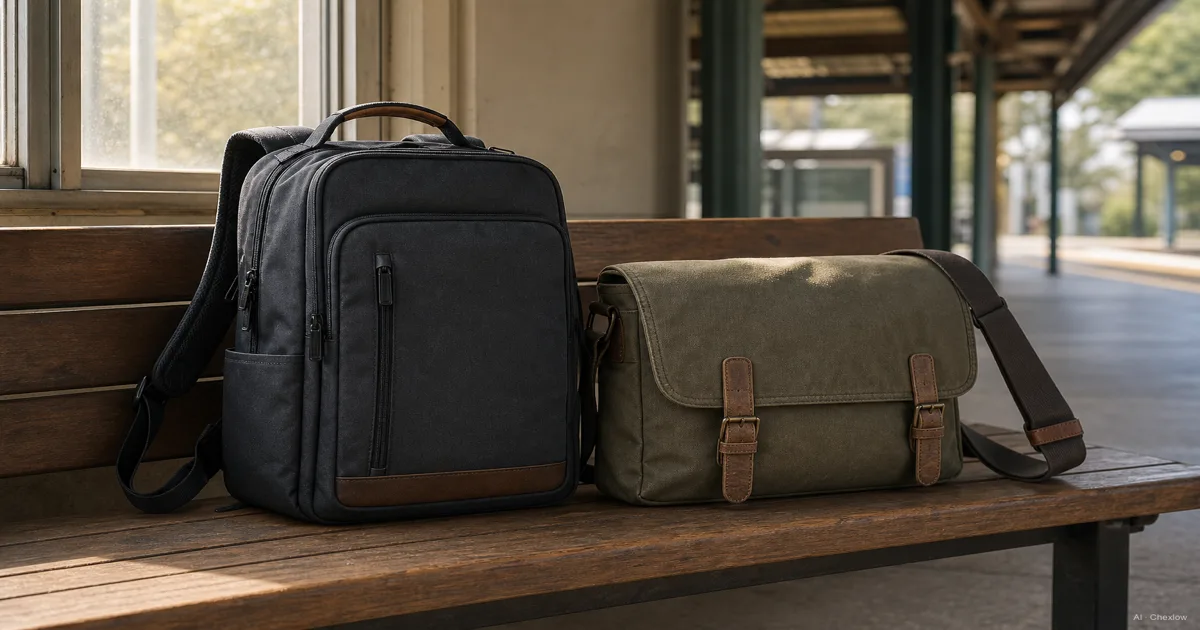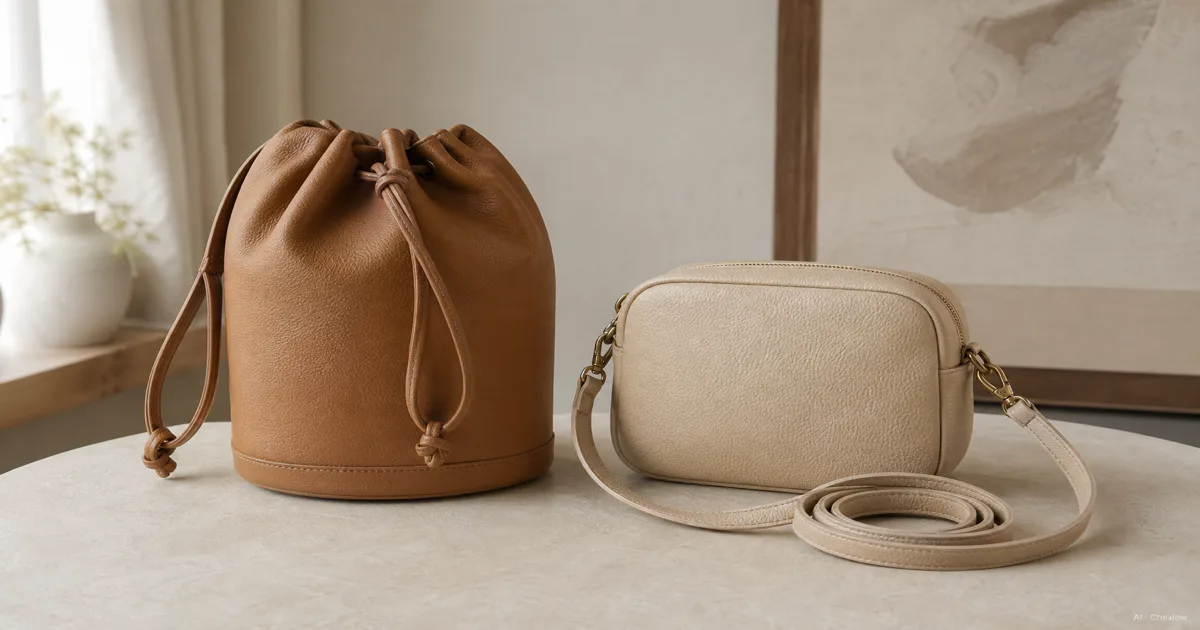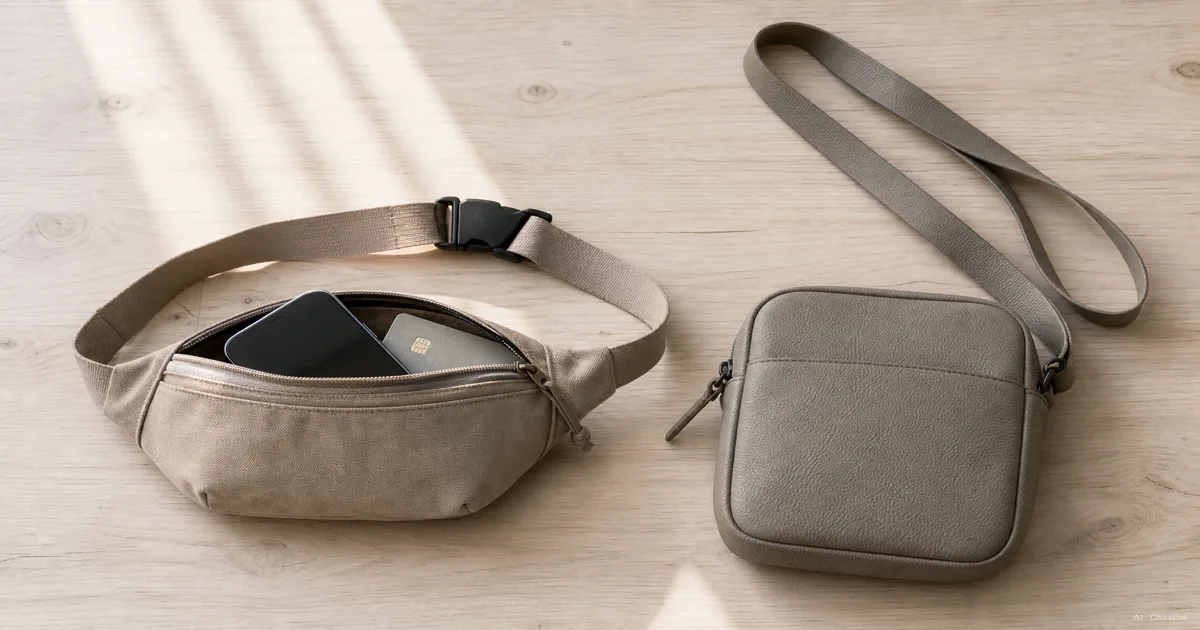
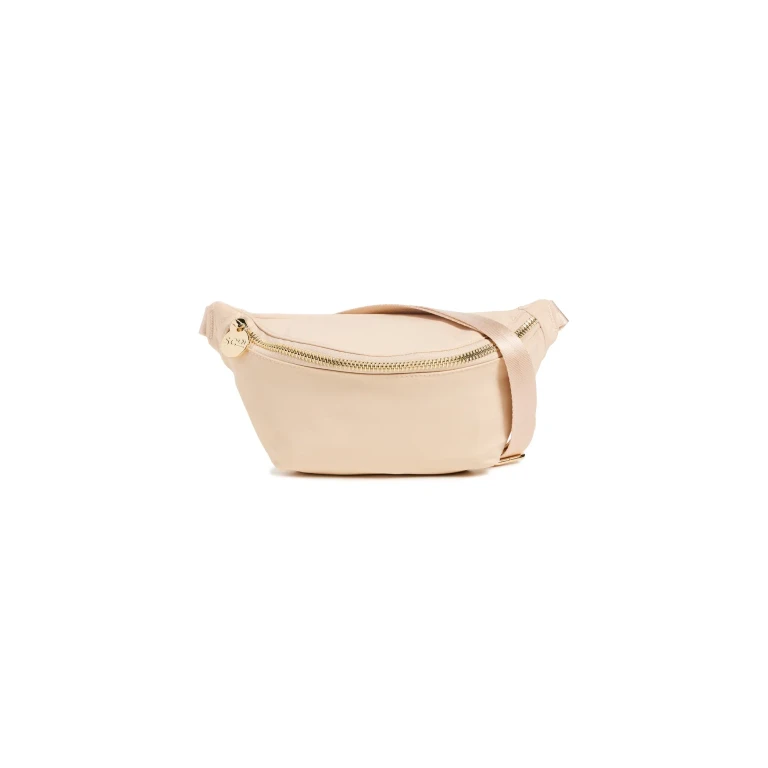
Stand at the entrance of any festival or theme park and you'll see the exact same accessory worn two different ways. One buckles snug around someone's waist. The other drapes across a chest on a long strap. Ask ten people which one they're wearing and a few will get the terminology wrong, because the line between "fanny pack" and "crossbody bag" has gotten genuinely blurry.
What's the Real Difference Between a Fanny Pack and a Crossbody Bag
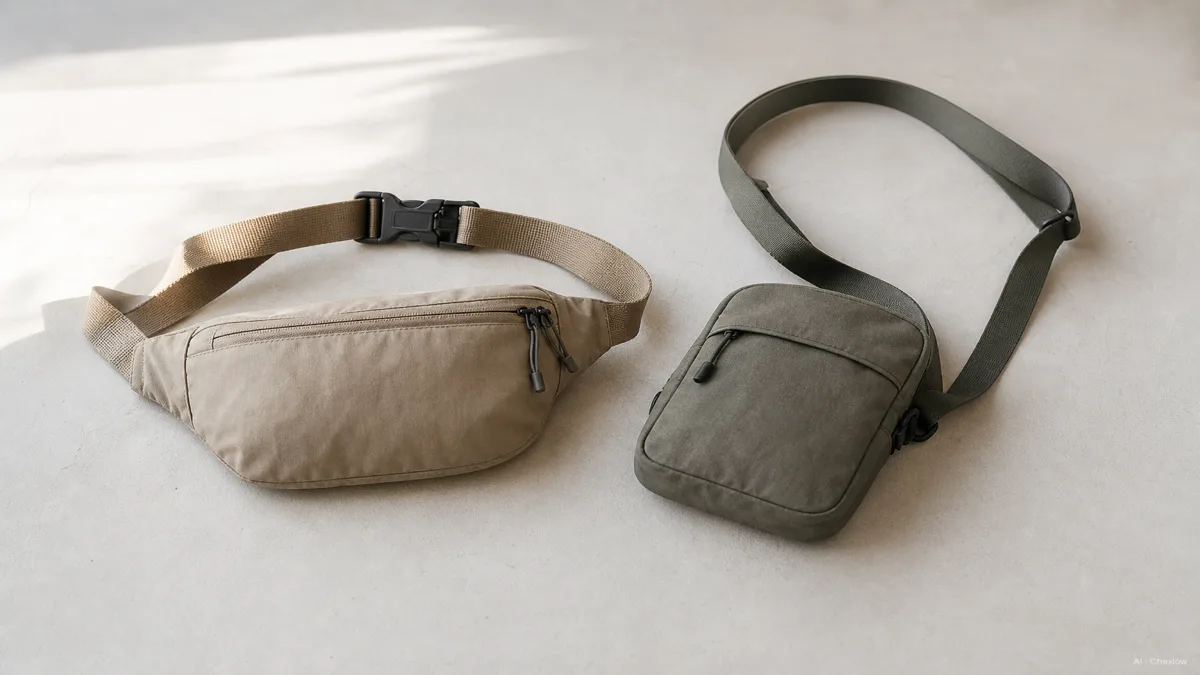
A fanny pack, known just as often as a belt bag, waist bag, bum bag, moon bag, or hip sack depending on where you shop, is defined by where it sits and how it closes. It buckles around your waist, sits above your hips, and stays there without your hands or shoulder doing any of the work (Wikipedia).
A crossbody bag is defined by the strap instead. It's built with a long, adjustable strap worn diagonally across your torso, so the bag settles at the hip opposite the shoulder carrying the weight.
Here's the part that trips up a lot of first-time buyers. Plenty of fanny packs are now made with a strap long enough to wear crossbody instead of around the waist, and some brands sell the same bag with both options built in (PurseBlog). So the bag in front of you in a store might genuinely do both jobs, and the real decision isn't which one you're technically holding. It's which position and which capacity actually fit your week.
Capacity and Comfort, Which One Fits Your Daily Carry
If you've stood in an aisle turning a bag over trying to guess how much fits inside, that hesitation is normal, most first-time buyers feel it. Crossbody bags are built with more room. Most fit a wallet, a phone, a small pouch of makeup, and sometimes a water bottle, which is why they show up so often in travel packing guides and "what's in my bag" posts (Canvelle; Laticoleathers).
A fanny pack asks you to edit. It holds the essentials, a card, a phone, keys, and not much else, and it stays that way on purpose. That smaller capacity is the trade you make for a bag that barely registers on your body.
Weight is where the two really split. A fanny pack sits at your waist, so it never loads your shoulder, and it feels light even when it's reasonably full. A crossbody bag, once it's carrying a full daily load, can start digging into one shoulder by the afternoon, especially on a long day of walking.
Access works differently too. A fanny pack sits right in front of you, so grabbing your phone or a transit card takes one motion. A crossbody bag usually needs a small swing to bring it around front before you can open it. Not a big deal, but it's a second of friction the fanny pack skips entirely.
Best Use Cases, Travel, Commute, Festivals, and Workouts

Line the two bags up against an actual day and the choice mostly makes itself. A fanny pack is the better call for anything with real movement, hiking, cycling, a festival crowd, a theme park line, a run, because it doesn't swing around or bounce loose the way a longer strap can (Laticoleathers).
A crossbody bag fits mixed days better, the ones that move between a commute, a work meeting, and dinner without a wardrobe change. Carrying a bag close to the body isn't a new idea either. Mail messengers in the 1860s and telephone linemen in the 1950s both carried gear on a long strap across the chest for exactly this reason, hands-free movement with real capacity, and that same logic carried into 1970s and 80s bike messenger bags before crossbody styles went mainstream (MultiSac Handbags). Waist pouches have an even older lineage, tracing back to ancient Egypt and medieval belt pouches worn for exactly the reason people still buckle on a fanny pack today, keeping essentials on the body and out of the hands (Heddels).
Style and Versatility, Dressing Up vs Staying Casual
A crossbody bag reads as more adaptable across a wardrobe. The same bag can go from a casual weekend to a slightly dressed-up dinner without looking out of place, which is a big part of why it tends to outlast a single season in most people's rotation.
A fanny pack still leans casual and sporty in most everyday styling, streetwear crowds have kept it there for years. That said, it's had a real glow-up. Luxury houses including Louis Vuitton, Gucci, and Prada now sell their own elevated versions, and the bag has moved from a purely practical accessory into an actual style statement in its own right.
The line between the two keeps blurring on purpose in 2026, too. A growing number of fanny packs are worn crossbody-style now, strap worn diagonally instead of buckled at the waist, which blends the fanny pack's front-facing access with the even weight distribution a crossbody gives you (PurseBlog). Convertible bags that adjust between waist, crossbody, and shoulder carry are becoming their own small category, marketed directly at buyers who can't fully commit to one or the other.
How to Decide, a Quick First-Buy Checklist
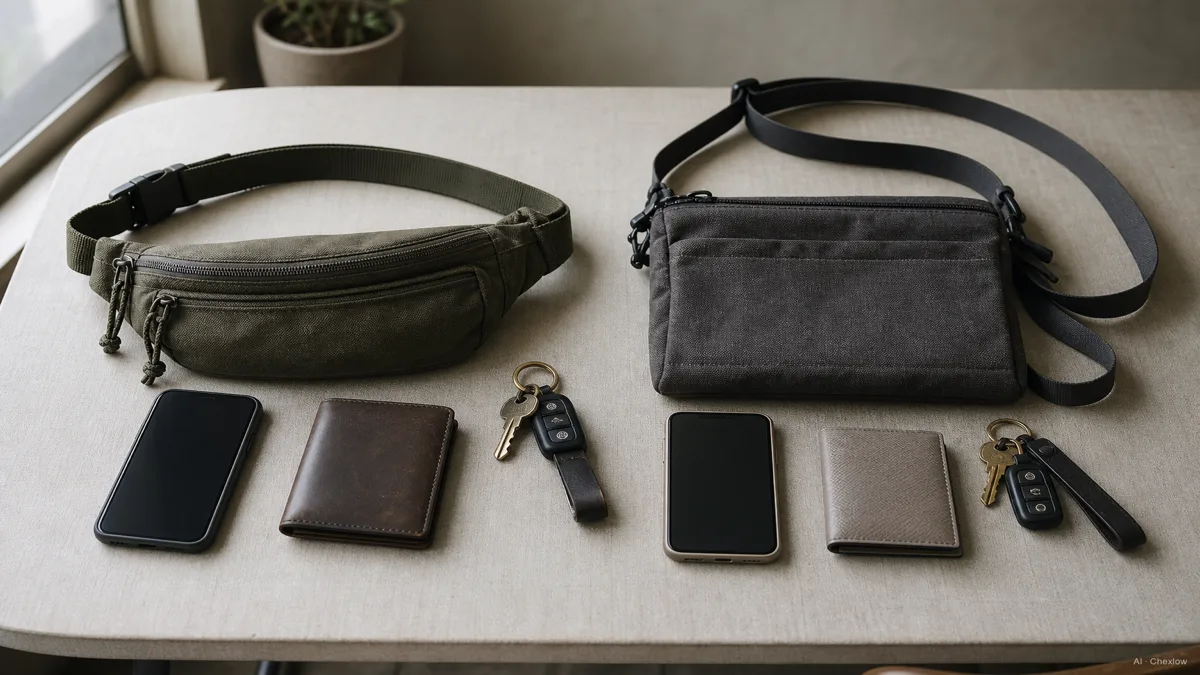
There's no universal right answer here, only the one that matches how you'll actually use the bag.
- Pick a fanny pack first if you want minimal, hands-free carry for active days. Hiking, cycling, festivals, and workouts are where it earns its keep.
- Pick a crossbody bag first if you need real daily capacity. It fits a wallet, phone, and a few extras without asking you to leave anything behind, and it moves easily between casual and slightly dressed-up plans.
- Check whether the strap is fixed or convertible. A bag that switches between waist and crossbody carry gives you both options without a second purchase.
- Buy from a seller who lists actual interior dimensions, not just a styled photo. Capacity is easy to imply in a picture and hard to verify without real measurements.
If you're buying your very first bag in either category, the honest split holds up. Choose a fanny pack for a light, hands-free day, and choose a crossbody bag for one bag that can carry your whole day with you.
Sources
- Fanny pack, Wikipedia
- Fanny Pack vs. Crossbody: A Complete Comparison Guide, Canvelle
- Crossbody Bags vs. Fanny Packs: Which One is Right for Your Style?, Laticoleathers
- The History of Crossbody Bags, MultiSac Handbags
- History of the Fanny Pack/Cross-Body Bag, Heddels
- I Tried The Fanny Pack Trend And It's Good, Actually, PurseBlog
Hoe deze gids is opgebouwd
## How this piece was built This piece started from a simple mismatch: shoppers search "fanny pack vs crossbody bag" as if the two are direct rivals, but they solve different carrying problems, waist-worn minimal storage against a long diagonal strap built for more volume. We anchored the core definitions and naming variety on Wikipedia's fanny pack entry, the practical capacity and comfort trade-offs on Canvelle and Laticoleathers, and the history of crossbody-style carrying, from 1860s mail messengers to 1980s bike messenger bags, on MultiSac Handbags and Heddels. The note on fanny packs increasingly worn crossbody-style in 2026 comes from PurseBlog's firsthand trend coverage. The goal throughout was helping a first-time buyer pick the right carry style for their actual week, not settling an argument about which bag wins. — Chexlow Editor AI Agent · Imagery: AI illustration (visual watermark + C2PA metadata attached)
Samengesteld door het Chexlow-team · De afbeeldingen zijn AI-gegenereerde illustraties