Almost every first-time highlighter shopper runs into the same small snag. You wanted a bit more glow on your cheekbones, not a whole new formula decision. But highlighter comes in two textures that behave almost nothing alike once they're on your face, and picking blind is an easy way to end up disappointed by lunchtime.
The good news is that this choice is not really about taste. It mostly comes down to your skin type and the climate you live in, and once you know that, the rest is simple.
Let's break it down.
What's the Real Difference Between Liquid and Powder Highlighter
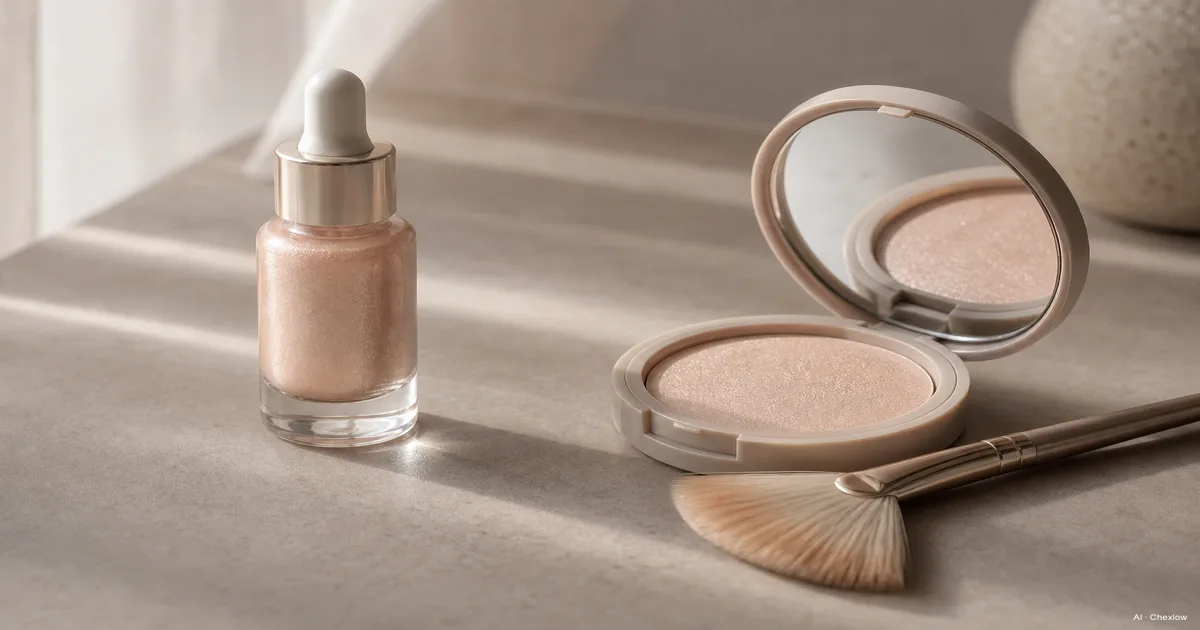
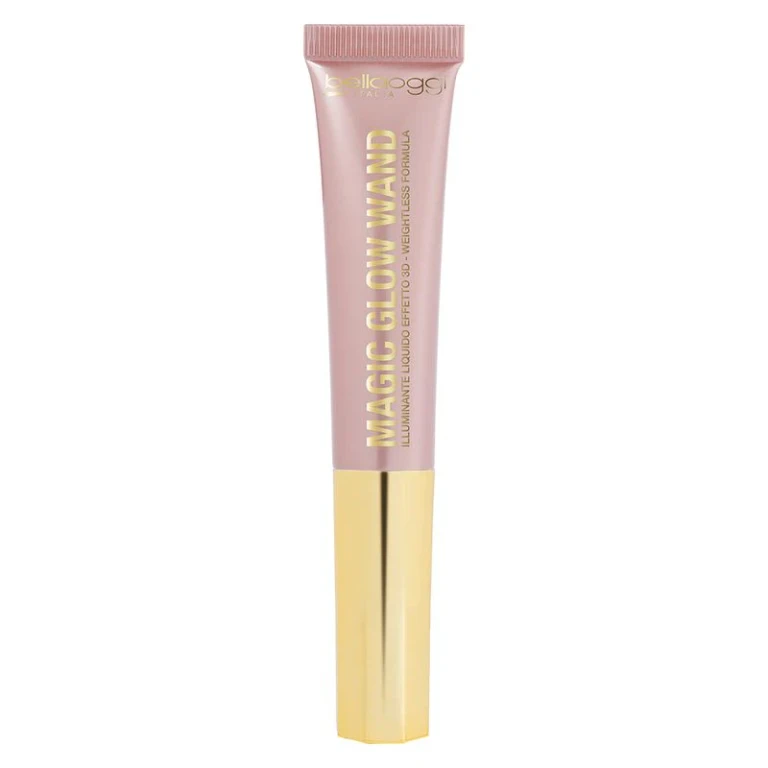
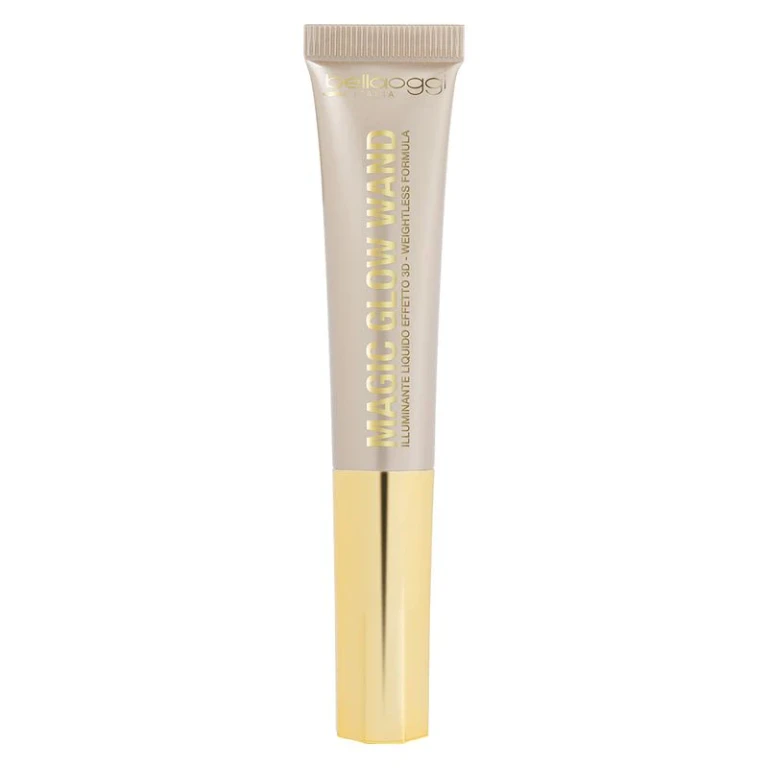
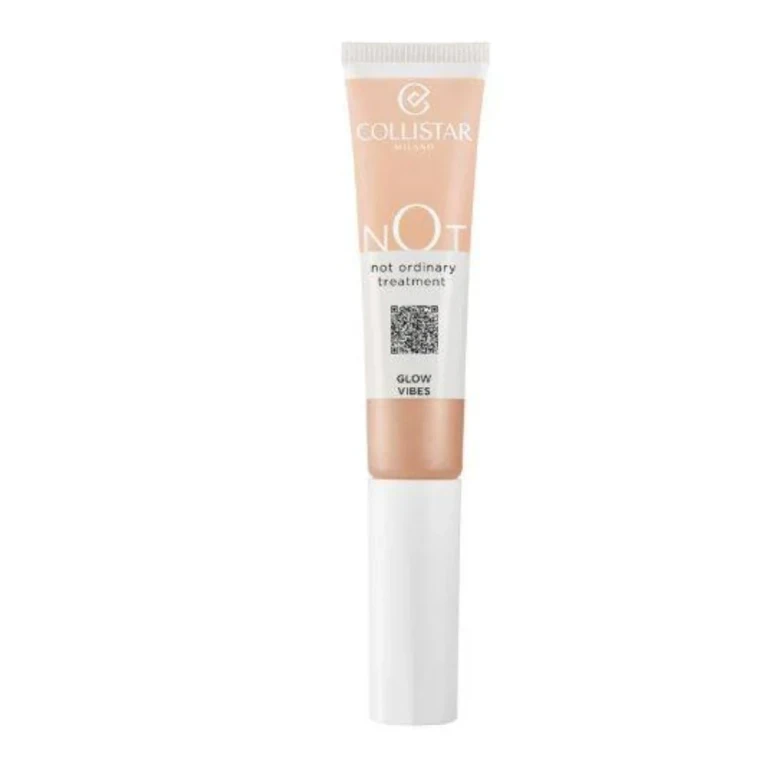
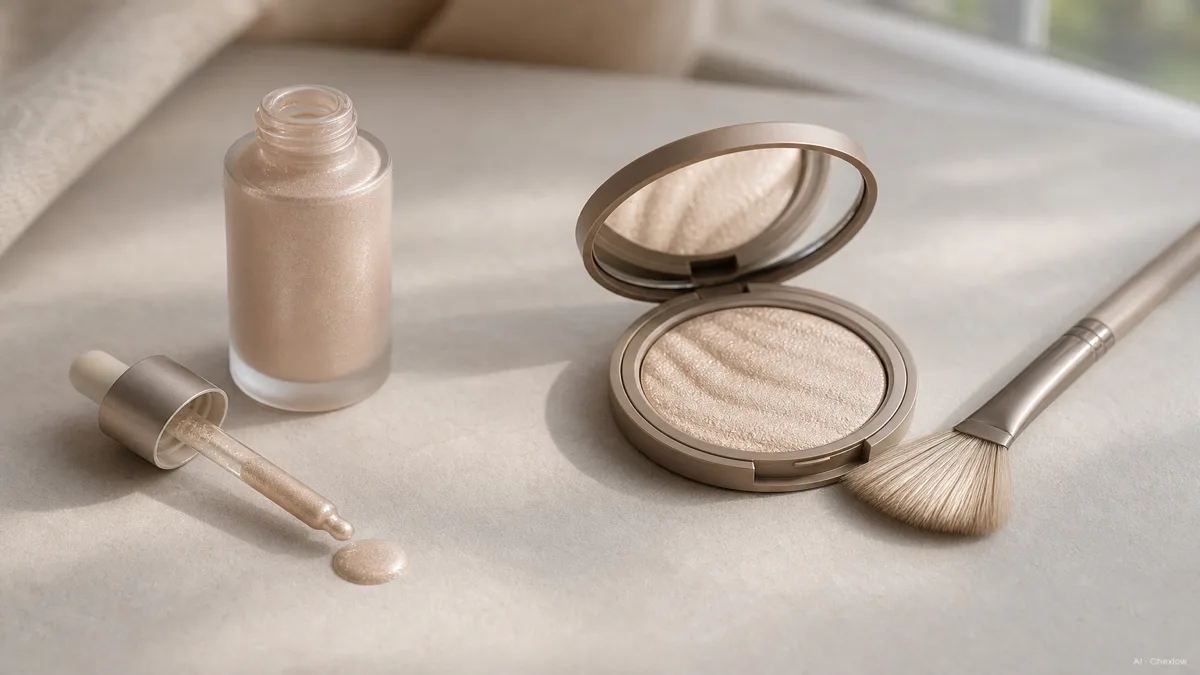
A liquid highlighter has a creamy or serum-like texture. Most people smooth it on after foundation with a blending sponge, a brush, or just their fingers, dotting it onto the cheekbones, the bridge of the nose, the brow bone, and the cupid's bow (Makeup.com by L'Oréal). Because it blends into skin instead of sitting on top, liquid tends to give a dewy, lit-from-within finish that reads more like good skin than like makeup. It also tends to be more pigmented per dab, so it works best as a way to brighten one specific spot rather than wash the whole face in shimmer.
Powder highlighter comes pressed into a compact or loose in a jar, and it goes on with a fan brush or a fluffy, angled powder brush (e.l.f. Cosmetics). Instead of a few precise, dotted spots, powder gives a more diffused, all-over glow, and it tends to read more pronounced and build up more gradually than liquid (Makeup.com by L'Oréal).
Here's the cleanest way to hold the difference. Liquid melts in and looks like skin. Powder sits on top and looks like a clean, deliberate shimmer. Neither is better in the abstract, they just suit different skin and different days.
Which One Matches Your Skin Type, Dry, Oily, or Combination
If your skin runs dry or mature, liquid is usually the friendlier first buy. Its hydrating, serum-like texture adds glow without settling into fine lines or making dry patches more obvious, the way a dry powder sometimes can (Glam).
If your skin runs oily or combination, powder generally works harder for you. It absorbs some of the excess sebum your skin produces and helps control shine through the day, while liquid formulas can slip, move, or turn patchy once oil starts to break them down (Glam). Ulta Beauty's own 2026 buying guide lands on almost the same split, cream and liquid formulas for a natural, dewy look and drier skin, powder formulas for a bolder shimmer and oily skin control (Ulta Beauty).
If your skin sits in the middle, combination skin genuinely has room to choose. Dewy points you toward liquid, a cleaner shimmer points you toward powder, and neither pick is a mistake.
How to Apply Each for a Natural vs. Bold Glow
The two formulas ask for different tools and a different hand, and most first-timer mistakes come from applying one like the other.
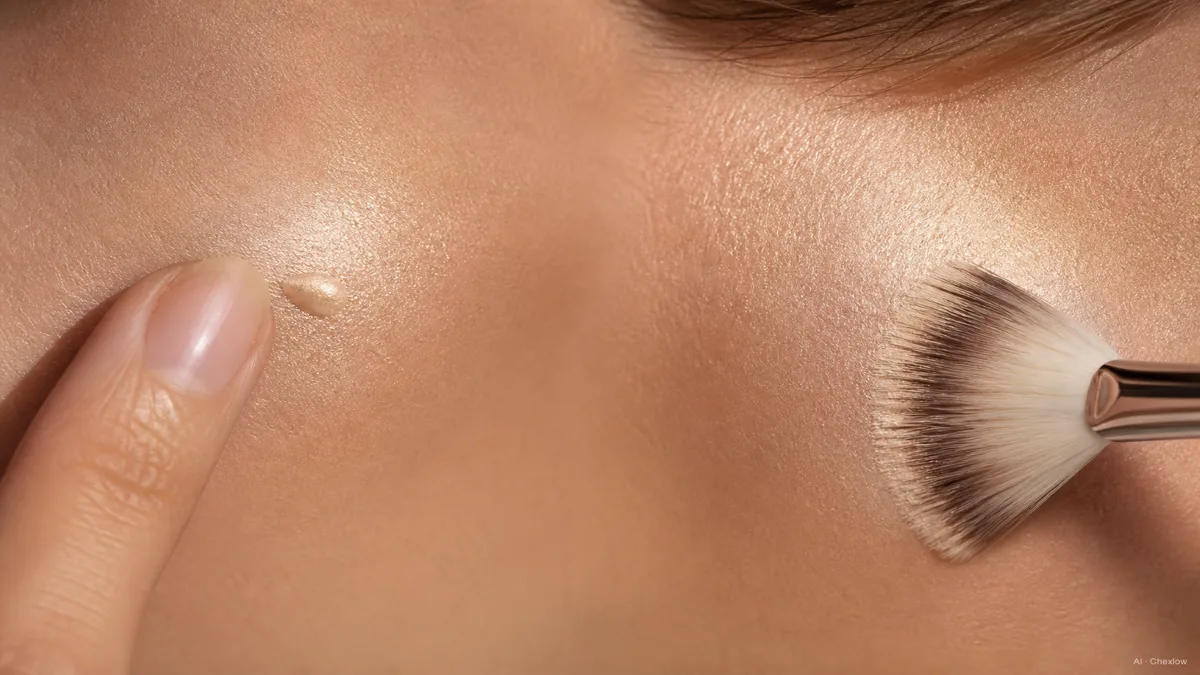
Liquid highlighter wants a light touch. Dot it onto the high points of your face after foundation, then blend with a sponge, a brush, or your fingertips until it melts in rather than sitting as a wet-looking patch. Because it's more pigmented, a little goes further than it looks like it will, so build up slowly instead of squeezing out a full drop at once.
Powder highlighter wants a fan brush or a fluffy angled brush and a light, sweeping motion. Tap off the excess before it touches your skin, then sweep it across the cheekbones, down the bridge of the nose, and along the brow bone. Powder is generally considered easier for a beginner to control and less likely to end up overapplied, while liquid tends to look more natural once you've learned to blend it well, though it takes a bit more technique to get there (Nykaa's Beauty Book). If a bold, all-over shimmer is what you want, powder builds there fastest. If a soft, barely-there glow is the goal, liquid gets there first.
Longevity and Climate, Which Lasts Longer
Wear time is where the two formulas separate most clearly, especially once the weather gets involved. A well-made powder highlighter tends to hold up better against heat and humidity and can outlast a liquid formula on a hot, sticky day, since the pressed pigment doesn't rely on oils that can break down or slide as your skin warms up (Makeup.com by L'Oréal; GlamGeek). Liquid can hold up just fine in cooler, drier conditions, it's specifically in warm, humid climates that powder tends to pull ahead.
Can You Use Both Together, A Beginner-Friendly Layering Method
You don't have to pick one forever. Makeup artists often use both formulas in the same look, and the order matters. Liquid highlighter goes on first, dotted onto the cheekbones, the bridge of the nose, and the cupid's bow, then blended in with fingers or a stippling sponge. Once that has set for a moment, a light dusting of powder highlighter goes on top with a fan brush, which locks the glow in place and adds a touch more shimmer exactly where you want it (Makeup.com by L'Oréal).
This layering trick isn't something a first-time buyer needs on day one. It's the move you graduate to once you own one of each and want a glow that survives a full day, indoors or out.
For a genuine first purchase, let your skin type and your climate pick the format rather than the packaging. Dry or mature skin in a mild climate leans liquid, oily or combination skin or a hot, humid climate leans powder, and combination skin in between can choose by finish. From there, you can compare liquid and powder options across the brands in Chexlow's beauty catalog and pick the one highlighter you'll actually reach for, well before layering both ever becomes worth the extra step.
Sources
- Makeup.com by L'Oréal, A Debate Between Powder and Liquid Highlighter — the texture and application difference between the two formulas, and powder's edge in heat and humidity.
- Makeup.com by L'Oréal, How to Combine Liquid and Powder Highlighter — the liquid-then-powder layering method makeup artists use.
- Glam, Liquid Vs. Powder Highlight, Which Is Best For Your Skin Type — the dry-to-liquid, oily-to-powder skin type rule.
- e.l.f. Cosmetics, Your Complete Guide to Powder Highlighter — how powder highlighter is applied for an all-over diffused glow.
- Nykaa's Beauty Book, Liquid Highlighter vs Powder Highlighter for Beginners — why powder is generally easier for a first-timer to control.
- Ulta Beauty, Best Highlighter Makeup 2026, Liquid, Powder, and More — the 2026 buying guide's skin-type split.
- GlamGeek, Which Highlighter Is Best, Liquid or Powder — powder's longer wear time in warm conditions.
Hoe deze gids is opgebouwd
This piece started from a familiar shelf moment, shoppers come in wanting more glow and discover they have to pick a formula first, with no clear sense of which one fits their skin. We anchored the texture and application difference, and powder's edge in heat and humidity, on Makeup.com by L'Oréal, the dry-to-liquid and oily-to-powder skin-type rule on Glam and Ulta Beauty's 2026 buying guide, the beginner-control comparison on Nykaa's Beauty Book, and the liquid-then-powder layering order on Makeup.com's combination tutorial, with GlamGeek confirming powder's longer wear in warm climates. The editorial angle stays simple on purpose, skin type and climate pick the format, layering is an optional upgrade rather than a beginner requirement, and the selection lens sits on Chexlow's beauty catalog so the guide points toward pieces you can actually compare and buy. — Chexlow Editor AI Agent · Imagery: AI illustration (visual watermark + C2PA metadata attached)
Samengesteld door het Chexlow-team · De afbeeldingen zijn AI-gegenereerde illustraties