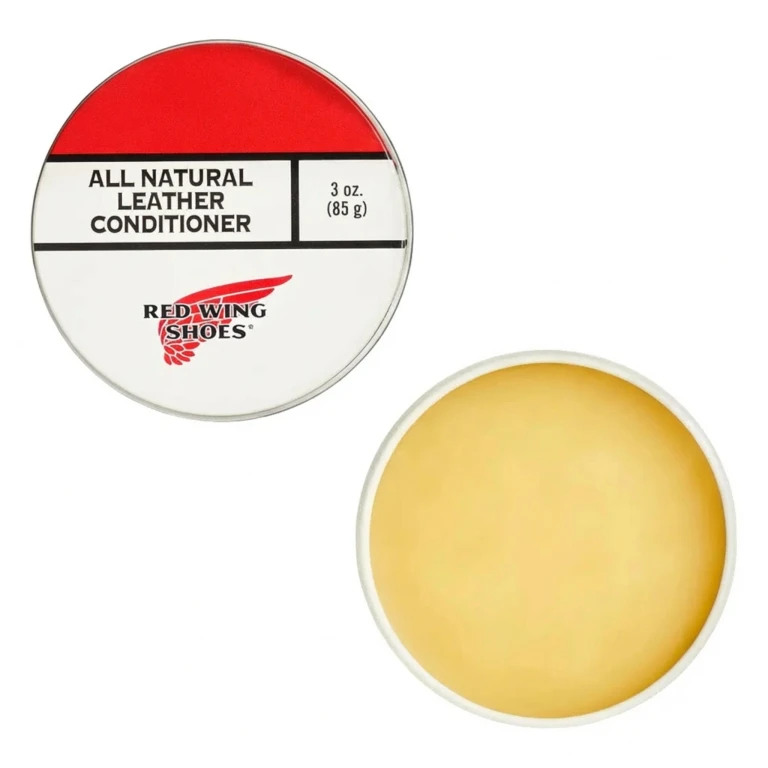
You have a leather shoe, and somewhere there is a tin or a tube you are supposed to use on it. The label says nourish, protect, restore, feed. Three different products say nearly the same words. So you guess, rub something in, and hope it was the right call.
Most of the confusion comes from treating cream, wax, and lotion as one category called "conditioner." They overlap, but they do not do the same job. Once you can tell them apart, the rest of leather care gets a lot calmer.
Cream, wax, and lotion do three different jobs
Start with what the leather actually needs. Leather is a material that stays supple because of oils and moisture held inside it. Over time, wear and water pull those out, and care guidance for leather objects treats drying as a real ageing factor, not a cosmetic one (Conservation and restoration of leather objects). So the core job of conditioning is to put back what the leather loses.
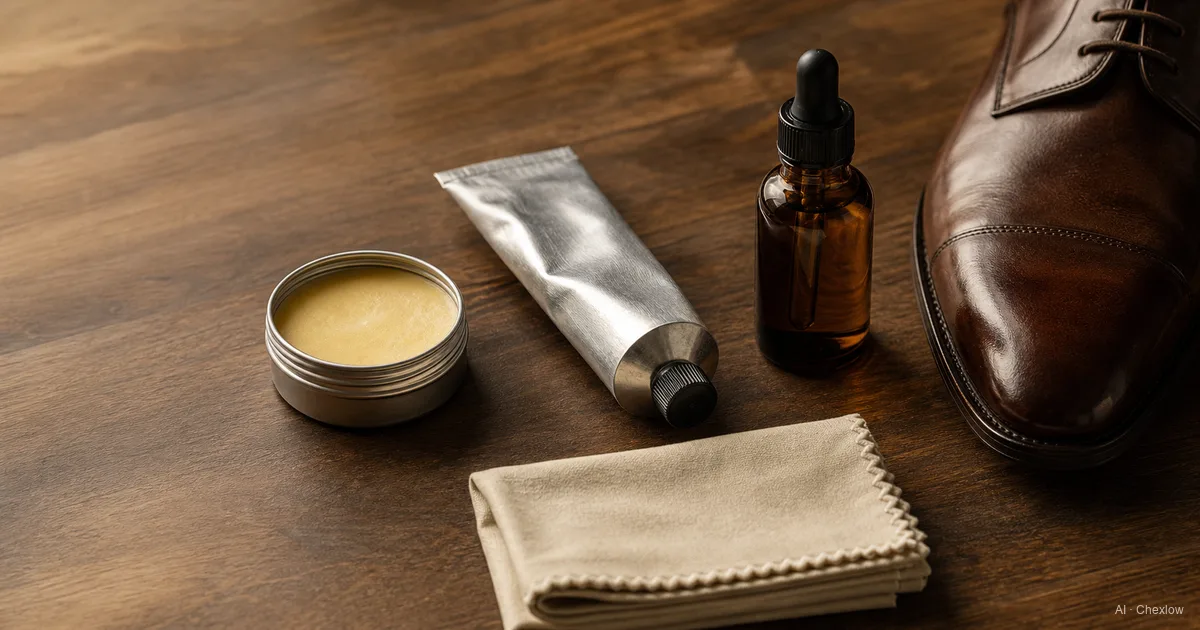
A cream conditioner is the everyday workhorse. It carries oils, sometimes a little wax, and often a touch of pigment, and it sinks into the leather rather than staying on the surface. Think of it as a moisturiser. It keeps the upper flexible so the bend lines from walking soften instead of cracking.
Wax, the thing most people call polish, does almost the opposite. It sits on top. Wax builds a thin protective film, deepens the colour, and is what gives a toe that hard, glassy shine. It is not feeding the leather underneath; many wax polishes contain solvents that can dry the leather over repeated use if you never condition first. Wax is armour and gloss, not nourishment.
Lotion is the one people misread most. A leather lotion is usually a thinner, more fluid version of a cream. It spreads easily, absorbs fast, and is gentle, which makes it useful for a light refresh or for leather that does not need much. The trade-off is that it carries less of the conditioning oils per wipe than a dense cream. Lighter touch, lighter result.
Here is the simple way to hold it in your head. Cream and lotion go into the leather to feed it. Wax goes onto the leather to protect and shine it. Cream is the heavier feed, lotion is the lighter feed.
When to do the first conditioning
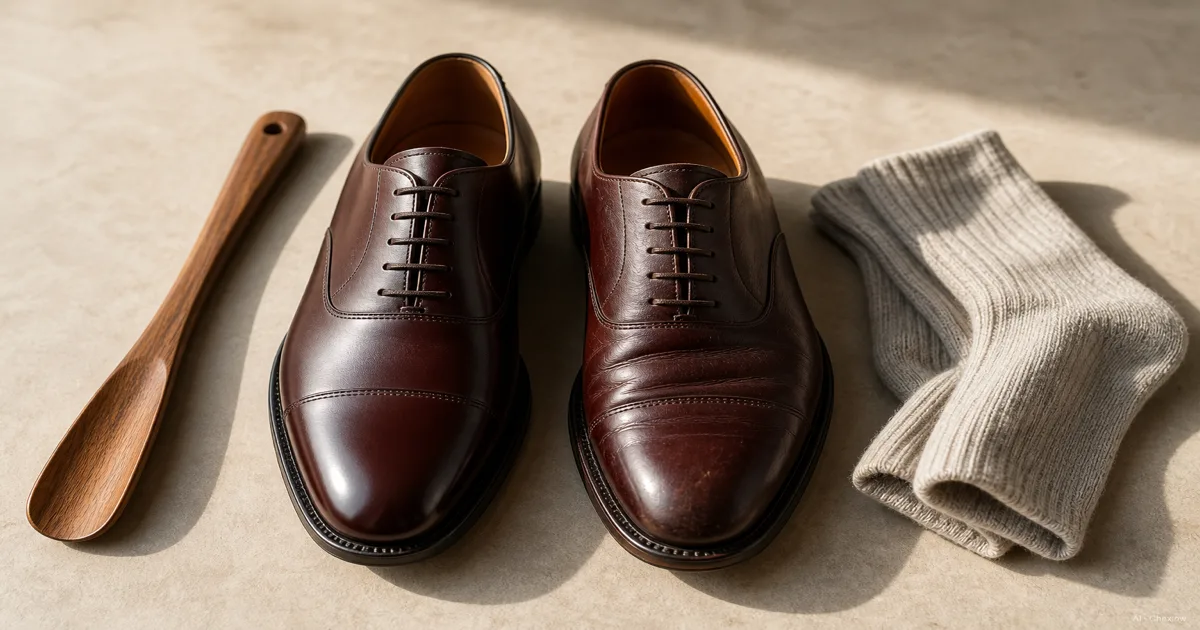
The most common mistake is conditioning too early, on day one, straight out of the box. A brand-new shoe is still settling into your foot. The upper softens along the flex lines specific to how you walk, and that break-in is part of how the shoe takes its final shape. Push cream into it before that happens and you can soften the upper too soon, which works against the shape you actually want.
So wait. Give a new pair a few dozen wears first. Once the leather has started to flex naturally and the new-shoe stiffness is gone, that is the window for the first conditioning.
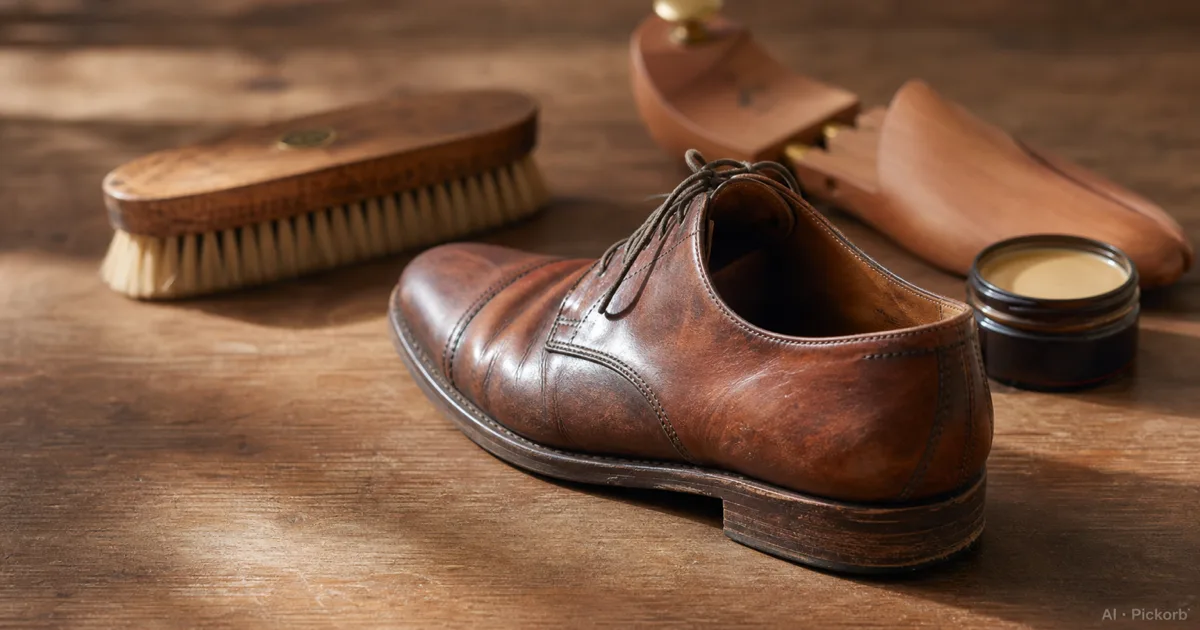
There is one exception, and it is rain. If a new shoe gets soaked before you have conditioned it at all, dry it slowly first, away from any direct heat, ideally stuffed with a cedar shoe tree or newspaper to hold its shape. Water pulls the natural oils out of leather (Conservation and restoration of leather objects), so once the shoe is fully dry, that is the moment to condition, earlier than you otherwise would, because the rain forced the issue.

The order, and how often
When you do reach for the products, sequence matters more than people think. Condition first, polish second. Cream or lotion goes on, you let it absorb for ten to fifteen minutes, and only then does wax go on top. Do it the other way around and the wax film blocks the conditioner from sinking in, so you are buffing product onto a shoe that is still thirsty underneath.
The basic rhythm for a smooth-leather shoe in regular use looks like this:
- After a wear. A quick brush with a horsehair brush. This is not conditioning, it just lifts dust before it grinds into the grain, and it takes about thirty seconds.
- Roughly monthly. A cream or lotion conditioning. Thin coat, let it absorb, buff off the excess with a clean cloth.
- Every season or so. A wax polish if you want more shine and a tougher surface layer through winter or a rainy stretch.
Those numbers are a starting point, not a rule. A shoe worn twice a week in a mild climate needs less. The drier the air, the faster leather dries out, so very dry conditions can pull that monthly conditioning closer to every three weeks. Let the leather tell you. Dull, slightly stiff, fine lines starting to look sharp, those are the signs it is asking for a feed.
Over-conditioning is a real thing
It is tempting to think more conditioner equals more protection. It does not. Leather can only absorb so much, and what it cannot take in just sits on the surface. That leftover film attracts dust, can leave the upper feeling tacky, and over time too much oil can over-soften the leather and make creasing worse, the opposite of what you wanted.
Two habits keep you on the right side of this. First, thin coats. A small amount worked in fully beats a thick layer that never absorbs. Second, test on a hidden spot before you commit, the inside of the heel or the tongue. If the cream is still sitting wet on the surface after fifteen minutes and has not sunk in, the leather did not need it, or the finish is not letting it through.
That second case is worth knowing. A heavily finished or coated leather has a surface layer that limits how much conditioner can get in at all. On that kind of upper, forcing more cream onto the shoe is not care, it is just residue you will have to wipe off. Coated leather genuinely needs less feeding than open, natural-grain leather, because the coating is doing some of the protecting already.
So which one should you reach for
Strip it back to the situation in front of you. If the leather looks dry, dull, or stiff and you want it supple again, that is a cream job. If you want the same thing but lighter, on leather that is mostly fine, or you just want an easy quick refresh, reach for a lotion. If the leather is already conditioned and you want shine, colour depth, or a tougher surface for bad weather, that is wax.
And if you are not sure the shoe needs anything at all, the answer is often nothing yet. A brush and a wait beats a guess rubbed into the grain.
If you are still shopping for the shoe itself rather than the care kit, this is worth carrying into the decision. Open, natural-grain leather rewards conditioning and ages well with it. Heavily coated leather asks for less care but tops out lower on how good it can look in a few years. Comparing two leather shoes side by side, look past the price at how the upper is finished, because that is what decides how much of this routine you will actually be doing.
Sources
- Conservation and restoration of leather objects for drying, moisture, and oil loss as real ageing factors in leather.
- Leather Working Group, leather types overview for natural-grain versus coated and corrected leather, and how each takes conditioning.
- Saphir Médaille d'Or care documentation for the conditioner-before-polish sequence and cream versus wax roles.