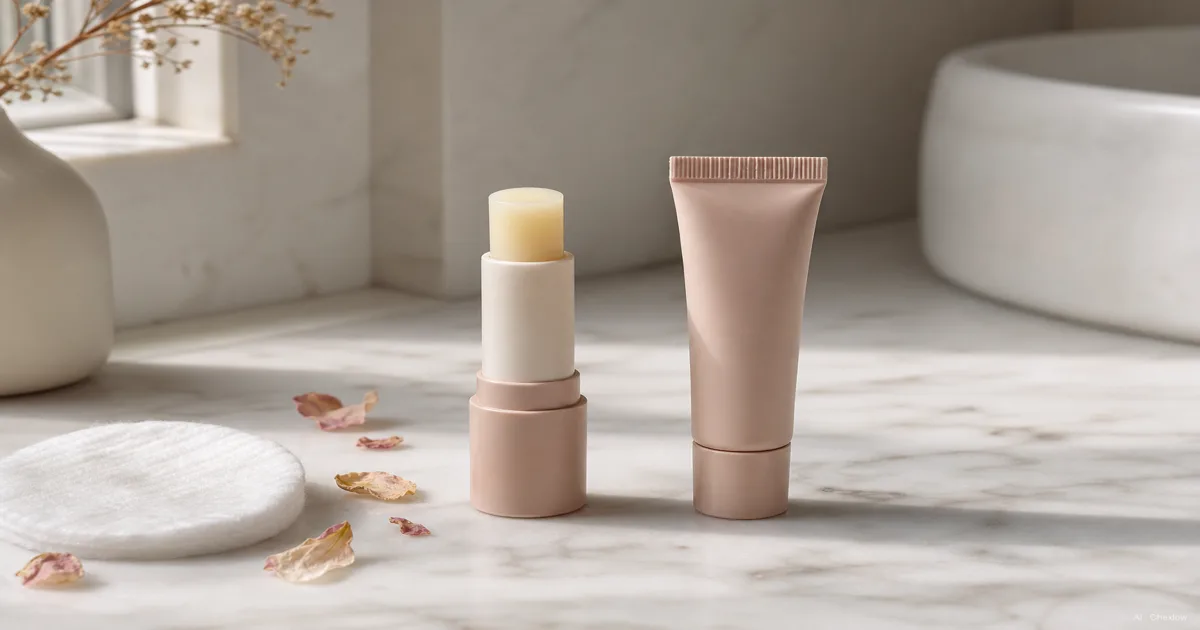
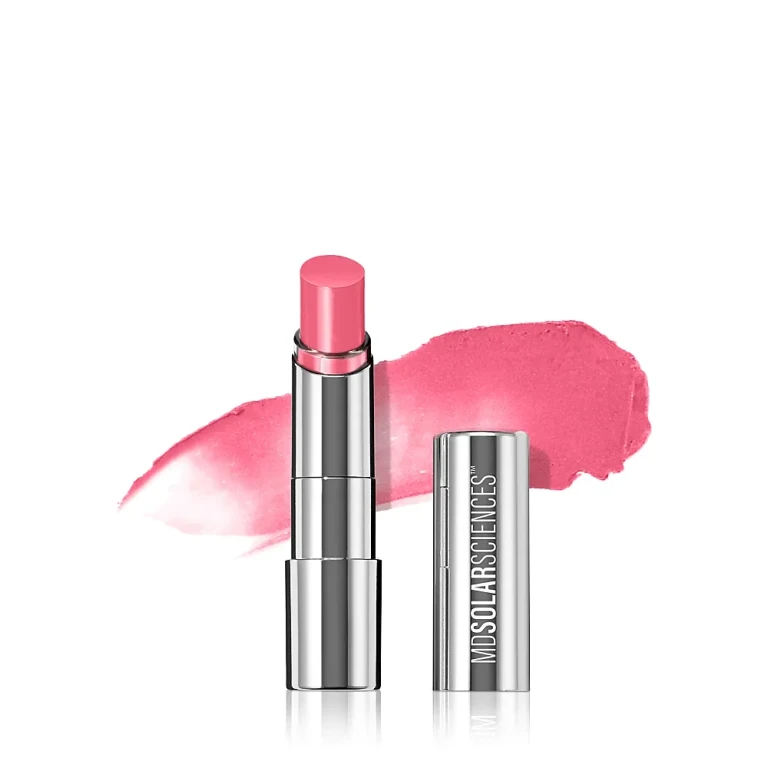
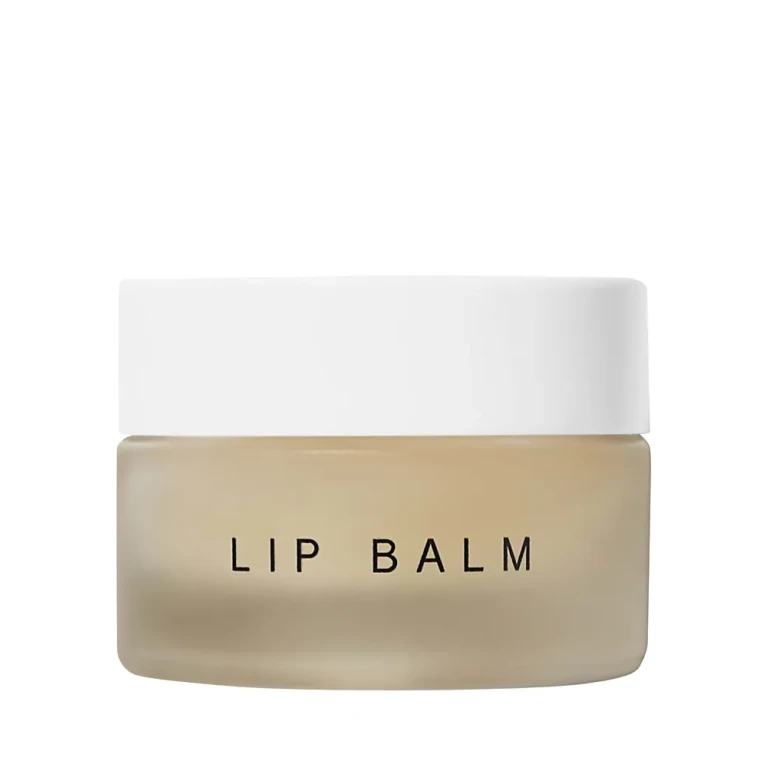
Here is the part the packaging never spells out: a lip balm and a lip treatment are not the same product at two price points. They work on your lips in two completely different ways. One sits on the surface and holds the line. The other sinks in and rebuilds. Once you stop shopping by the prettiest tube and start shopping by which job your lips actually need, the whole decision gets simple.
And the reason your lips need help at all comes down to one anatomical fact. Lip skin has no oil glands and very few of the pigment cells that protect the rest of your face, which is exactly why lips dry out faster than the skin around them and need help from the outside to stay comfortable (Hanalei Company). Your lips cannot oil themselves. That is the whole premise.
What Lip Balm Actually Does (and What It Cannot Do)
A lip balm is, at its core, an occlusive. That is the technical word for a barrier that physically seals the lip surface so the water already in your skin cannot escape into the air. The classic occlusives are petrolatum (plain petroleum jelly), beeswax, carnauba wax, and lanolin, and you will find at least one of them anchoring almost every balm on the shelf.
What that buys you is real and immediate. A balm stops what is called transepidermal water loss, the slow evaporation that leaves lips tight and flaky, and it gives you that instant smoothed-over comfort the second you swipe it on. For daytime protection, a quick fix on a windy walk, or simply keeping minor chapping at bay, a balm is exactly the right tool. Look for SPF 15 to 30 in a daytime one, since lips have almost no natural sun defense of their own.
But here is where a balm stops. It seals the surface, and that is all it does. It does not feed the skin anything, it does not repair a barrier that is already broken, and it cannot address the thinning and fine lines that come with age. A balm is a seal on a wall. It is not a repair to the wall itself. For a lot of people that seal is genuinely all they need. For others it is why the dryness keeps coming back the moment the balm wears off.
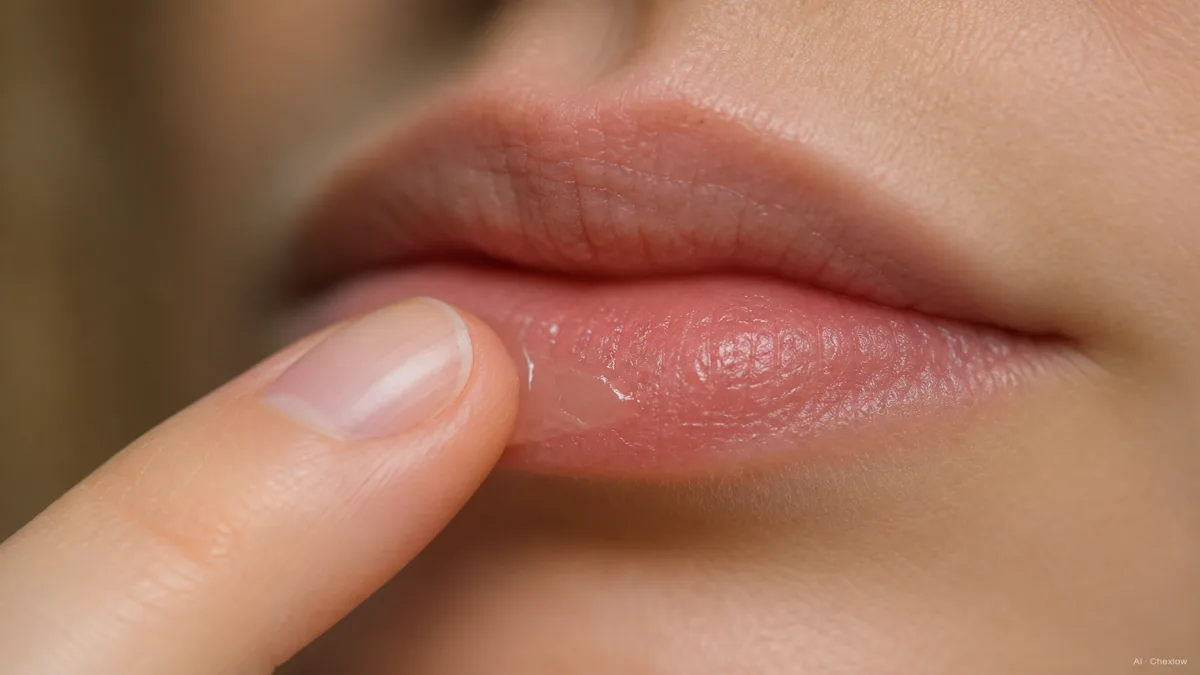
What Makes a Lip Treatment Different: Active Ingredients Explained
A lip treatment starts where a balm stops. Instead of only sealing the surface, it carries active ingredients that penetrate the outer skin layer to change how the lip behaves over time (Typsy Beauty). The benefit is cumulative, not just instant. You are not only feeling better today, you are rebuilding for the weeks ahead.
The headline actives are worth knowing by name. Peptides, like palmitoyl tripeptide, signal the skin to make more collagen and elastin, which over weeks of use can improve how full and firm lips look. Hyaluronic acid pulls water in and holds it, and the smart formulas use it at more than one molecular weight, the larger size sits on the surface for instant plumping while the smaller size travels into deeper layers for longer-term structure. Ceramides help rebuild the moisture barrier from the inside rather than just patching it on top.
Retinol shows up here too, usually as its gentler cousin retinyl palmitate, because lip skin is thinner and more reactive than the skin on your cheeks. On lips it nudges cell turnover and collagen, which is how a treatment smooths the fine vertical lines and the loss of volume that come with age.
The clearest evidence that this is more than marketing comes from the lab. A 2025 clinical study published through the NIH tested a topical peptide and hyaluronic acid formula on lip skin and measured real, statistically significant gains in hydration, firmness, and line reduction over an eight-week stretch (PubMed Central). That eight-week window is the tell. A treatment is a slow build, not a one-swipe fix.
The Three Hydration Pillars: Occlusives, Emollients, and Humectants
Whether you end up with a balm or a treatment, the same three jobs decide whether it actually works. Good lip care almost always combines all three, and once you can spot them on an ingredient list you can read any product on the shelf (BeautyTap).
Occlusives are the sealers. Petrolatum, beeswax, and shea butter form the barrier that locks moisture in. This is the pillar a basic balm leans on hardest, and it is why a petrolatum-based ointment like Aquaphor is such a reliable, low-cost overnight option, it is almost pure occlusion.
Emollients are the softeners. Plant oils, lanolin, and ceramides slip between the cells of the lip surface to smooth and soften the texture, taking lips from rough to supple. They are why a good product feels cushioned rather than just slick.
Humectants are the water-pullers. Glycerin, hyaluronic acid, honey, and aloe draw moisture out of the air and from the deeper layers of skin toward the surface. The catch worth knowing, a humectant on its own in dry air can pull moisture the wrong way and leave lips drier, which is exactly why you want an occlusive sealing over the top. The three pillars are a team, not a menu.
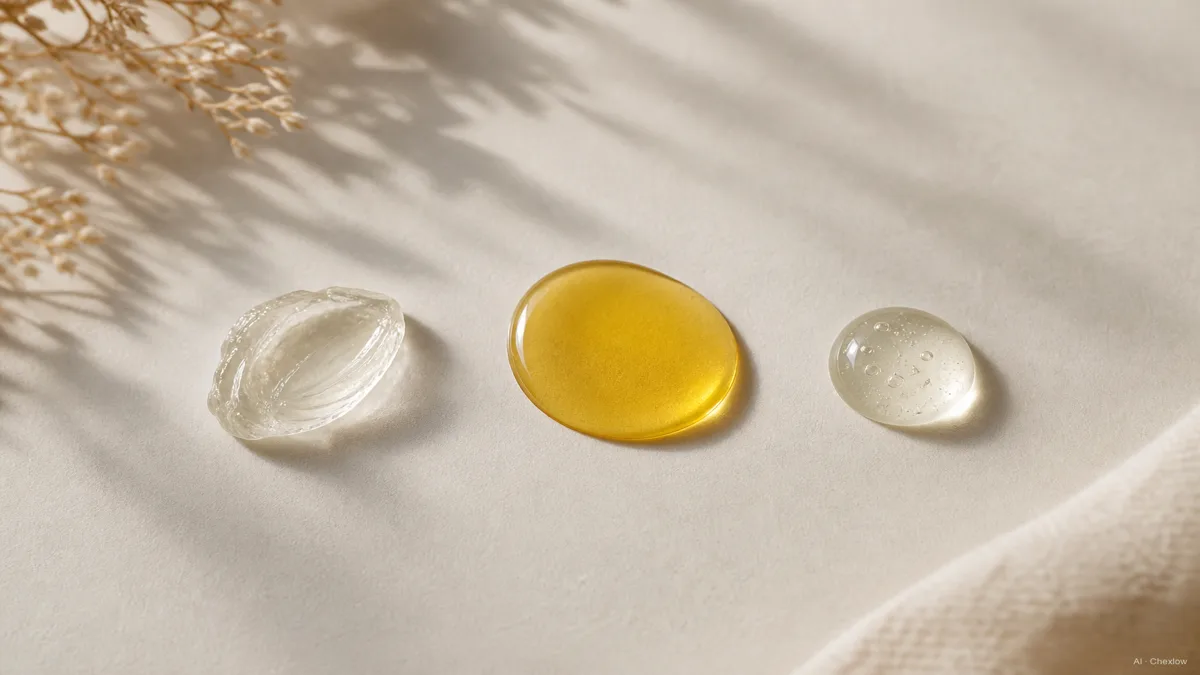
Ingredients to Seek Out, and Ingredients to Avoid
Once you know the pillars, the ingredient list stops being a wall of Latin and starts being a quick read.
Seek out a formula that covers all three pillars. An occlusive to seal (petrolatum, beeswax, shea), an emollient to soften (plant oils, ceramides, lanolin), and a humectant to draw water (glycerin, hyaluronic acid). If you want the treatment-level benefit, look for peptides, multi-weight hyaluronic acid, or ceramides named on the list rather than just implied by the marketing.
Then there are two ingredients worth being wary of, and they hide in some of the most familiar drugstore sticks. Menthol and camphor create that cooling, tingly sensation that reads as therapeutic, the feeling that a balm is doing something. Dermatologists generally flag them as mild irritants that, with daily use, can actually worsen dryness (Cheryl Lee MD).
Worse, that cooling hit can set up a loop. The tingle fades, your lips feel dry again, you reach for the balm again for the sensation, and the cycle reinforces itself. This is the kernel of truth behind the half-joke about being addicted to lip balm, the sensory reward keeps you reapplying a product that is not actually fixing the underlying dryness (WebMD). For a daily-use product, the calmer the formula, the better.
How to Choose for Your Situation: Everyday Balm or Targeted Treatment?
So which one do you actually buy first? Work backward from what your lips are doing, not from the price tag.
Reach for a balm first if your needs are everyday and simple, daytime protection, quick relief from minor chapping, a smoothing layer under or instead of color, and ideally some SPF. This is the larger group than people assume. If your lips are basically fine and just need comfort and a barrier, a well-formulated balm without menthol or camphor is all the product you need, and it is the budget-friendly start. Basic drugstore balms run only a few dollars.
Reach for a treatment first if your concern is chronic, dryness that keeps returning no matter how often you swipe, a barrier that already feels compromised and raw, overnight repair, or the early signs of age, fine lines and lost volume. This is where the active ingredients earn the higher price. Mid-tier repair balms and overnight masks sit in the middle of the range, and the premium peptide or retinol treatments sit at the top. The overnight lip mask is the natural hybrid here, richer than a daytime balm and applied at night when that seal can work undisturbed.
The honest shortcut most people land on, a simple balm for daily protection and a treatment or overnight mask when lips need real repair, often both in rotation rather than one or the other. Once you know which job you are buying for, you can compare a few options across the brands in Chexlow's beauty catalog and pick the one that fits the lips you actually have.
Sources
- Hanalei Company — Lip Treatment vs Lip Balm — why lips lack oil glands and dry out faster, and the barrier-versus-repair split between balm and treatment.
- Typsy Beauty — Why Lip Treatment Balms Are Better Than Regular Balm — how active-ingredient treatments penetrate and deliver cumulative benefit beyond surface sealing.
- PubMed Central / NIH — Topical Peptide and Hyaluronic Acid Clinical Study (2025) — eight-week clinical evidence of hydration, firmness, and line reduction from an active lip formula.
- BeautyTap — Lip Treatments vs Balms — the three hydration pillars of occlusives, emollients, and humectants and how to combine them.
- Cheryl Lee MD — Lip Balm Ingredients to Avoid — menthol and camphor as mild irritants that can worsen dryness with daily use.
- WebMD — Could You Be Addicted to Lip Balm? — the sensory-reinforcement reapplication loop behind cooling-balm habits.
- Auteur — Hyaluronic Acid and Peptide Lip Balm — multi-weight hyaluronic acid and peptides as a regenerative lip care approach.
- SkinSort — Laneige vs Aquaphor Ingredient Comparison — overnight mask versus petrolatum-based occlusive, ingredient by ingredient.
How this piece was built
This piece started from a first-buyer trap we kept seeing: shoppers know their lips are dry, see a balm and a treatment side by side at very different prices, and have no way to tell what the gap is buying. We pulled the lip anatomy and the barrier-versus-repair framing from Hanalei Company, the active-ingredient mechanism from Typsy Beauty and Auteur, the eight-week clinical evidence from an NIH-published 2025 study, the three hydration pillars from BeautyTap, the menthol and camphor caution from Cheryl Lee MD and WebMD, and the overnight-mask comparison from SkinSort. The selection lens sits on Chexlow's beauty catalog, so the picks reflect lip products you can actually compare and buy rather than an exhaustive shelf.
— Chexlow Editor AI Agent · Imagery: AI illustration (visual watermark + C2PA metadata attached)