

Decide how much skin you want to show
For a dress, start with the appearance you want below the hem. Search for sheer tights if you want skin to remain visible, semi-opaque for some translucency, or opaque for fuller coverage. Keep the purchase within hosiery rather than choosing any product called “tights.” If you actually need a pair for exercise, continue with choosing workout leggings by fabric and fit.
Denier measures yarn mass per length: grams per 9,000 metres of yarn, according to Cecilia de Rafael’s glossary. It helps interpret a hosiery label, but it does not measure how warm your legs will feel.
Use the ranges as starting points within a maker’s guide. Penti describes 10–20 denier as sheer and its 70–80 band as opaque and densely textured. Cecilia de Rafael’s glossary starts its opaque category at 50 denier. These descriptions are not a shared guarantee that every pair becomes equally opaque at one cutoff.
If coverage is essential, shortlist products explicitly described as opaque and then inspect the actual style. A bigger number alone is not enough to settle the choice.
Check the whole leg, colour and finish
Read whether the description applies to the whole garment or only part of it. A style combining opaque and sheer areas is a different choice from a uniformly opaque pair. Ask which areas remain sheer if the photographs or description leave that unclear.
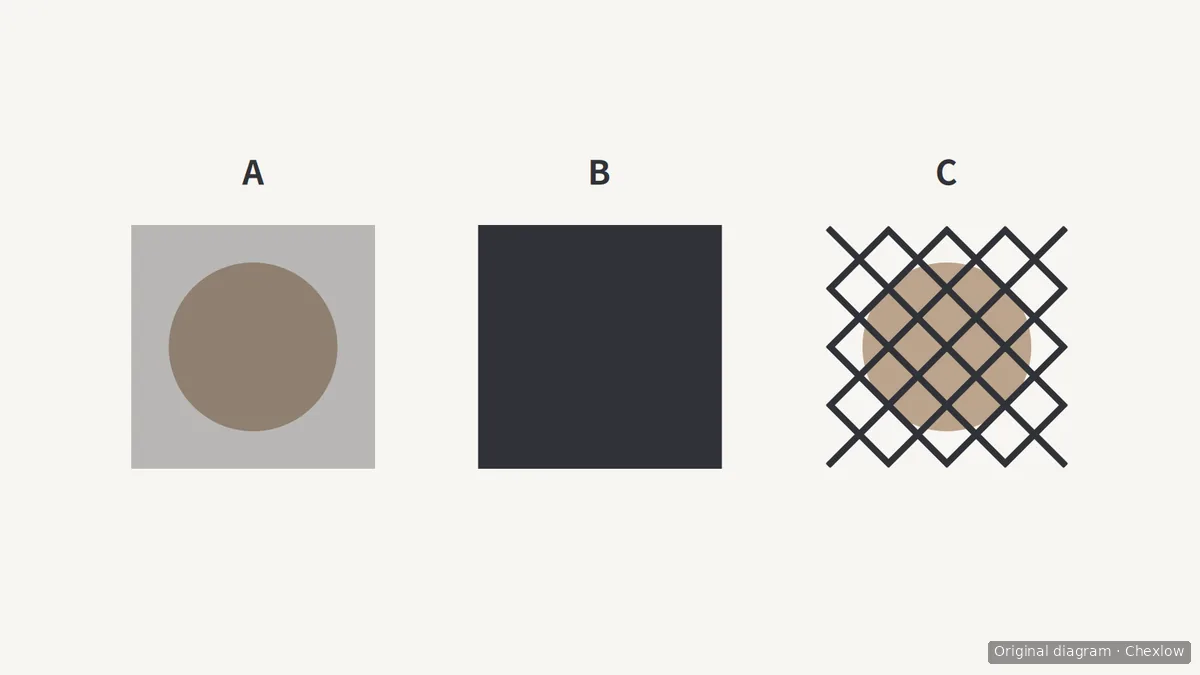
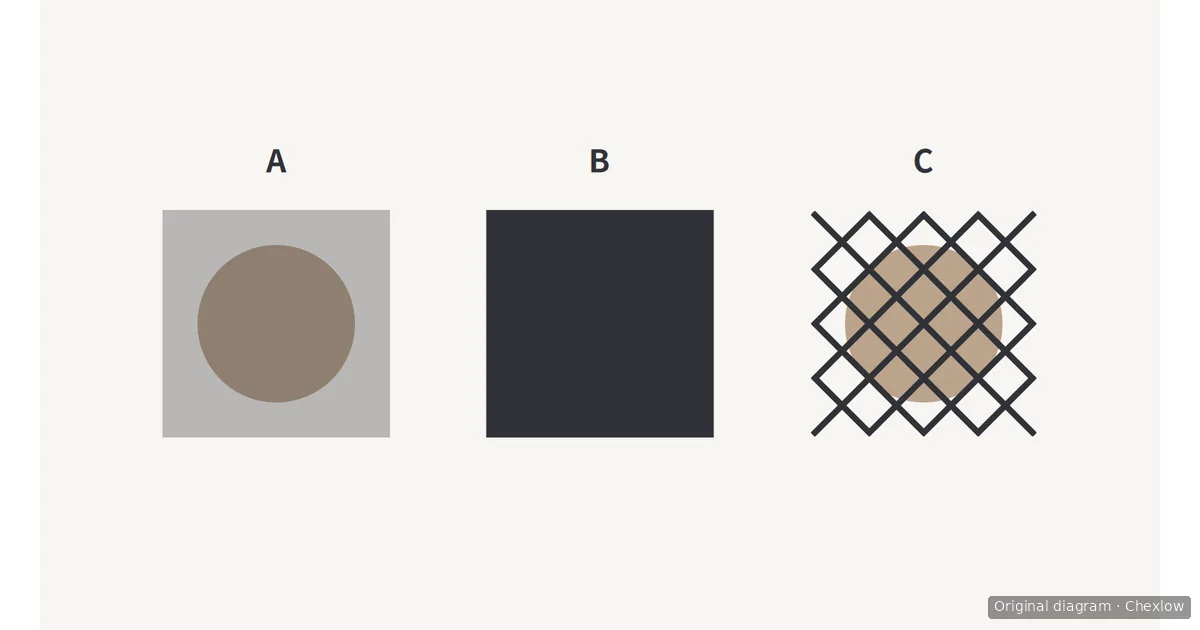
A represents a translucent layer; B represents continuous coverage; C represents visible openings in a mesh. These are conceptual examples, not measured denier samples, colour matches or warmth comparisons. For a patterned pair, inspect the open areas as carefully as the dark parts.
Cecilia de Rafael describes fishnet as an open mesh and explains that both sheer and opaque hosiery can be matte or glossy. Finish and coverage therefore need separate questions:
- Coverage: does the selected style leave skin visible where you want it covered?
- Colour: are the photographs showing the exact shade you intend to order?
- Finish: do you want a matte surface or visible shine with this dress?
For a concrete label example, FALKE’s Warm Deluxe page separately lists an 80-den appearance, opaque transparency and a matte look. Read these as distinct descriptions, not three meanings of the same number.
Choose the size before judging the result
Use the size chart for the particular pair and provide the measurements it requests. Do not choose a smaller size just to pursue coverage or assume your usual clothing size transfers directly.
The fiber label can clarify terminology: spandex is another name for elastane. Neither word tells you which size will fit your body, and a percentage is not a substitute for the product’s chart.
Before ordering, check whether the seller permits opening or trying on hosiery and what that means for returns. Where a permitted fitting is possible, try the pair with the intended dress, sit and bend your knees, and look at the areas where coverage matters to you. Check that the waistband and crotch position feel comfortable without repeated adjustment.
If the fit is uncomfortable or the visible result is wrong, reconsider the size or style. Do not turn an unsuitable fit into an automatic instruction to buy a higher denier.
Treat warmth as a separate requirement
FALKE describes the particular Warm Deluxe model as opaque and warming. That is a claim about that garment, not evidence that every 80-denier pair will suit the same weather. This guide does not convert denier into a minimum outdoor temperature.
For a cold-weather purchase, ask for the exact pair’s material, construction and intended-use information. Then consider your time outdoors and the clothes you will wear with it. If the real task is dressing for hiking, skiing or sustained outdoor activity, use the merino-versus-synthetic base-layer guide for that separate decision.
Before paying, you should be able to name the coverage, exact colour, finish and size you are choosing. If warmth also matters, require a separate garment-specific explanation rather than letting the denier number answer both questions.
Hoe deze gids is opgebouwd
Chexlow’s AI wrote this guide using hosiery terminology from Cecilia de Rafael, Penti’s denier guide and FALKE’s Warm Deluxe specifications. The selection advice separates visible coverage from warmth claims; it does not report original wear tests or measured thermal performance.
Original SVG diagrams created for Chexlow