What a passport wallet actually needs to hold
The specification for a passport wallet starts with the passport itself: a standard biometric passport measures approximately 125 × 88 mm and is 3–5 mm thick depending on the number of visa pages and stamps accumulated. The wallet's passport sleeve must fit this without bending the cover or the data page, and without requiring the passport to be forced into a sleeve that is slightly undersized.
Beyond the passport, the realistic packing list for a typical trip is: one to two boarding passes (which may be paper or may be managed on a phone, reducing the physical need), two to four payment cards (primary card, backup card, one or two currency-specific cards), local currency in one denomination set, and optionally a SIM card or a SIM card storage slot. That is the real load. Some travelers add a hotel key card; most hotel key cards are standard credit card size and fit any card slot.
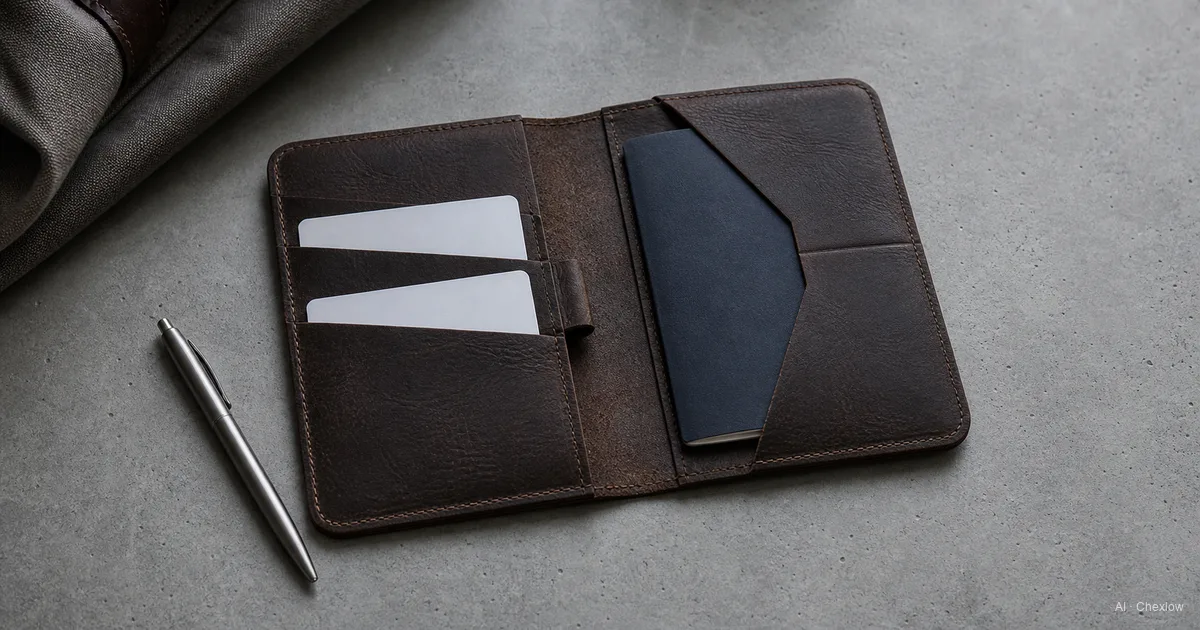
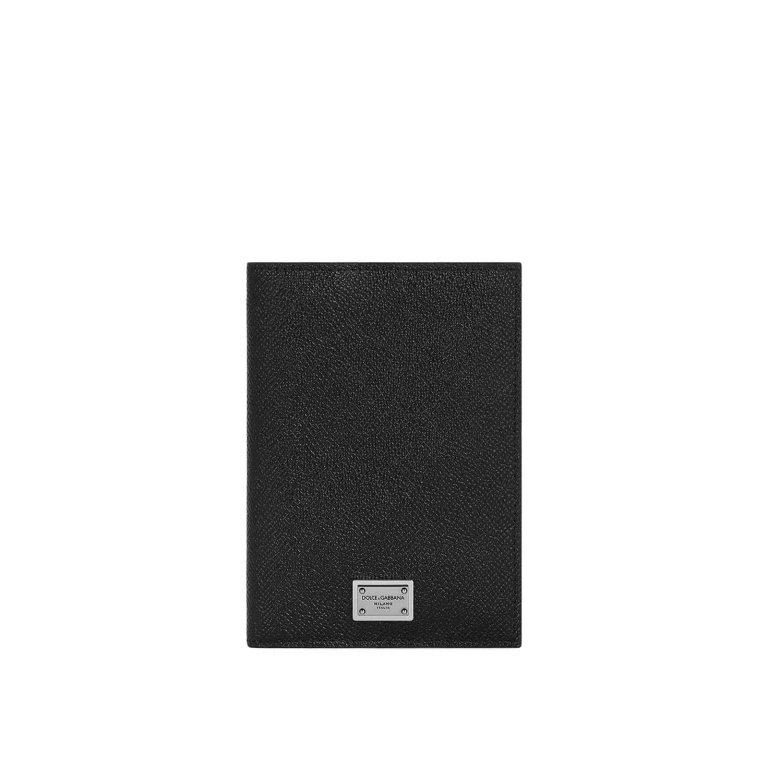
A wallet designed for this real load should have: one full-length passport sleeve with room for a boarding pass stacked behind the passport, three to five card slots (not twelve), a slip pocket or clip for folded cash, and nothing else. The best passport wallets are deliberately narrow in scope. If the product description mentions pen loops, zippered coin purses, or a full checkbook slot, you are buying more than you need and it will show in size and weight (Wirecutter, Best Travel Wallets, 2024).
Leather vs. nylon shell — durability, weight, and character
Leather and nylon represent two genuinely different approaches to travel wallet construction, and the better choice depends on your travel style rather than on abstract quality hierarchy.
Leather — specifically full-grain vegetable-tanned or chrome-tanned calf leather — produces a passport wallet that will last for years, develop a patina, and feel substantial in the hand. A leather passport wallet communicates care and permanence. The limitations are weight (leather is heavier than nylon of comparable thickness), sensitivity to water (a leather wallet dropped in a puddle or caught in a rain shower will water-mark and need immediate attention), and price. A well-made leather travel wallet from a credible maker typically starts around $80–150 USD (Ettinger, Full-Grain Leather Travel Wallet).
Nylon — particularly ballistic nylon (1050D or higher denier) or Cordura — is lighter, more water-resistant from the outset, and generally less expensive. A good nylon travel wallet will not care if it gets wet, can be wiped clean after a spill, and is easier to pack tight. The limitation is that nylon does not develop character over time — it ages through fraying and color fading rather than patina. For travelers who take many trips per year, frequently check bags in rain, or travel to environments where the wallet may get wet regularly, nylon is the more practical material.
There is no objectively correct answer. If you travel three times a year for business and want something that holds its look over multiple trips, leather. If you backpack, travel to rainy climates, or need something indestructible, nylon.
RFID blocking — real protection vs. marketing
RFID (Radio Frequency Identification) blocking is one of the most marketed features in travel wallets, and it is worth understanding what it does and does not protect against before making it a buying criterion.
Modern contactless payment cards and e-passports contain RFID chips that transmit data when interrogated by a reader at close range. The theoretical theft scenario is that a criminal with a concealed RFID reader could swipe card data or passport data by standing near you in a crowd. RFID blocking wallets contain a metallic mesh layer that attenuates the signal and prevents the chip from being read through the wallet.
The threat is real in theory but rare in practice. There are documented cases of RFID skimming, but they are uncommon compared to the volume of contactless transactions processed globally, and most contactless card standards include rolling security codes that make single-swipe data useful only for low-value transactions (The Points Guy, Is RFID Blocking Worth It?). E-passport data is encrypted and the chip is designed to require very close proximity.
The practical position: RFID blocking does not hurt anything, and if two wallets are otherwise equal, the one with RFID blocking is marginally better. But choosing a wallet primarily because of RFID blocking, or paying significantly more for it, is not warranted given the low real-world risk. Focus on fit, capacity, and material first.
Size and carry method — neck strap vs. pocket carry
The neck strap option (a lanyard attached to the wallet, worn under a shirt) is a travel security feature rather than a lifestyle choice. It protects against pick-pocketing and bag-snatching by keeping documents physically attached to your body. It is most useful in high-density tourist environments (popular markets, crowded transit hubs, certain urban areas known for bag theft) and when passing through security and customs, where having documents physically attached rather than in a bag reduces the risk of leaving them behind.
The limitations of neck carry are comfort (a wallet on a lanyard becomes uncomfortable over a full day, especially in warm weather), accessibility (getting to the wallet requires reaching under your shirt, which can be conspicuous), and appearance (the lanyard breaks the line of any outfit). For most travel situations, a deep front pocket carry with a compact wallet is just as safe and significantly more comfortable (Travel + Leisure, Best Travel Wallets).
A better approach for most travelers is to carry the passport wallet in the front pocket of a jacket, inner breast pocket, or a secure zippered pants pocket — and use a hidden neck pouch only during transit moments (airports, train stations) in genuinely high-risk environments. A wallet that works well in a jacket breast pocket (flat, no more than 2 cm thick when full) covers most travel scenarios without the discomfort of neck carry.
Interior organization — card slot count, SIM storage, and cash management
The card slot question should be answered by your actual carry needs, not by the wallet's maximum capacity. Three to four card slots accommodate: your primary payment card, one backup or travel card, an airport lounge card if you have one, and a temporary card like a transit card bought at the destination. If you have specific needs beyond this (multiple corporate cards, loyalty cards you use frequently abroad), five slots may be justified. More than five is almost always organizational wishful thinking that leads to a heavier wallet.
Card slots should be tight enough to hold a card without it falling out when the wallet is open and tilted, but not so tight that getting a card out requires two hands. The quality test: put your most-used card in the slot you will reach for most often, open the wallet, and tilt it at 45 degrees. If the card falls out, the slot is too loose. If you need to pry it with a fingernail, it is too tight.
A SIM card slot is a useful specific feature for international travelers who buy local SIMs. It should be a separate, small sleeve — not a card slot you sacrifice for SIM storage. Some wallets include a small flat tool for ejecting SIM trays, which is helpful if you regularly swap SIMs.
For cash, a full-length interior slip pocket is preferable to a money clip. A slip pocket holds folded bills without creating a visible exterior bulge and works across different currency note sizes (some currencies are significantly larger than US dollars or euros). A money clip is faster to access but creates bulk and does not organize mixed-denomination bills.
Security considerations when traveling
Document security on a trip comes down to three behaviors: keeping documents on your person rather than in checked luggage or left in a hotel room, distributing cards and cash so a single theft does not wipe you out, and having electronic backup of critical document data.
The passport wallet itself supports the first behavior: if you carry it, you have it. The distributing behavior means keeping your emergency card and some cash in a separate location from the passport wallet — an inner jacket pocket, a money belt, or a small hidden pouch — so that losing the wallet to theft does not leave you with no funds and no ID.
Electronic backup means photographing your passport data page and visa stamps, uploading to a secure cloud location, and also emailing copies to yourself. This is not a substitute for the physical document in most countries, but it significantly accelerates the replacement process at the nearest consulate or embassy. Some travelers also carry a photocopy of the data page in a separate bag section.
Hotel room safes are appropriate for storing your passport when you are exploring a city and do not need it for that activity. However, do not leave your only payment card in the safe — keep at least one card accessible on your person at all times (U.S. State Department, Smart Traveler Enrollment Program Tips).
Sources
- Best Travel Wallets, Wirecutter 2024 — capacity needs, material comparison, RFID assessment
- Ettinger Full-Grain Leather Travel Wallet — leather travel wallet quality standard
- Is RFID Blocking Worth It?, The Points Guy — RFID threat analysis, real-world risk
- Best Travel Wallets, Travel + Leisure — neck carry vs. pocket carry, security considerations
- Smart Traveler Enrollment Program Tips, U.S. State Department — document security overseas