Check the sole before reaching for water
Take the shoes off and examine both soles under good light. Locate the trapped stones, packed dirt and any splits or lifting edges before you start; a quick photograph gives you a useful comparison afterward.
Check the exact shoe’s care instructions before choosing a cleaner. REI’s hiking-boot guide includes clearing trapped pebbles and checking cleaner compatibility, but its boot-cleaning methods are not blanket permission to soak everyday shoes.
This guide covers accessible dirt in external tread grooves. If an object appears to penetrate the sole, or removing it would require opening a cut or levering rubber apart, stop and ask the manufacturer or a shoe repairer to assess it.
Brush the grooves and release loose stones
Start with a dry, soft-bristled shoe brush. A clean spare toothbrush can reach a small groove; Nike recommends both options for loose dirt. Use a suitable brush you already own before buying another one.
- Clear the surroundings. Brush loose soil away so you can see the stone’s edges and the groove around it.
- Remove what releases easily. Brush out loose pebbles. Pick up a plainly visible loose stone only if you can grasp it without digging into the sole.
- Stop at resistance. If the stone stays wedged or the rubber moves with it, do not increase force. Leave it for assessment rather than pushing a tool underneath it.
For this home-cleaning method, do not use a knife, needle, metal pick or wire brush. Do not cut a wider channel around a stone or carve new grooves into a smooth patch. The aim is to remove foreign material while leaving the sole itself intact.
Wash remaining dirt only as the shoe permits
If dry brushing leaves packed soil, use the shoe maker’s permitted cleaning method. For compatible sneakers, Nike describes warm water with a small amount of mild detergent or dish soap, applied with a brush or cloth in its shoe-cleaning instructions. That is a dilute cleaning solution, not an instruction to pour concentrated detergent into the grooves.
Work on the dirty sole area, then remove the dirty solution and any cleaner residue as the shoe and cleaner instructions require. Keep upper-material care separate. A footwear cleaner is only useful here if its label and the shoe’s instructions agree; an appropriate cleaner already at home does not need replacing with a kit.
Let the shoes dry completely before wearing them. Salomon’s hiking-shoe guidance specifies room-temperature drying with ventilation, away from sun and excessive heat. For this guide, use that gentle drying approach rather than trying to finish the job beside a radiator, while following any more specific instructions for your pair.
Decide whether you uncovered a groove or found wear
Compare the same areas after cleaning and drying. Look at the forefoot and heel separately, and check both shoes.
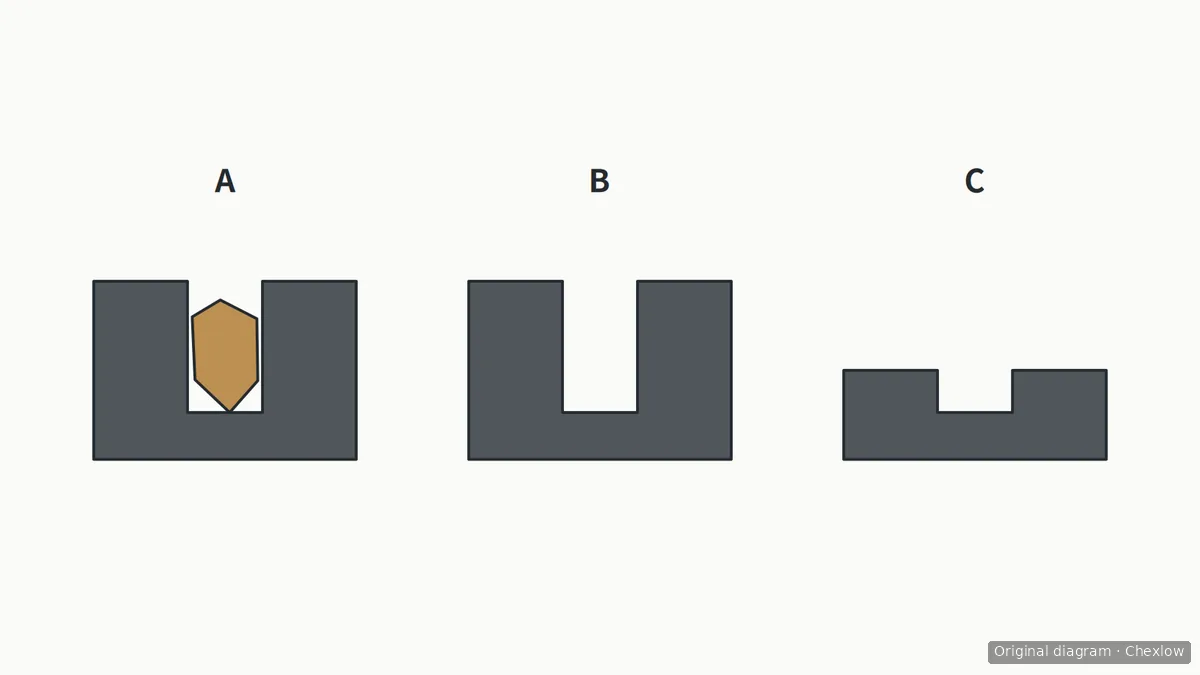
A and B illustrate debris removal: the groove’s rubber edges remain in place. C is a separate wear example, not the result of cleaning B. The drawing is schematic, without a wear-depth threshold, and cannot establish how much grip a shoe has.
- Debris cleared. The obstruction has gone and the existing groove is visible again. You do not need to keep scrubbing simply to make the rubber look new.
- Possible wear. A patch remains shallow or smooth because material appears to be missing. Compare with an earlier photo or the exact model’s original sole image if you are unsure whether that shape was there from the start.
- Damage or uncertainty. A hole, split, lifting sole edge or stubborn embedded object is a reason to stop home cleaning and request an assessment. Do not disguise it with a coating or more aggressive scraping.
ASICS distinguishes tread debris removal from running-shoe replacement signs, including an outsole worn through to the midsole, and says there is no single replacement time for every runner. Do not turn that running-shoe advice into a universal age limit for everyday footwear. A clean sole is not proof of restored grip or suitability for a slippery surface.
If the pair is a leather dress shoe and the remaining question concerns heel or sole repair, continue with deciding when leather shoes need a cobbler. Ask what can be repaired on the actual pair before choosing repair or replacement.
Hoe deze gids is opgebouwd
This guide was written by AI for Chexlow, using footwear-care guidance from Nike, Salomon, ASICS and REI. It separates the sources’ sneaker, hiking and running contexts from our cautious home-cleaning boundaries; no original cleaning or grip tests were performed.
Original SVG diagrams created for Chexlow