Decide what “defined” means to you
Is it a clearer arch and tail, or less visible space between the hairs? Those are different goals, even though both can make a brow look more defined.
- A more deliberate outline. Put pomade on your shortlist. Anastasia Beverly Hills’ DIPBROW guide describes sculpting the shape with precise, hair-like strokes.
- A softer fill through gaps. Start by comparing brow powders. Jane Iredale describes PureBrow Brow Powder as giving a soft, diffused look.
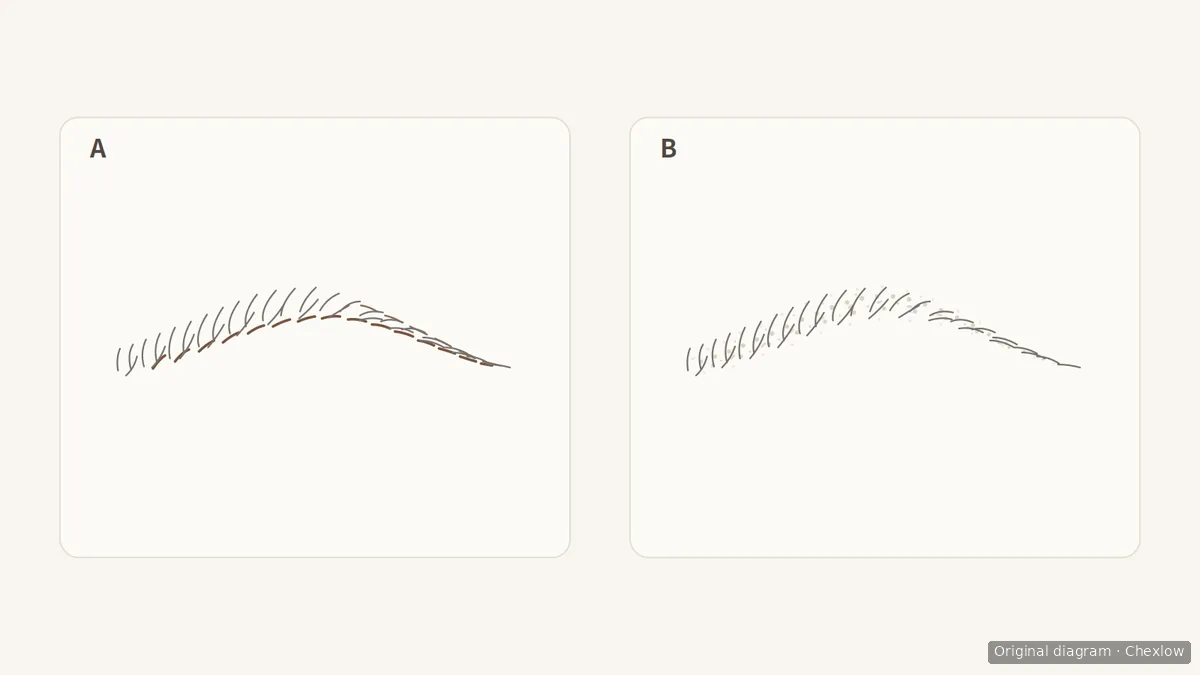
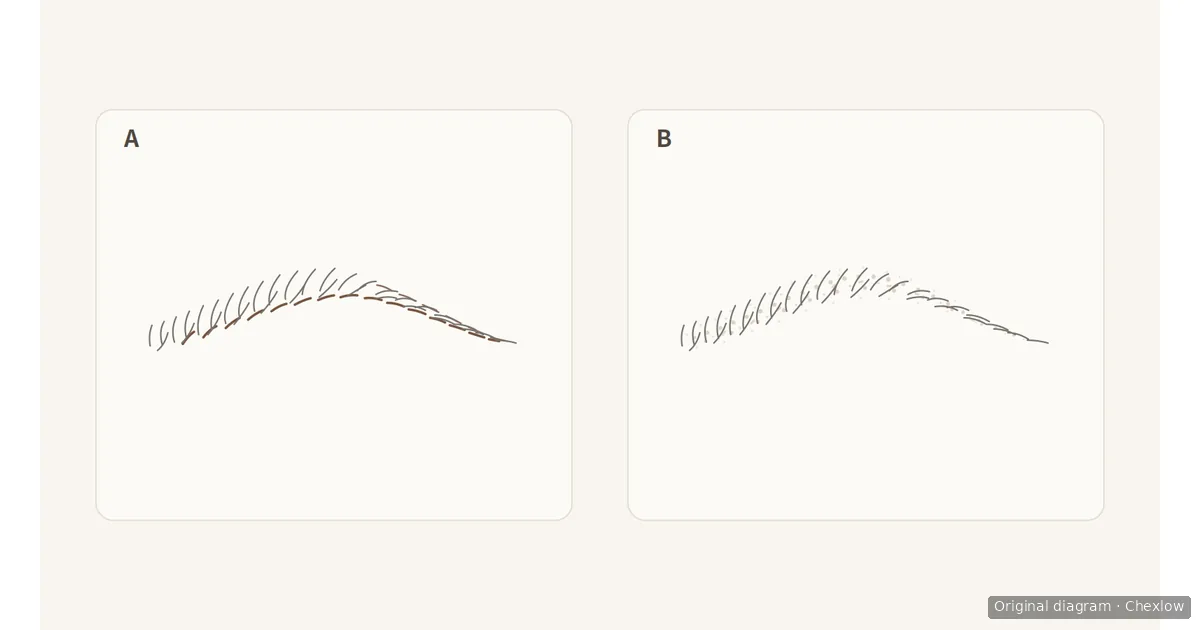
A represents emphasis on the outline; B represents softer filling between hairs. These are drawing goals, not before-and-after results or guaranteed finishes from a product.
There is overlap. ABH’s Brow Powder Duo guide describes buildable intensity, while its pomade instructions include blending for a natural finish. Do not reject powder just because you want definition, or assume pomade must look heavy.
Compare the brushwork before buying
Both of the ABH methods below use an angled brush to place color and a spoolie, the small spiral brush, to blend it. Check what you already own before adding a tool; if you need one, look for an angled brow brush suited to your chosen formula, with a spoolie available separately or on the other end.
With DIPBROW pomade, ABH recommends its thin, angled Brush 12. Work a small amount across the lid to distribute it on the brush. Begin at the highest point of the brow with light pressure, work toward the tail, then use what remains on the brush at the front. Blend as you go; the guide also recommends a spoolie when you have applied too much. These are DIPBROW’s application directions, not a fixed dose for every pomade.
With Brow Powder Duo, ABH uses the angled side of Brush 7B to take the deeper shade from the high point toward the tail. The lighter shade goes through the front with light pressure, followed by spoolie blending. The two complementary shades let you vary the depth; this is a method for that duo, not a requirement to buy two colors with every powder.
Choose the process you want to repeat: controlling a small pomade load and drawing detail, or placing and blending powder through the brow. You do not need both formats to make that decision.
Check the shade and the exact wear claim
Compare a lightly applied swatch as well as a stronger one. Ask whether the color works where you intend to use it: through the front, in gaps or along the tail. With a duo, decide whether both shades have a job; a second pan is useful only if you want its different depth.
Keep wear claims separate from texture. ABH describes DIPBROW as waterproof and smudge-proof. That is the maker’s claim for this formula, not evidence that every pomade outlasts every powder.
If water resistance matters to your purchase, look for an explicit claim on the exact candidate. A soft-looking finish does not answer that question, and neither does the word “pomade.”
Finish the purchase with application and removal in mind
Before ordering, confirm the shade, application tool and removal directions for the product you have selected. Start with one format that serves your main goal; add another only if there is a specific effect you still want. This comparison concerns makeup definition, not a treatment for brow growth.
Keep the brush clean. When sampling in a shop, ask for a single-use applicator, and check the ingredient list if you need to avoid a particular ingredient. FDA eye-cosmetic guidance also advises stopping immediately if a product causes irritation and seeing a doctor if it persists.
If you have chosen your brow makeup but still need a suitable remover, continue with micellar water versus cleansing balm. Match the remover to the makeup and the method you prefer rather than automatically adding another cleansing step.
Como este guia foi construído
Chexlow’s AI wrote this comparison using manufacturer descriptions and application guides from Anastasia Beverly Hills and Jane Iredale, plus FDA eye-cosmetic guidance. The selection advice distinguishes drawing an outline from softly filling gaps; it is not based on our own product testing. The illustration is a conceptual drawing, not evidence of a particular formula’s results.
Original SVG diagrams created for Chexlow