Decide where you will wear them
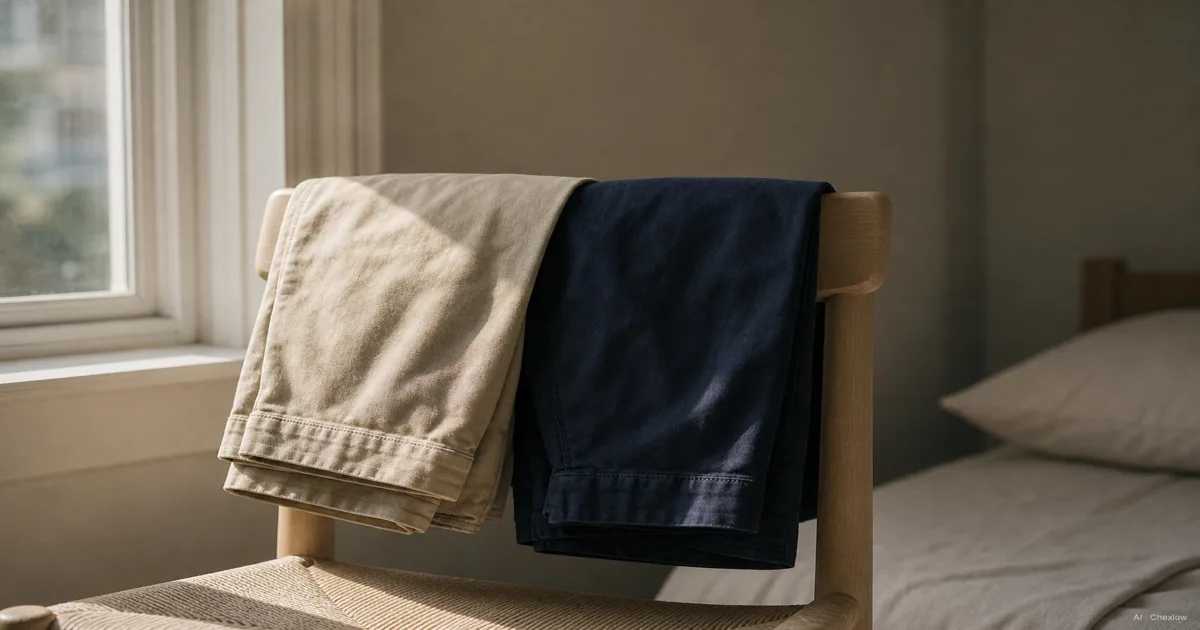
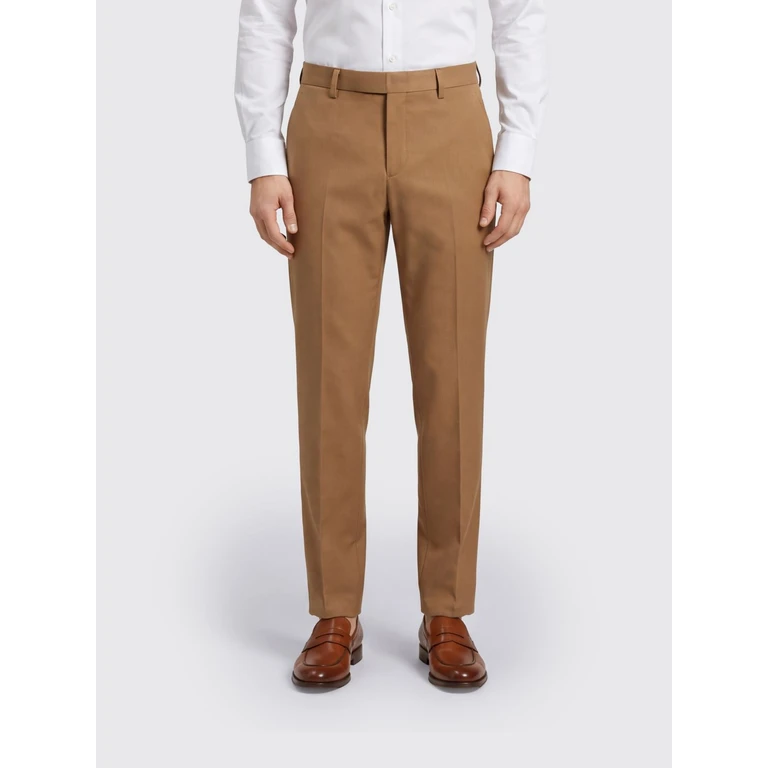
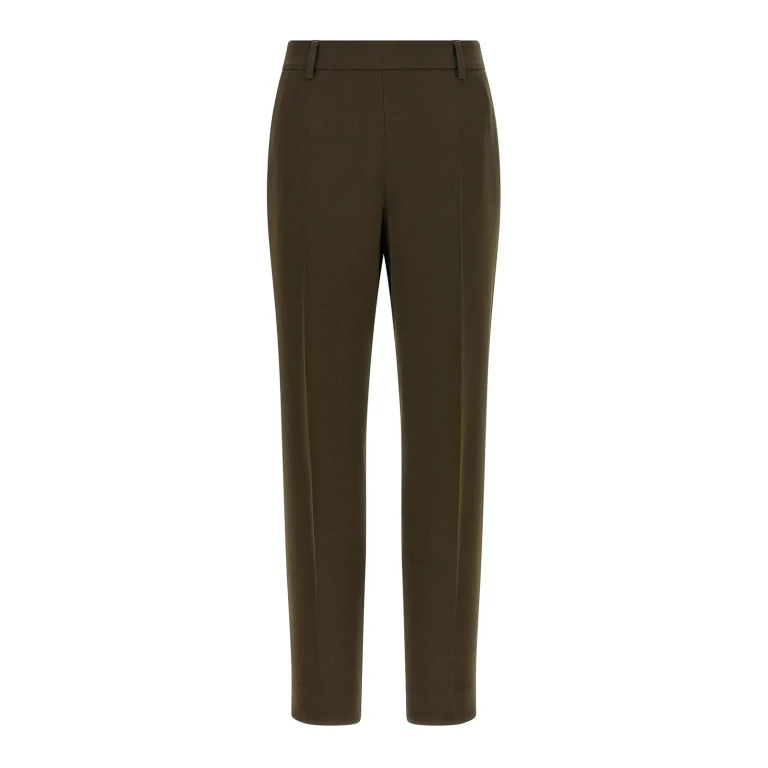
Pick a real outfit before picking a colour: one shirt and one pair of shoes you already own. Try navy, beige or olive against those pieces rather than buying a supposedly universal shade.
If this purchase is for work or an event and you are unsure how formal the trousers need to be, settle whether chinos or dress pants suit the occasion first. Check the actual dress code before treating either as a substitute for a required suit.
One naming trap is easy to avoid. Khaki is a colour name, but khakis is also used for trousers, sometimes regardless of colour. Read the listing's colour and fabric fields separately. Khaki terminology.
Compare leg shapes without guessing your body type
Start with two cuts in a similar waist size so you can see what changes. You do not need to decide whether your body is a “slim” or “straight” body.
- Slim: try it if you want the trousers close to the leg, then check that sitting is comfortable.
- Straight: try it if you want a less narrowed lower leg.
- Tapered: try it if you prefer a narrower ankle, but check the thigh room separately.
That last distinction matters: Dockers' fit guide includes both slim tapered and roomier athletic tapered fits. A taper does not promise a roomy thigh.
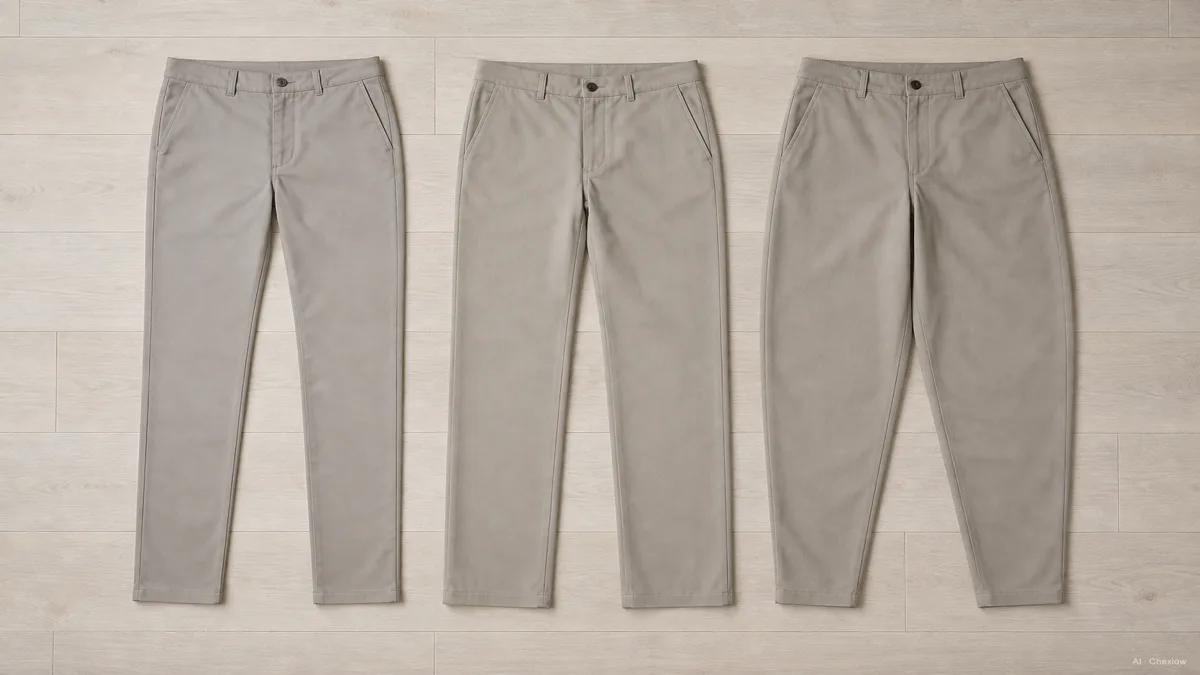
Use the illustration to compare the leg outlines, not to estimate a size. For an online shortlist, look for thigh and hem measurements as well as waist size; ask the seller whether the chart describes the body or the garment.
Try them sitting down before judging the hem
Fasten the trousers at the height where you intend to wear them, without tightening a belt to hold them up. The waist should stay in place without squeezing. Black Lapel's waist guidance.
Now sit, bend your knees and stand again. Check for discomfort at the crotch and upper thigh. Rise is the length between the crotch and waistband; the front and back together affect how the trousers sit. Proper Cloth's fit advice treats comfort and preferred waist height as the deciding factors.
Use this as a fitting-room decision:
- Waist works, upper leg feels trapped: compare a cut with more room there before simply sizing up.
- Waist works, crotch stays uncomfortable: try another rise or cut.
- Everything feels comfortable except the length: fold the hem temporarily and assess it with your usual shoes.
For a neat first pair, aim for the hem to touch the shoe with little or no folding at the front. That is a styling starting point, not a rule against longer or cropped trousers.
Read the cloth, not a quality score
Twill is the weave with diagonal lines shown below; plain weave alternates over and under successive yarns. The illustration explains that difference, not fabric quality. CottonWorks' weave guide.
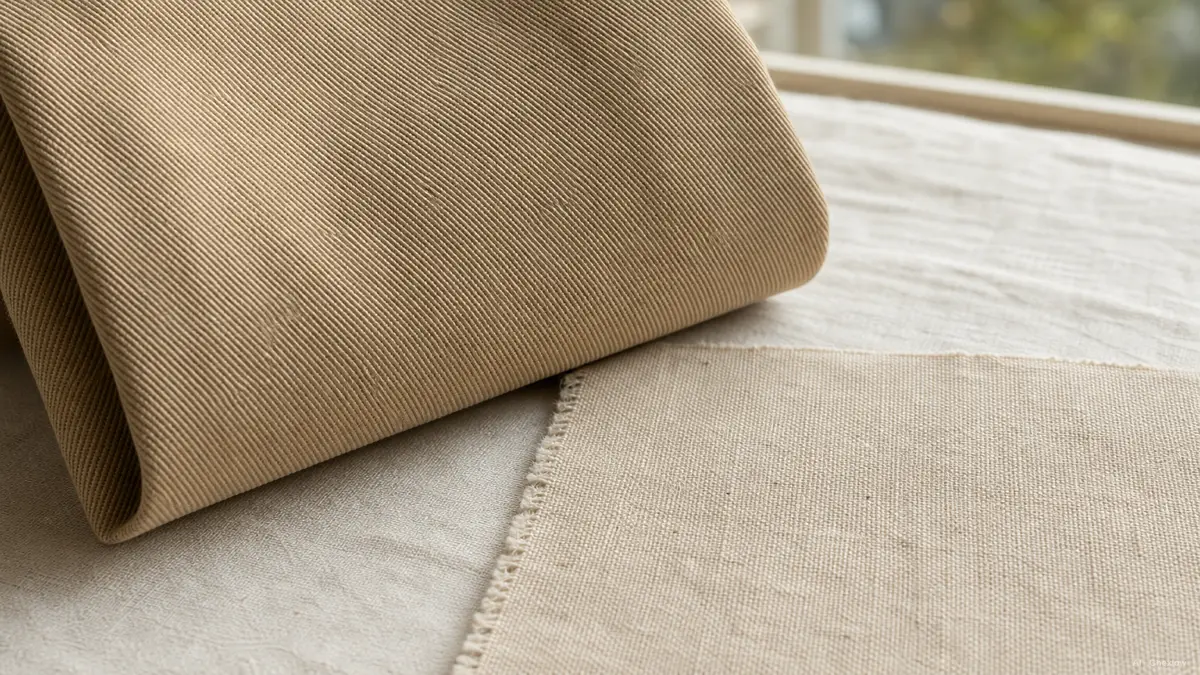
Do not reject a listing solely because its cloth looks smoother. For example, ASKET's Slim Chino specifies sateen construction and 98% cotton with 2% elastane. “Chino” on a product page is not a complete weave specification.
Choose between candidates by asking three practical questions:
- Movement: do you prefer the feel of the stretch version or the non-stretch version when seated? Compare them in a similar cut.
- Coverage and feel: does the cloth feel suitable for where you will wear it, and do pale colours show more than you want?
- Appearance: do you prefer this surface and drape with your chosen outfit?
Record fabric weight if provided, but do not use a single weight range as a pass/fail test. Likewise, check the fibre label instead of guessing composition from shine.
Keep, exchange or plan the alteration
Shortlist the chinos that pass the outfit, movement and fabric checks. Compare their measurements, composition, washing instructions and return terms before price breaks the tie.
Keep a pair that works as it is. Exchange or try another cut if you are relying on future stretching to make it comfortable. Consider hemming when the fit works and only the length needs attention; get the cost before committing.
Read the care label before washing or altering anything you may return. Once you decide to keep a washable pair, follow its prescribed wash and drying method and reassess the length before the final hem. Construction and processing affect shrinkage, so a blanket “allow 3–5%” rule is not a sound sizing method. CottonWorks on shrinkage.
Drying instructions also belong in the buying decision. ASKET's cited chino prohibits tumble drying; its broader cotton-care guide recommends air drying and checking the individual item's instructions. If that routine will not work for you, choose a pair whose label does.
Como este guia foi construído
Written by Chexlow's AI editor using CottonWorks textile guidance, manufacturer fit and care information, and Wikipedia for terminology. The try-on sequence and shortlist criteria are editorial recommendations for a first purchase; no hands-on product testing was conducted.
Editado pela equipe Chexlow · As imagens são ilustrações geradas por IA