
Choose for the walk you actually take
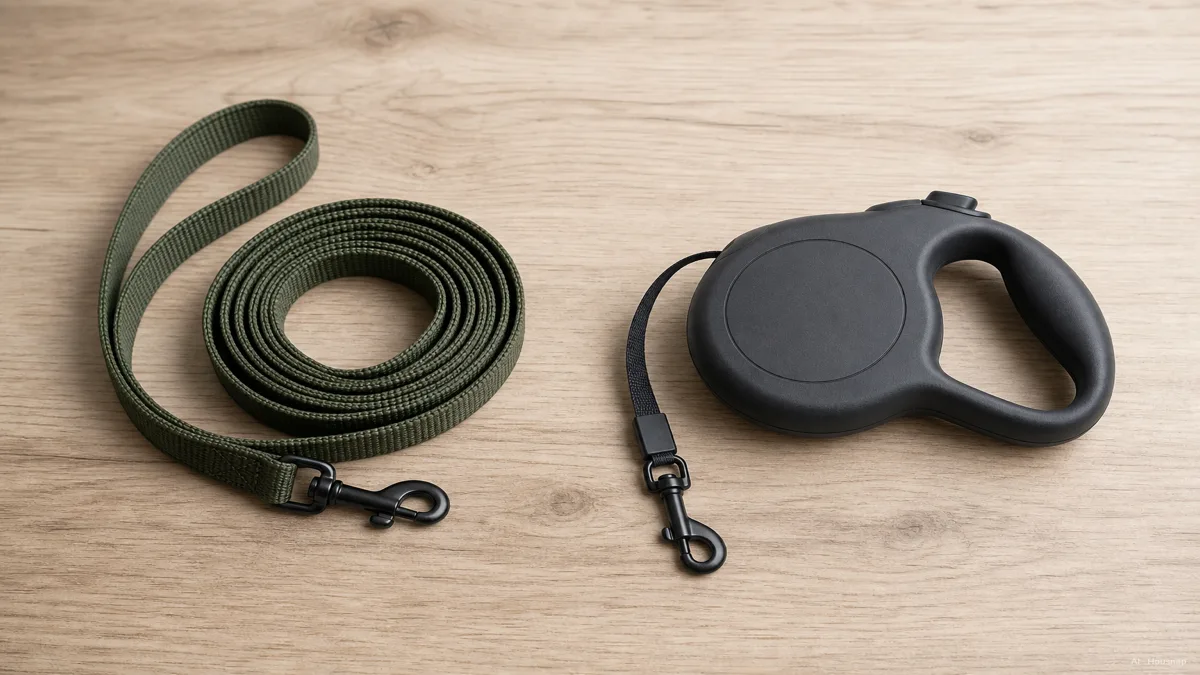
A standard fixed leash has no automatic payout; a retractable leash feeds cord or tape from a handle. Extra reach is useful only when you have somewhere appropriate to use it.
- Learning to walk together or sharing busy paths: put a fixed leash first on your shortlist. AKC recommends a 4–6-foot nylon leash for initial leash training.
- An already controllable dog exploring open space: a retractable leash remains an option, provided you can keep the dog and line clear of others.
That first-buy preference is an editorial judgment, informed by AKC’s leash guide, rather than a promise that fixed leashes cannot fail. You need not buy both before discovering what your normal route requires.
Decide where extra reach must end
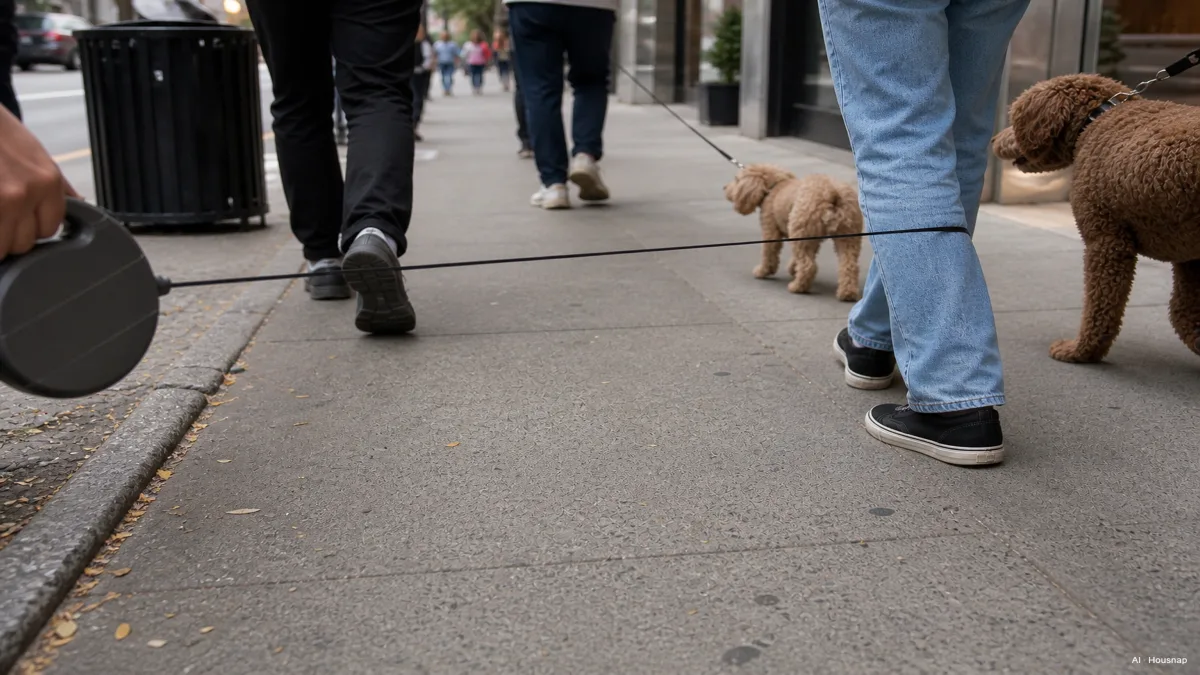
Picture the whole route, including the narrow path to the open field. If most of it requires your dog close by, a retractable mechanism offers little benefit for that outing.
With a flexi, shorten and lock the leash when people or animals approach; never grab or wrap its cord or tape around yourself. These are manufacturer precautions, not something an empty field makes unnecessary.
Hardware deserves attention too. The CPSC’s SlyDog recall concerned metal-clasp failure and recoil; plastic-clasp versions were excluded. It documents a particular defect, not the relative accident rate of every leash type. Neither “metal clip” nor “wide tape” is a safety guarantee.
Check the actual leash before buying
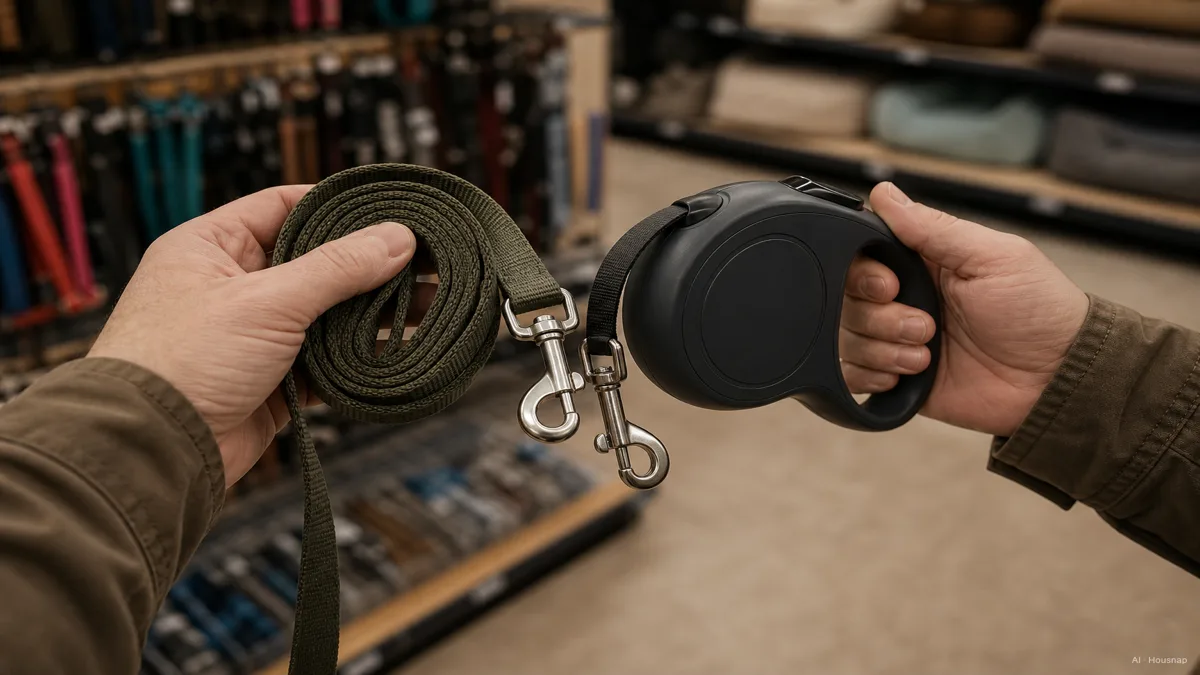
Compare a specific size and its instructions, not just a product-family photograph.
- Length and grip: use the training length above as a starting point. Hold the handle and consider the space you will share, rather than choosing the longest option available.
- Rating and attachment: check the dog-weight limit and intended attachment point. The flexi tape-leash instructions specify a D-ring, not an ID-tag ring, and require the supplied safety collar.
- Controls: ask for a demonstration of stopping, locking and releasing the exact model. If you cannot operate it confidently, keep the fixed option on your shortlist.
Still choosing what the leash will attach to? Read the Y-shape versus H-shape harness guide to work through that separate fit decision before completing the walking setup.
Make the first walk a handling check
Buying a fixed leash does not teach loose-leash walking. Start somewhere quiet, reward your dog for staying nearby, and pause when the line tightens without jerking it back. Dogs Trust explains the training approach.
For a retractable leash, learn its instructions before taking it onto a busy route. Inspect it before each use; flexi says to stop using damaged cord or tape and not to open the housing. Its safety guidance is the reference for those checks.
If handling the dog or controls feels uncertain, return to the fixed-leash setup and a quieter route. More reach can wait.
Como este guia foi construído
AI wrote this guide for Chexlow using AKC’s leash guidance, flexi’s instructions, a CPSC recall notice and Dogs Trust’s training advice. It compares first-purchase choices and handling checks; the fixed-first recommendation is editorial judgment, not a product test or a claim of new human review.
Editado pela equipe Chexlow · As imagens são ilustrações geradas por IA