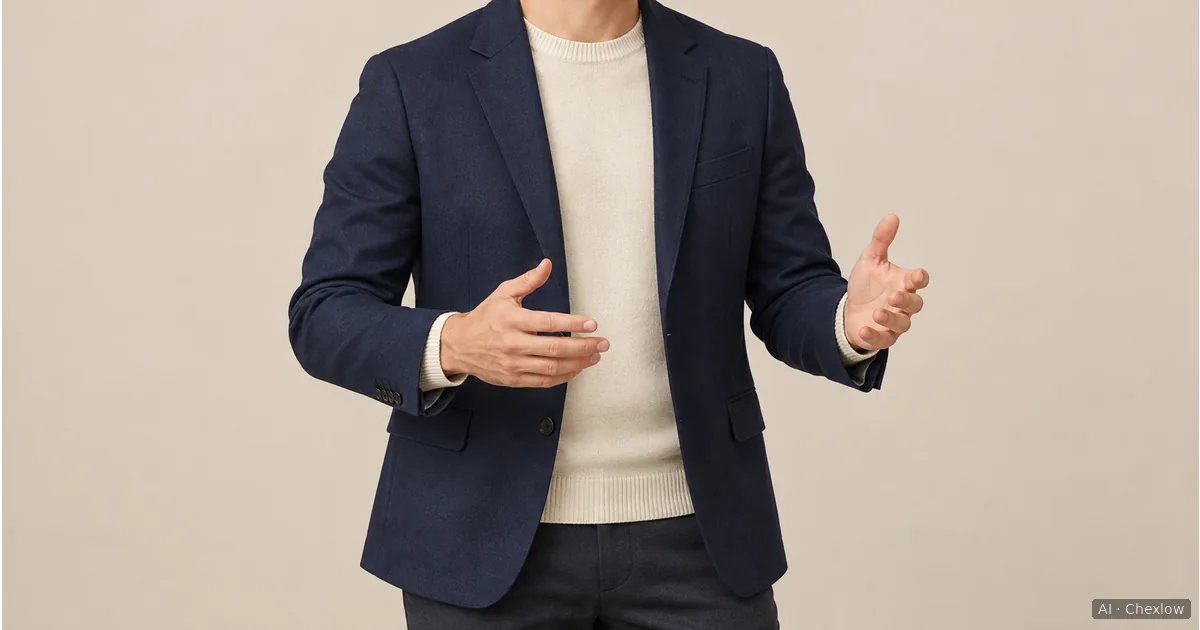

Shortlist the construction, not just the fibre
Use a thin, relatively smooth knit as your starting candidate. A wool name alone does not answer whether the finished sweater fits inside your jacket.
Gauge describes knitting-machine needles per inch. John Smedley's fit and gauge guide describes its 30-gauge knit as thin and lightweight and its 24-gauge fabric as somewhat thicker. These are useful comparisons within that maker's range, not a universal minimum gauge for wearing a blazer.
Check the details separately. The Ellair product description, for example, combines a lightweight knit with a fashioned collar, V-neck and shaped rib details. “Lightweight” does not tell you the whole outline of the garment. Look at the neckline, shoulder seams and cuffs before shortlisting it.
For a pale sweater, also check coverage over your intended underlayer. John Smedley notes some transparency in pale colours of its 30-gauge knit; do not discover only after buying that you want an extra layer underneath.
Compare measurements with a sweater that already works
If you own a sweater that fits comfortably under this blazer, use it as a reference. Compare garment chest, sleeve length and body length using the seller's measuring method, without stretching the knit.
First identify what the size chart measures. Charles Tyrwhitt's knitwear chart separates your chest from the garment chest. A body measurement and a finished-garment measurement are not interchangeable.
The John Smedley guide measures chest 2.5 cm below the armpit and its underarm sleeve length from the underarm to the sleeve hem. Follow those conventions only when comparing with that chart; ask another seller where its measurements start and finish.
Read the fit description too. John Smedley's Common Fit has a slightly dropped shoulder line and room in the armholes and body. That is a reason to inspect where the extra fabric sits under your jacket, not to reject every relaxed sweater. Ask for upper-arm or cuff measurements if those are the areas that usually feel crowded.
Try the cuffs, shoulders and front together
Wear your planned shirt or T-shirt, put on the sweater and settle its sleeves before adding the blazer. Compare candidates with the same jacket and underlayer.
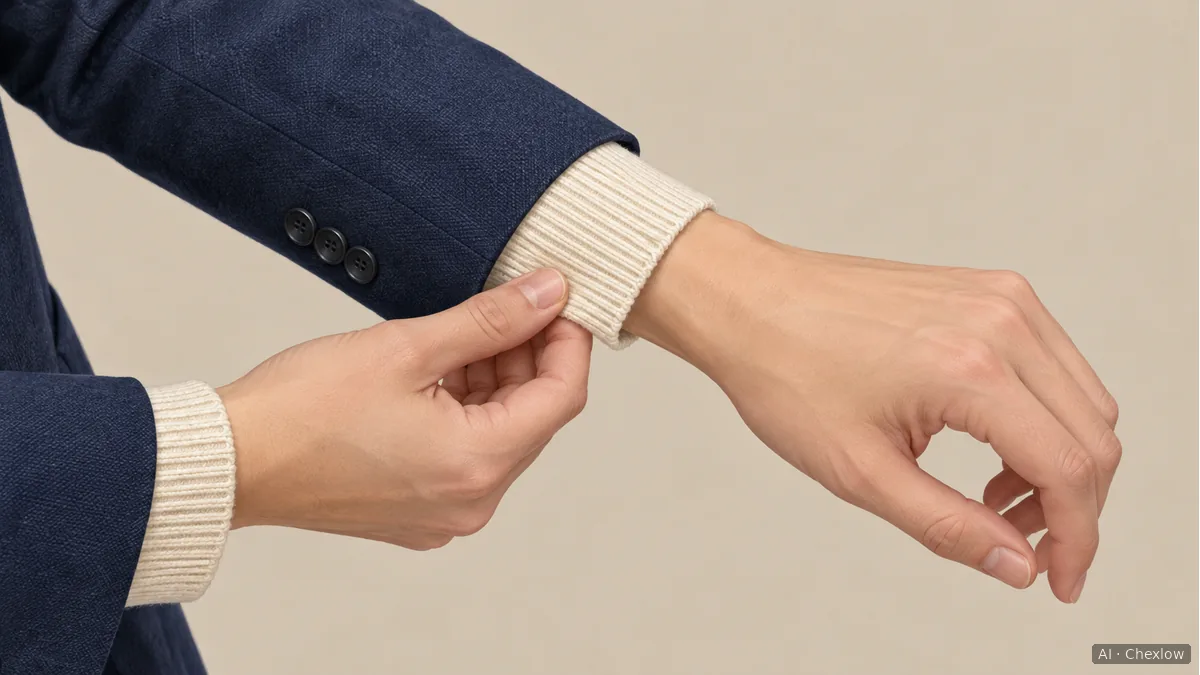
The illustration shows straightening the cuff, not proof that the combination fits. Leave the cuff arranged as you would actually wear it, then check the whole outfit:
- Wrists and elbows. Bend both arms. Notice whether the cuff forms an uncomfortable roll or the sweater repeatedly bunches inside the jacket sleeve. If you must fold the cuff to control its length, repeat the check with that fold.
- Shoulders and upper arms. Reach forward as you would at a desk. If the combination restricts you, remove the blazer and repeat the movement in the sweater alone. Compare again with your reference sweater to locate the problem.
- Front and neckline. Fasten the blazer as intended while standing, then sit in your normal wearing arrangement. Reject a combination that needs tugging into place or feels compressed at the chest, neck or upper arms.
If the body and sleeves work but a higher collar is still undecided, compare turtlenecks and mock necks.
Change the failed feature before changing the size
A tight sweater on its own calls for a different size or cut. A comfortable sweater that becomes crowded only under the blazer calls for comparison with a thinner knit, less sleeve volume or a different cuff. Do not automatically size down until the outfit merely looks flatter.
Keep a candidate when it works both alone and with the blazer, including the way you actually move and arrange the cuffs. If the blazer already restricts you over your usual thin top, reassess that jacket's fit before buying a sweater to solve it.
For an online order, obtain missing measurements and cuff photos, then check care instructions and return conditions. Measurements narrow the choice; they do not establish the final layered fit.
Once fit is settled, if the remaining choice is the fibre, continue with merino, lambswool and cashmere.
Como este guia foi construído
AI wrote this guide for Chexlow using official knitwear sizing, fit and product descriptions from John Smedley and Charles Tyrwhitt. The comparison and try-on sequence are editorial guidance for choosing a sweater for an existing blazer, not original garment testing or a guarantee of compatibility.
Editado pela equipe Chexlow · As imagens são ilustrações geradas por IA