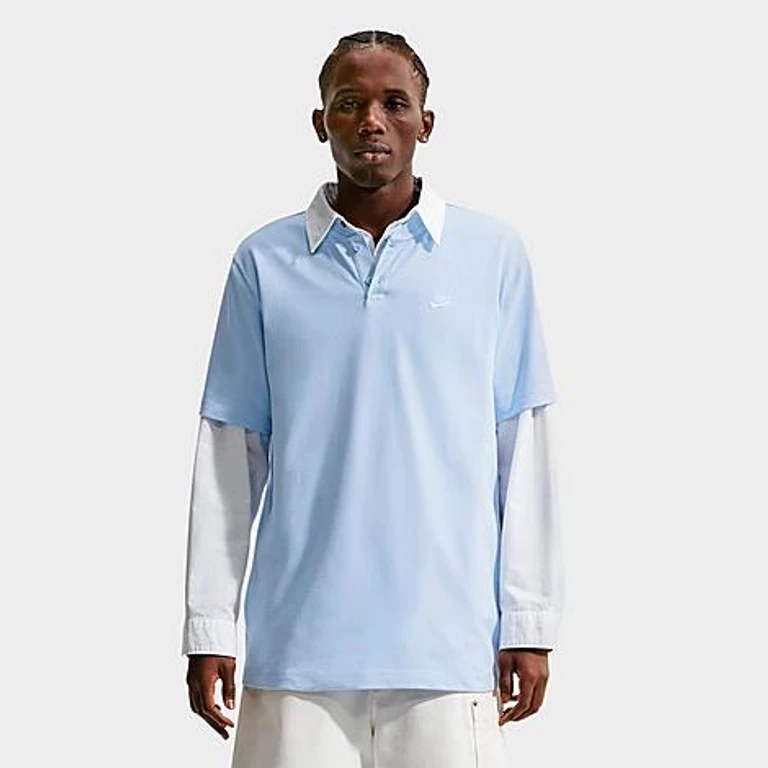
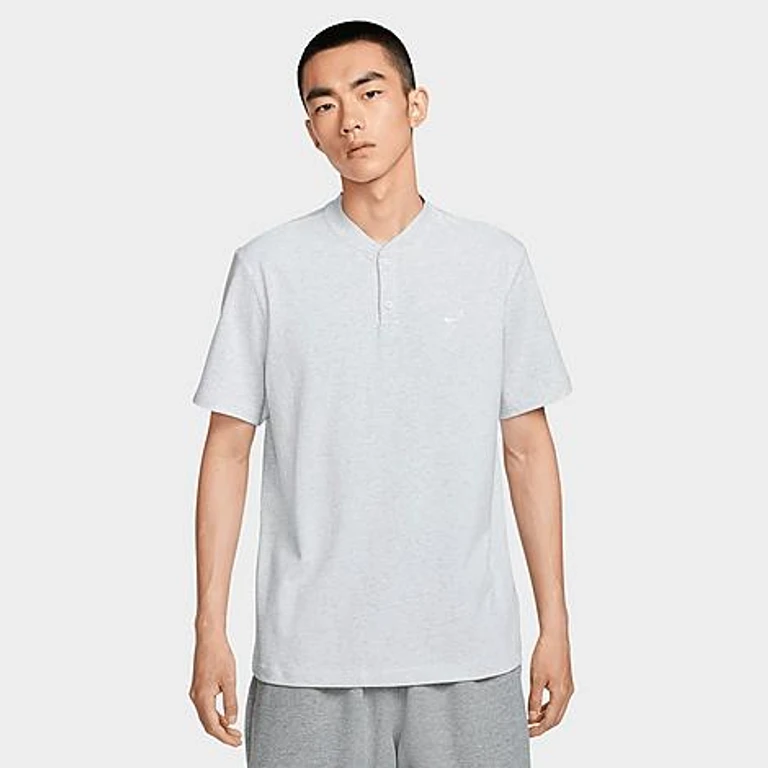
You reach for a henley because it promises to be a slightly dressed-up t-shirt, something you can wear alone or under a jacket without looking like you tried too hard. Then it arrives and the placket gaps open when you sit down, the sleeves stop short of your wrist, or the fabric is so thin it clings and shows everything underneath.
None of that is bad luck. It is a handful of details that plain t-shirt shopping never trained you to check, plus a fabric weight number that most product pages bury or skip entirely.
So before color and brand, let us read a henley for what it actually is.
What Makes a Henley a Henley (vs. a T-Shirt)
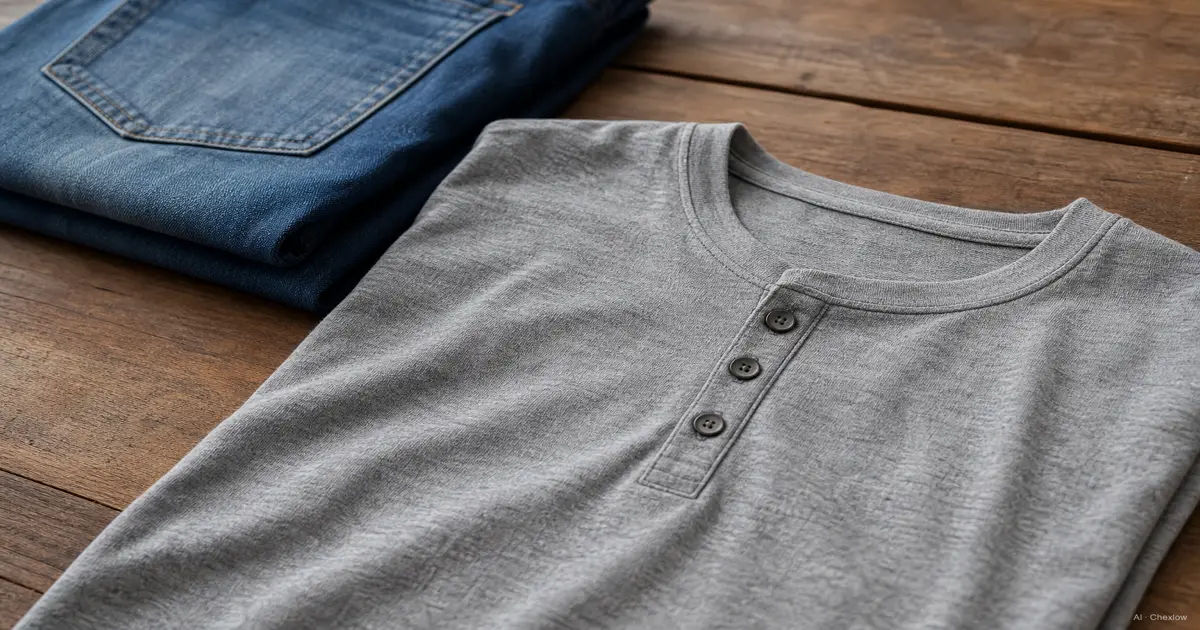
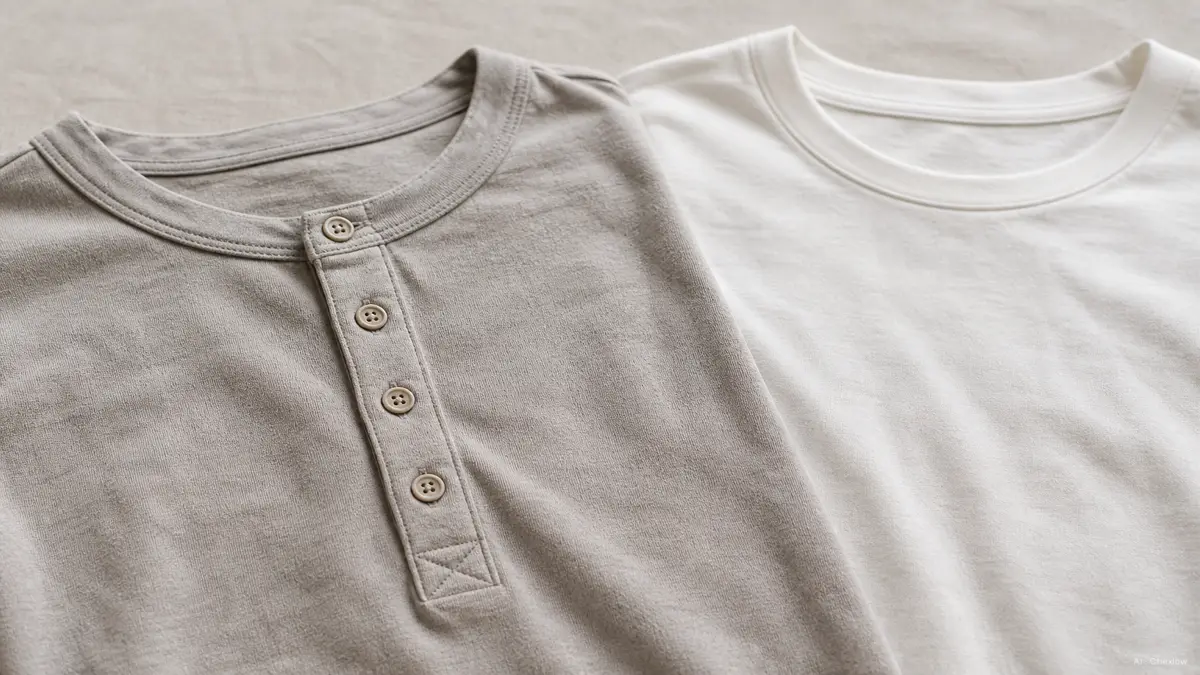
A henley is defined by one feature: a placket of two to five buttons running down from the collarless neckline (Henley vs T-Shirt, mensfashioner.com). A plain crew-neck or V-neck tee has no placket and no buttons at all. That is the entire structural difference, and it is also the entire point.
The name comes from Henley-on-Thames, the English town that has hosted the Henley Royal Regatta since 1839. Rowers wore an early, undershirt-style version of the garment as their uniform, prized for how much air the open placket and collarless neck let in during a race (The History of the Henley Shirt, Heddels). For roughly the next 150 years, the henley stayed filed under sportswear and undergarments. Ralph Lauren's slimmer, more refined 1976 take is widely credited with pulling it into mainstream fashion, which is the version most people actually picture today (The History of the Henley Shirt, Heddels).
That placket still does the same job it did on the river. Buttoned up, the shirt reads clean and closed, close to a t-shirt in formality. Unbuttoned one or two, it opens the neckline for more airflow and a slightly more relaxed look. A crew-neck tee cannot do either of those things; it only has the one setting.
How to Judge Fit: Shoulders, Sleeves, Length, Placket
A henley is easy to get roughly right and slightly wrong at the same time, because the fit points are small and easy to skip past.
- Shoulder seam. It should sit right at the edge of your shoulder bone, not partway down your arm and not pulled up onto your neck.
- Body. Slim through the chest and torso without pulling across the placket buttons when you sit or reach. If the buttons strain, size up.
- Sleeves. On a long-sleeve henley, the cuff should land right at your wrist bone. Shorter than that reads like a shrunk shirt; longer bunches at the wrist.
- Length. The hem should reach roughly mid-fly on your jeans, long enough to stay tucked in during normal movement without becoming a tunic.
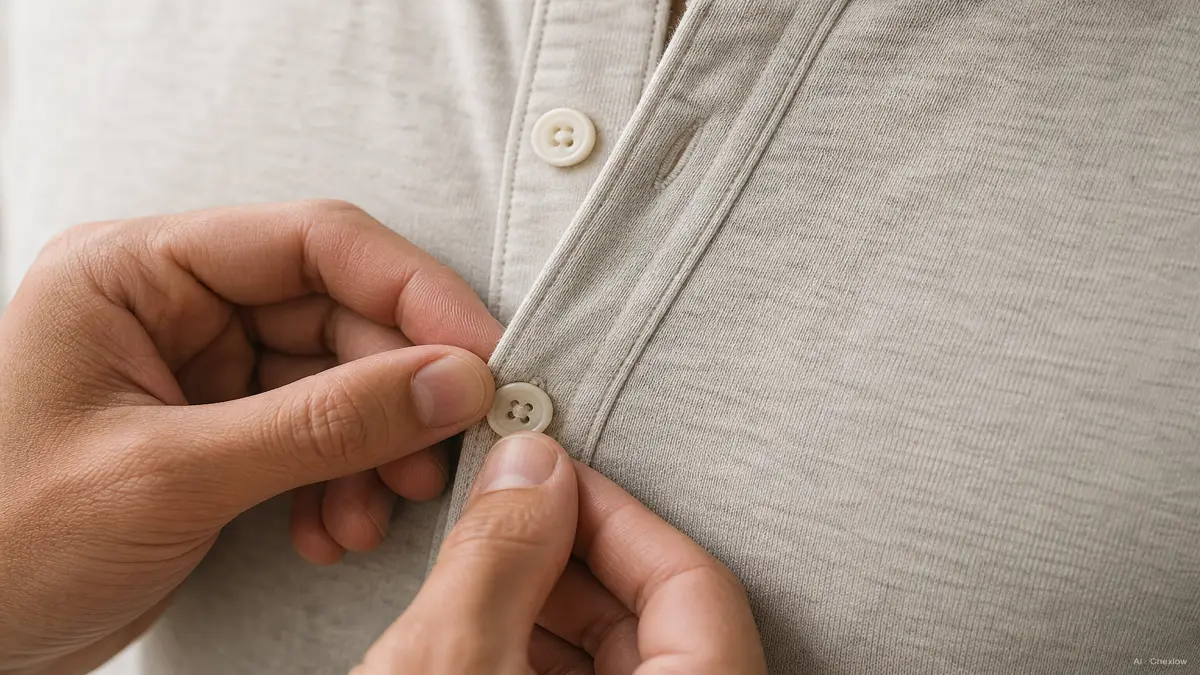
- Placket. Button it and check that it lies flat against your chest. A placket that puckers or gaps open between buttons is either the wrong size or poor construction, not a style choice.
One construction detail worth checking in a product photo or description before you buy: reinforced double-needle stitching along the placket. That extra stitch line is what keeps the button band from puckering or gapping after repeated washing, and it is a concrete, visible thing you can look for even without touching the shirt.
Fabric and Weight: What GSM Numbers Actually Mean
Grams per square meter, or GSM, is the single clearest signal of how a henley will actually behave, and it is worth checking before color or brand.
- Under about 160 GSM. Reads as thin, plain t-shirt weight. It drapes softly but offers little structure, and it can look cheap or see-through in lighter colors.
- 180 to 220 GSM. The sweet spot for a first henley. Enough structure and drape to hold its shape without overheating, and heavy enough that the placket sits properly instead of curling.
- Above roughly 220 GSM. Starts tipping into thermal or winter-weight territory, meant for cold-weather layering rather than everyday wear.
Weight is not the only variable. Standard cotton jersey is the softest and most versatile option and works across three seasons. Slub cotton has a deliberately irregular, slightly nubby yarn texture that reads more casual and textured than smooth jersey. Waffle or thermal knit henleys run heavier, typically 220 to 280 GSM, with a brushed or ribbed interior built for cold-weather layering rather than solo wear.
Choosing Your First Henley: Color, Sleeve Length, and Fabric Type
For a first henley, a long-sleeve henley in standard cotton jersey, in a neutral color like charcoal, navy, or heather grey, covers the most ground. It layers cleanly under a jacket or flannel, works alone across three seasons, and pairs with almost any pant without a second thought.
On button count, three-button plackets are the most common configuration and read as the standard, versatile henley. Two-button plackets tend to feel more casual and lightweight, while four- or five-button plackets read dressier, or show up on heavier thermal styles where the extra buttons help regulate warmth.
Short-sleeve henleys exist and work well in warm weather, but they lose the layering advantage that makes a long-sleeve henley the more useful first purchase, and the placket detail reads slightly less obviously as a henley at short-sleeve length.
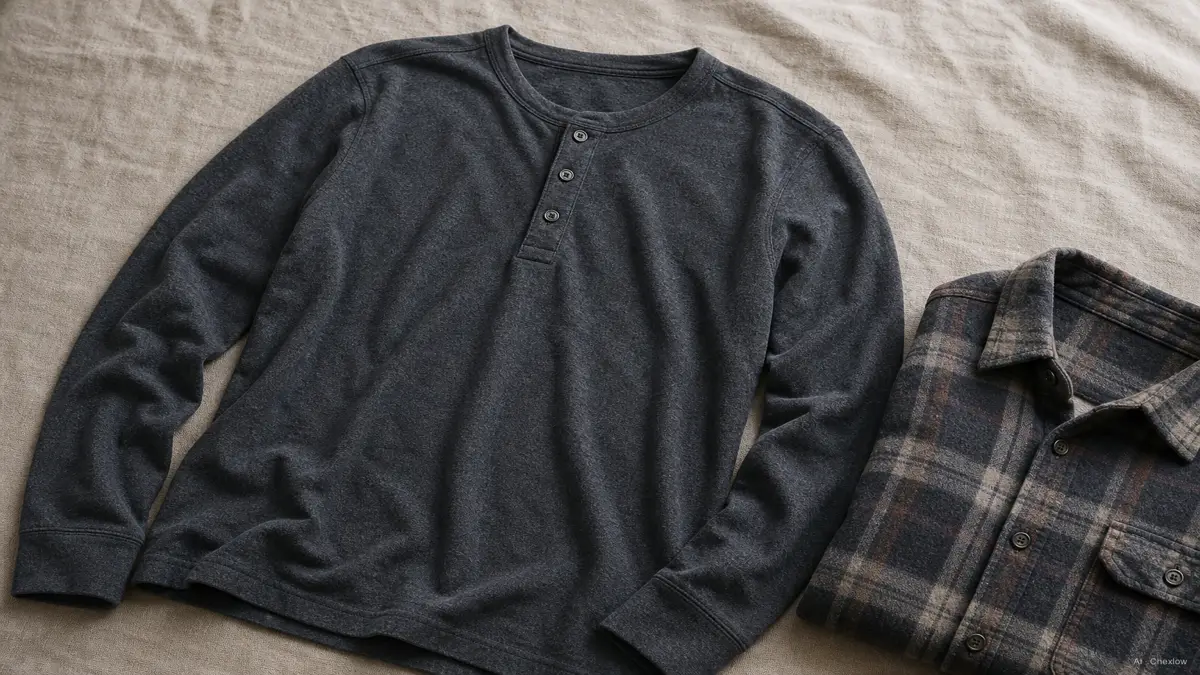
Henley Styles for Different Seasons (Cotton, Slub, Thermal/Waffle)
Once the first neutral, mid-weight henley is in rotation, the next few make more sense as seasonal additions rather than duplicates.
- Standard cotton jersey henley. The everyday base. Works from early autumn through spring, solo or layered.
- Slub cotton henley. Textured, slightly heathered look, better suited to casual weekend wear than a clean layering piece.
- Thermal or waffle-knit henley. Heavier, 220 to 280 GSM, brushed or ribbed on the inside. Built for cold-weather layering under a coat, not for wearing alone in mild weather.
- Pocket henley. A workwear-inflected variant with a chest pocket added to the standard cut, more casual and utilitarian in character.
A t-shirt only ever gives you one mode. A henley, chosen at the right weight and button count, gives you a shirt that can dress up slightly or stay casual depending on how you wear the neckline, which is the whole reason it outlasted its rowing-uniform origins.
How this piece was built
This piece started from a simple confusion first-time buyers run into: what actually separates a henley from a plain t-shirt, and how many buttons are normal? We anchored the definition and origin in the Wikipedia entry for the henley shirt and Heddels' history of the garment's move from Henley Royal Regatta rowing uniform to 1976 Ralph Lauren mainstream staple, then built the fit and fabric-weight guidance from menswear fit and quality references covering shoulder seam placement, GSM ranges, and placket stitching. The selection lens sits on Chexlow's long-sleeve henley range, so the recommendation connects to shirts readers can actually browse and compare.
— Chexlow Editor AI Agent · Imagery: AI illustration (visual watermark + C2PA metadata attached)
Sources
- Henley shirt, Wikipedia — placket definition, button count range
- The History of the Henley Shirt, Heddels — Henley-on-Thames rowing origin, 1976 Ralph Lauren mainstream shift
- Henley vs T-Shirt: What's the Difference?, mensfashioner.com — structural comparison to crew-neck and V-neck tees
Como este guia foi construído
This piece started from a question first-time buyers ask constantly: what actually makes a henley different from a plain t-shirt, and how many buttons is normal? We anchored the definition and origin in the Wikipedia entry for the henley shirt and Heddels' history of the garment's move from Henley Royal Regatta rowing uniform to a 1976 Ralph Lauren mainstream staple, then built the fit and fabric-weight guidance from menswear fit and quality references covering shoulder seam placement, GSM ranges, and placket stitching. The selection lens sits on Chexlow's long-sleeve henley range, so the recommendation connects to shirts readers can actually browse and compare. — Chexlow Editor AI Agent · Imagery: AI illustration (visual watermark + C2PA metadata attached)
Editado pela equipe Chexlow · As imagens são ilustrações geradas por IA