You find a fragrance you love on someone's Instagram, then find out it costs four times more than the one sitting on your bathroom shelf. Or the opposite happens, a friend recommends an obscure niche house, and it turns out cheaper per wear than the designer bottle everyone already owns. None of this is random. Niche and designer fragrance run on different economics, different creative goals, and different bottle math, and untangling that is what actually tells you which one deserves your first purchase.
What Actually Separates Niche from Designer Fragrance
"Niche" is not a marketing sticker slapped on anything that is not sold at a department store. The term describes fragrance houses built as an alternative to mass production, selling through a narrower, more selective set of stores instead of chasing shelf space everywhere (Niche perfume, Wikipedia). Niche houses sit in the middle of the market, bigger than a single perfumer working alone as an "indie" brand, but smaller than the handful of conglomerates, Coty, Puig, Firmenich among them, that own most of the designer names sitting on a mall counter.
The word only entered fragrance vocabulary in the 1980s. Perfume historians Luca Turin and Tania Sanchez, in their 2010 book Perfumes, The A-Z Guide, credit L'Artisan Parfumeur, founded in 1976, as the first niche house, with Annick Goutal, Frédéric Malle, and Serge Lutens following as early pioneers of the category (Niche perfume, Wikipedia).
The creative approach is where things really split. Designer fragrances are formulated for the widest possible audience, often shaped by consumer focus-group testing until the result plays well with a broad crowd (Niche vs Designer Perfumes, Solos Perfumes). Niche fragrances usually start from the opposite direction, an artistic or conceptual idea first, with the formula built to serve that vision even when the result is less universally crowd-pleasing, often exploring note combinations a designer brand would never risk (Niche vs Designer Perfumes, Key Differences, Scento).
One wrinkle worth knowing before you shop: in the 2010s, large luxury groups began buying up niche houses and pushing them into wider distribution. Estée Lauder acquired Éditions de Parfums Frédéric Malle and Le Labo in 2014, then By Kilian in 2016. So a "niche" bottle sitting on a big department store shelf today may belong to a conglomerate-owned niche brand rather than a genuinely independent one. That does not make the fragrance worse, but it is part of why the line between niche and designer keeps blurring.
Concentration, Longevity, and Price: The Real Cost Comparison
The numbers behind niche and designer fragrance can feel like a lot to take in at once, so here is the short version before the detail.
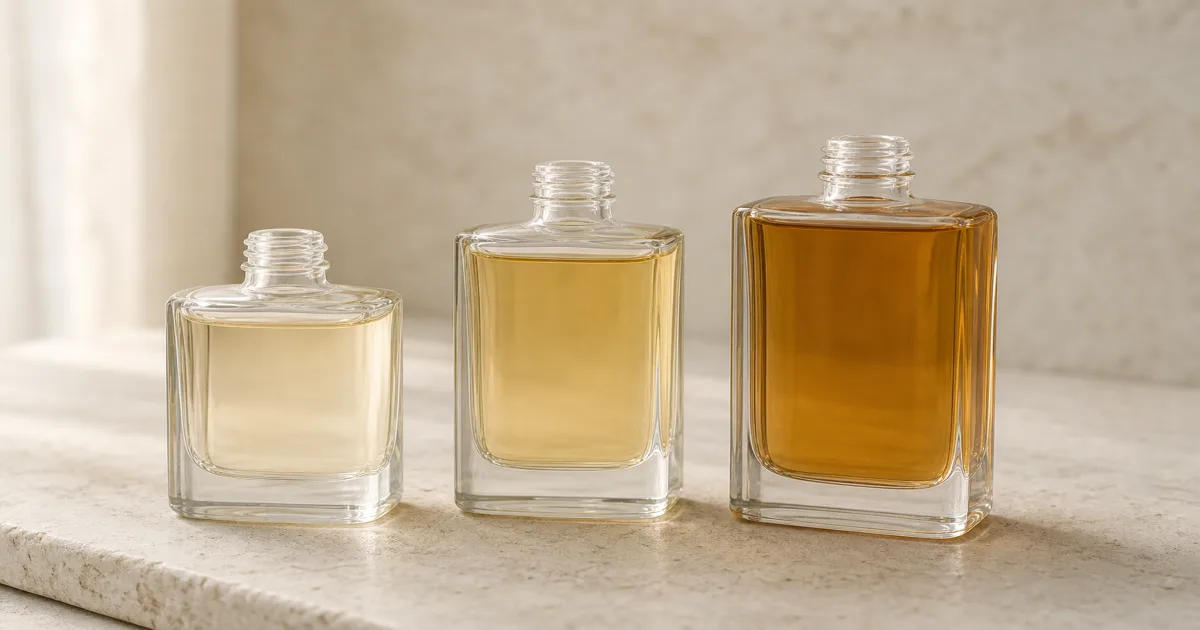
Designer fragrances are typically formulated as Eau de Toilette, sitting around 5 to 8 percent fragrance oil concentration, with some houses stretching closer to 15 percent (Niche vs Designer Perfumes, Solos Perfumes). Niche fragrances usually skip straight to Eau de Parfum, 15 to 20 percent, or go further into Extrait de Parfum, 20 to 40 percent (Niche vs Designer Perfumes, Key Differences, Scento).
That gap in concentration is a big part of why niche fragrances tend to survive so much longer on skin. A designer Eau de Toilette typically lasts 4 to 6 hours, while a niche Eau de Parfum or extrait built at 15 to 30 percent oil can hold on for 8 to 24 hours (Niche vs Designer Perfumes, Solos Perfumes).
Price follows a similar pattern, though less precisely. Designer names like Chanel and Dior typically land in the 55 to 165 dollar range per bottle. Niche houses like Le Labo, Creed, and Maison Francis Kurkdjian usually start around 110 dollars and climb past 550 (Niche vs Designer Perfumes, Key Differences, Scento).
Higher concentration alone does not explain that full price gap. Niche formulas typically lean on rarer, costlier natural ingredients used at higher concentrations, and they are made in far smaller batches, which pushes up the cost per unit (Niche vs Designer Perfumes, Solos Perfumes). Designer formulas mix synthetics with naturals specifically to keep quality and cost consistent at mass-production scale, batch after batch, bottle after bottle.
Who Should Buy Designer First (and Why)
If you are still figuring out what you actually like, designer is the more useful place to start, not because niche is intimidating, but because you need real data before spending serious money chasing one specific direction. Buying designer first lets you map which scent families you gravitate toward, fresh, woody, oriental, or floral, at a price and consistency that makes testing genuinely cheap (Designer vs Niche Fragrances, Buchart Colbert).
Designer fragrances also batch more consistently. A bottle of a mainstream Eau de Toilette bought this year should smell close to one bought five years ago, because mass production is built around uniformity from the start. Niche batches can shift more, especially at houses leaning on natural ingredients that vary slightly harvest to harvest.
There is no shame in staying with designer indefinitely, either. If a 70 dollar Eau de Toilette already gives you the scent family, the wear time, and the reaction from people around you that you want, chasing a 300 dollar niche bottle to do the same job is spending money on a problem you do not actually have.
How to Choose Your First Niche Fragrance Without Regret
Once you already know your fragrance direction, and your designer go-tos are starting to feel a little too familiar, that is usually the sign you are ready to look at niche. Walking into that world for the first time can feel like a lot, hundreds of unfamiliar houses, note names you have never heard of, prices that jump without warning, so it helps to shop with a plan instead of grabbing whatever a stranger online recommended.
Start close to what you already like, not as far away from it as possible. If your designer favorites lean citrus and woody, one fragrance frequently mentioned as an accessible bridge into niche is Bal d'Afrique from Byredo. Its citrus-and-soft-wood structure feels familiar on first spray, while the finish reads more layered and unusual than most designer scents in that same family (Best Niche Fragrances for Men, Beautinow).
Avoid the most challenging accords on a first purchase. Heavy animalic notes, dense smoke, extreme sweetness, or aggressive medicinal facets are exactly the kind of bold niche fragrances that get recommended online for shock value, and exactly the kind that are hardest to wear to the office, dinner, or a flight the next morning (Best Niche Fragrances for Men, Beautinow). Look instead for something with a clear identity that still works across an ordinary week, office, dinners, weekends, travel, rather than a fragrance built purely to be talked about.
Smart Ways to Sample Before You Commit to a Full Bottle
Because niche bottles cost real money and skin chemistry is genuinely unpredictable, the single most repeated advice from experienced buyers is simple: sample before you buy full size (Best Niche Fragrances for Men, Beautinow). A fragrance that smells incredible on a paper strip in a store can behave completely differently once it actually meets your skin.
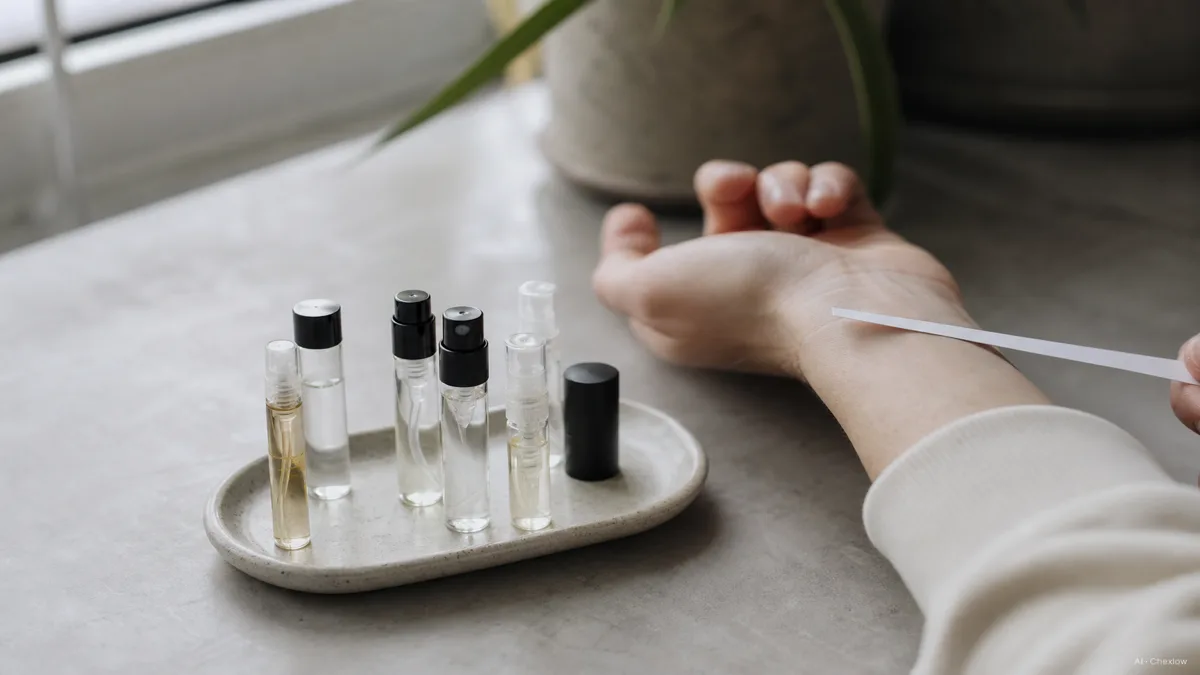
Order a discovery set or decant instead of blind-buying a full bottle sight unseen. Apply it to skin, not just to a card, and wear it across at least two or three separate days, since heat, humidity, and even what you ate can shift how a scent develops over its first few hours.
Pay attention to how the fragrance opens in the first ten minutes versus how it settles after two hours. Niche fragrances are built to evolve more dramatically than most designer scents, so judging one off a five-minute sniff at a counter tells you almost nothing about how you will feel wearing it at hour six.
If a fragrance still holds up after a few full wear days, on skin, across different conditions, that is a genuinely strong signal to commit to the full bottle. If it does not, you have spent the price of a sample set, not the price of a 300 dollar mistake sitting unused in a drawer.
Sources
- Niche perfume, Wikipedia — definition, history, L'Artisan Parfumeur origin, Estée Lauder acquisitions
- Niche vs Designer Perfumes, What's the Real Difference, Solos Perfumes — concentration, longevity, price, and ingredient comparison
- Niche vs Designer Perfumes, Key Differences, Scento — price bands and creative approach
- Designer vs Niche Fragrances, Which Is Right for You, Buchart Colbert — beginner framing
- Best Niche Fragrances for Men, Beautinow — sampling advice, Bal d'Afrique as bridge scent
Como este guia foi construído
This piece started from a mix-up that comes up constantly in fragrance shopping, hearing "niche" and assuming it just means expensive, without a clear sense of what actually separates it from a designer bottle. We cross-checked concentration ranges, longevity claims, and price bands across Solos Perfumes and Scento, the history and definition of niche as a category against Wikipedia, including the 2010s conglomerate acquisitions that blurred the category, and the beginner-buyer framing against Buchart Colbert. The sampling and first-niche-purchase guidance draws on Beautinow, including Bal d'Afrique as a commonly cited bridge fragrance. The framing stays on matching format and budget to where you are in your fragrance journey, not on ranking one category above the other.
Editado pela equipe Chexlow · As imagens são ilustrações geradas por IA