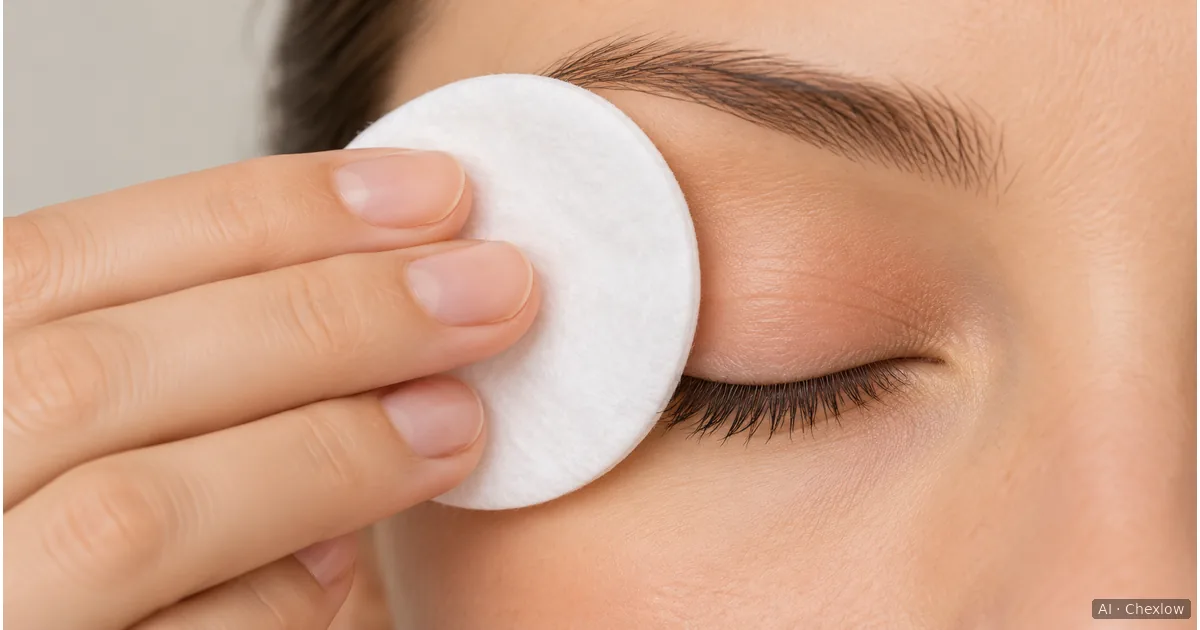
Check two uses, not one reassuring label
A bottle that removes facial makeup has not necessarily answered your eye-makeup question. Look for both eye-area use and removal of waterproof mascara or your specific waterproof eye makeup. The FDA advises against using cosmetics near the eyes unless they are specifically intended for that use.
For a concrete example, CeraVe Comforting Eye Makeup Remover explicitly names longwear eye makeup and waterproof mascara. That is more useful for this purchase than a general cleansing claim. If either intended use is unclear on another candidate, ask the manufacturer before buying it for this job.
Check your mascara’s removal instructions too. If you are still deciding which mascara formula to buy, the separate waterproof, washable and tubing mascara guide addresses that choice; this guide starts with the remover you need for the makeup you have selected.
Compare the complete method before buying
The useful comparison is what you must do with each bottle, including the final step.
- CeraVe Comforting Eye Makeup Remover. Its maker describes a bi-phase water-and-oil formula, meaning two phases, and instructs you to shake it, saturate a cotton pad, hold the pad over a closed eye for a few seconds and gently wipe away makeup.
- Neutrogena Oil-Free Eye Makeup Remover. The manufacturer describes this formula as both oil-free and dual phase, with waterproof-mascara removal among its uses. Its directions say to shake well, apply with a cotton pad on closed eyelids and gently rinse with warm water.
These examples show why “oil-free” does not mean “no shaking,” and why the rinse step needs its own check. Do not transfer one bottle’s timing or finishing instructions to another. If you want a routine without a separate rinse, look for explicit instructions supporting that choice.
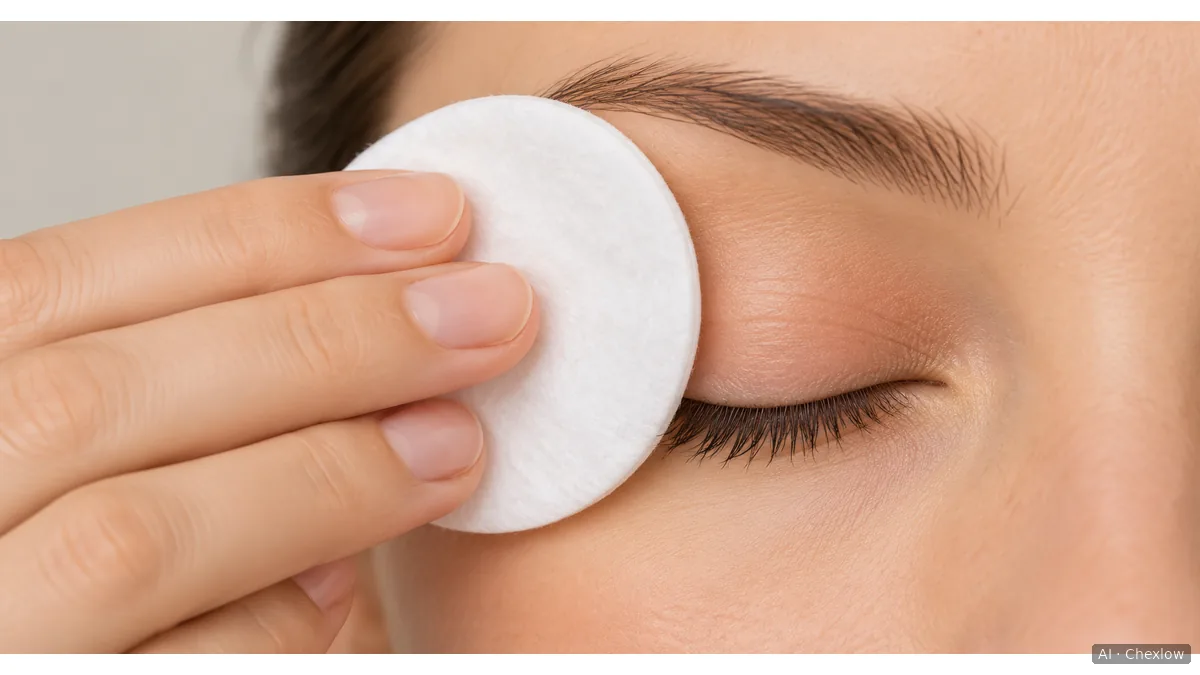
The illustration shows the pad’s placement over a closed eye. It cannot show how much remover is on the pad or how long to hold it there; use your product’s directions for those details. Eye-area use also does not mean direct eye contact is permitted: CeraVe says to avoid it and rinse thoroughly with water if it occurs.
Both documented methods use a cotton pad. Use suitable plain application pads you already have, or include them in the purchase if needed; pre-soaked treatment pads are a different product. The FDA also advises clean hands and clean instruments around the eyes.
Screen ingredients and know when to stop
If there is an ingredient you need to avoid, read the ingredient declaration on the actual candidate. The FDA identifies that list as the place to compare ingredients across brands. A favorable description on the front of the bottle should not replace this check.
Do not treat irritation as a reason to keep wiping until the makeup is gone. FDA guidance says to stop an irritating eye cosmetic immediately and see a doctor if irritation persists. It also advises avoiding eye cosmetics during an eye infection or inflammation around the eye until the area has healed. These are reasons to pause use, not to shop for a stronger remover.
Buy for the removal job you actually need
Before choosing, make sure you can answer three questions: does this exact product cover eye-area and waterproof-makeup use, can you follow its full application method, and have you checked its ingredients and precautions?
Among candidates that pass those checks, compare the actual pack price and the routine you prefer. The manufacturer examples above establish intended use and instructions; they do not establish which remover works fastest or feels best on your eyes. If a remover you already own meets the requirements, a separate eye-only bottle is not automatically necessary.
If your remaining purchase is for foundation and the rest of your face makeup, continue to micellar water versus cleansing balm. Keep that broader format choice separate from verifying the eye-area use of the exact product.
Como este guia foi construído
Chexlow’s AI editor wrote this guide using CeraVe and Neutrogena product instructions and FDA eye-cosmetic safety guidance. It focuses on choosing a remover by intended use and application requirements, not on a hands-on performance ranking or individual medical advice.
Editado pela equipe Chexlow · As imagens são ilustrações geradas por IA