Choose the job before the model
Picture the ordinary day you want this pair for, rather than the occasional outfit it might suit.
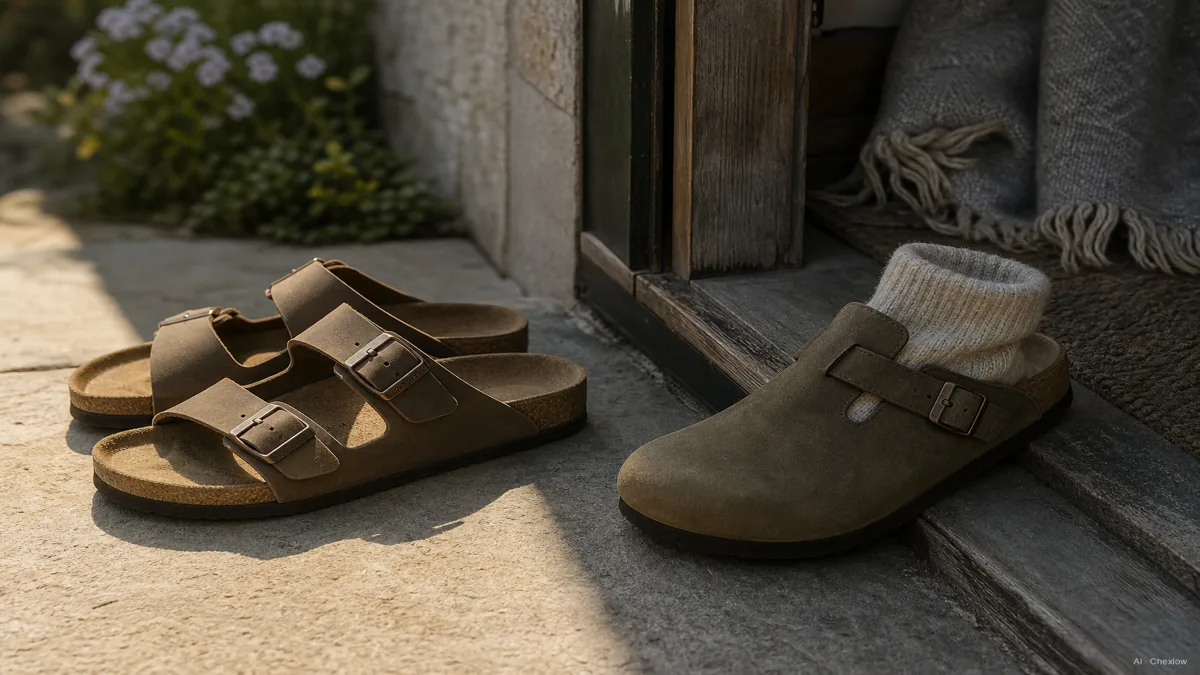
- Summer sandal. Start with Arizona if exposed toes are part of the appeal and you mainly want a sandal for dry, warm days.
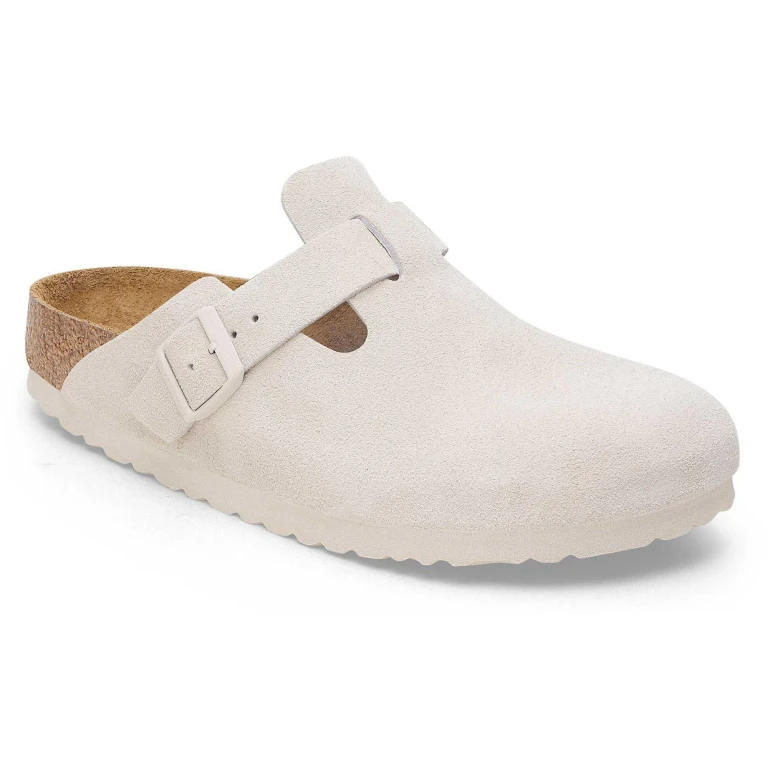
- Covered toes. Start with Boston if you prefer your forefoot enclosed, including when wearing socks in cooler weather. Try it with the socks you actually use.
- Only one pair. Choose the use you have most often. Boston is not automatically the better buy just because it covers more of your foot.
These are practical selection judgments based on the two shapes, not manufacturer temperature ratings. Socks are a styling choice with either model; they do not make Boston a winter boot.
If your main problem is a wet commute, pause the cork-footbed comparison. Birkenstock advises against immersing most styles; a closed toe is not a waterproof specification. For that different job, compare rain boots and duck boots, checking the particular boot's water protection. (Official care guidance)
Compare how each upper holds your foot
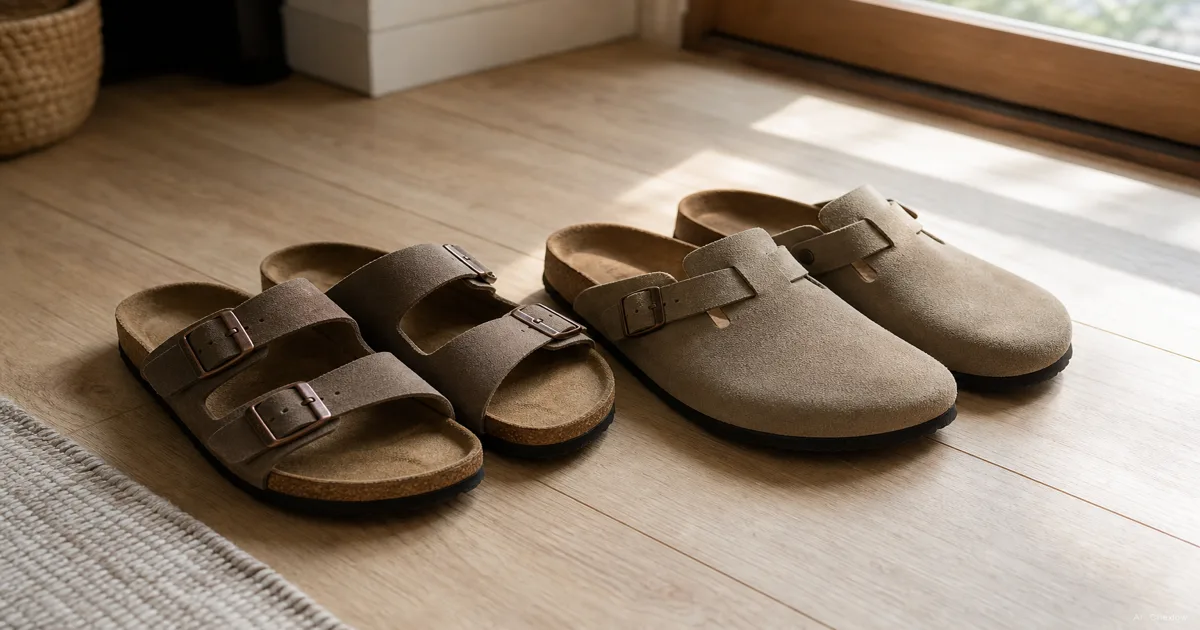
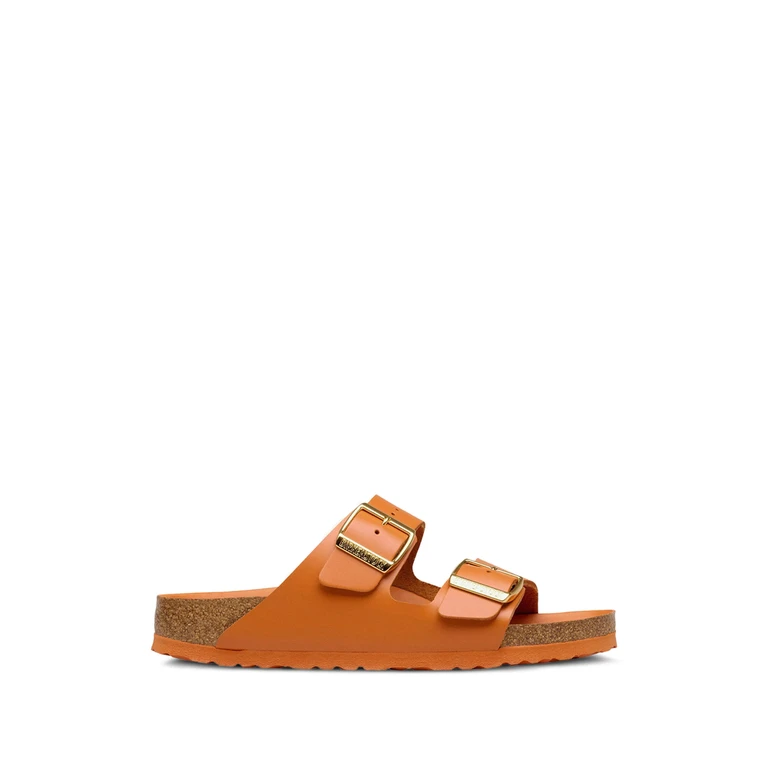
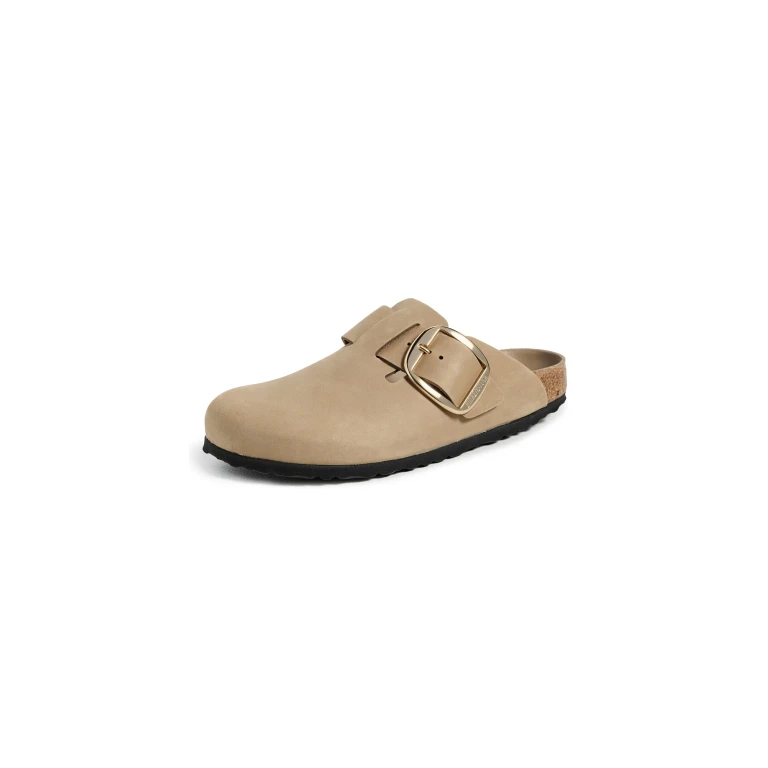
Arizona leaves the toes open and has two separately adjustable buckle straps. Boston encloses the forefoot and uses one adjustable strap. Both leave the heel open.
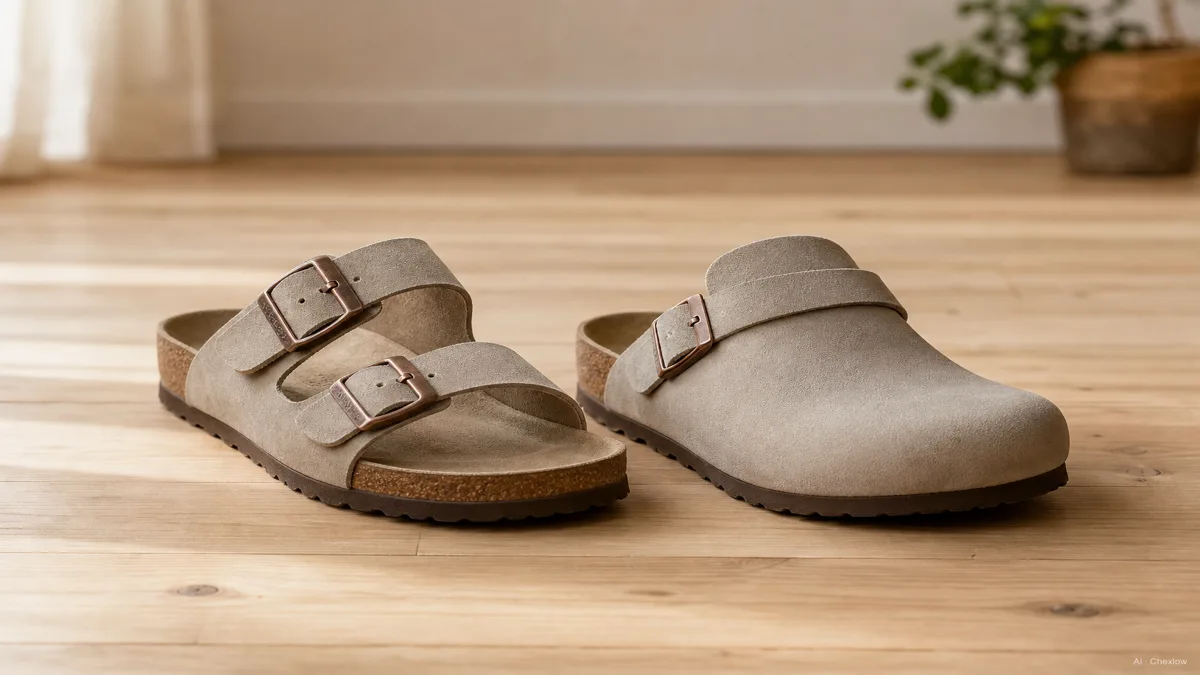
With Arizona, check each strap separately: does one pinch while the other feels loose? With Boston, check the space above your toes and across your instep, the top of your foot. Loosening its buckle is worth trying, but do not assume it will solve pressure inside the covered forefoot.
Keep the model that suits your preferred coverage on your shortlist. If neither feels secure without gripping or squeezing, widen your search instead of choosing the less uncomfortable one. Buckles adjust the upper; they cannot make a short footbed longer.
Check the version before comparing comfort
The footbed is the shaped platform under your foot. The standard Arizona suede and Boston oiled-leather examples linked above both specify cork-latex footbeds and EVA outsoles. That shared construction does not make every Arizona and Boston identical.
Read the full product description, especially these distinctions:
- Standard cork-latex. Use this as your starting point when comparing the two classic shapes on similar terms.
- Soft Footbed. This adds a foam cushioning layer. It is a separate specification, not another name for a soft suede upper. (Arizona Soft Footbed)
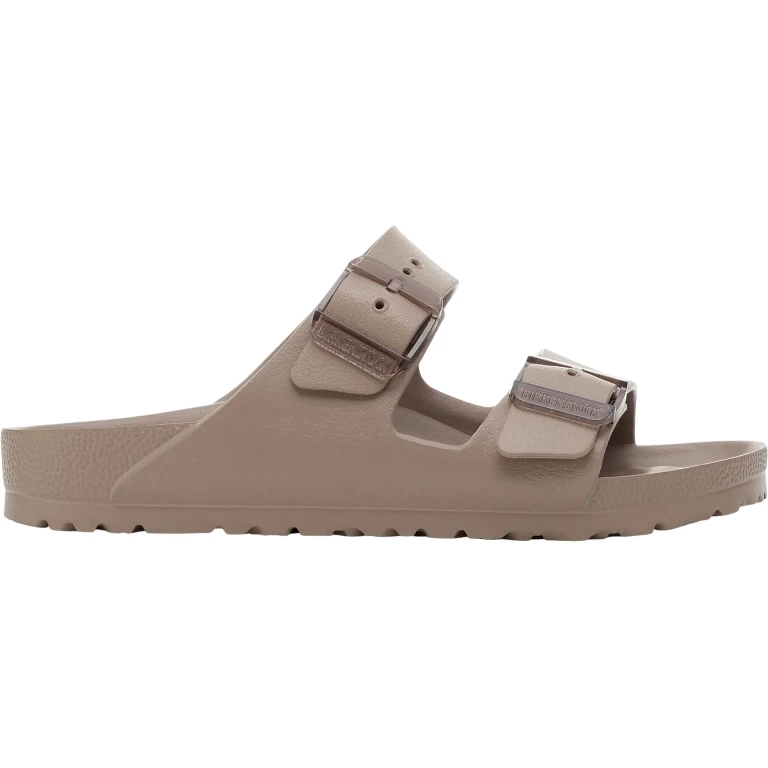
- Arizona EVA. This version has an EVA footbed as well as an EVA upper and sole, and the manufacturer describes it as waterproof. An EVA outsole underneath a cork pair does not make it the same construction. (Arizona EVA)
For a fair comparison, try similar footbed versions with your intended socks. If one feels better, note whether you changed the upper material or footbed as well as the model.
Material also changes the upkeep: Birkenstock distinguishes brushing suede and nubuck from wiping Birko-Flor and Birkibuc uppers. If you are considering a suede pair, read the suede and nubuck care guide for the upper, while following Birkenstock's instructions for the footbed. (Care by material)
Confirm the fit before keeping the pair
Do not use “Boston means size down” as a rule. Start with the official size guide, then check the actual pair.
- Choose length and width separately. Regular is intended for medium-to-wide feet; Narrow for narrow-to-medium feet. Open the straps before trying the pair. (Fit guide)
- Check the edges. Your toes should not touch the footbed rim. Even in Narrow, your foot should have room at the sides rather than ride onto them. An outlined footprint marks Regular; a filled footprint marks Narrow. (Width guidance)
- Walk indoors in your intended socks or bare feet. Check both feet, including Boston's covered toe area. If a toe hits or the upper presses, compare another size, width or version before committing. Check the seller's return conditions before extended wear.
Birkenstock recommends gradually increasing indoor wear while the cork-latex footbed flexes and molds. That is an adjustment process, not a reason to keep an obviously cramped pair. Stop and reassess if wearing it hurts. (Break-in guidance)
Your final choice should identify the model, upper material, footbed type, EU size and width. “Boston in my usual size” leaves too much undecided.
Sources
- Arizona suede specifications and Boston oiled-leather specifications.
- Birkenstock fit guide and width guidance.
- Birkenstock care guidance and break-in guidance.
How this guide was built
Written by Chexlow's AI editorial team using Birkenstock's product specifications, fit guidance and care instructions. The comparison separates documented construction details from editorial advice about which pair to buy first; it is not a wear test or a guarantee of individual comfort.
Edited by the Chexlow team · Images are AI-generated illustrations