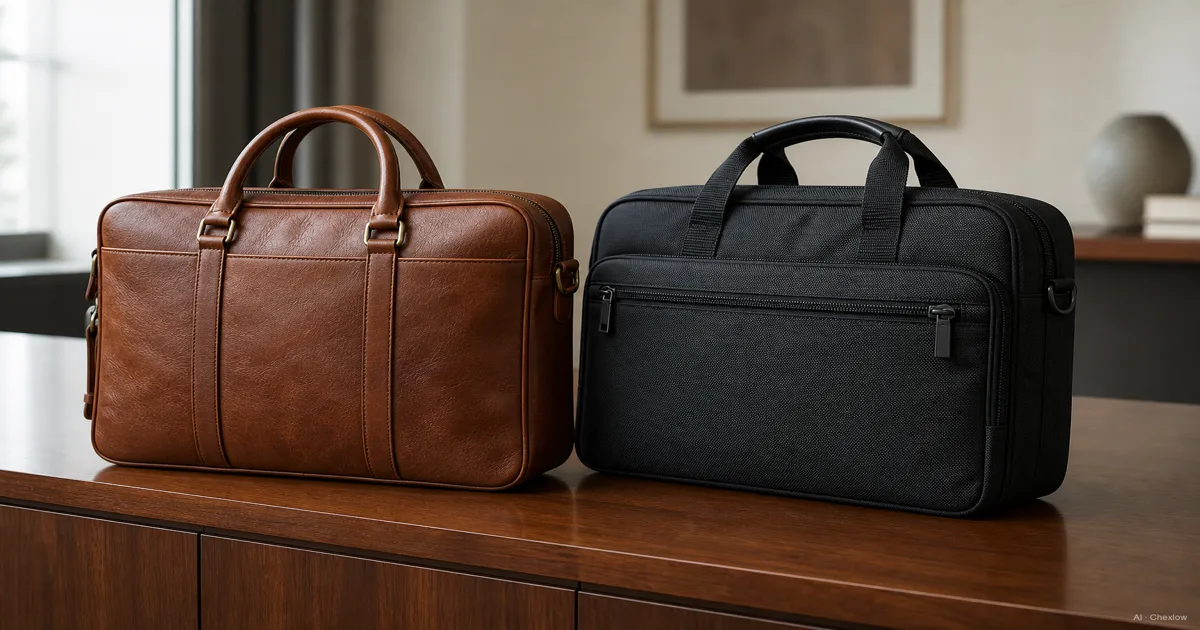


Choose a starting point for your working week
- Leather first. Shortlist it if you specifically want a leather finish with your work clothes and are willing to follow the maker's care instructions. Treat that as a preference, not a requirement imposed by your profession.
- Nylon first. Shortlist it if your main frustration is carrying a laptop between trains, offices and appointments. Compare actual bag weights and rain claims rather than assuming every nylon briefcase is light or waterproof.
- Still undecided. Put one of each on your shortlist with similar usable capacity. Let the loaded carry check below break the tie.
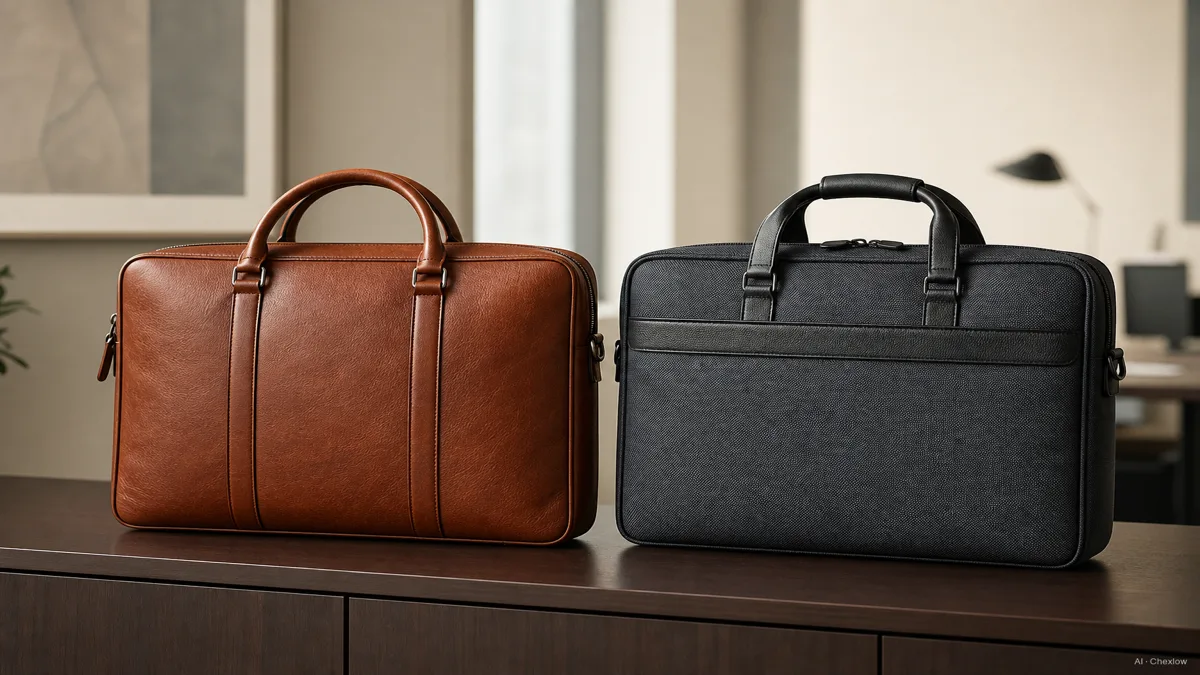
Use the side-by-side illustration to consider the shape you want. Then check whether the actual bag stands as you need it to, both empty and packed; the material name alone cannot answer that.
Try your laptop, documents and full daily load
Measure your laptop's width, depth and thickness, including any case you keep on it. Ask for usable compartment dimensions and opening clearance, not just the briefcase's outside measurements. Satchel & Page's Attaché specification explicitly uses laptop width rather than screen diagonal.
For a shop visit or a permitted indoor trial, bring the folder you actually use, charger and other daily essentials.
- Start with the laptop. Slide it in and close the bag without forcing the zip.
- Add your daily load. Put in the folder and charger. Check that documents lie flat and the charger does not press against the laptop.
- Check carrying and access. Carry it by the handles and shoulder strap, over your usual coat. Try retrieving your phone without unpacking everything.
Compare empty weights too. The leather Attaché is listed at 1.5 lb; that is a useful reminder to check the individual design, not assign a fixed weight penalty to leather.
If both finalists feel awkward with your normal load, pause the briefcase purchase and compare leather and nylon everyday backpacks. Changing how you carry the load may matter more than changing its outer material.
Read the material label without buying a lifespan promise
For leather, ask about the surface finish as well as the grain. Full-grain means the original grain surface has not been buffed away, according to the Leather Research Laboratory. It does not give you a guaranteed number of service years. Ask what surface changes to expect and which care instructions apply to that finish.
For nylon, separate yarn size from bag performance. Denier, the D in 1000D, measures grams per 9,000 metres of yarn, not years of use or waterproofness. Rockywoods explains the measurement.
Do not turn “ballistic versus CORDURA” into an automatic ranking. CORDURA Classic itself spans several yarn sizes and finish options. Ask which fabric, coating and construction the particular briefcase uses; a bigger number is not enough to settle the purchase.
Check the whole bag's rain protection
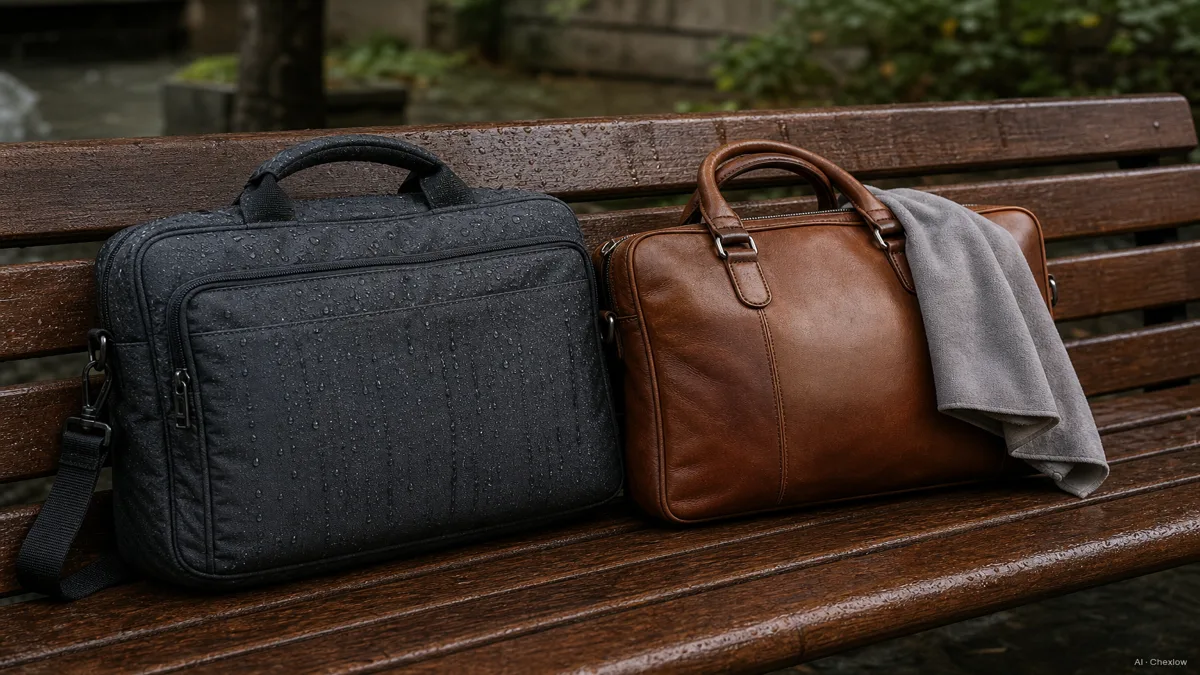
Beading on the outside is not evidence that your laptop will stay dry. TOM BIHN's FAQ warns that its seams can leak in significant weather despite water-resistant fabric and protected zippers.
For a wet commute, ask what the maker promises for the completed bag, including seams and openings. If that information is missing, do not treat “ballistic nylon” as a substitute. Choose a bag with documented protection appropriate to your route, or plan how you will shelter it.
Leather requires finish-specific advice. Satchel & Page, for example, tells owners to wipe its bags dry promptly after rain. If you do not want that responsibility, rule those finishes out before buying.
Make the final choice from the details you will use
Open and close the loaded bag, examine the handle attachments and ask whether handles, straps and zippers can be repaired. Request the repair route and likely charges rather than treating a hardware brand or warranty headline as a durability test.
A nylon body does not remove every care task: Filson's Dryden combines 1000D nylon with leather handles and specifies spot cleaning. It also has an adjustable removable shoulder strap and a trolley strap; prioritize those features only if they solve your actual carrying routine.
Read warranty exclusions before paying more for longevity. Satchel & Page excludes natural aging and water marks in its warranty terms. Ask the seller which terms apply to your purchase.
Buy when fit, loaded comfort, weather expectations and upkeep all work. If both materials pass, choose the appearance you prefer within your budget. If one fails a daily requirement, a more impressive material label is not a reason to keep it.
How this guide was built
Written by Chexlow's AI editor using manufacturer specifications and care guidance from Filson, Satchel & Page and TOM BIHN, plus material definitions from the Leather Research Laboratory, CORDURA and Rockywoods. The guide turns those sources into a first-purchase checklist; the use-case recommendations are editorial judgments, not hands-on test results.
Edited by the Chexlow team · Images are AI-generated illustrations