Check the material before choosing the cleaner
This guide is for dirt on the rubber strip around an existing canvas shoe. Check the actual shoe’s instructions, especially if it has printed rubber, coatings or leather panels; its appearance alone does not establish which cleaner is suitable.
Converse’s cleaning guide uses a little mild dish soap in lukewarm water and asks you to test the solution on a hidden area first. Test the material you intend to clean: a successful fabric test does not establish how a rubber finish will react.
Keep upper and edge instructions separate. Superga’s care guide specifies a damp soft cloth and gentle detergent for cotton, but describes a separate rubber treatment that keeps grease remover away from the fabric. That is not permission to use an arbitrary household degreaser on another shoe. The routine here deliberately stays with locally applied mild cleaning that your maker permits.
Wipe the rubber below the fabric boundary
Remove loose dirt first. A soft shoe-cleaning brush can help with this and with gentle rubber cleaning where permitted; use an existing suitable brush rather than buying a kit. A clean soft cloth is enough for the wiping step.
- Prepare the cloth. Dampen a small folded corner with the permitted cleaning solution, then squeeze out excess liquid so it does not drip.
- Work on the edge. Wipe a small patch of rubber gently, keeping the contact area below the fabric boundary. Reposition the cloth instead of sweeping across both materials.
- Keep dirt moving off the shoe. Turn to a clean part of the cloth as it picks up grime. Do not compensate for a stubborn mark by pressing harder.
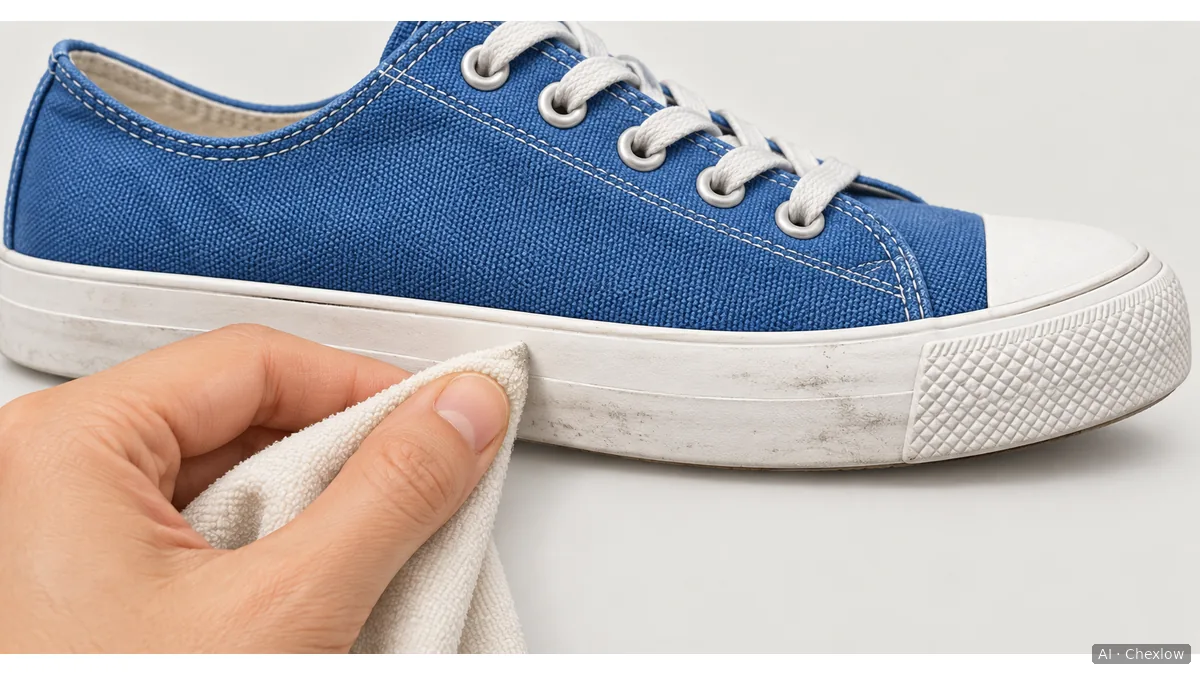
The illustration shows where the cloth touches, not an approved cleaner or a guaranteed cleaning result. Vans lists a damp soapy cloth for soles and rubber foxing; its separate magic-eraser advice is for rubber, not fabric uppers. Neither instruction makes the upper and edge interchangeable cleaning surfaces.
Remove residue and give the shoe time to dry
Use a separate clean, water-dampened cloth to lift the cleaning residue from the rubber. This follows Superga’s wipe-off approach; it does not require rinsing the whole shoe under a tap. Keep this pass local too.
Let the shoe dry in a cool, ventilated place away from direct sunlight and heat. Do not use a heater or dryer to fit cleaning into a rushed morning. Converse specifies room-temperature drying, and Superga also calls for ventilation and protection from sun and heat.
If cleaning repeatedly leaves you without a dry pair for your next outing, use the guide to rotating sneakers you already own to arrange wear and drying time before considering another purchase.
Stop when the remaining mark needs a different decision
Inspect the dry edge before deciding it needs more cleaning. A remaining dark or yellow area is not, by itself, proof of dirt that another pass will remove. This guide does not promise whitening or restoration.
Vans warns against chlorine bleach on white canvas and against prolonged soaking of shoes. Neither belongs in this targeted routine. If the cloth picks up the shoe’s own colour, the finish changes, or you find cracks or separation at the edge, stop and ask the maker or a shoe-repair professional to assess it. Describe what you used and what changed; do not try to scrub structural damage away.
How this guide was built
This guide was written by Chexlow’s AI using official Converse, Vans and Superga care instructions. It selects a narrow routine for cleaning an existing shoe’s rubber edge, distinguishes brand-specific advice, and does not report original cleaning tests or promise stain removal.
Edited by the Chexlow team · Images are AI-generated illustrations