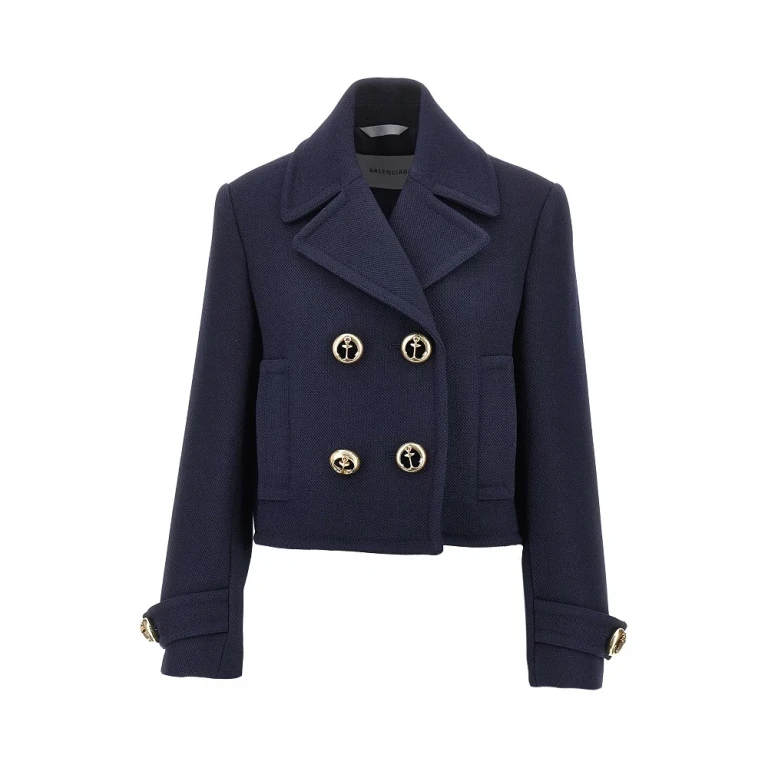
Start with the trousers you actually wear
Pick two everyday outfits, including the tops. Put each pair of trousers at its comfortable wearing height; do not pull them higher just to meet the jacket.
The natural waist and the trouser waistband are separate reference points. Patagonia locates the natural waist at the crease made by bending slightly sideways. Proper Cloth’s rise guide places low-rise trousers at the hip bones and high-rise trousers at or above the navel or natural waist, and explains that wearing height affects the waistband size needed.
For this purchase, use the actual waistband position. Decide whether you want the jacket to overlap it, finish near it, or leave some of the inner top visible between the two. These are styling choices, not a correct-proportion formula.
If the trousers only reach your preferred position when you pull them uncomfortably high, settle that separately with the trouser rise and seated-fit guide.
Compare garment length using the same starting point
A body-size chart does not tell you where a jacket ends. Patagonia, for example, explicitly identifies its chart as body measurements. Ask for the finished jacket’s back length in the size you intend to buy, plus the measuring diagram.
Use a jacket you own as a reference. Luxire’s tailored-jacket method uses a cloth measuring tape and measures down the centre-back seam from its intersection with the collar to the bottom hem. That is one defined method: follow the seller’s method if it starts elsewhere. Do not compare a shoulder-to-hem measurement with a collar-seam-to-hem measurement as though they were identical.
Record the candidate’s length beside your reference jacket’s length, in the same unit. Then wear the reference with your chosen trousers to understand what a shorter or longer candidate would change. This narrows the shortlist; it does not predict the exact drape.
Use model photos as a second check. UNIQLO’s length guide compares different model heights, asks readers to inspect front and back views, and directs them to each product’s size chart. For your candidate, check the model’s height and worn size where provided, and ask for a back view if it is missing.
Check the top that shows below the jacket
Try the same top tucked in and left out, if you would realistically wear it both ways. Keep the trousers and jacket unchanged so you can judge the extra visible fabric rather than an entirely different outfit.
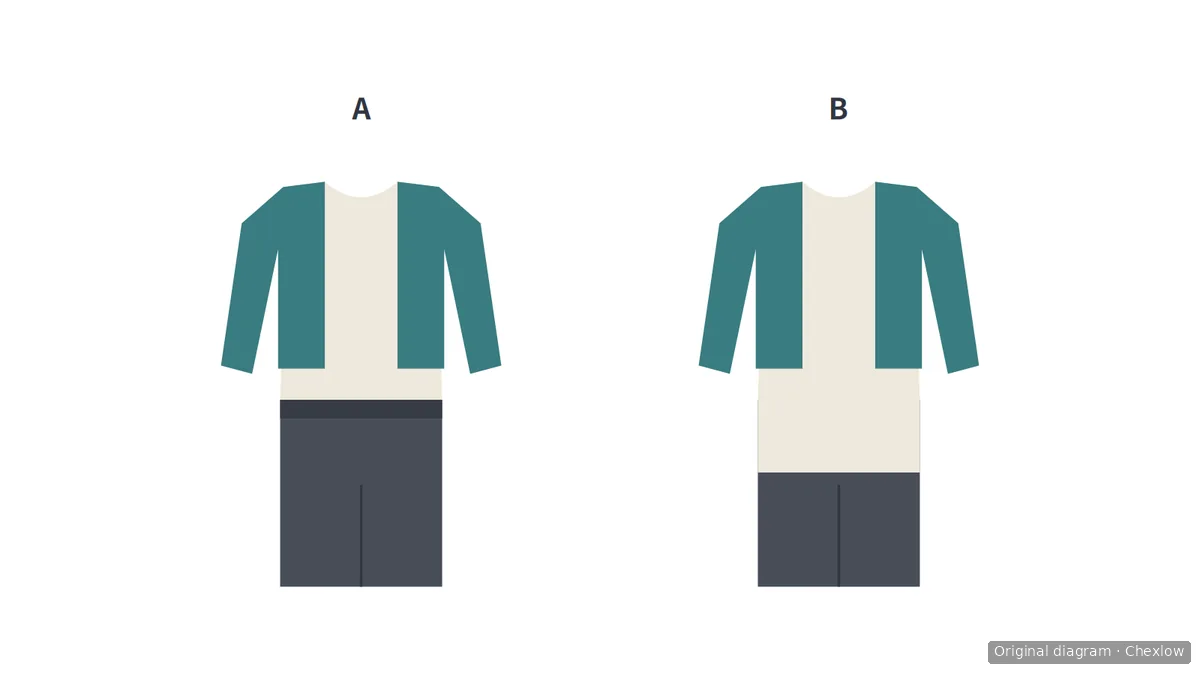
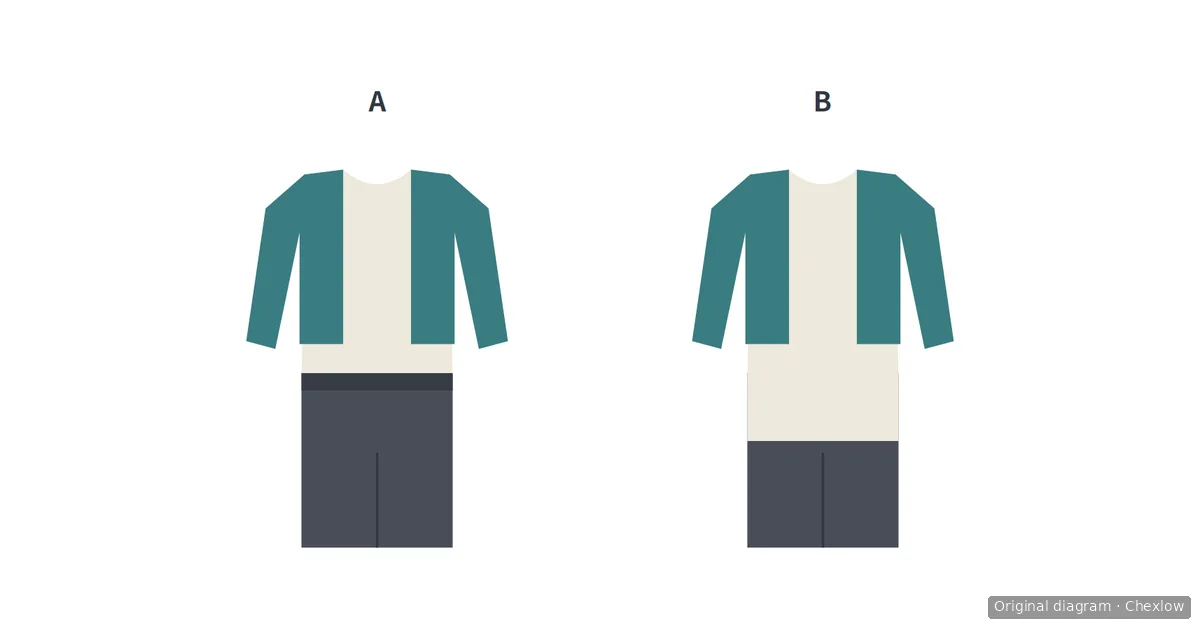
A shows the waistband with the top tucked in. B shows the longer top covering the waistband and extending below the jacket. The diagrams explain that visible difference; neither is an ideal body ratio or a measured product fit.
- If you want the waistband visible, check the outfit with the top tucked in before choosing the jacket length.
- If you prefer an untucked top, inspect its exposed hem from the front, side and back. Keep the combination if you like that additional band of fabric.
- If you dislike the exposed top but never tuck it in, compare a different jacket length before buying replacement tops.
There is no required number of centimetres of shirt that must show. Your useful comparison is between the combinations you will actually repeat.
Buy only after the outfit works in motion
Wear the intended layers and use the jacket’s closure as you normally would. Sit, stand and reach forward, then check where the jacket and top settle. Notice whether you keep pulling either hem into place or whether the jacket feels restrictive when closed.
Keep the candidate if you like the visible layers, accept its coverage and can move comfortably. If the length works but the jacket feels tight, try another size or cut and reassess the hem; do not assume the next size changes only the width.
For an online purchase, request missing garment measurements and check return conditions before ordering. Choose a longer alternative if you want more overlap with your existing trousers. A cropped jacket need not work with every outfit, but decide which existing combinations justify buying it before adding more clothes to make it work.
How this guide was built
Written by Chexlow’s AI editor using Patagonia’s sizing guidance, Proper Cloth’s waistband explanation, UNIQLO’s length guide and Luxire’s jacket-measuring instructions. The outfit comparison and purchase checks are editorial suggestions, not a universal proportion rule or findings from original wear testing.
Original SVG diagrams created for Chexlow