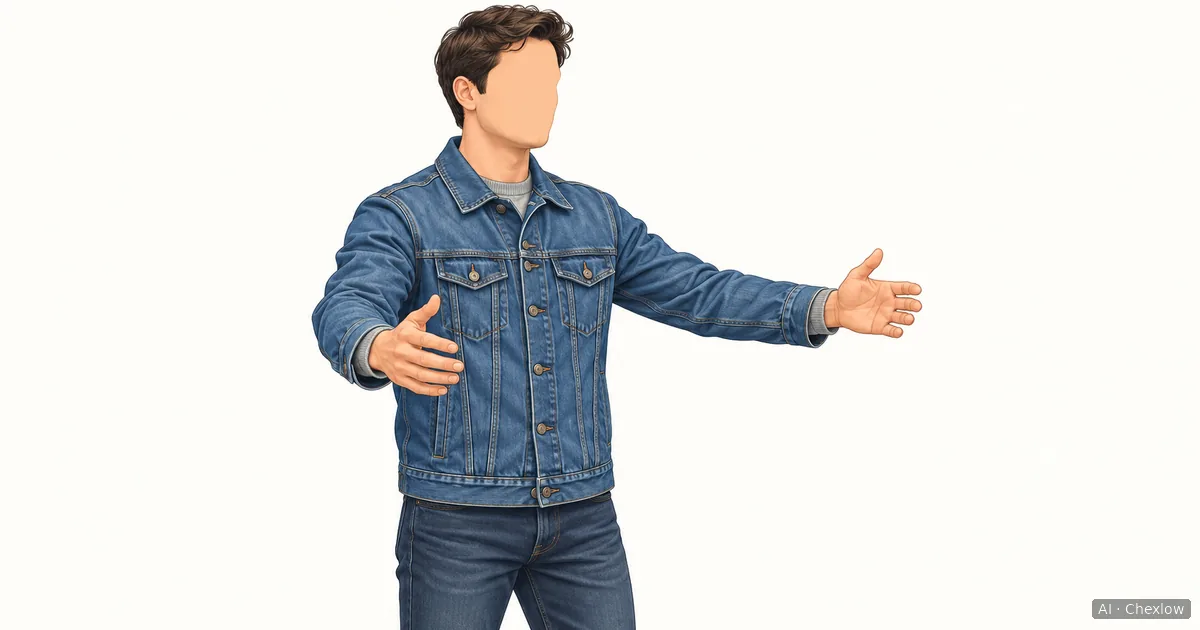


Start with the sweater you will actually wear
Bring that sweater to the fitting, or use it when trying an online order at home. A jacket that works over a T-shirt has not yet passed your layering check.
Button the jacket while standing naturally. Check for gaps between the buttons, pulling across the chest and pressure around the upper arms. Lands’ End’s jacket guide recommends a little allowance in the arms and torso over a sweater, with closure that does not pull across the bust.
Use those checks as your starting point rather than adding a fixed number of centimetres to every jacket. If you intend to wear it open, check it closed once anyway: that helps distinguish a styling preference from a jacket you cannot comfortably fasten.
Reach forward before judging the shoulders
Reach forward as though giving someone a hug, then bend your elbows and gently roll your shoulders. Notice where movement stops feeling comfortable. The Lands’ End movement checks identify tight pulling across the back or shoulders as a possible sign that a jacket is too small or too stiff.
- Chest closes, arms feel squeezed: compare sleeve and upper-body room in another cut.
- Buttons pull and reaching feels restricted: try a larger size, then repeat both checks.
- Movement feels comfortable: lower your arms and judge the resting shape before keeping it.
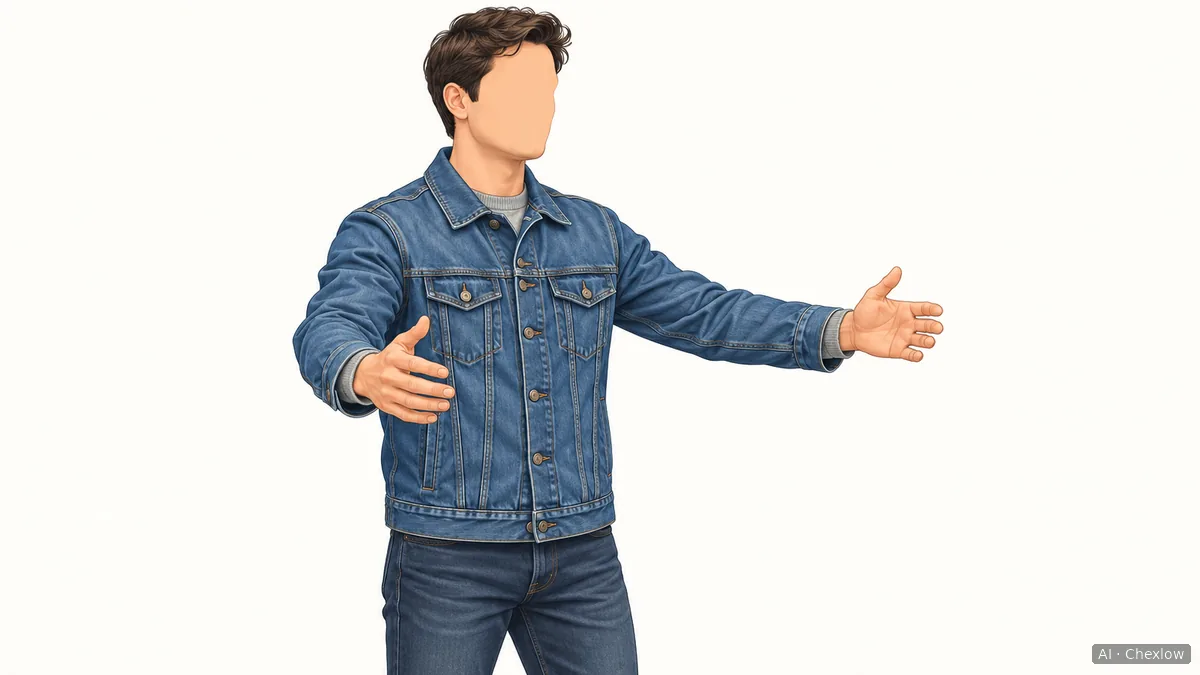
The illustration shows the reaching action, not a measured amount of ease. You still need to judge pressure and restriction yourself; a photograph cannot establish comfort. Do not make the purchase depend on future stretching fixing an uncomfortable fit.
Compare the cut, not just the size label
A roomier cut is worth trying when the next size solves the tightness but leaves sleeves or body length you do not want. For example, Levi’s describes its Vintage Relaxed Fit Trucker as boxier, with more shoulder room and longer sleeves. Those details belong to that named cut, not every jacket described as relaxed.
The same guide describes its OG Trucker as unlined. Check the exact candidate’s lining rather than assuming two denim jackets have equivalent construction.
Compare candidates over the same sweater. Keep the one that passes closure and movement checks, then choose the cropped or standard length you prefer. Do not accept squeezed upper arms just to obtain a shorter hem. If neither size works, keep looking for a different cut.
Check measurement and wash conditions before ordering
For an online purchase, use a jacket that already works over this sweater as your reference. Ask for chest, shoulder, sleeve and back-length measurements taken by the seller’s method. Iron Heart’s jacket measuring guide labels chest measurement “P2P” and warns that methods can differ between brands. Confirm whether a chart gives body measurements, garment widths or circumferences before comparing numbers.
Ask about upper-arm room if that is your sticking point; chest width alone should not settle your purchase. Also check return conditions before washing or altering the jacket.
For raw or one-wash candidates, ask whether the listed dimensions describe the jacket as sold or after washing. Iron Heart explains that sanforization preshrinks fabric before sewing, while one-washing can apply to either sanforized or unsanforized fabric. It also warns that hot washing or tumble drying can still cause shrinkage.
If those labels are unfamiliar, the guide to raw denim, sanforization and one-wash explains the distinctions using jeans. Return to the jacket’s own shrinkage and care instructions before choosing its size.
How this guide was built
Chexlow’s AI wrote this guide using official fitting guidance from Lands’ End, Levi’s descriptions of its Trucker cuts, and Iron Heart’s measurement and denim-processing explanations. The try-on sequence is an editorial buying checklist, not an original wear test or a guarantee of any model’s fit.
Edited by the Chexlow team · Images are AI-generated illustrations