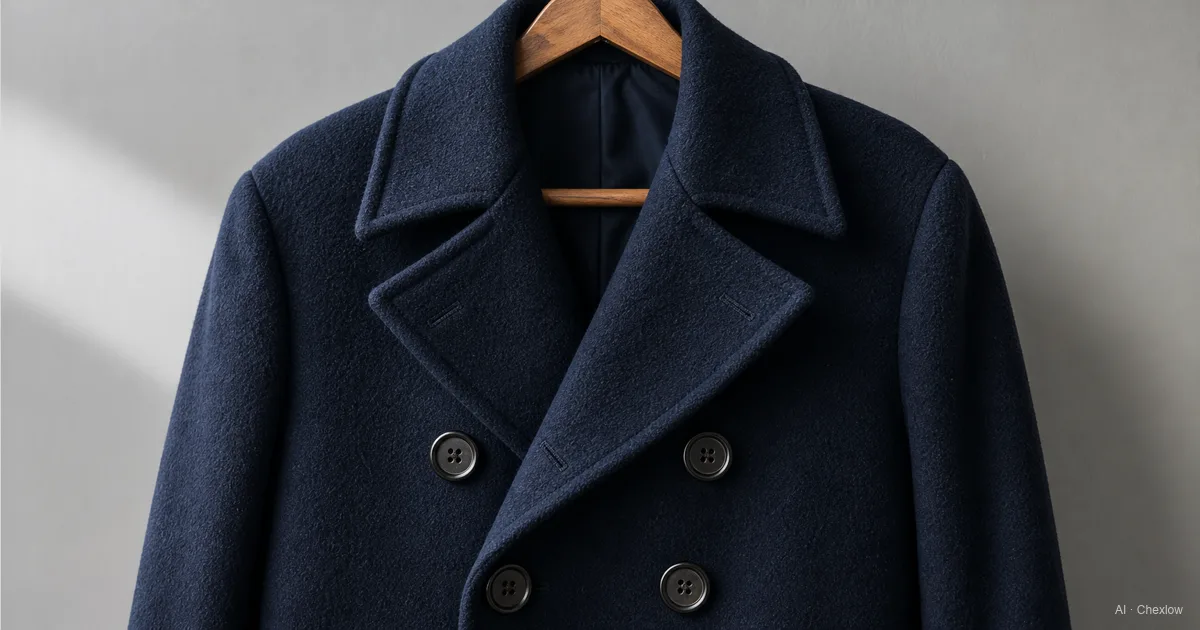
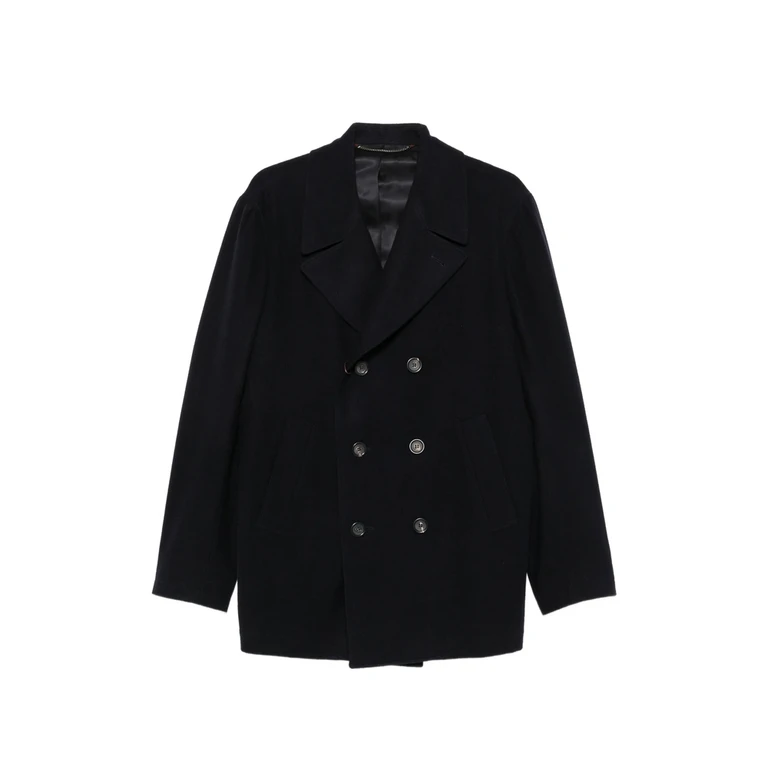
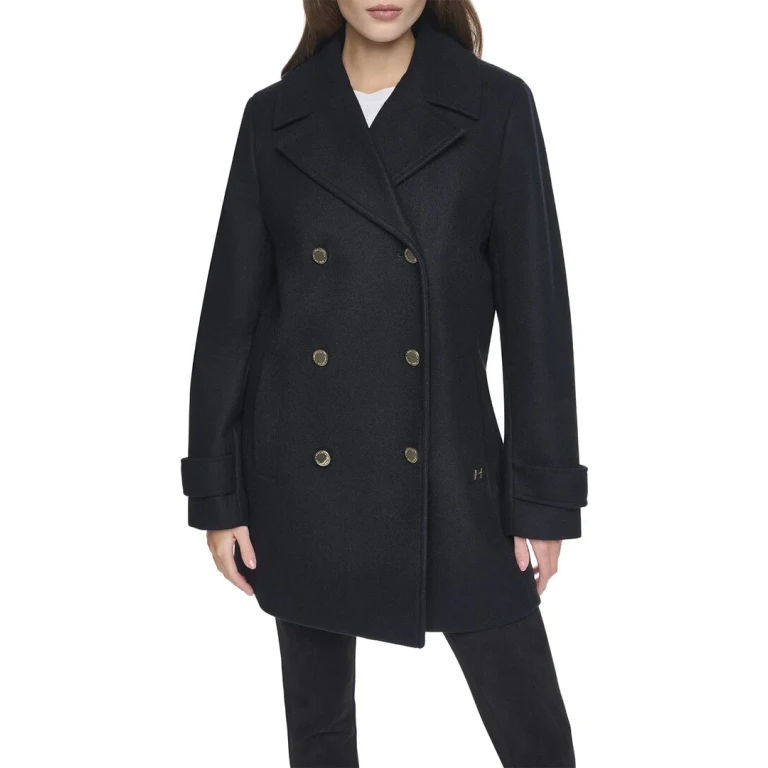
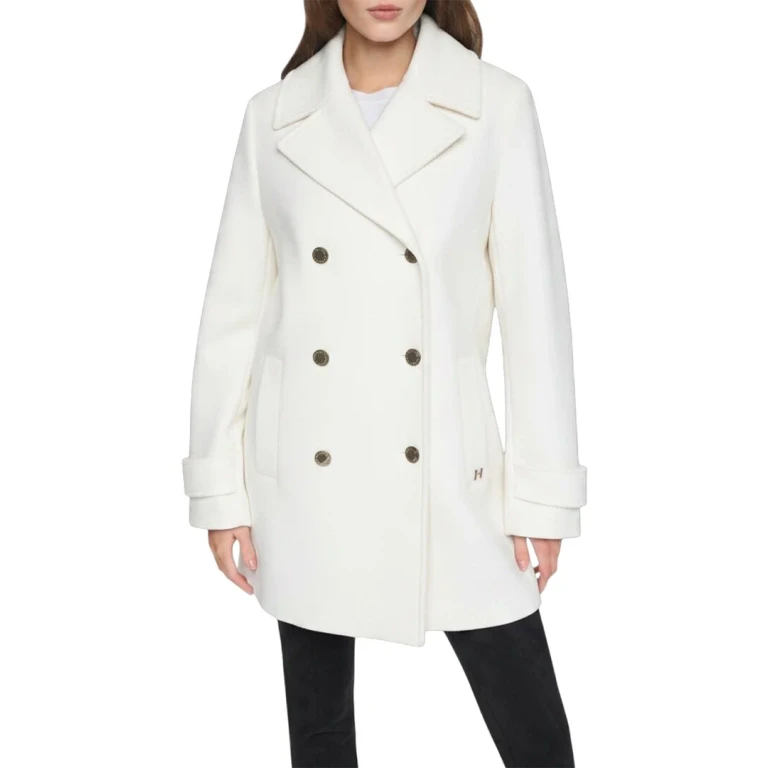
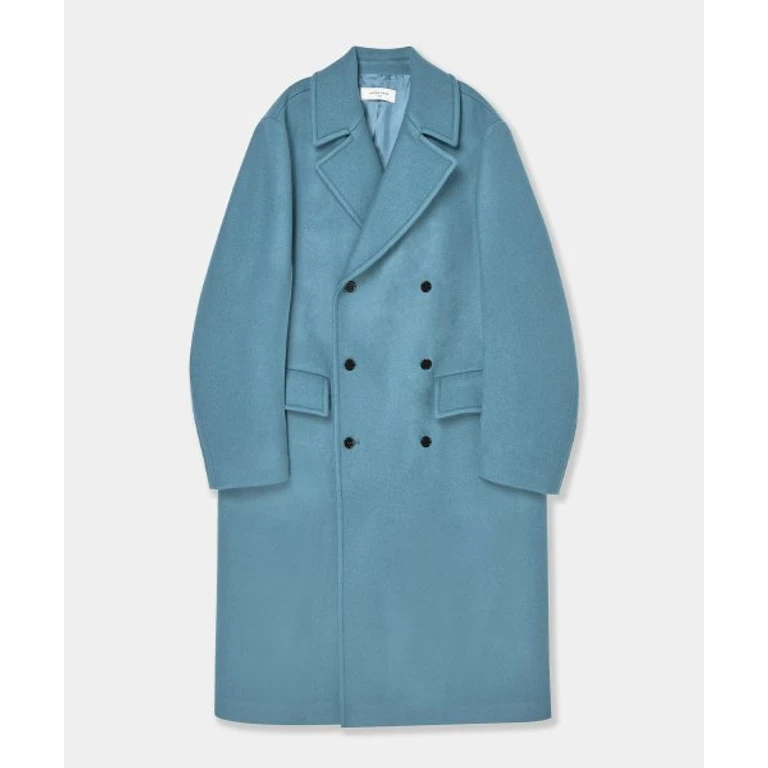
Decide whether a short coat suits your clothes
Start with the outfit you actually need to cover. Try the peacoat over your everyday knitwear; if you wear a blazer, bring that too and check where both hems finish. Choose a colour against trousers you already wear rather than treating navy, black or charcoal as an automatic winner.
A peacoat need not be ruled out for tailoring: Gloverall's guide shows it with suits as well as denim. If covering a longer jacket or more of your legs matters most, compare short wool coats and longer overcoats before narrowing your search.
For a wet commute, check the actual weather-protection specification. Wool cloth's resistance to a shower is not the same as a waterproof shell.
Compare the whole coat, not a wool-percentage score
Two manufacturer examples make the distinction useful:
- Pure wool. Gloverall's Churchill specifies a 100% Melton wool outer and full lining.
- Wool blend. The cited Schott 740 uses 80% wool and 20% nylon, with a quilted lining.
These are specification examples, not a tested ranking or a promise that either is warmer. Keep both types on your shortlist. Compare how much weight you want to carry, the room left for layers and the feel of the collar against your neck.
Melton means wool cloth woven closely and milled to create a felted surface, as Gloverall explains. It is not another wool percentage. Read the shell and lining composition separately; “wool coat” is not a complete description of both.
Read the size chart before choosing a size
Check whether the chart measures your body or the finished coat. Gloverall's size guide uses flat garment widths: a 55 cm chest width is roughly 110 cm around the coat, not a 55 cm body chest.
Lay out a coat that fits over the same layers and compare it using the seller's measuring method. Note chest width, shoulders, sleeve length and back length. Do not assume the same letter size means the same dimensions elsewhere.
If the seller gives only a generic size conversion, ask for the garment measurements and check the return conditions. A familiar size label is a starting point, not enough evidence for a close-fitting purchase.
Button it, move, then inspect the finish
Use this fitting-room sequence as a practical acceptance check:
- Close the front. Fasten the intended closures, including an inside fastening if present. Look for a flat overlap without having to pull the panels together. Persistent strain across the chest or hips is a reason to try another size or cut.
- Move naturally. Reach forward, bend your elbows and sit as you normally would, opening the coat if needed. Reject a fit that pinches or makes you hold your shoulders differently just to look right.
- Check shoulder and sleeve together. For a conventional set-in sleeve, use the shoulder seam as a starting reference. Judge an intentionally dropped shoulder by its intended shape and your movement, not that same seam rule. For winter coverage, sleeves should cover the wrist, as Gloverall advises; do not shorten them simply to display shirt cuffs.
- Look inside. Check for split seams, loose buttons and lining that snags on your knitwear. Put your usual phone in the pocket and see whether it sits comfortably and distorts the front.
Treat lining material and button count as specifications to inspect, not automatic quality grades. If only the sleeve length bothers you, get an alteration assessment before paying; do not buy on the assumption that every fitting problem can be repaired.
Check the care commitment before paying
Both the Churchill and the cited 740 specify dry cleaning only. A synthetic component does not give you permission to wash a coat at home. If home washing is essential, shortlist only garments whose own label explicitly allows it.
For routine care of woven wool, Woolmark recommends a soft garment brush used lengthwise and a shaped or padded hanger. Use suitable ones you already own; these are upkeep tools, not reasons to buy an accessory kit.
The buying decision is now concrete: keep the coat if its closed fit, movement, coverage and care requirements work for you. Request missing measurements or an alteration quote before committing. If the cut still fights your layers, return to the shortlist rather than relying on the wool percentage to justify it.
Sources
- Gloverall peacoat guide
- Gloverall Churchill specifications
- Schott 740 specifications
- Gloverall measuring guide
- Woolmark wool care
How this guide was built
AI wrote this guide for Chexlow using Gloverall and Schott product documentation and Woolmark care guidance. It focuses on first-purchase checks; the fitting sequence is editorial guidance, not a hands-on product test.
Edited by the Chexlow team · Images are AI-generated illustrations