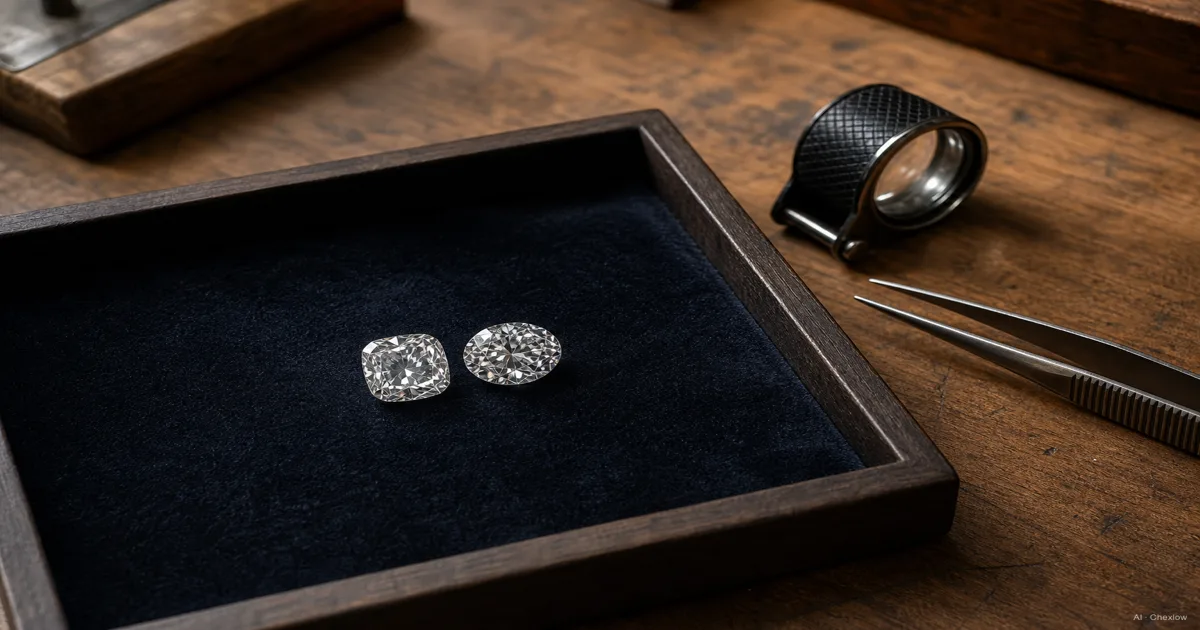
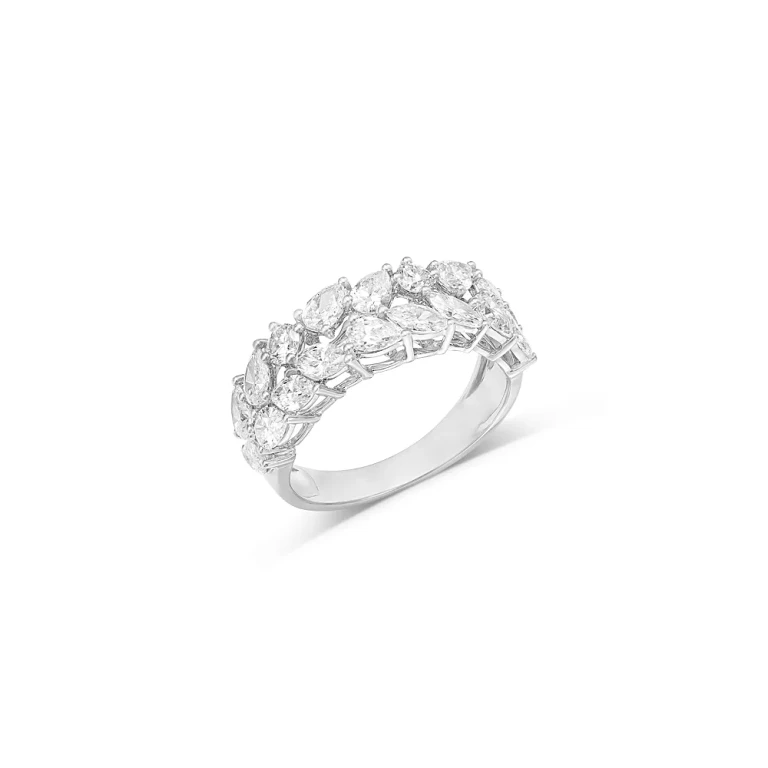
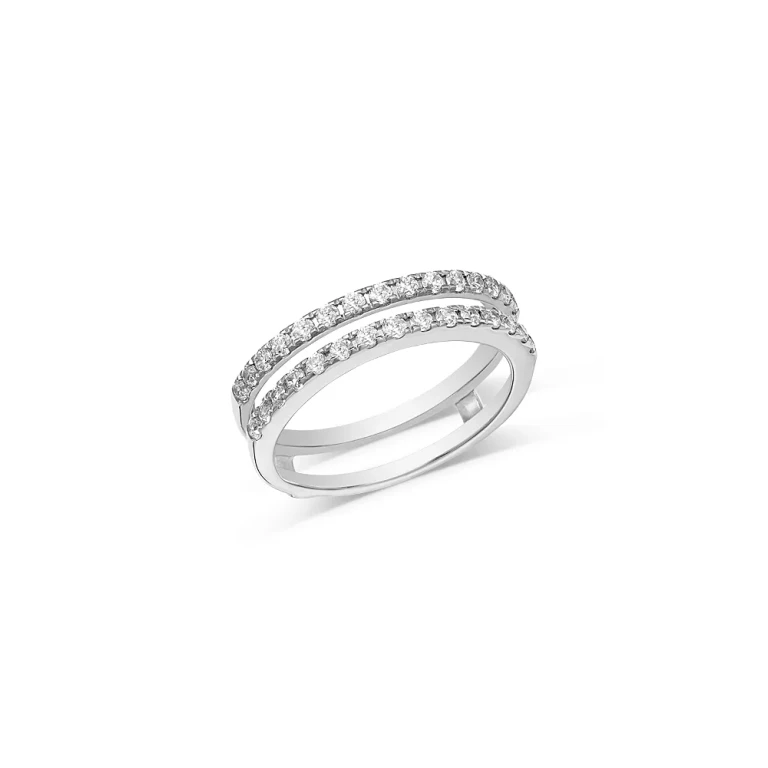
Every engagement ring ad wants the lab-grown versus natural decision to feel like a matter of the heart. It mostly is not, at least not first. The real fork in the road is technical: how the stone was actually made, what its certificate can and cannot promise, and what happens to its value the day you try to sell it. Side by side on a hand, the two stones look identical. Everything that actually matters happens before that moment and after it.
If terms like color grade, clarity, and origin-disclosed report already sound like fine print, that reaction is normal for a first diamond purchase. This guide breaks the decision into the four things worth checking before you buy, not just the vocabulary.
Lab-Grown vs Natural Diamond: What's Actually Different (and What Isn't)
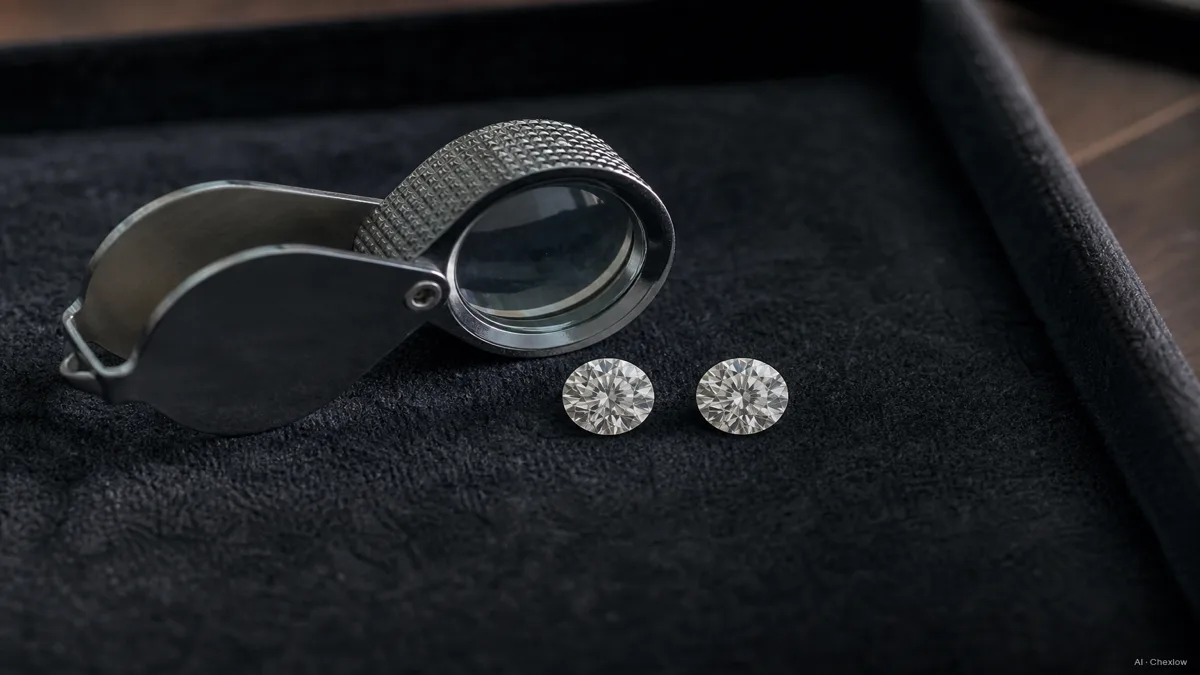
Chemically and structurally, there is nothing to argue about. Both are pure crystallized carbon arranged in the same isometric crystal system. Both score a 10 on the Mohs hardness scale, both bend light at the same 2.42 refractive index, and both conduct heat the same way. To the naked eye, and even under most tools a jeweler keeps on hand, a lab-grown diamond and a natural diamond are visually and chemically indistinguishable, a point GIA itself confirms.
The difference is entirely about origin. A natural diamond forms roughly 100 miles underground, under enormous heat and pressure, over one to three billion years, before a volcanic eruption carries it toward the surface. A lab-grown diamond reaches the same atomic structure in a lab, using one of two processes. HPHT, or high-pressure high-temperature, recreates the underground conditions directly. CVD, or chemical vapor deposition, builds the crystal layer by layer from a carbon-rich gas. Either way, the process takes weeks, not eons.
That timeline is really the whole story. Nothing about the finished stone announces which process made it. Only specialized lab equipment can trace the growth signature back to its origin, which is exactly why certification, not appearance, becomes the first real checkpoint.
Price and Budget: How Much Further Your Money Goes
This is where the two stones separate hard. A comparable 1-carat, D-to-F color, VVS-to-VS1 clarity diamond typically runs $1,000 to $1,500 lab-grown versus $4,500 to $7,000 natural. A lab-grown stone with matching specs usually costs 70 to 90 percent less.
One widely cited example makes the gap concrete: a 1.70-carat, H color, VS2 clarity, Excellent-cut lab-grown diamond priced at $1,770, next to a mined diamond with identical specs listed at $10,810 (Beyond Carat).
Most buyers are not pocketing that difference, they are spending it on size. The average lab-grown engagement ring center stone grew to 2.45 carats in 2026, up from 1.31 carats in 2019, an 87 percent jump in seven years (Beyond Carat). Put simply, the same ring budget that bought roughly one carat of natural diamond in 2019 can now buy two to three carats lab-grown.
That math is a big part of why lab-grown diamonds made up about 61 percent of engagement ring center stones in 2026, per The Knot's Real Weddings Study (Beyond Carat). For a lot of first-time buyers, lab-grown is no longer the alternative choice. It is the default one.
Certification and Grading: What GIA Reports Actually Tell You
Reading a grading report can feel like homework nobody assigned, but this is the one section worth slowing down for, since it changes what your certificate can actually promise.
GIA has graded lab-grown diamonds since 2006. What began as the Synthetic Diamond Grading Report was renamed the Laboratory-Grown Diamond Report in April 2019, a shift away from language that implied lab-grown stones were somehow less real (International Gem Society). For a first-time buyer, an origin-disclosed report from GIA or an equivalent lab is the single most important document to ask for, full stop.
That report changed again on October 1, 2025. Under the updated methodology, GIA now describes D-to-Z lab-grown diamonds using broader "Premium" or "Standard" quality-assessment terms instead of the precise color-and-clarity scale it still uses for natural diamonds (GIA; JCK).
In practice, that means you can no longer line up a lab-grown report next to a natural diamond's certificate and compare grade for grade. If a seller tells you a lab-grown stone is "VS1 equivalent," ask exactly where that language appears on the actual GIA report, because as of late 2025, it usually does not read the same way it used to (GIA Gems & Gemology).
Resale Value: The Trade-Off First-Time Buyers Overlook
Resale is where the two stones' fortunes reverse. Lab-grown diamonds typically resell for only 10 to 40 percent of their original retail price, and some sources put it closer to 10 to 20 percent, while natural diamonds tend to hold 50 to 80 percent of theirs (TheCaratCut; Sam's Jewelers). As a percentage, natural diamonds retain roughly twice as much value.
Percentages can be misleading here, though, because the starting prices are so different. One comparison found a buyer losing about $2,800 reselling a lab-grown stone, versus $14,750 lost reselling a comparable natural diamond, simply because the lab-grown stone cost far less to buy in the first place (Sam's Jewelers). A bigger percentage loss on a much smaller number can still be the better outcome in dollars.
The deeper reason resale keeps compressing is production cost, not falling demand. Lab-grown wholesale prices have been dropping roughly 10 to 15 percent a year, and one report put the wholesale cost of a 1-carat CVD stone at under $150 in the first quarter of 2026 (TheCaratCut). Treat a lab-grown diamond as a consumer purchase rather than an appreciating asset, and the resale numbers stop being a surprise.
Which One Should You Buy First? A Decision Framework
Once the specs are out of the way, the decision usually comes down to what you are actually optimizing for.
- Maximizing carat for the money. Lab-grown is the practical pick. The same budget buys roughly two to three times the carat weight.
- Resale or long-term value. Natural diamonds hold a higher percentage of their price at resale, worth weighing if the ring is meant to be passed down or eventually sold.
- Sustainability priorities. Lab-grown sidesteps the land disturbance and supply-chain questions tied to mining. That is a values call, not a technical one.
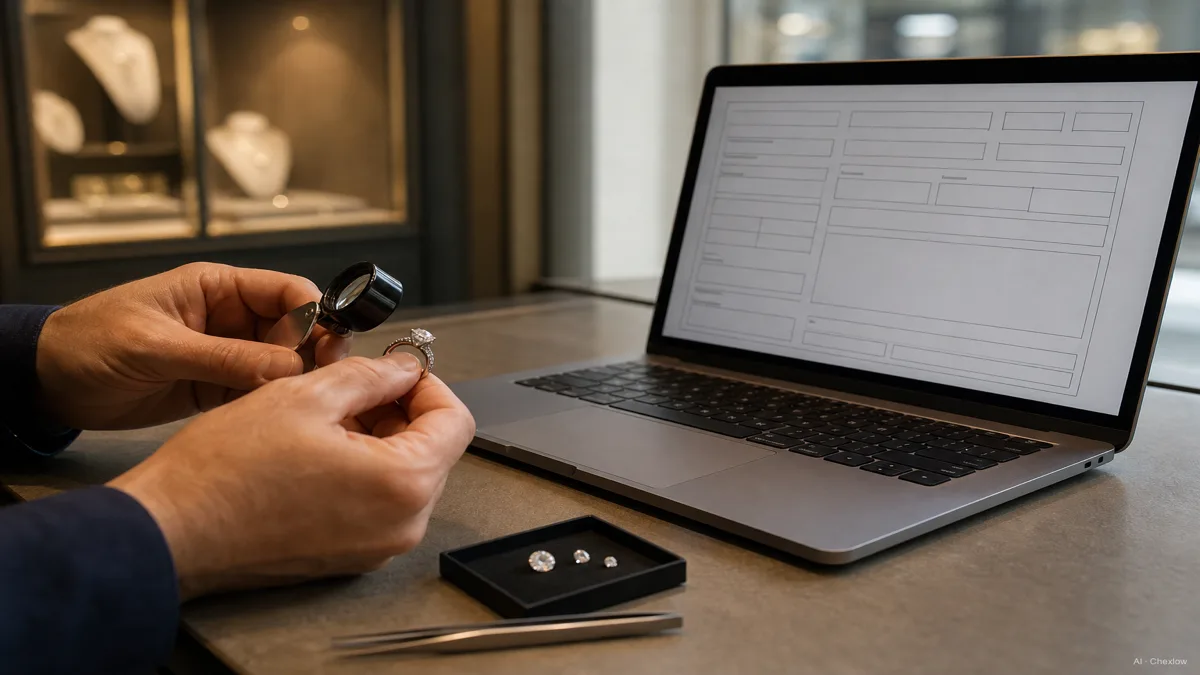
- Either way, the paperwork. Ask for an origin-disclosed GIA report, and have the jeweler walk you through what its grading language actually means under the post-2025 rules. Do not assume it maps directly onto a natural diamond's certificate.
There is no universally correct answer between lab-grown and natural. There is only the one that matches what you are actually buying the diamond for.
Sources
- Lab Grown vs Natural Diamonds: 2026 Price & Quality Guide, Beyond Carat — price gap, carat size trend, and market adoption data
- GIA Launches Updated Laboratory-Grown Diamond Services, GIA — the October 2025 grading methodology change
- Laboratory-Grown Diamonds: An Update on Identification and Products Evaluated at GIA, GIA Gems & Gemology — identification methodology and report language
- Does the GIA Grade Lab-Grown Diamonds?, International Gem Society — GIA grading history since 2006
- GIA Changes Its Lab-Grown Grading (Again), JCK Online — practical implications of the 2025 grading change
- Lab-Grown Diamond Resale Value: The Brutal Truth (2026 Data), TheCaratCut — resale percentages and wholesale cost trends
- Natural vs. Lab Diamonds: 2026 Resale Value & Worth Guide, Sam's Jewelers — dollar-value resale comparison
Cómo se elaboró esta guía
This piece started from a question first-time diamond buyers keep running into: lab-grown and natural diamonds look the same, so what actually decides which one to buy. We pulled the physical and production comparison from Beyond Carat's price and quality guide, then cross-checked GIA's own grading history and its 2025 methodology change against International Gem Society, JCK, and GIA's Gems & Gemology research. Resale figures came from TheCaratCut and Sam's Jewelers, both of which break the trade-off down into percentage and dollar terms. The selection lens sits on Chexlow's jewelry catalog, spanning lab-grown and natural diamond rings.
Editado por el equipo de Chexlow · Las imágenes son ilustraciones generadas por IA