
Decide what happens when rain starts
“Mostly dry” describes the weather you usually get. The more useful buying question is what you will do on the wet journey home.
- You can wait indoors or change your route. A windbreaker is a reasonable shortlist for the dry, windy parts of your commute, provided you are willing to use that alternative when rain persists.
- You must keep walking or wait at an exposed stop. Prioritize a waterproof rain shell. A short journey is not a guarantee that a water-resistant jacket will keep your clothes dry.
- You already have reliable rainwear. Choose the windbreaker for a separate dry-weather job, rather than expecting it to replace that protection.
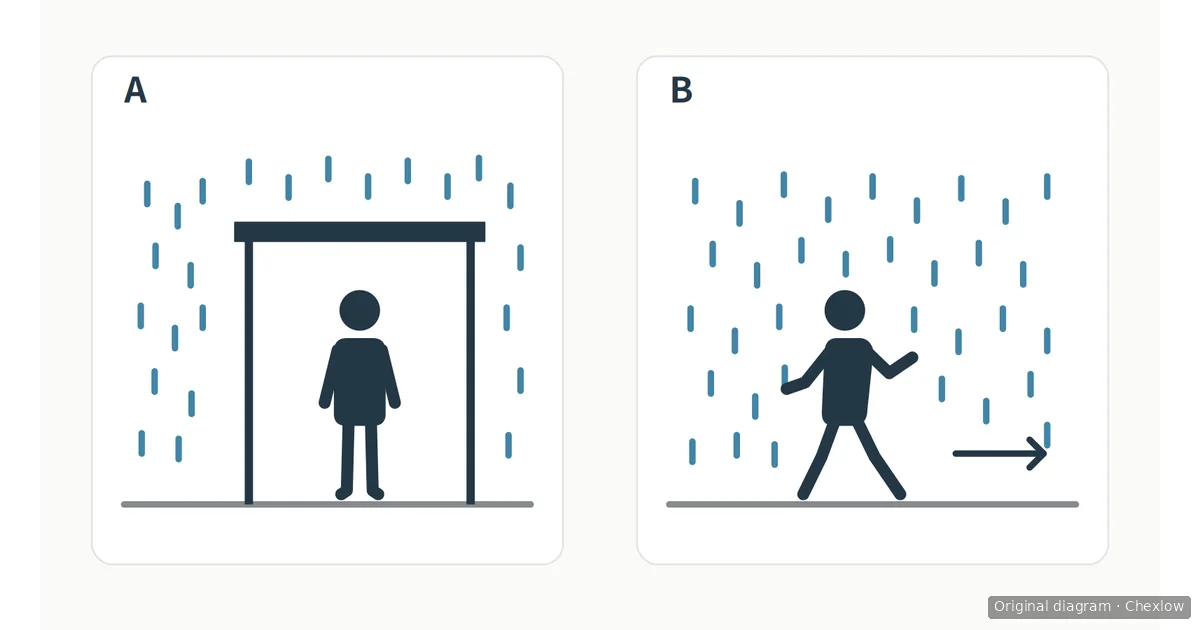
Helly Hansen describes windbreakers as light, packable wind protection and distinguishes them from rainwear for a downpour. These route-based priorities are a way to apply that distinction, not a fixed number of safe minutes in rain.
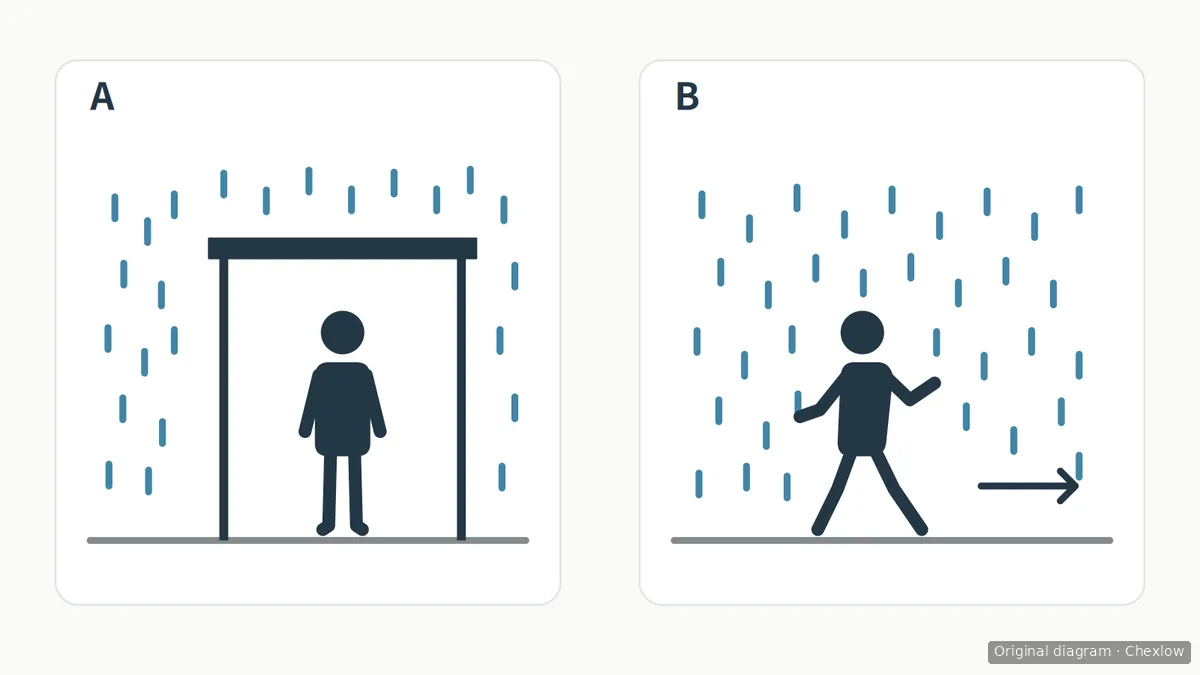
A represents a trip where you can stop under cover and wait. B represents a trip where you must continue exposed to rain. The drawing compares your options along the route; it does not show either garment passing a waterproof test.
Read the protection claim before choosing
Treat water-resistant as limited rain protection, not another spelling of waterproof. REI explains that water-resistant jackets can handle light rain briefly but are unsuitable when it persists or blows sideways. Windproof wording alone does not settle the rain question either.
DWR, a durable water-repellent surface finish, encourages droplets to bead. That does not establish a waterproof barrier throughout the jacket. For a sewn rain shell, look for an explicit waterproof claim, a waterproof membrane or coating, and full seam sealing; tape only around the hood and shoulders is insufficient evidence.
Product descriptions need the same careful reading. Patagonia describes the linked Houdini as offering “weather-resistant protection.” Those words alone are not a waterproof claim. Apply that distinction to the exact jacket you are considering, regardless of brand or price.
If your route requires reliable rain protection and the listing leaves construction unclear, ask the maker before buying. Once you have decided you need a rain shell, continue with what to check when buying your first rain jacket.
Check whether the lighter layer earns its place
If you will take the jacket off on the train or at work, compare its packed bulk in the bag you actually carry. REI's packability guidance distinguishes low-bulk fabrics from the additional convenience of a pocket that doubles as a pouch. Do not assume every windbreaker has that feature.
Check the garment type as well as the title. This catalog detail uses “windbreaker” in its name but describes a down jacket and lists down-and-feather filling. That conflicting catalog information is not manufacturer verification. For the light wind layer considered here, set aside down-filled, padded and insulated jackets; if the description conflicts with the name, ask the seller to confirm the model before buying.
A rain shell need not be bulky: Helly Hansen also describes packable rain jackets. Compare the two actual candidates rather than awarding the windbreaker an automatic win on portability.
Before choosing:
- Wear your normal commuting clothes underneath and reach forward with the jacket closed. Check whether the shoulders pull or the hem rises more than you want.
- Try the front zip and any vents. Decide how you will release heat during a brisk walk or on warm transport; even breathable rainwear can be overwhelmed by strenuous activity, as REI explains.
- Pack and unpack the jacket if possible. Check whether it fits alongside your usual belongings without an inconvenient amount of rearranging.
Choose the windbreaker when its wind protection and everyday carrying convenience solve your actual problem. If you need one jacket to cover unavoidable rainy journeys as well, put documented waterproof construction ahead of a smaller bundle.
Cómo se elaboró esta guía
Chexlow's AI wrote this guide using public guidance from Helly Hansen and REI and Patagonia's visible Houdini product description. A catalog product detail illustrates conflicting garment labels, not verified material specifications. The commuting scenarios and fitting checks are editorial judgments, not original product tests.
Original SVG diagrams created for Chexlow