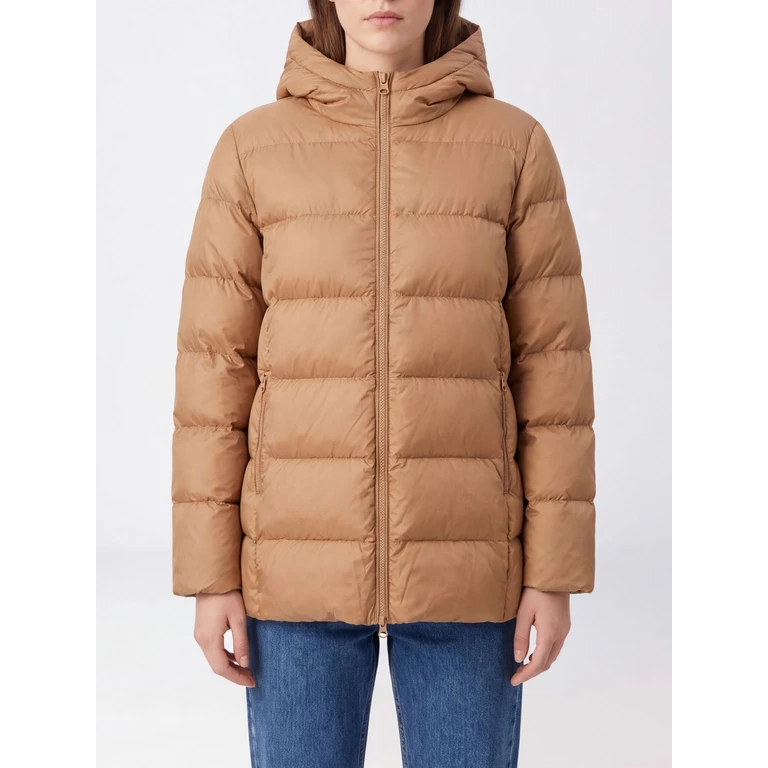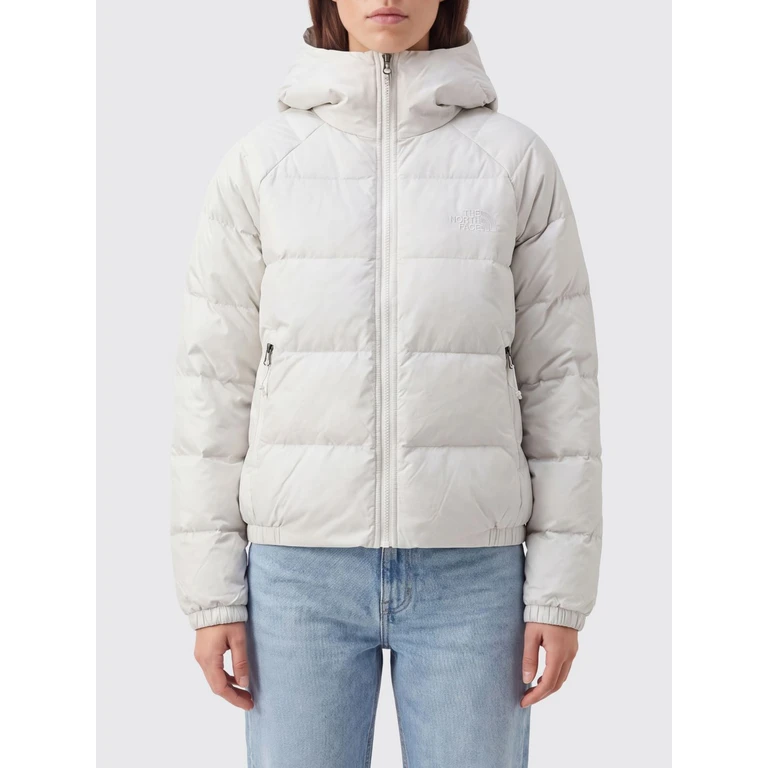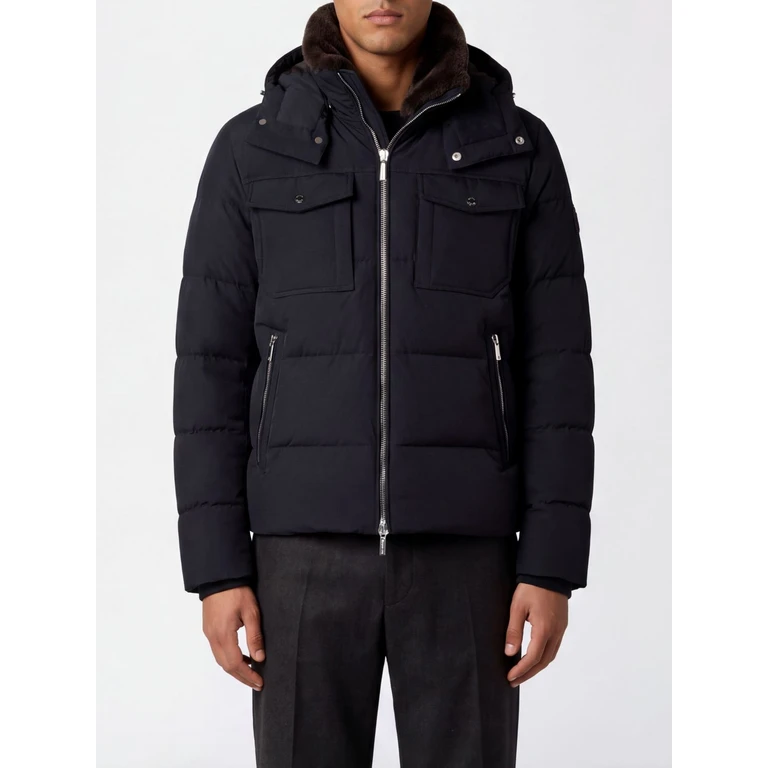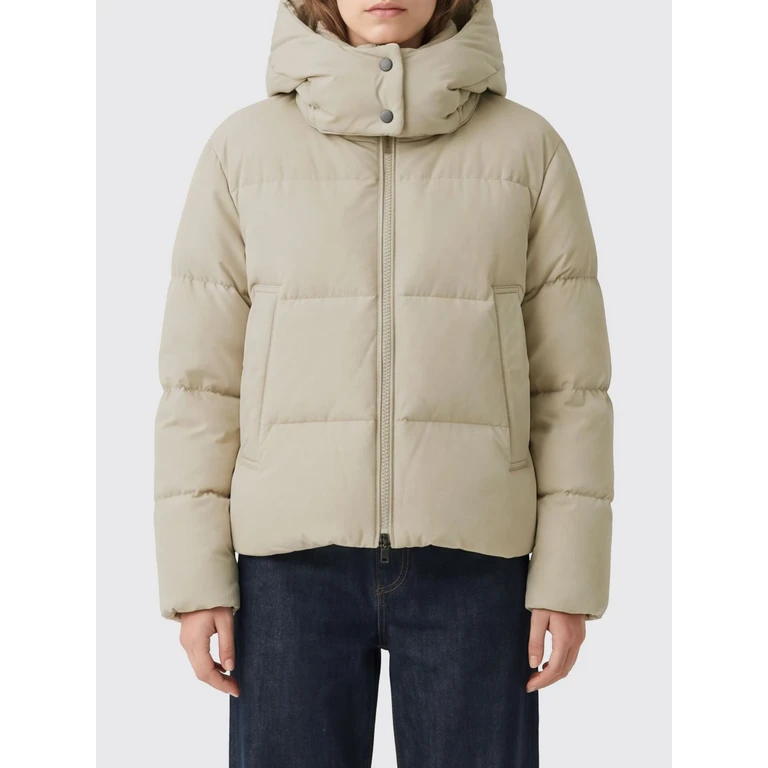
Decide what the jacket needs to do
Start with your hardest regular outing, rather than an imagined expedition. Use these priorities to narrow your shortlist:
- Commuting. Try the jacket over work clothes; prioritise coverage, usable pockets and a hood you can adjust easily.
- Carrying for occasional rain. Compare actual packed size and weight. Put 2.5-layer designs on the shortlist, but do not exclude a compact 3-layer jacket.
- Long walks with a pack. Give ventilation, robust construction and accessible pockets more weight than the smallest packed size.
These are selection priorities, not weather guarantees. Bergans' shell guide distinguishes everyday comfort from the demands of sustained mountain use.
Check the whole jacket, not just water beading
Look for an explicit waterproof claim, a membrane or waterproof coating, and sealed seams. Waterproof coatings are legitimate barriers too; a membrane is not the only route. Rab explains both constructions.
For a stitched rain shell, look for fully taped or fully sealed seams. Tape only at the shoulders and hood is not equivalent. Check how the front zip is protected as well. REI's buying guide explains these potential entry points.
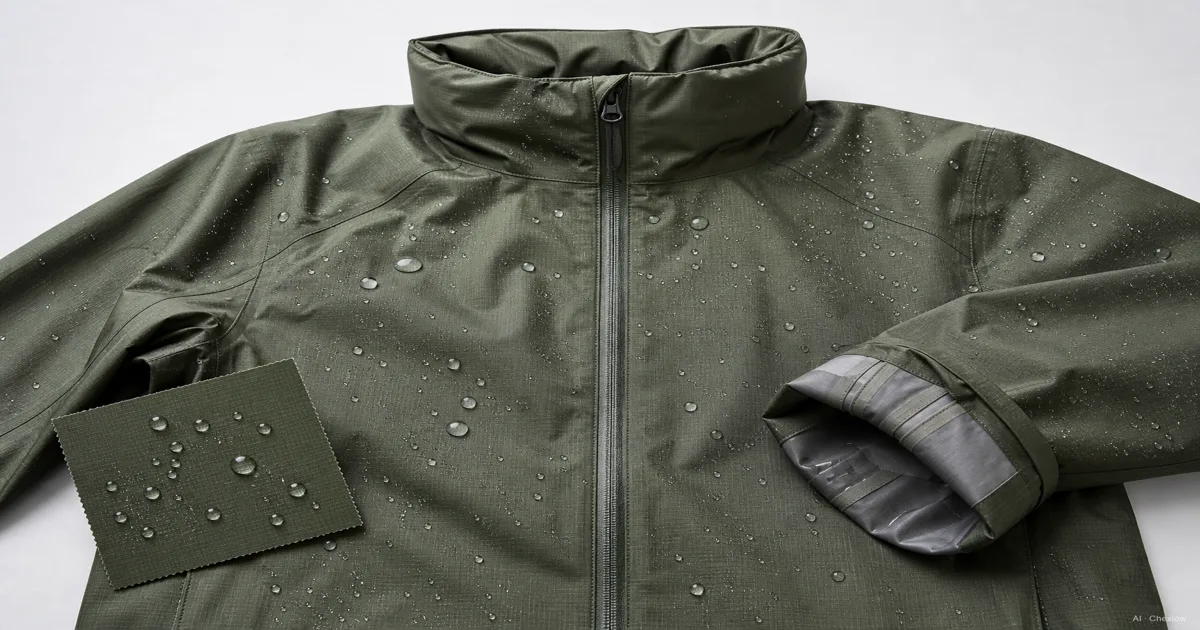
DWR is a surface treatment that encourages water to bead. It is not proof of whole-jacket waterproofness, and a soaked outer fabric does not automatically mean a leak. Gore explains the distinction. If the listing only says “water-repellent”, ask for the actual waterproof construction before buying for sustained rain.
Read mm and MVTR without turning them into promises
10,000mm means pressure equivalent to a 10-metre water column in a fabric test. It is not rainfall depth or hours of protection. Ask which test was used and whether the result applies to new or aged fabric. REI's testing overview explains why a number alone cannot rank complete jackets.
A useful example is Patagonia's H₂No standard: it includes testing after simulated wear and checks garment construction. That is a brand-specific process, not a universal requirement to buy that brand.
MVTR reports vapour transfer in g/m²/24h; higher is better under comparable test conditions. RET measures resistance to evaporation, so lower is better. Neither is a comfort guarantee. Rab explains both measures.
If two listings use different methods, stop ranking them by the bare numbers. Compare vents and fit instead. In warm, humid conditions, hard effort can overwhelm even breathable rainwear; opening vents and adjusting layers still matter. REI's use guidance covers those limits.
Choose construction by what you gain
The layer count describes the fabric assembly, not how many garments to wear.
- 2L. A separate lining protects the waterproof layer. Consider it when everyday comfort matters more than minimum bulk. Bergans
- 2.5L. A thin protective print or coating replaces a full inner textile. Consider it for a jacket you will often carry. Outdoor Research
- 3L. An inner textile is bonded to the waterproof layer. Consider it for frequent use, while checking the actual weight and feel. Outdoor Research
Do not pay for “3L” alone. Compare two complete jackets in your budget, including their packed dimensions and the features you will use.
Try the hood, movement and controls before paying
Use the clothes and backpack you expect to wear. This is a practical fitting checklist, not a home waterproof test:
- Hood. Adjust it, then look left and right. Can you see clearly without holding the brim?
- Movement. Reach forward and overhead. Reject a fit that pulls across the shoulders or exposes more of your waist than you want.
- Controls. Work the zip, cuffs and hem yourself. Can you close them comfortably?
- Pack. Fasten the hipbelt and check pocket access.
- Ventilation. Find out how you will release heat while keeping useful rain coverage.
REI's feature guide explains hood adjustments, zip protection and vent placement. If two candidates meet your protection needs, choose the one that passes your fitting checks rather than the one with the bigger headline number.
Add warmth only when you need it
An uninsulated rain shell and a warm middle layer have different jobs. For cold rain, plan the insulation underneath the shell; choose how much you need for the activity and conditions. Down loses efficiency when damp, while fleece and synthetic insulation tolerate moisture better. REI's layering guide explains the trade-offs.
Use a layer you already own for the fitting check. If you need a new middle layer, explore fleece zip styles and fit. If you are considering down, read what fill power tells you about warmth before choosing it. Neither purchase is a requirement for buying a rain jacket.
Cómo se elaboró esta guía
AI wrote this guide for Chexlow using published technical guidance from REI, Rab, Gore, Patagonia, Outdoor Research and Bergans. It explains how to shortlist and fit a first rain jacket; the buying priorities are editorial judgments, not product-test results.
Editado por el equipo de Chexlow · Las imágenes son ilustraciones generadas por IA