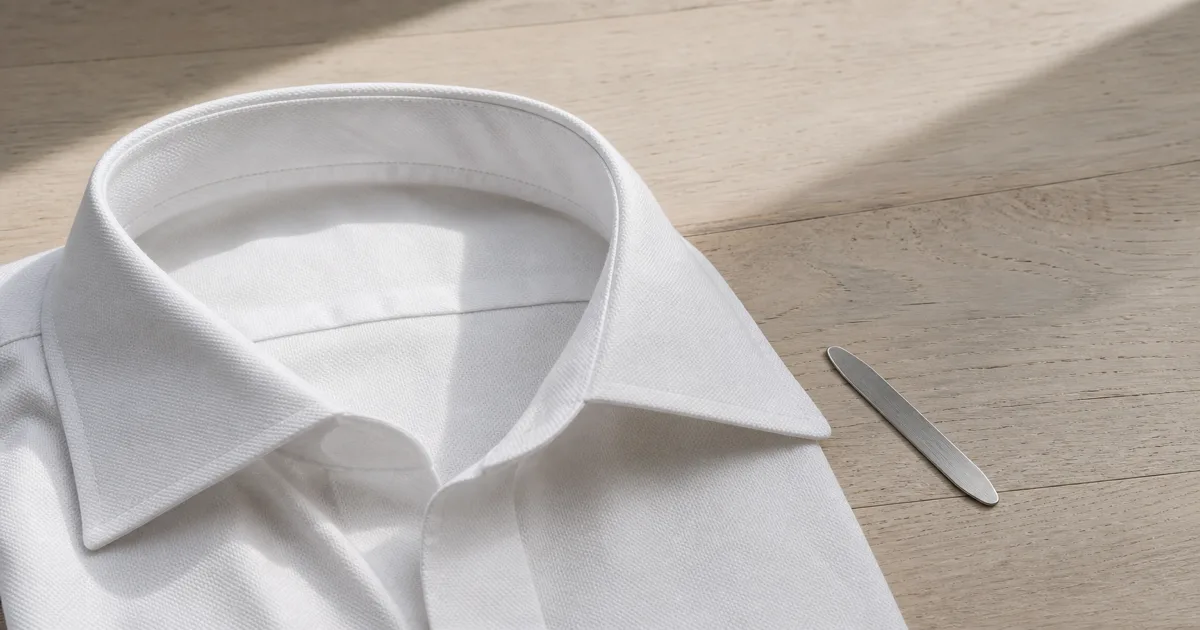
Walk up to a rack of white shirts and your eye gives up fast. Same color, similar collars, prices that do not explain themselves. The thing actually separating them is printed in small type on the label, and most people skip it: the weave.
Oxford, poplin, and twill are not different fabrics in the way cotton and linen are different. They are the same cotton thread, woven three different ways. That sounds like a small detail. It is the single thing that decides how a shirt feels in the hand, how it wrinkles, how warm it is, and how dressed-up it reads before anyone has looked closely.
Get this one choice right and a first dress shirt earns its keep. Get it wrong and you end up with a shirt that fights the occasion you bought it for.
What the three weaves actually mean, and why it matters
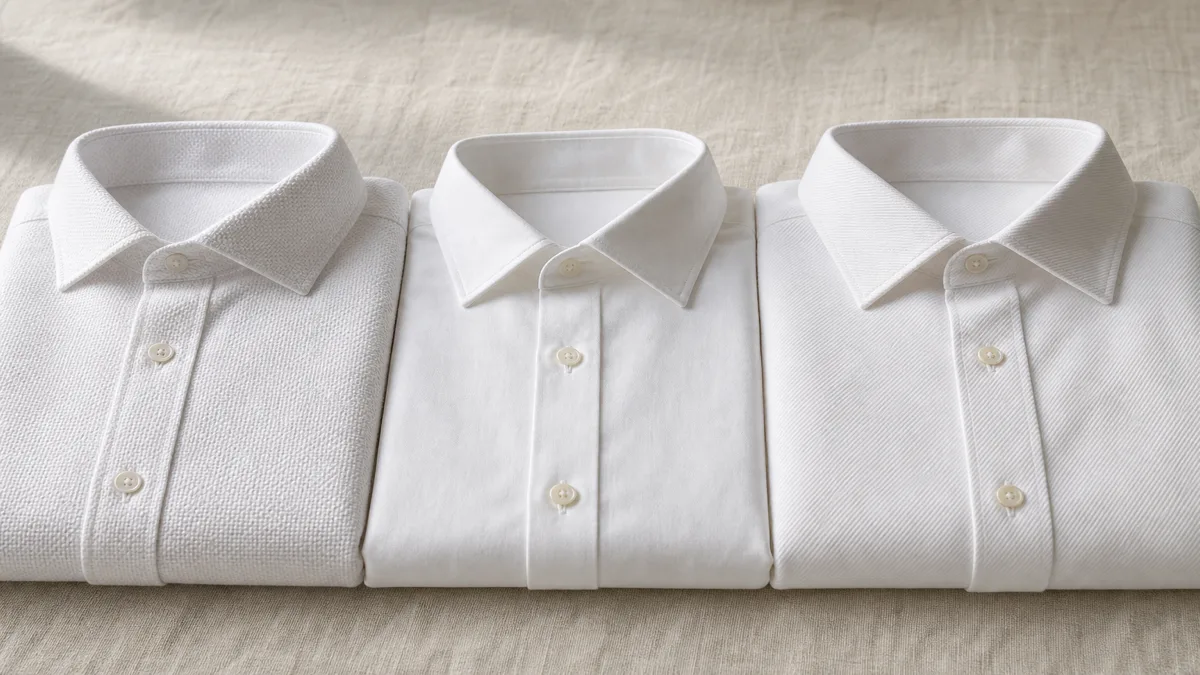
A weave is just the pattern in which the lengthwise threads (the warp) and the crosswise threads (the weft) interlace. Three patterns cover almost every dress shirt you will ever buy.
Oxford is a basket weave. Usually two weft threads cross over two warp threads at a time, like a tiny woven basket. That doubling is why oxford has a visible texture and a heavier hand. Shirting oxford typically lands around 180 to 220 GSM, the heaviest of the three (Nimble Made, Poplin vs Oxford).
Poplin, also sold as broadcloth, is a plain over-under weave with a lot of fine warp threads packed in. The surface comes out flat, smooth, faintly ribbed, with a slight sheen. It is the lightest of the three, roughly 90 to 130 GSM (Batch, Dress Shirt Weaves Guide).
Twill is the diagonal one. The weft crosses over one or more warp threads and then steps over by a row each pass, which builds a slanted rib you can see running across the cloth. It sits in the middle for weight, around 130 to 170 GSM, and it drapes well (The Adult Man, Poplin vs Twill vs Oxford).
Here is the quick version. GSM, grams per square meter, is just fabric weight. Lower means lighter, cooler, and a touch more see-through. Higher means more opaque, warmer, more structured. Poplin is the light end, oxford the heavy end, twill in between.
One more number worth knowing. Yarn count, the 60s, 80s, 100s, 120s you see on nicer labels, is about how fine the thread is. Finer yarns feel softer and more luxurious. Most entry-level oxford shirts use 60s or 80s yarns, while decent poplin usually starts around 80s to 100s. A high yarn count on a coarse-feeling shirt is a red flag worth noticing.
Oxford, the everyday workhorse
Oxford is the shirt you will reach for without thinking. That basket weave gives it a slightly heathered, two-tone look, especially when it is made the classic way, with a colored weft thread running against a white warp. That is why a light blue oxford up close looks like soft blue and white woven together rather than a flat blue. Poplin and twill cannot do that (Selvane, Poplin vs Oxford vs Twill).
It is also the most casual of the three. The texture and the weight read smart-casual rather than boardroom, which is exactly why it works with chinos on a weekday and with jeans on the weekend. The button-down collar lives here too. That collar style started with polo players at Oxford in the late nineteenth century, and it has been paired with oxford cloth ever since.
Because it is the heaviest weave, oxford also holds a little warmth. It layers nicely under a sweater and earns its place more in autumn and winter than in a July heatwave.
If you want one oxford to start, make it light blue. It is the most useful color the weave makes, and it covers more of the week than white does.
Poplin, the formal staple
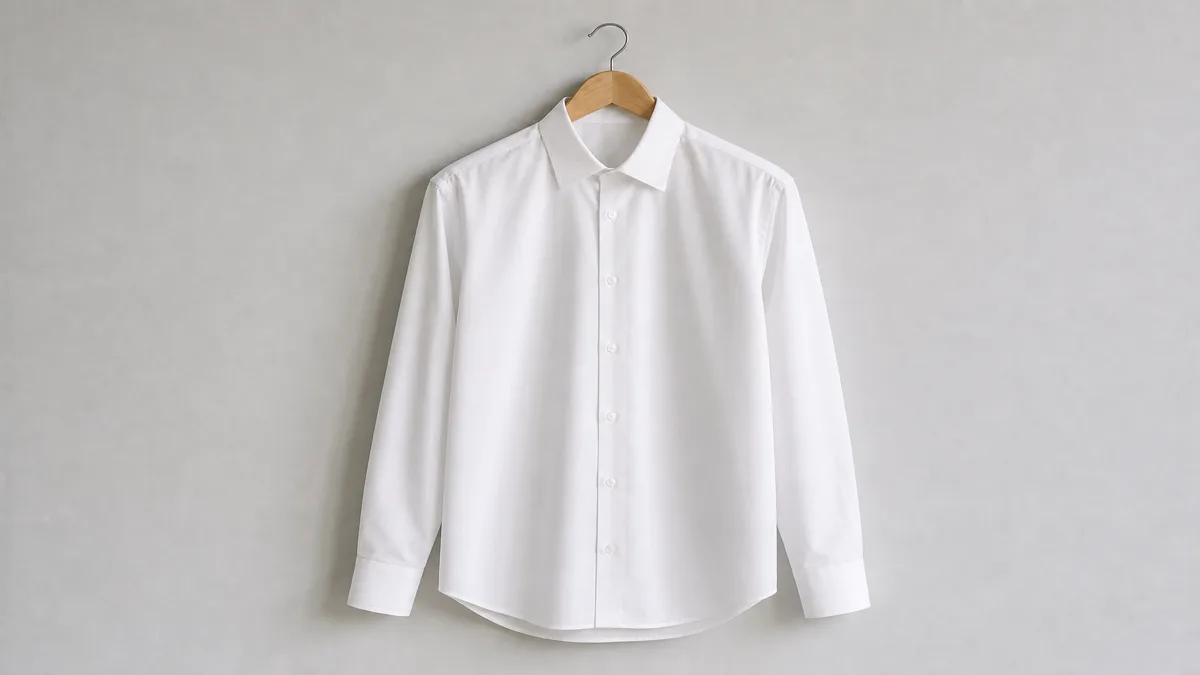
Poplin is the one that reads formal. The smooth, flat surface and faint sheen are what we picture when we say dress shirt, and it is the weave that sits cleanest under a suit. If there is an interview, a wedding, or anything where you want the shirt to disappear and let the rest of the outfit talk, poplin is the answer.
It is also the lightest and most breathable of the three, which makes it the easy pick for spring and summer office wear. The trade-off is that it shows wrinkles more readily than twill, and a low-GSM poplin can be a little see-through, so a thicker undershirt or a slightly higher weight is worth it for a true white.
A white poplin is the formal anchor of any shirt collection. It is the one shirt that has to look right, so it is worth not buying the cheapest version.
Twill, the wrinkle-fighter
Twill is the quiet problem-solver. That diagonal structure does something the other two cannot: it breaks up crease lines, so the surface hides wrinkles instead of holding them. For a long travel day, a packed work schedule, or anyone who would rather not iron at lunch, twill is the most forgiving weave you can buy (T.M. Lewin, Shirt Fabric Guide).
It also drapes well. The slightly denser, thicker cloth falls in a clean line rather than billowing, which is why twill reads put-together even after a full day. On the formality scale it lands between the other two: dressier than oxford, softer than poplin, squarely in business-casual territory and happy with or without a tie.
A mid-blue or navy twill is the most versatile single shirt many people own. It goes to the office, survives the commute, and still looks intentional at dinner.
Building your first three-shirt foundation
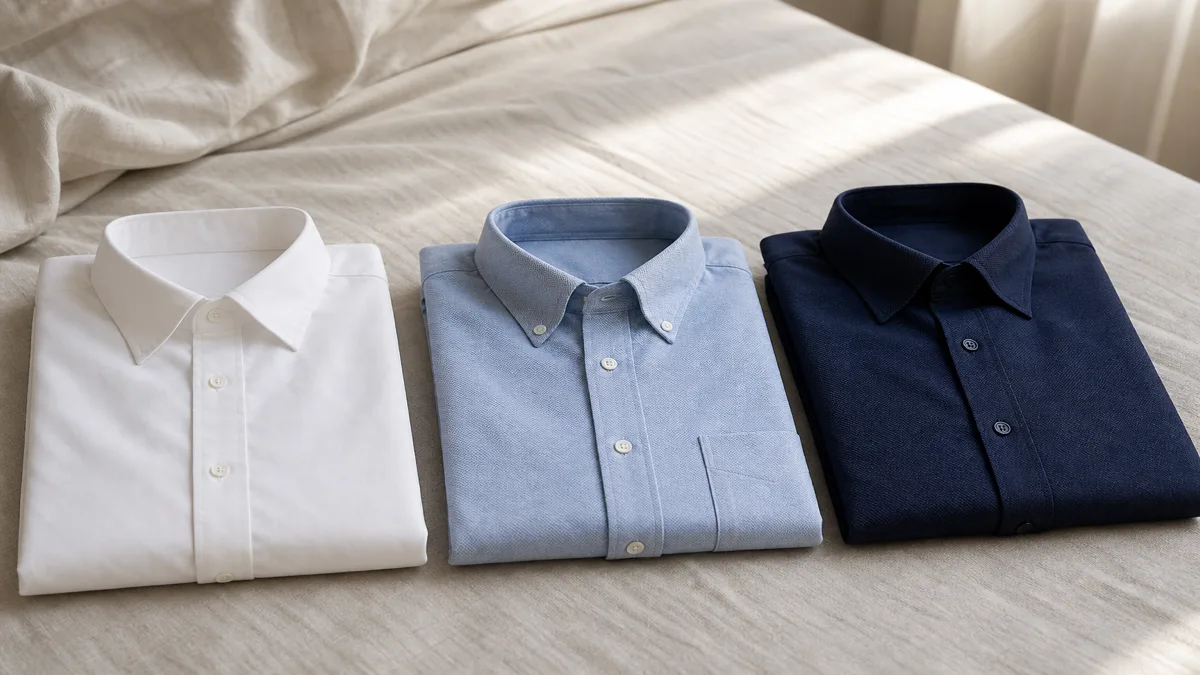
The good news is that three shirts cover almost everything. Style guides land on the same trio again and again, and it holds up because each shirt does a job the other two cannot.
Start with one white poplin for the formal end: interviews, weddings, suit days, anything where the shirt should be invisible and correct. Add one light blue oxford for everyday office and smart-casual wear, the shirt that works with a tie or with the collar open over chinos. Then a navy or mid-blue twill for versatile business-casual, the one that hides a long day and never looks tired.
That set covers something like ninety percent of the situations a dress shirt is asked to handle. Almost everything else is a variation, a stripe, a different collar, a heavier or lighter version of one of these three.
Two more things worth knowing before you buy. All three weaves are most often pure cotton or a cotton-rich blend; a little polyester buys wrinkle resistance at the cost of breathability, which is a fair trade for travel shirts and a poor one for a formal white. And the luxury versions, the ones that feel noticeably softer, usually use long-staple cotton like Egyptian or Pima, which is where a lot of the price difference at the top actually goes.
Pick the weave for the job, not the color on the front, and a first dress shirt stops being a guess.
Sources
- Nimble Made, Poplin vs Oxford Shirt — basket vs plain weave, oxford texture and weight, formality difference
- The Adult Man, Poplin vs Twill vs Oxford — twill diagonal structure, drape, crease resistance
- Batch, Dress Shirt Fabric Weaves Guide — GSM ranges, yarn count, weave fundamentals
- Selvane, Cotton Poplin vs Oxford vs Twill — colored-weft two-tone oxford effect
- T.M. Lewin, The Shirt Fabric Guide — weave formality and care, twill wrinkle behavior
Come è stata costruita questa guida
This piece started from a question that trips up almost every first dress shirt buyer: the label says oxford, poplin, or twill, and nobody explains what that actually changes. We pulled the weave mechanics and GSM ranges from menswear fabric guides at Nimble Made, Batch, The Adult Man, Selvane, and T.M. Lewin, then cross-checked the formality and care notes across them so the three-shirt starter set reflects what the sources broadly agree on. The framing stays inside the dress shirts you can compare on Chexlow, so the suggestions point to shirts you can actually find.
Curato dal team Chexlow · Le immagini sono illustrazioni generate dall’IA