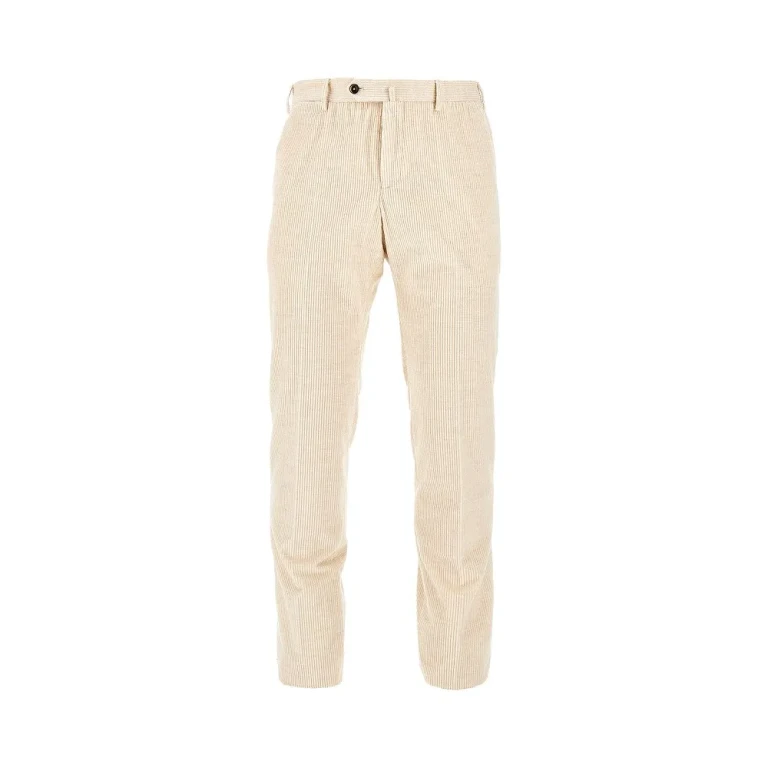
Choose for the occasion you actually need to cover
Before shopping, check the workplace policy or invitation. “No jeans” alone does not tell you whether chinos, tailored separates or a suit are expected. If the wording is vague, ask for an example of an acceptable outfit.
- Chinos first: you need a regular office-and-weekend pair, and chinos are accepted.
- Dress trousers first: you want a dressier everyday outfit, or the setting specifically expects tailored trousers.
- A suit first: the requirement is a matching suit. Buying dress trousers alone leaves that requirement unresolved.
These are buying priorities, not universal dress-code rules. Black Lapel’s comparison places chinos on the business-casual side and dress pants on the more formal side.
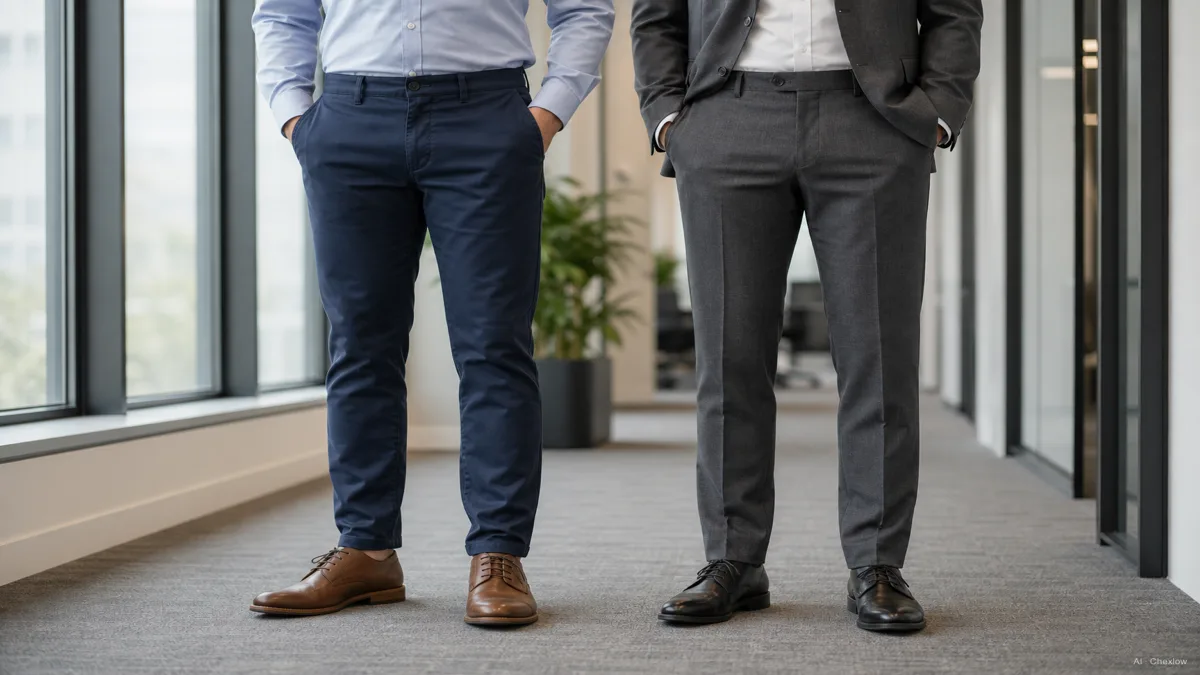
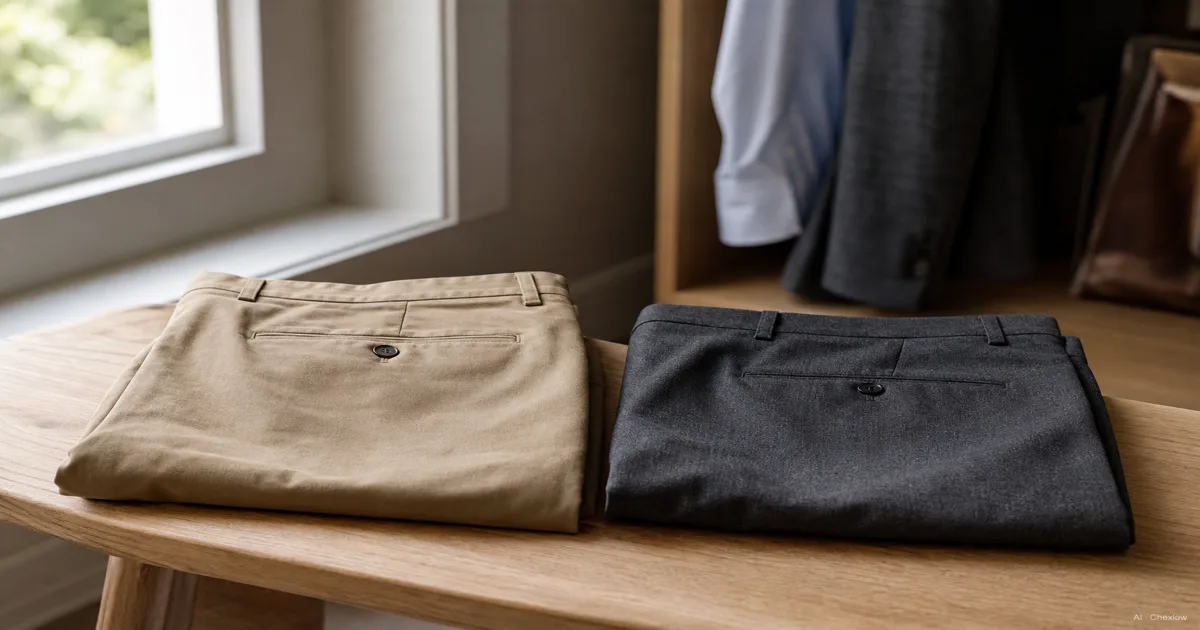
The illustration compares two complete outfits, so the jacket contributes to the difference too. Wearing a jacket does not automatically rule out chinos: a blazer can accompany them, while a suit jacket has matching trousers in the same cloth (Celio’s jacket guide). If you already own a jacket, work out whether it is a blazer or part of a suit before choosing its trousers.
Compare the actual cloth, not just the category name
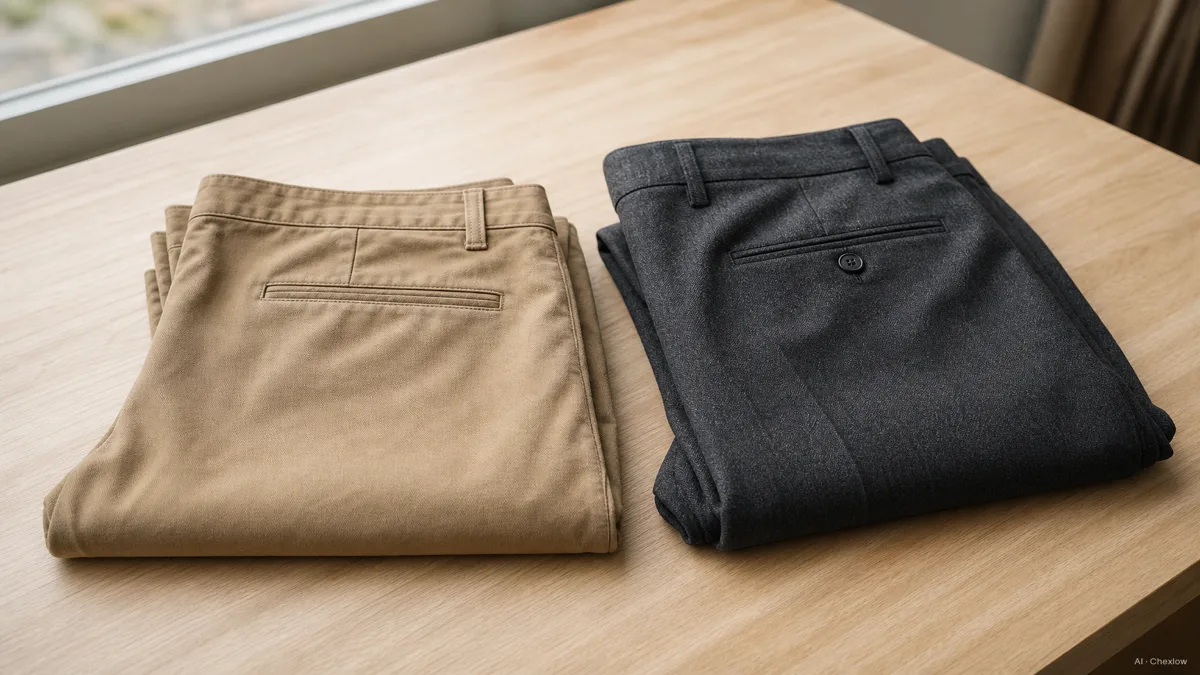
Use the cotton-chino and wool-trouser illustration as a starting comparison, not a specification for every pair.
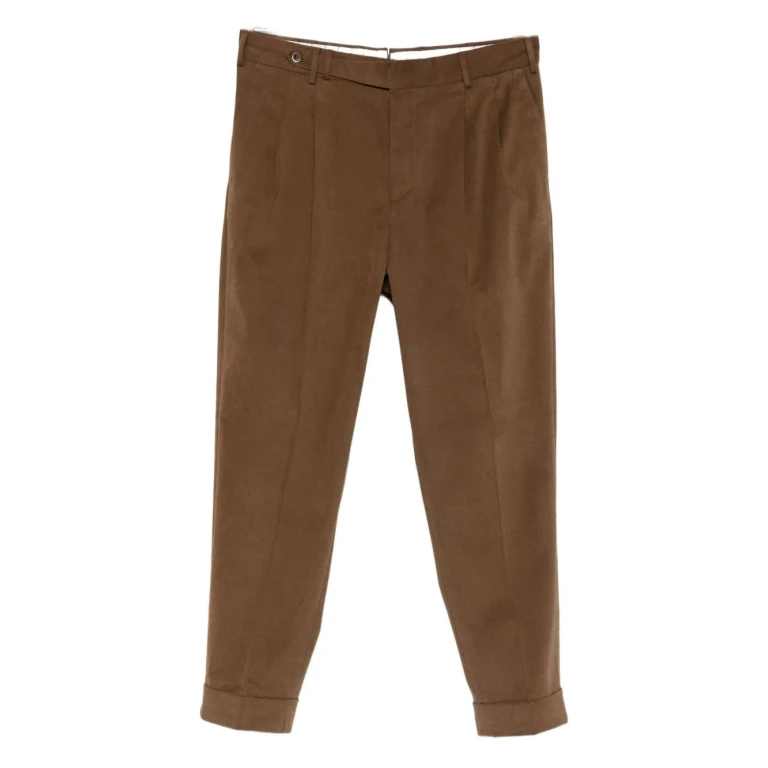
Two exceptions are useful when reading listings. Brooks Brothers’ Modern Pleated Chino is cotton twill with front pleats, so pleats do not identify dress pants. Mizzen+Main’s Helmsman Chino uses polyester and spandex, so “chino” does not guarantee cotton either.
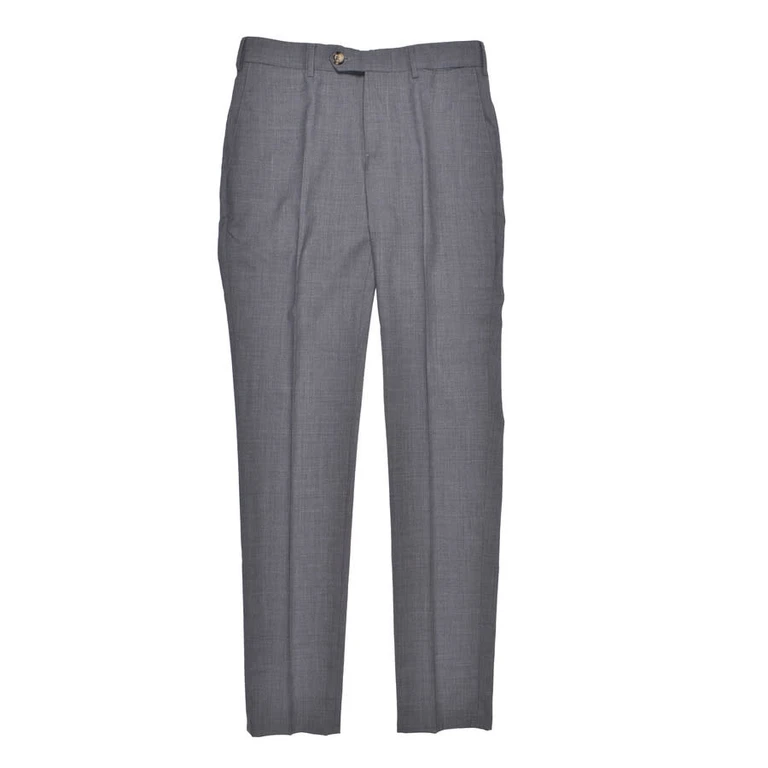
For each candidate, check the fibre composition, close-up fabric image and intended season. Do not dismiss wool automatically for warmer conditions: the manufacturer describes its Lavelle wool dress pant as lightweight and suitable for year-round wear. That describes this garment, not every wool trouser.
Now compare chino trousers if you chose the everyday route, or dress trousers if you need the dressier one. Keep both in contention only when both satisfy the actual dress code. Product names are a starting filter, not the final verdict.
Try the fit with clothes you already wear
Fasten the trousers without using a belt to rescue the fit. Look for pulling below the waistband and pockets that flare open; insufficient waist or hip room can cause these signs (Proper Cloth’s waist guide). Then sit, walk and bend to decide whether you can comfortably spend your day in them.
Do not switch categories just because one slim pair feels restrictive. Dress trousers also come in different cuts; Proper Cloth’s athletic fit adds room through the seat and thighs while narrowing toward the hem (fit comparison).
For a first purchase, try navy chinos with a pale shirt, or grey dress trousers with a shirt and your intended jacket. Treat these as easy starting outfits, not compulsory colours. Bring the shoes you expect to wear, check where the hem falls, and price any alteration before deciding. Choose the pair that completes an outfit you will actually use.
Let the care label settle a close decision
Home washing is a feature to verify before buying. Brooks Brothers specifies machine washing for the chino above, subject to its care instructions. Wool is not automatically dry-clean-only either: Woolmark makes the garment’s care claim the deciding factor. The Lavelle example, however, does specify dry cleaning.
If home laundering is essential, shortlist only pairs whose instructions permit it. Read the drying instructions separately; a washable garment is not a blanket invitation to use the dryer.
Before paying, you should be able to name the occasion, a complete outfit, a comfortable fit and a manageable care method. If both categories pass, choose the one that fills your more frequent need; there is no requirement to buy both. If chinos win but the cut is still undecided, continue with the chino fit and fabric guide.
How this guide was built
Written by Chexlow AI using manufacturer product information from Brooks Brothers and Mizzen+Main, fit guidance from Proper Cloth, and care guidance from Woolmark, alongside Black Lapel and Celio’s clothing explanations. The purchase order and outfit examples are editorial suggestions for a first-pair decision, not product testing or a dress-code guarantee.
Edited by the Chexlow team · Images are AI-generated illustrations