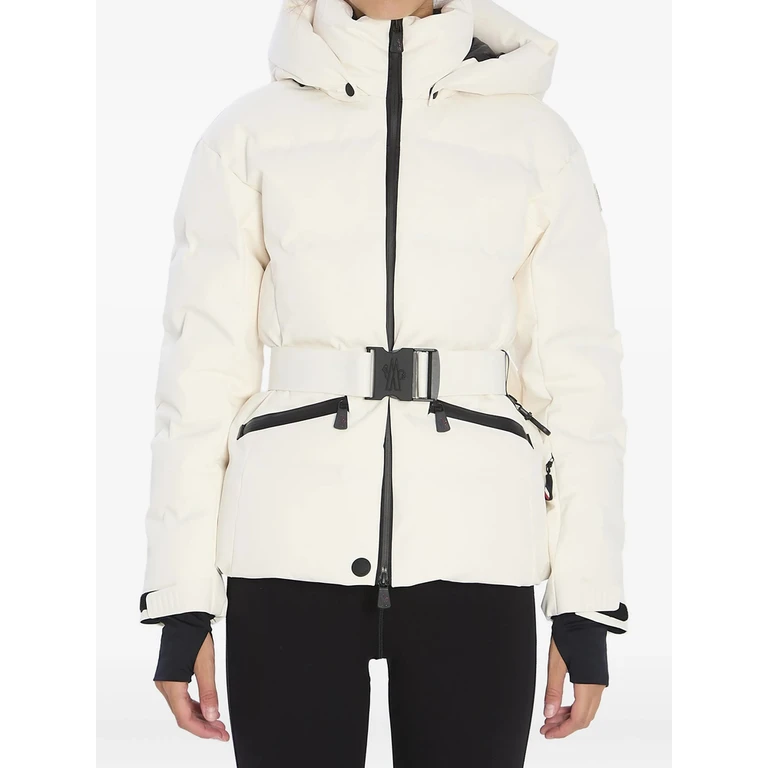
Keep both labels on your shortlist
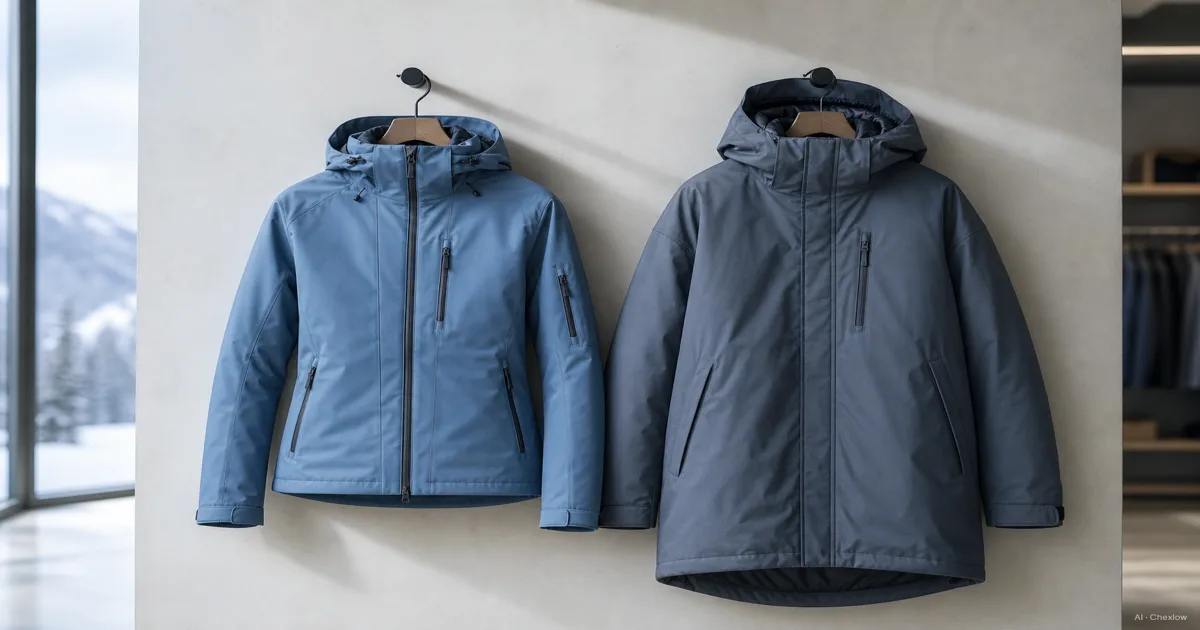
Ski jackets often have a closer fit; snowboard jackets often offer more room and length. These are tendencies, not restrictions: Quiksilver explains that their technologies overlap and either type can serve both sports.
Use that distinction to choose what to try. If you prefer a closer silhouette, start with regular or fitted cuts. If you want more coverage when sitting to adjust bindings, start with longer cuts. Neither label excuses restricted movement.
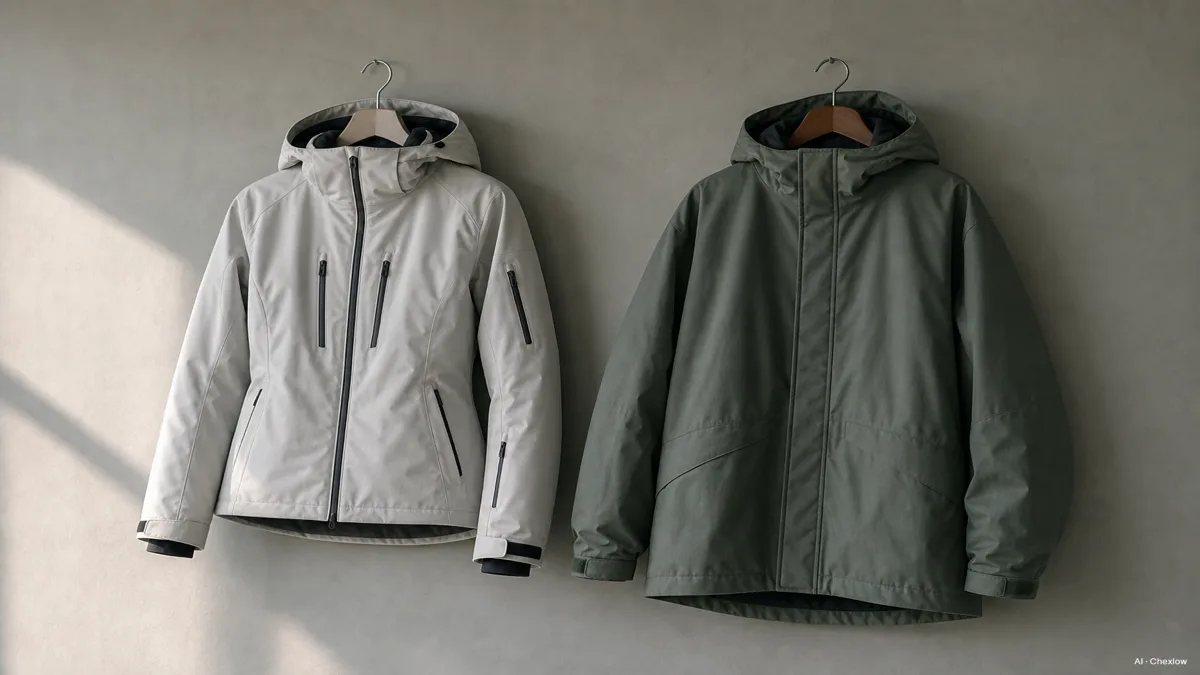
The illustration shows contrasting silhouettes, not a compulsory uniform for each sport. Compare the actual garment measurements before ruling out either category.
Decide how you will get your warmth
For a first resort jacket, make this choice before settling on size:
- Insulated: Start here if you tend to feel cold during lift rides and breaks.
- Shell: Start here if you want to adjust warmth with separate layers. Include the layers you already own when comparing the total purchase.
REI distinguishes added warmth from layering flexibility and encourages reusing suitable outdoor clothing. A shell has no built-in insulating fill; a 3-in-1 adds a removable insulating liner. Check the description rather than assuming every lining comes out. Quiksilver explains these constructions.
Still deciding what to wear next to your skin? Compare merino and synthetic base layers before choosing your try-on layers.
Check the whole waterproof construction
The millimetre rating describes resistance to water pressure, not hours of guaranteed dryness. Breathability describes moisture-vapour escape, and brands do not all use the same test. REI explains these testing limits.
For a starting shortlist, evo suggests at least 10,000mm and considering 20,000mm in wet climates. Treat that as buying guidance, then check the construction:
- Fully taped: All seams are taped.
- Critically taped: Only selected exposed seams are taped. For expected wet snow, favour full taping rather than buying on the fabric number alone.
Quiksilver describes the two seam treatments. The preference for full taping in wet conditions is this guide's selection advice.
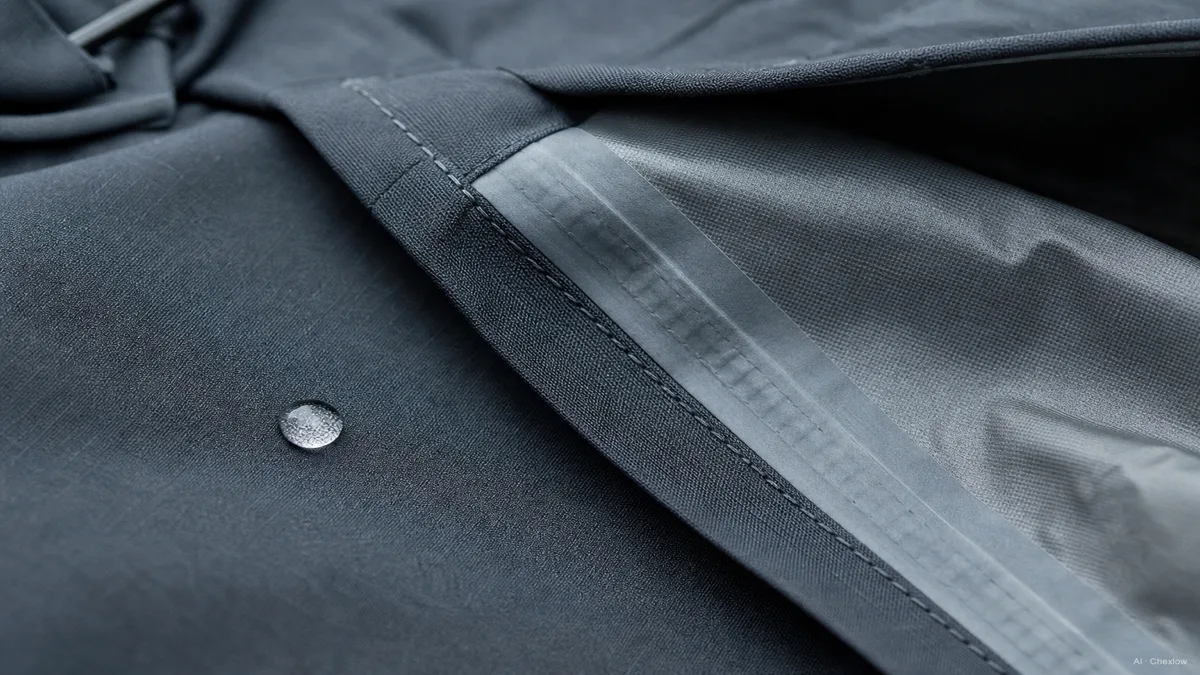
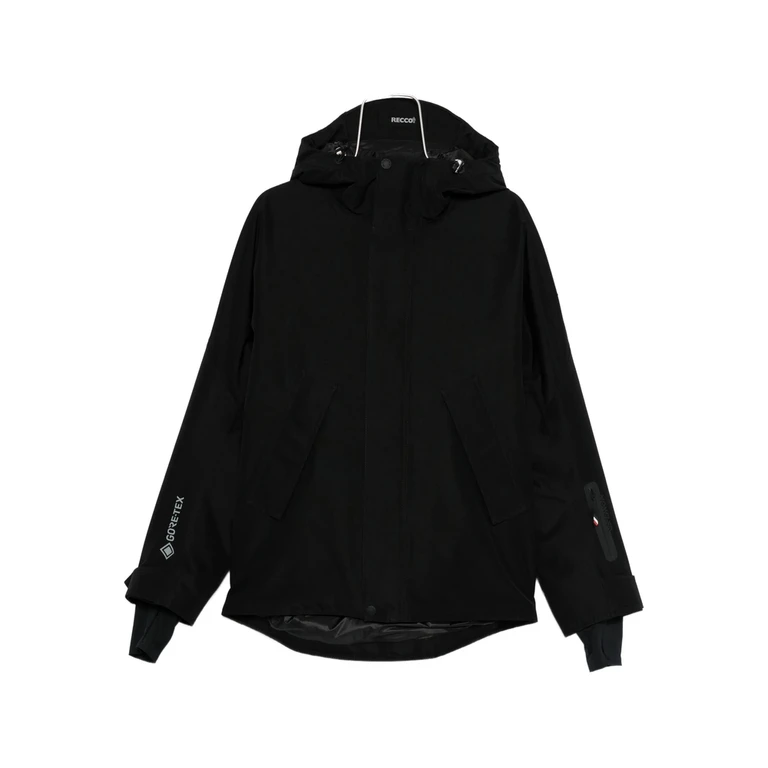
The image illustrates two separate details. Seam tape covers stitching; surface water beads are not proof that the whole jacket is waterproof. GORE-TEX explains the separate jobs of water-repellent surface treatment and its waterproof membrane.
If the specifications still need unpacking, read the guide to waterproof ratings and rain-jacket construction.
Let the try-on decide
Wear the layers you intend to use, zip up, and work through these checks:
- Move: Raise your arms, crouch and reach towards your bindings or into your skiing stance. Reject a cut that pulls across your shoulders or prevents the movement.
- Check coverage: Sleeves should overlap your gloves without swallowing your hands. Sit down and check the back hem.
- Check the waist: Fasten the powder skirt, the inner barrier against snow. If a jacket-to-pant connection matters to you, verify the actual fasteners on both garments.
Quiksilver's fit guidance covers arm movement, sleeve coverage and the different attachment systems.
Try the hood over your helmet and check your view to either side. Operate the vents and reach the pockets; their usefulness matters more than a supposed ski-versus-snowboard pocket rule. evo recommends checking these features on the garment.
Keep the jacket that passes these checks with your chosen layers. If two pass, choose the silhouette you prefer. If neither passes, try another cut before compromising on movement or coverage.
How this guide was built
Written by AI for Chexlow, using Quiksilver's jacket guides, REI's clothing and rainwear explanations, evo's buying guidance and GORE-TEX's explanation of surface water repellency. The article turns those sources into a first-purchase comparison for resort use; the selection priorities are editorial guidance, not product testing or a new human review.
Edited by the Chexlow team · Images are AI-generated illustrations