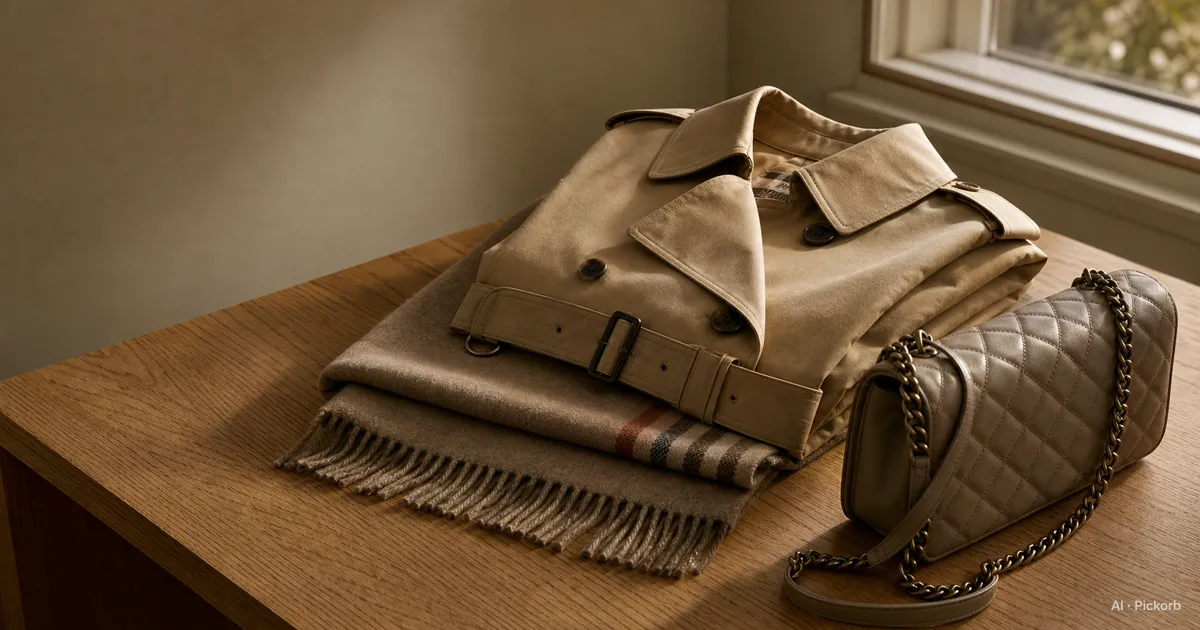
Walk into Burberry for the first time and you'll probably feel the same hesitation everyone does. The heritage trench, the check scarf, and the Lola bag sit close together in the imagination, and at a glance they read as three versions of the same idea.
They really aren't.
Each one was drawn for a completely different problem, decades apart, by different hands. Treating them as interchangeable is the easiest way to end up with a first Burberry that feels slightly off after a few outings. It usually shows up around the third or fourth wear, when the rest of your wardrobe starts disagreeing with the piece.
Here's the simpler version. The trench is a 1879 weatherproof fabric translated into a First World War officer coat. The check scarf carries a lining pattern that Burberry places in the 1920s and that later moved outside the coat. The Lola is a Riccardo Tisci silhouette that debuted for Fall/Winter 2019 and was pushed again as a core bag in 2022. Once that clicks, the choice gets a lot easier.
Where each one came from
Burberry began in 1856 when 21-year-old Thomas Burberry, a former draper's apprentice, opened a store in Basingstoke, Hampshire, England (Burberry, Wikipedia). His central problem was that British outerwear was heavy, rubber-stiff, and impossible to move in. In 1879 he solved it by inventing gabardine, a tightly woven, water-resistant fabric made from long-staple cotton chemically treated before weaving (Thomas Burberry, Wikipedia; Burberry heritage, Burberry corporate). The fabric was patented in 1888 and quickly carried into polar expeditions and military kit.
The trench coat as we know it grew out of that fabric. Burberry patented an earlier weatherproofed officers' coat called the Tielocken in 1912, with a wrap belt and broad lapels, and during the First World War the design was adapted for British officers in the trenches: D-rings on the belt for equipment, epaulets for rank, a storm shield, a pistol flap. The wartime version is what fixed the silhouette as "the trench coat" in popular memory (The Classy Rise of the Trench Coat, Smithsonian Magazine; Burberry trench coat, Wikipedia).
The check came later. Burberry's own history places the now-iconic camel, black, red, and white check in the 1920s as a raincoat lining. In 1967, a Paris-store buyer turned the lining outward for accessories, and the cashmere check scarf itself arrived in the 1970s (Our Signature Check, Burberry; The Evolution of Burberry Check, What Goes Around NYC).
The Lola is by far the youngest of the three. It was introduced as part of the Fall/Winter 2019 collection under chief creative officer Riccardo Tisci and then re-staged in 2022 as a core bag for the house, with a Los Angeles campaign and launch event in April 2022 (Burberry Introduces Its Newest Bag, The Lola, Hypebae; Burberry Debuts The Lola Bag Campaign, Haute Living). The design uses the Thomas Burberry monogram clasp Tisci had introduced with Peter Saville in 2018, with quilting that nods back to the check pattern's grid (Burberry logo update under Riccardo Tisci, Designboom).
Three pieces, three different design problems. The trench is a piece of weatherproof engineering that became a wardrobe staple. The check scarf is a pattern that escaped its own lining. The Lola is a soft contemporary bag that quotes both.
Heritage trench: the engineered coat that ages into a wardrobe
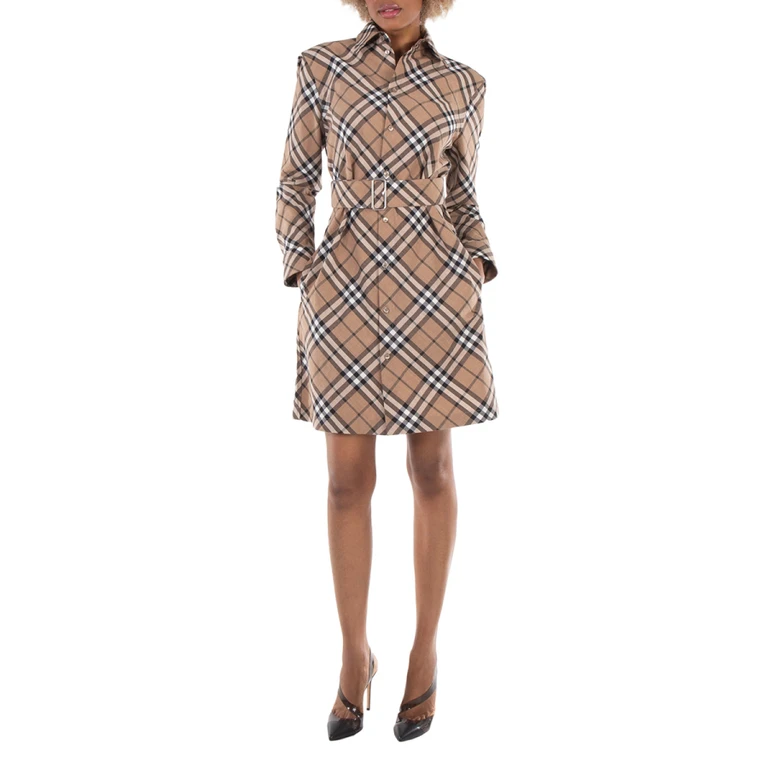
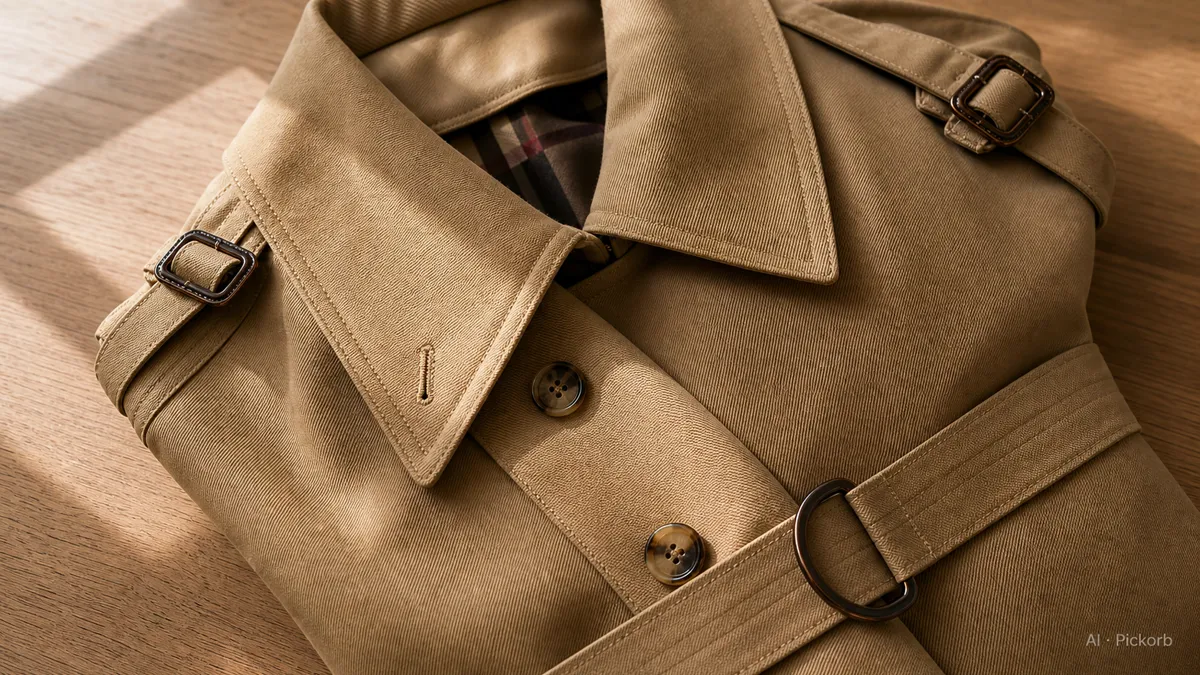
The trench sits in a very specific slot. More structural than almost anything else in a closet, with the gabardine shell, the storm flap, the epaulets, the D-rings, the throat latch, the belted waist, and the famous Burberry Check lining hidden inside. Two cuts dominate today: the Kensington (slim, dressier) and the Chelsea (a touch shorter, slightly more relaxed). Kensington reads sharper from a distance; Chelsea reads more contemporary.
You'll find it pairs naturally with tailored trousers, midi dresses, a knit and denim. Two situations where it's not the first choice:
- Cold-weather everyday. Gabardine handles rain well, but on its own it's not a winter coat. A removable wool warmer helps, but the silhouette stays a three-season piece.
- A wardrobe with no neutral outerwear gap. If you already own a polished beige or stone coat, the trench duplicates the slot rather than filling a new one.
The Chexlow selection tends to surface the Kensington Heritage and Chelsea Heritage in honey and stone, with the occasional black or midnight. If a closet already has knits and tailoring but no proper three-season weatherproof coat, this is the gap to fill. If you already own a similar shell, the trench upgrades the position rather than duplicating it.
One thing worth knowing: the mid-length Kensington in Honey is the version most often recommended as a first Burberry trench. It holds the proportions people picture when they hear "Burberry trench", and the honey tone reads as the brand color even before the check lining shows.
Check scarf: the lining that became its own object
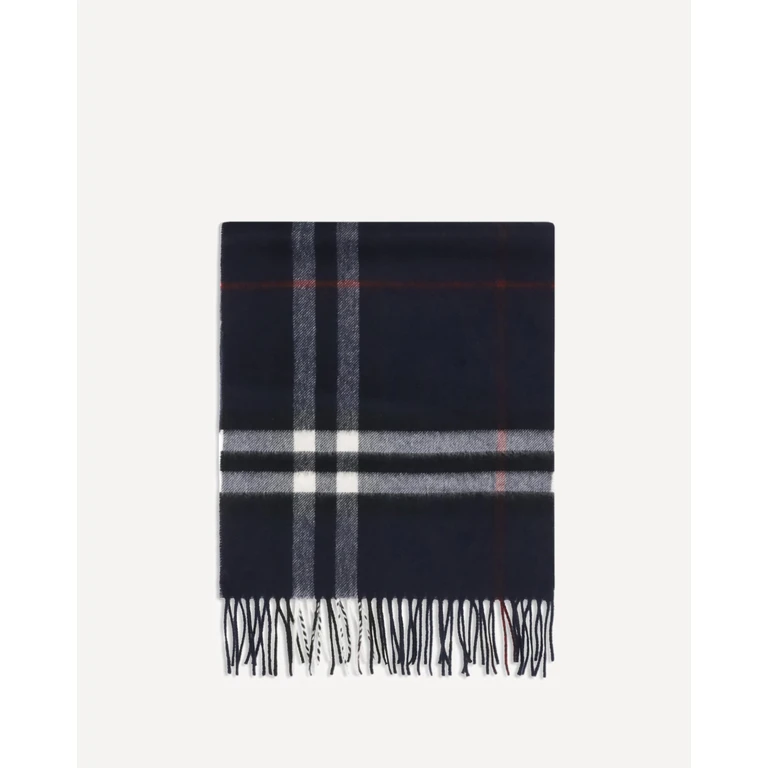
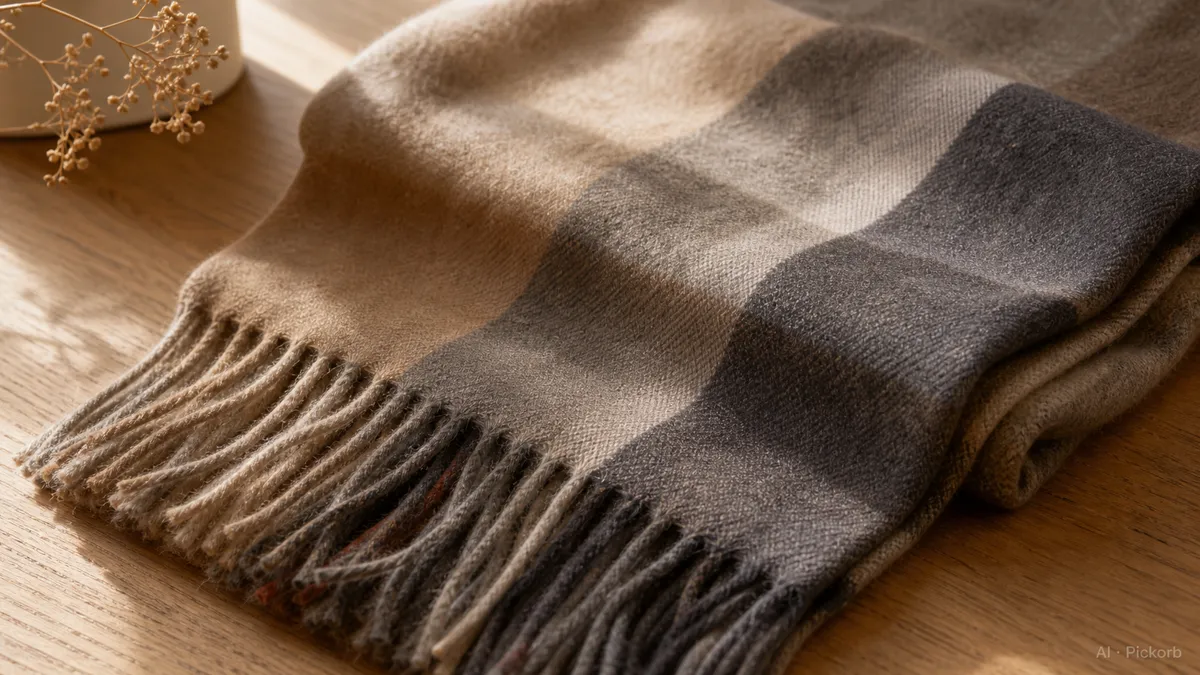
The check scarf works the other way around. The brief was never originally to make a scarf: the check started as a lining in the 1920s, then migrated outside the coat decade by decade. A long rectangular cashmere scarf in the same plaid, woven in Scotland at a mill founded in 1797, is how most first-time Burberry buyers end up with the pattern itself (Burberry classic check cashmere scarf, Burberry corporate).
Structurally a check scarf is closer to a winter accessory with brand recognition than to a fashion statement that pretends to be one. The standard size sits around 168 by 30 cm in cashmere, with a fringed finish, which means it wraps long enough for a wool coat collar without bulking up. The Burberry corporate scarf page describes the production as taking more than thirty steps at the Scottish mill: washed in local spring water, brushed with teasels. That detail is more of the value than any logo placement.
That's actually useful to know when you're deciding. A check scarf behaves in a wardrobe the way a well-made cashmere accessory does. It works under a black wool coat, over a charcoal blazer, with a beige trench (where the pattern intentionally echoes the lining). The check is what makes it read specifically as Burberry at a distance.
For a closet that already has the heritage trench, the check scarf doesn't duplicate. It makes the trench's hidden lining suddenly visible at neck height. For a closet built around neutral outerwear with no Burberry piece, the check scarf is the lowest-friction way to bring the house's most recognizable graphic in without committing to a full coat.
The mid-weight cashmere version in archive beige or stone is the most common first-Burberry-scarf pick. The giant check (a larger-scale plaid) reads more contemporary; the classic check stays closer to the early lining proportions.
Lola bag: the contemporary silhouette that quotes both
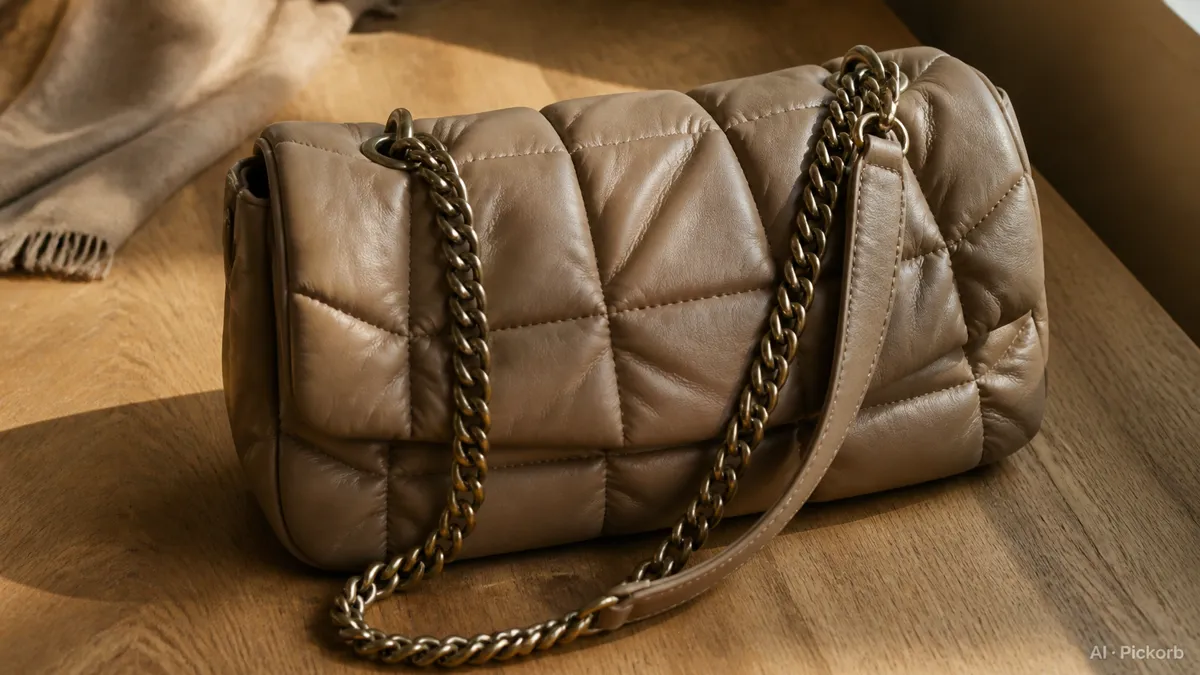
The Lola is the youngest of the three and the easiest to live with as an accessory. Designed under Riccardo Tisci and introduced for Fall/Winter 2019, it was restaged as one of the house's core bags in spring 2022 with a Los Angeles launch event (Burberry Lola bag campaign 2022, Haute Living). The silhouette is a soft padded shoulder bag with a chain strap, a Thomas Burberry monogram clasp, and quilting that visibly grids back to the check pattern without printing it.
The Lola comes in small, medium, and mini camera variants. The padded leather version is the most recognizable, but seasonal canvas, raffia, and patent runs also appear through retail partners (Burberry small quilted Lola bag, Farfetch; Burberry Lola shoulder bag, italist).
Two situations the Lola handles well that the other two don't:
- Evening or dressed-up casual. The chain strap reads dressier than a flat leather strap, and the quilting holds shape better than an unstructured pouch.
- A wardrobe that already has the trench. The Lola brings the Tisci-era TB monogram into the closet without re-stating the check.
Two situations where it falls short:
- Heavy daily carry. The small Lola is a phone-and-card bag, not a work tote. The medium fits more, but it's not built for a laptop.
- Closets that want a quieter house signal. The TB clasp reads loudly at close range. If the rest of the wardrobe is monogram-shy, a check scarf is the lower-volume entry.
For a closet that already leans contemporary, this is often the truest first Burberry accessory. It doesn't ask the rest of the wardrobe to formalize, and the entry price for the small quilted Lola sits well below the heritage trench tier.
Three things that show up after a season of carrying each
Once you've lived with each one for a season, three differences make the choice obvious in retrospect:
- Where the brand reads from. The trench reads as Burberry from a wide shot; the silhouette and the honey tone are enough. The check scarf reads from medium range, because the pattern is the entire signal. The Lola reads from close range through the TB monogram clasp.
- Maintenance. Gabardine handles rain well but shows cuffs and collar wear first; a yearly professional clean keeps it honest. The cashmere check needs gentle care, and a wool comb pulls pilling back. The padded leather Lola shows corner softening after a season of daily carry.
- Resale. Trench and check scarf hold value steadily because both have the deepest secondary markets and the silhouettes haven't changed in decades. The Lola's resale follows seasonal colorways more than the silhouette itself; padded black and white run steady, novelty prints drop faster.
So which one first?
Honestly, it usually comes down to one question: which slot in your closet is actually empty?
- No proper three-season weatherproof coat, a wardrobe with tailoring and knits: the heritage trench is the first piece.
- The trench (or another neutral coat) is already in, but no Burberry signature anywhere: the check scarf is the first piece.
- Contemporary wardrobe, the trench feels like a bigger commitment than you want yet, looking for a Burberry accessory that reads modern: the Lola is the first piece.
The misstep most first-Burberry buyers make is trying to make a single piece cover all three needs. It rarely works out. People who end up owning more than one tend to start with whichever fills the bigger wardrobe gap, then add a second a season or two later once the first has settled in.
Sources
- Burberry, Wikipedia: 1856 founding in Basingstoke by Thomas Burberry, history of the house through the 20th century.
- Thomas Burberry, Wikipedia: 1879 gabardine invention, 1888 patent.
- Burberry heritage, Burberry corporate: brand-authored timeline of the 1856 store, 1879 gabardine, and the trench's development.
- Burberry trench coat, Wikipedia: Tielocken patent 1912, First World War adaptation, modern Kensington and Chelsea cuts.
- The Classy Rise of the Trench Coat, Smithsonian Magazine: WWI officer kit, D-rings, epaulets, storm shield, the £50 outfit allowance for British officers.
- Our Signature Check, Burberry: 1920s raincoat lining, 1967 accessory moment, 1970s cashmere scarf introduction.
- The Evolution of Burberry Check, What Goes Around NYC: secondary account of the check's move from trench lining to exterior pattern.
- Burberry classic check cashmere scarf, Burberry corporate: Scottish mill founded 1797, dimensions, more than 30 production steps.
- Burberry Introduces Its Newest Bag, The Lola, Hypebae: Fall/Winter 2019 debut under Riccardo Tisci.
- Burberry Debuts The Lola Bag Campaign, Haute Living: April 2022 Los Angeles launch and campaign.
- Burberry logo update under Riccardo Tisci, Designboom: 2018 Peter Saville rebrand and the TB monogram used on the Lola clasp.
How this guide was built
This piece started from a recurring question among first-time Burberry buyers: which of the three iconic Burberry pieces, the heritage trench coat, the check scarf, or the Lola bag, should be the first one in the closet. We pulled the design context for each from the Burberry corporate heritage pages, the Wikipedia entries on Burberry and the Burberry trench coat, Smithsonian Magazine on the WWI Tielocken, and contemporary editorial on the Lola launch under Riccardo Tisci. The recommendations stay within the Burberry pieces you can compare through Chexlow's partner stores, so the framing reflects what a reader can actually act on rather than the brand's full archive.
Edited by the Chexlow team · Images are AI-generated illustrations