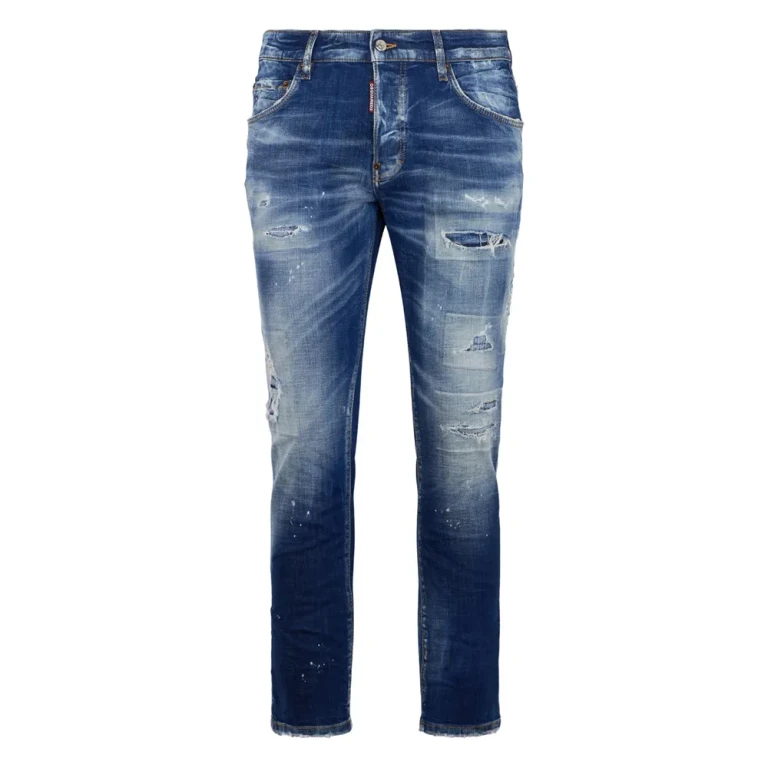
Walk into a denim-focused store for the first time and the words come at you fast. Raw, selvedge, sanforized, unsanforized, one-wash. Some are about how the fabric was woven; some are about whether the fabric will shrink; some are about whether the jeans were already washed before they reached you. Each one is a separate decision.
The good news is that the four words do not overlap as much as they sound like they do. Once each one is pulled apart, the choice for a first pair becomes clear.
1. Raw vs washed — about the jeans, not the fabric
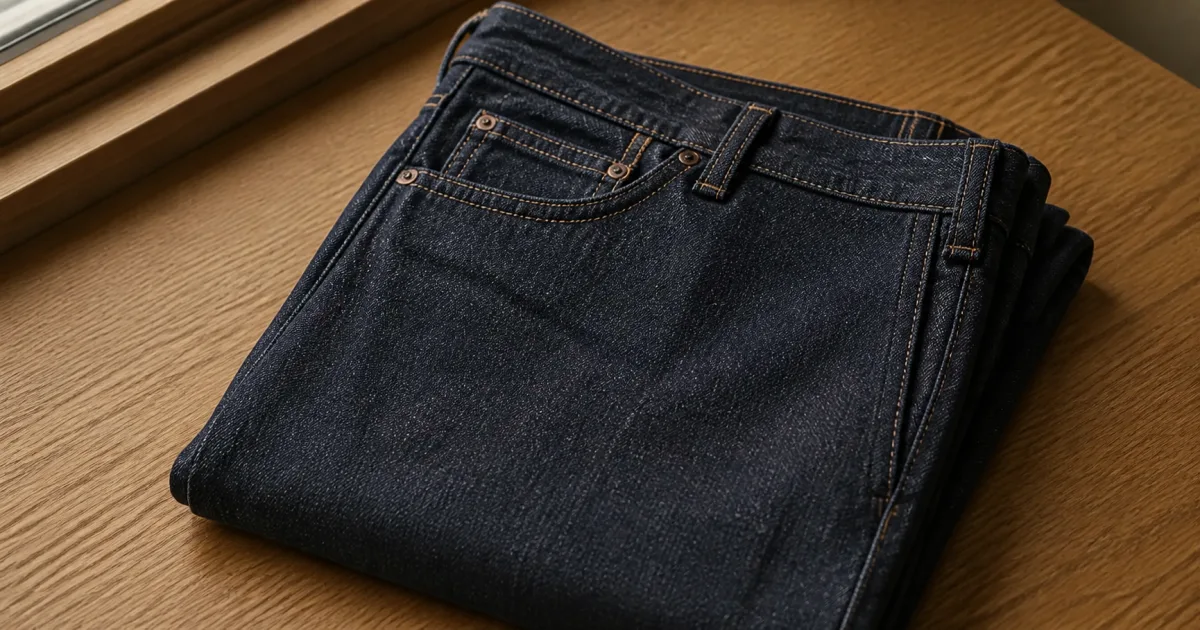
Raw denim means the jeans have not been washed before being sold. They come straight off the loom or out of the cutting room and into your hands. They are stiff, deep indigo, slightly waxy to the touch, and they smell faintly of the cotton mill.
Washed denim has been put through a wash cycle (or several) before it reaches the store. The wash softens the fabric, removes some of the indigo, and on most modern jeans produces the slightly faded look that the brand decided was on-trend.
The trade-off is about who gets to make the fade.
Raw denim fades wherever you bend it. After a year of regular wear, the creases behind your knees, the front of your thighs, and the wallet shape in your back pocket all show as light areas against the deep blue. The pattern is unique to how you sit, walk, and move. Denim communities call these honeycombs and whiskers. They take six months to two years to develop properly.
Washed denim has the fades already there. The factory made them, and they belong to nobody in particular. The jeans are softer on day one and look closer to their final state from the start. But they will not develop a personal fade pattern — the fabric has already lost too much indigo.
Pick raw if you want to wear the jeans for years and like the idea that the wear pattern is yours. Pick washed if you want jeans that look good immediately and you do not want to spend the first six months looking like you forgot to wash anything.
2. Selvedge — about how the fabric was woven
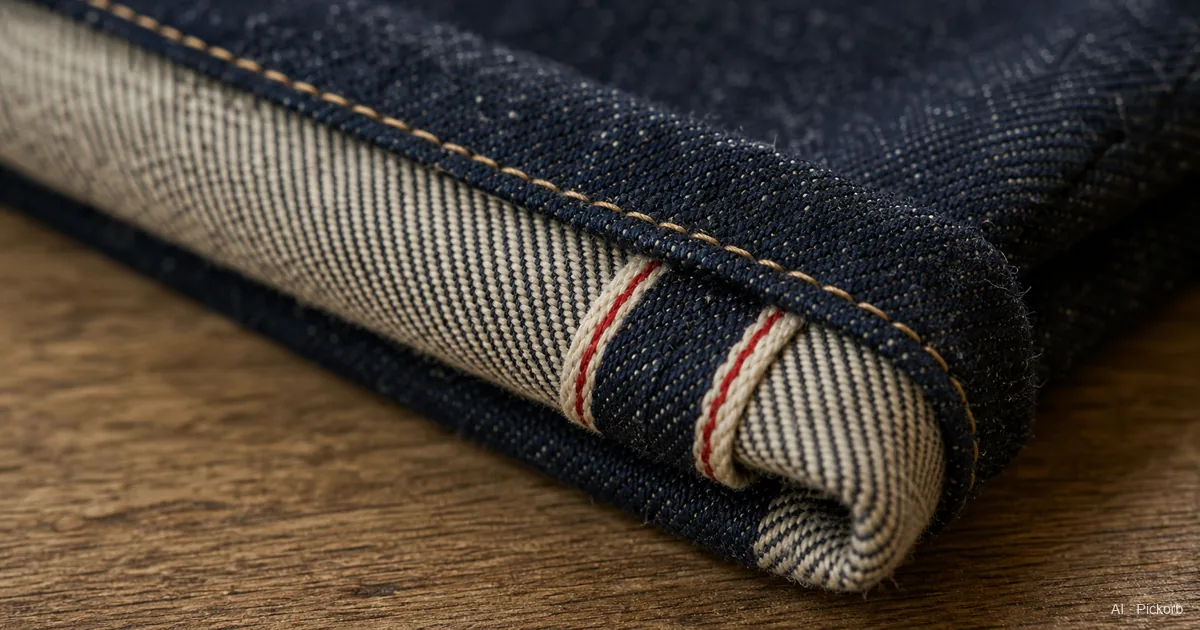
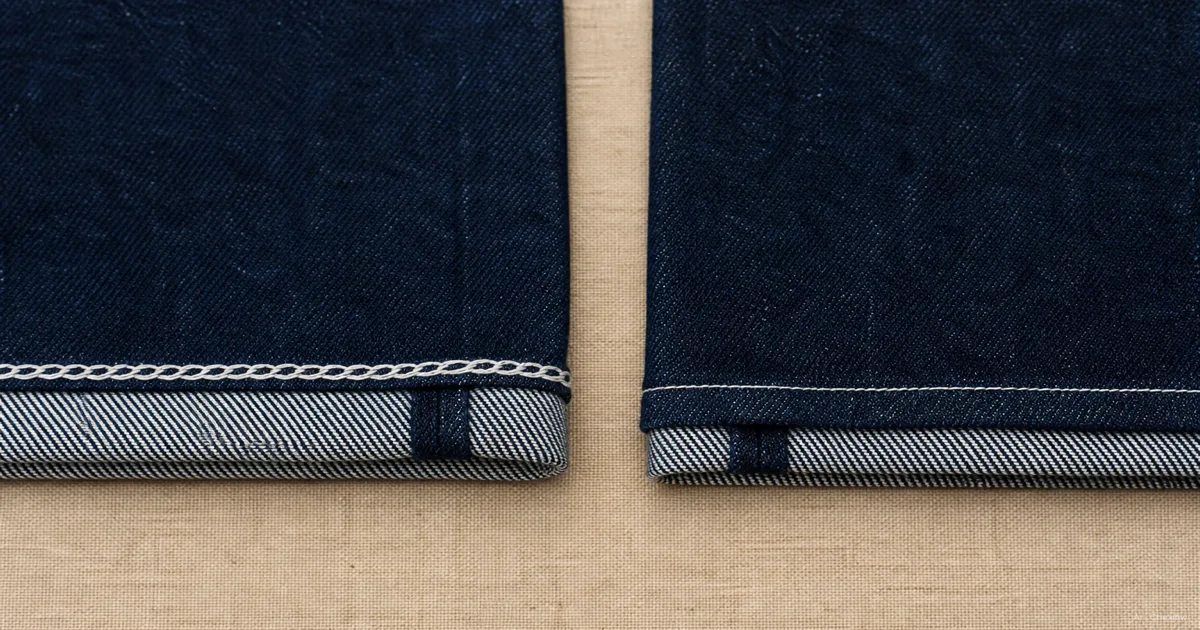
Selvedge (sometimes "self-edge") is a property of the fabric, not the jeans. It means the denim was woven on an older-style shuttle loom that produces a fabric with a finished edge — the threads loop back on themselves at the side of the fabric rather than being cut and hemmed later.
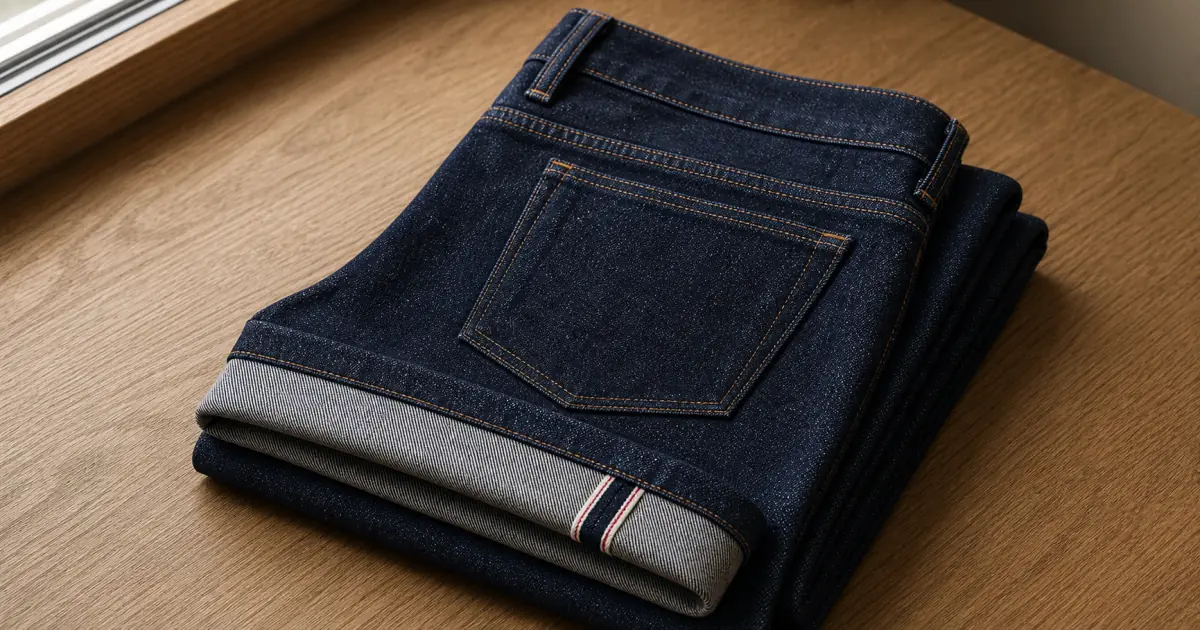
You can identify selvedge by cuffing your jeans. On a selvedge pair, the inside seam of the cuff shows a clean band with a thin colored stripe running through it (often red, sometimes white or another color). That stripe is the selvedge.
Selvedge denim is generally heavier, slightly stiffer, and slower to fade in a more textured pattern than non-selvedge denim. It costs more because shuttle looms are slow — a shuttle loom produces roughly one tenth the fabric per hour of a modern projectile loom (Selvedge denim guide, Stridewise).
Most selvedge denim is also raw, but the two are not the same thing. You can buy washed selvedge (less common) or non-selvedge raw (also less common). The classifications run independently.
For a first nice pair, selvedge is the choice that takes the jeans from "good jeans" to "denim hobby starter." Non-selvedge raw is a bit cheaper and a bit lighter, but the fade pattern is less interesting.
3. Sanforized vs unsanforized vs one-wash — about shrinkage
Sanforization is a fabric treatment done before the jeans are sewn. The fabric is passed through a sanforization machine that uses heat, steam, and pressing to pre-shrink the cotton. The result is fabric that will not shrink significantly after you buy the jeans.
Unsanforized denim has not been treated this way. The cotton is still in its loomstate, and it will shrink by 2 to 10 percent on first contact with water (Sanforized vs Unsanforized, Heddels). The shrinkage is not uniform — usually the length shrinks more than the width, and the legs shrink more than the waist.
One-wash denim is unsanforized denim that has been soaked in water once at the factory to remove the initial shrinkage, then sold to you. It keeps most of the raw-denim properties (stiff, deep indigo, faded only where you wear it) but the size you buy is the size you will wear.
For a first pair, the choice between sanforized and one-wash is essentially "no surprises." Both arrive at a stable size. Unsanforized is the deep end — you will need to soak the jeans yourself before wearing them, and even then there is a learning curve to predicting the final fit.
A practical rule:
- Sanforized raw selvedge. The standard first pair. No shrinkage, full raw fade potential, full selvedge character.
- One-wash raw selvedge. Almost the same as sanforized for a beginner, with very slightly different hand. Common from Japanese makers.
- Unsanforized raw selvedge. Deep end. Worth trying when you already own one or two pairs of the easier kind.
4. The first six months with a raw pair
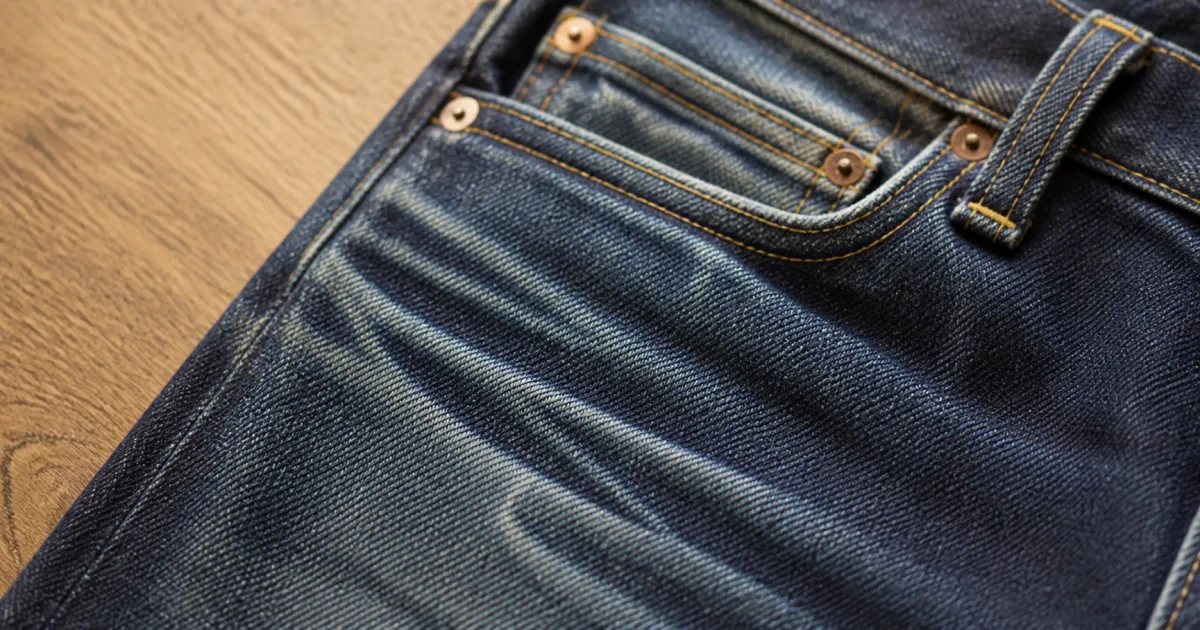
A raw pair fades into shape over six months to a year of regular wear, then keeps improving for another year after that. The first six months matter most because that is when the fade patterns set.
Rough routine for a sanforized raw selvedge pair:
- Weeks 1-2. Wear them most days, soft surfaces only. Avoid wet weather; the indigo will rub off onto light-colored furniture and shoes if it gets damp.
- Months 1-3. Wear them as often as practical without washing. The bending creases at the back of the knees and front of the thighs are starting to form. Spot clean stains with a damp cloth, do not soak.
- Months 3-6. First wash. Cold water, inside out, gentle detergent or a denim wash like Dr. Bronner's. Hang dry, never tumble dry. After the first wash, the fades you have built will be visible and slightly sharper.
- Months 6-12. Wash every two to three months of wear. The fade pattern is now visibly yours.
- Year 2+. The jeans now do their best work. The high-friction areas are clearly lighter; the low-friction areas are still deep indigo.
The most common first-year mistake is washing too often. Each wash removes some indigo and softens the fabric — washing every couple of weeks like normal jeans produces a uniform medium-blue with no defined fade pattern. The second most common mistake is never washing. After about six months without a wash, the bacteria in the fabric start to weaken the cotton and the jeans wear out faster than they fade.
One wash every two to three months, in cold water and hung dry, is the boring right answer.
A starting recommendation
For a first nice pair of jeans:
- Sanforized raw selvedge denim, 12 to 14 oz weight, straight or slim-straight cut.
- A maker that ships globally. Japan (Iron Heart, Studio D'Artisan, Pure Blue Japan), US (Tellason, Naked & Famous), or Europe (Tender Co., Hiut Denim).
- One size up if between sizes. Raw denim does stretch a little at the waist with wear, but not enough to compensate for a tight starting fit.
The price for a first pair sits between $150 and $300. Above that, you are paying for fabric weight, mill history, and hand-stitching that takes years to fully appreciate. A first pair at $200 will teach you most of what you need to know.
Sources
- Raw Denim vs Selvedge vs Sanforized vs One-Wash, Stridewise — beginner-level definitions of all four terms
- Sanforized vs Unsanforized Raw Denim, Heddels — shrinkage range and the practical case for sanforized
- Sanforized, Unsanforized & One-Washed Denim, Rivet and Hide — what one-wash actually changes
How this guide was built
This piece is a cross-brand beginner's guide to raw denim vocabulary. The definitions are cross-checked across denim references including Stridewise's beginner guide, Heddels' sanforization explainer, and Rivet and Hide's primer. The recommendations below assume a reader who wants a first nice pair of jeans, not someone already deep in the denim hobby — the second group already knows everything in here.
Edited by the Chexlow team · Images are AI-generated illustrations