Why fit beats everything else, and what good fit looks like
The single most important factor in how a suit looks is fit. Not the brand on the label, not the price, not the fabric. A well-fitted suit at an entry price reads as sharp; an expensive suit that hangs wrong reads as borrowed. This is the one principle that, if you take nothing else from this guide, will steer you right.
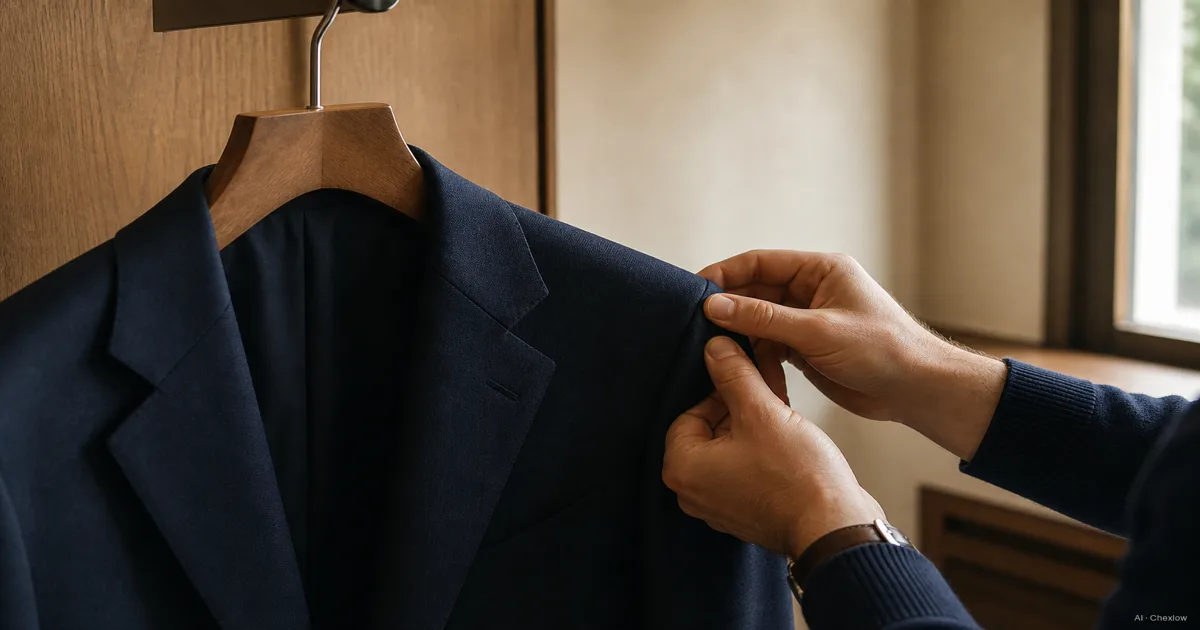
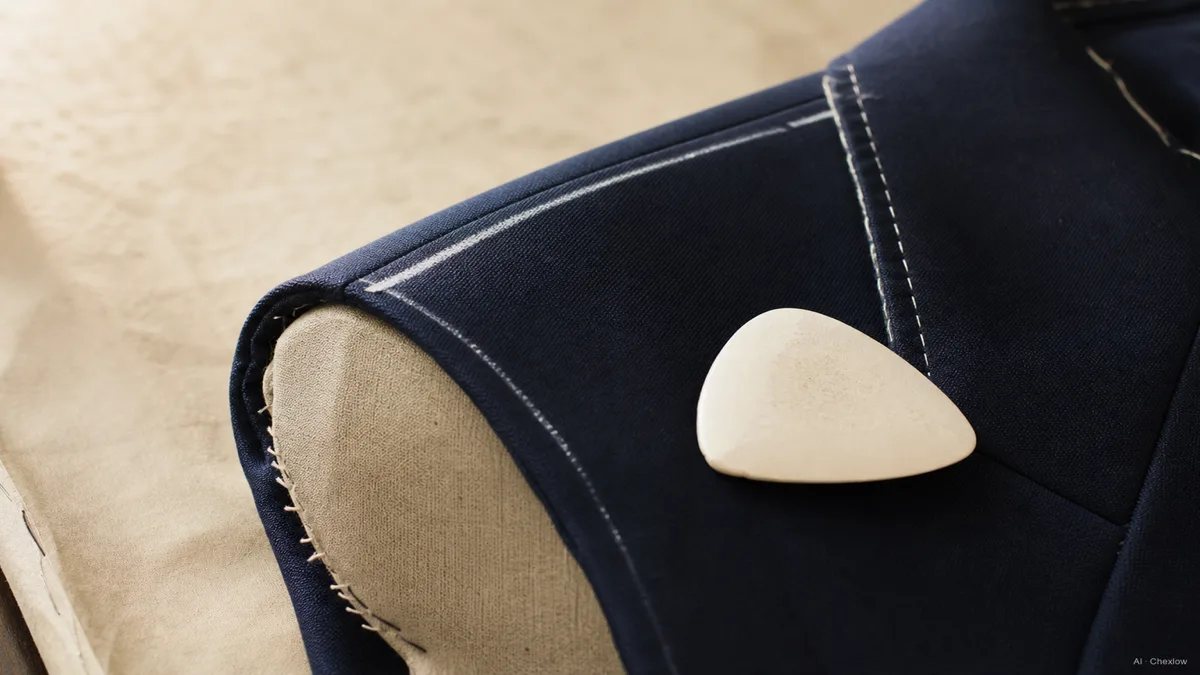
Fit starts at the shoulder because the shoulder is the foundation. The shoulder seam should end exactly where your own shoulder bone ends, sitting flat with no dent and no overhang past the edge. Stand sideways to a mirror. If the seam droops off the edge of your shoulder, the jacket is too big through the shoulders. If it digs in and creates a ripple below the collar, it is too small. This seam is built into the jacket's structure, so it has to be right before anything else matters.
The chest is the next check, and it has a simple test. Button the jacket and slide a flat hand between your chest and the fabric. It should slip in without a fight and without flapping loose. If you see an "X" shape pulling at the button, with diagonal creases radiating out, the jacket is too tight and the button is doing work it shouldn't. That X is the clearest sign of a chest that is too small.
Sleeve length has a rule worth memorizing. The jacket sleeve should fall so that roughly a quarter to a half inch of shirt cuff shows below it. A quick way to land near it: the jacket sleeve should end about an inch past your wrist bone, measured from the shoulder seam. Too long and your hands disappear; too short and it looks like you are growing out of last year's jacket.
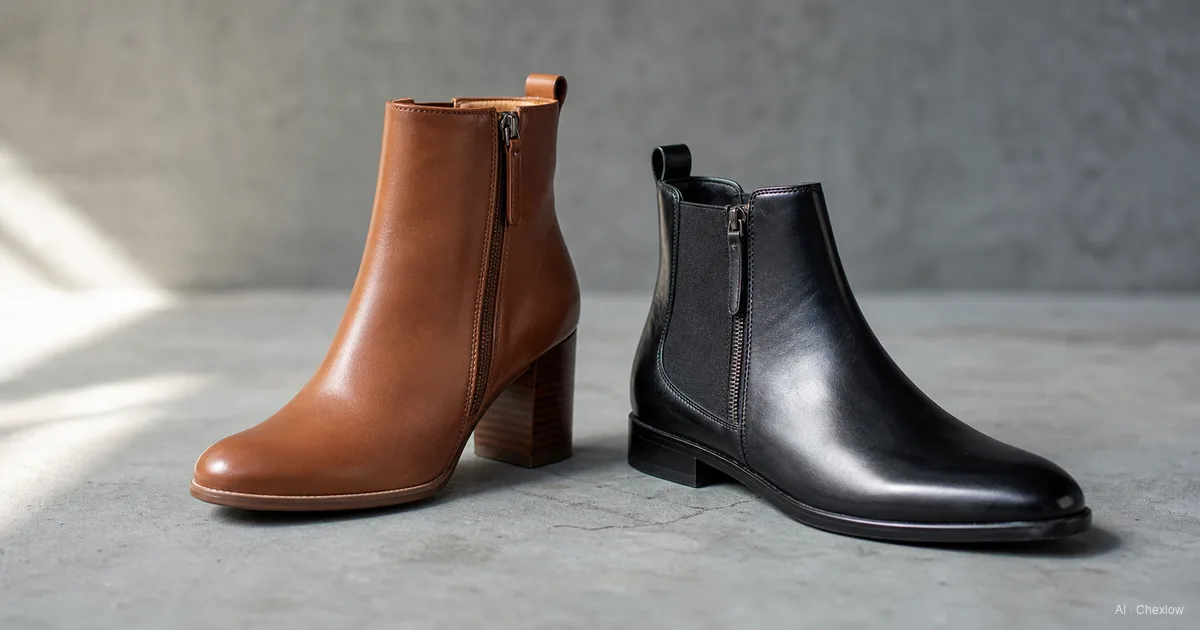
Then there is the trouser break, which is where the trouser hem meets your shoe. A medium or slight break, where the hem just touches the top of the shoe with a small fold, is the most versatile and modern choice for a first suit. A heavy break pools fabric around the ankle; no break at all reads as deliberately fashion-forward. Slight break is the safe middle, and it suits nearly every shoe you would wear a suit with.
Choosing your first suit fabric, wool, cotton, linen, and what to avoid
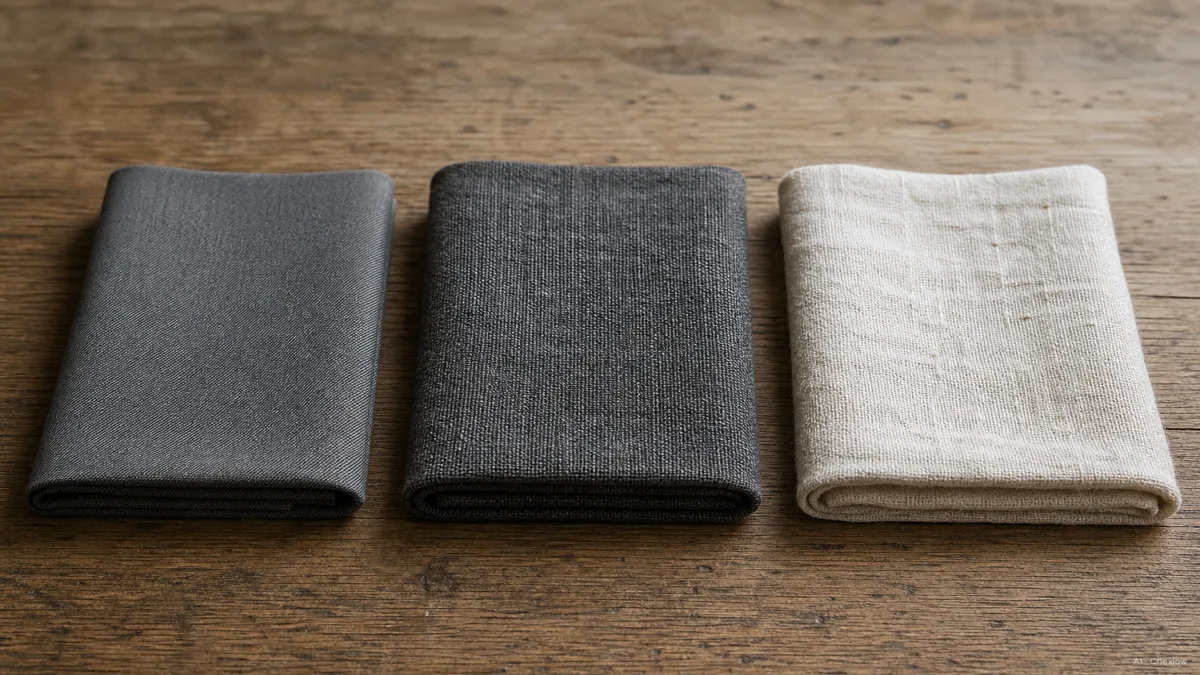
For a first suit, the answer is wool, and specifically a hundred percent worsted wool. This is the near-unanimous recommendation across the guides worth trusting, from GQ to Black Lapel to Gentleman's Gazette. Wool breathes, it drapes, it resists wrinkles on its own, and it works across the whole year rather than just one season. That last point matters more than it sounds: a first suit should be the one you can wear to an interview in March and a wedding in September without thinking about it.
It helps to know what the alternatives give up. Cotton sits one notch down from wool. It is smart-casual and fine in warm weather, but it wrinkles more than wool and reads as less formal, so it makes a good second suit rather than a first all-rounder. Linen is gorgeous in real summer heat and the most breathable of the three, but it wrinkles the moment you sit down and needs constant attention, which makes it too casual and too high-maintenance to carry the role of your only suit.
The one to avoid as your main fabric is polyester. It carries a synthetic sheen that reads as cheap in most settings, especially under indoor light, and it does not breathe, so you overheat in it. A small amount of synthetic blended in for stretch or wrinkle resistance is not the enemy. A suit that is mostly polyester is. When in doubt, read the composition tag and let wool lead.
Decoding suit labels, super numbers, weave types, and other specs
The most confusing thing on a wool suit label is the "Super" number, written like S100s, S120s, or S150s. Here is the part that clears it up: the Super number describes how fine the wool fiber is, not how good the suit is, and not the thread count. A higher number means a finer, softer fiber, as Gentleman's Gazette lays out in detail.
For a first suit, the sweet spot is S100s to S120s. That range is durable enough to survive frequent wear and still softer than the entry-level wools below it. It is the practical middle, and it is what most people should buy first.
The temptation is to chase a higher number, but finer is not automatically better for you. S150s and above feel wonderful in the hand and look luxurious, but the finer the fiber, the more delicate the cloth, and these higher Supers are prone to wearing through and tearing under daily use. Save them for an occasional-wear suit later, once you already own the workhorse.
A couple of other label terms are worth knowing. "Worsted" describes a smooth, tightly spun wool yarn, which is exactly what you want for a year-round suit; it is the standard and you do not need to overthink it. You may also see weight given in grams per square meter, where mid-weight cloth around 250 to 280 grams is the flexible all-season choice. Lighter is summer-only, heavier is winter-only.
The right color for a first suit, navy vs charcoal
A first suit should be navy or charcoal. Both work with nearly every shirt and tie you would pair them with, which is exactly the quality you want when you only own one suit. This is less a style opinion than a math problem: these two colors maximize the number of occasions a single suit can cover.
Navy is the slightly more stylish and versatile of the two. It has a touch of life to it, it flatters a wide range of skin tones, and it carries from a daytime interview to an evening event without feeling out of place. If you are buying one suit and want it to do the most work, navy is the pick most guides lean toward.
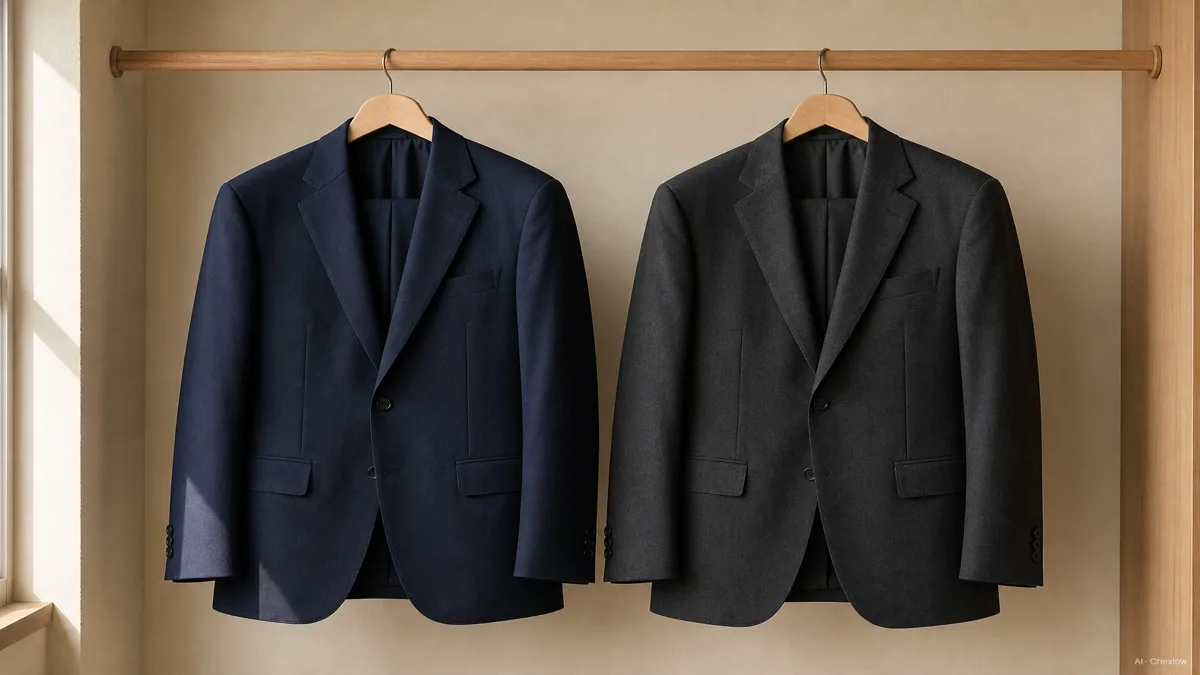
Charcoal is the more conservative, more formal of the two. It is a deep neutral gray that reads as serious and understated, which makes it the stronger choice if your first suit is mainly for formal or professional settings, or if you simply prefer to stay quiet rather than be noticed. Neither color will date, and neither will look out of place; the choice between them is really a choice about which register you live in more often.
One thing to skip for a first suit: black. It is less versatile than it looks, it reads as either funereal or formal-event-only in many settings, and it is harder to pair with everyday shirts than navy or charcoal. Black is a specialist, not a first suit.
What a tailor can, and cannot, fix
Buying off the rack means almost nothing will fit perfectly out of the box, and that is fine. The skill is knowing which imperfections a tailor can erase cheaply and which ones you must reject on the spot. Get this right and an off-the-rack suit ends up looking made for you.
Here is what a good tailor can adjust without much trouble:
- Waist. The jacket can be taken in or let out at the side seams to follow your torso, so a boxy off-the-rack jacket can be shaped to you.
- Trouser inseam and hem. Length is one of the easiest fixes, which is why buying trousers slightly long and hemming them down is almost always safer than buying short.
- Sleeve length. Sleeves can be shortened or lengthened a fair amount, so a sleeve that is close but not perfect is not a dealbreaker.
And here is what a tailor cannot meaningfully change, the things you must get right on the rack:
- Shoulders. The shoulder seam is built into the jacket's structure and cannot be moved without effectively rebuilding the jacket, which costs more than the suit. If the shoulder is wrong, walk away.
- Collar. A collar that gapes away from your neck or buckles is very hard to correct, and it is the second thing, after the shoulders, to check before you fall in love with a jacket.
So the buying rule writes itself. Prioritize the shoulders and the collar above all, because those are the two things money cannot fix afterward. Let the chest, waist, sleeves, and trouser length be "close enough," because a tailor turns close enough into exact. If you only remember one sentence from this whole guide, make it that one.
Pulling it together
If you want the short version: single-breasted, two-button, notch lapel, flat-front trousers, in worsted wool, in navy or charcoal, with the shoulders fitting cleanly off the rack. That configuration is the one almost every guide converges on for a first suit because it is classic, versatile, and unlikely to date.
From there, the decision is narrow enough to compare directly. Once you have two or three suits in your range that all clear the shoulder and collar test, line them up on fabric and color rather than price alone, since a navy worsted that fits your shoulders is worth more than a cheaper one that never will.
Sources
- How to Buy a Suit, GQ — fit priority, fabric recommendation, first-suit configuration
- Buying Your First Suit, Black Lapel — five key factors, navy vs charcoal, fabric choice
- Wool Super Numbers Explained, Gentleman's Gazette — what Super numbers mean, S100s–S120s sweet spot, fragility of higher Supers
- How a Suit Should Fit, Oliver Wicks — shoulder seam, chest hand test, sleeve length, trouser break
- Suit Fabric Guide, Nathan Tailors — wool vs linen vs cotton tradeoffs
- Best Suit Fabrics for Beginners, Westwood Hart — beginner fabric ranking, why polyester reads cheap
How this guide was built
This is a cross-brand first-suit buying guide, not a recommendation for any one label. The fit checks and alteration limits are cross-checked against Oliver Wicks and Black Lapel, the fabric tradeoffs against Nathan Tailors and Westwood Hart, and the Super-number explanation against Gentleman's Gazette, all listed in the sources. The framing reflects the kind of worsted-wool suits, jackets, and tailored trousers you can actually compare through Chexlow partner stores, so the advice points at pieces you can act on.
Edited by the Chexlow team · Images are AI-generated illustrations