
Both tools show up in every gym bag list and every physical therapist's recommendation, and both genuinely help. But they solve different problems, cost very different amounts, and reward different kinds of soreness. Understanding the mechanism first is what actually saves a first-time buyer from ending up with the wrong one.
What's the Real Difference Between a Foam Roller and a Massage Gun
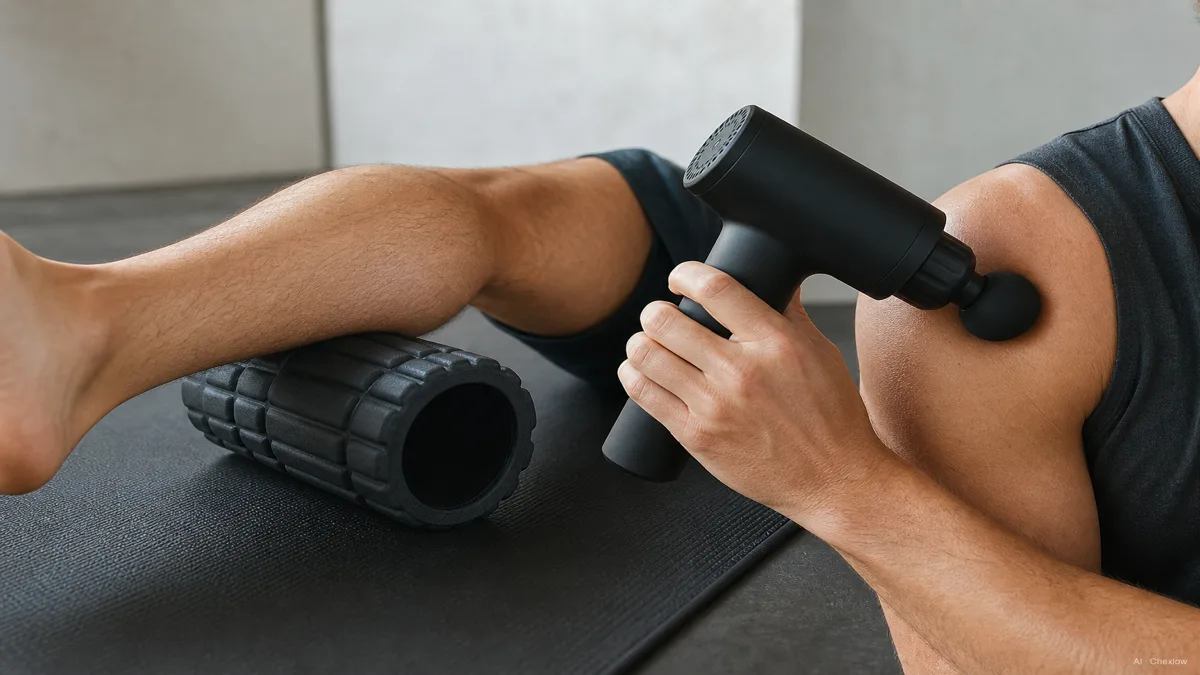
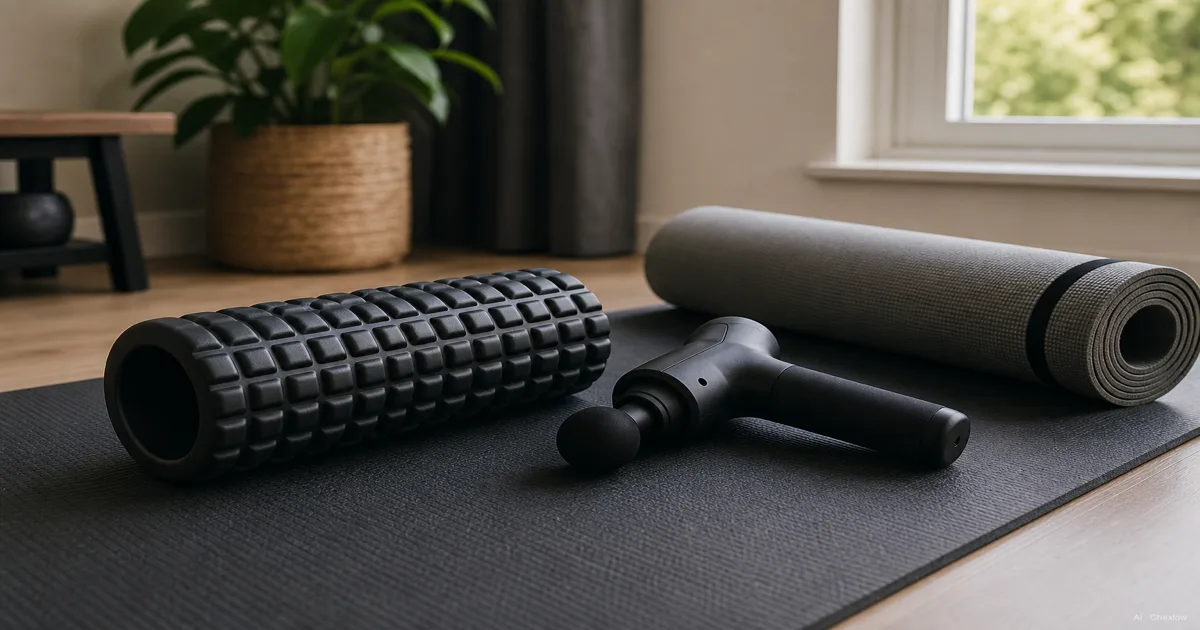
A foam roller works through self-myofascial release. You place a cylinder of dense foam on the floor, lay your bodyweight on top of it, and roll a muscle group slowly back and forth, letting your own weight apply broad, sustained pressure across the whole area (Petersen Physical Therapy). It is manual, it is slow, and it covers a lot of surface at once, a quad, a whole side of the back, an entire calf.
A massage gun works through percussive or vibration therapy. A small motor drives a head that taps in and out dozens of times per second, sending short, sharp pulses deep into one specific spot (RENPHO). It is fast, it is localized, and it is built to hit one tight knot rather than sweep a whole muscle group.
That mechanical split explains almost everything else in this guide. Broad coverage versus pinpoint depth is the actual decision, not "which one works better."
Which One Should You Buy First: Budget, Goals, and Body Type
The single biggest factor in this decision is usually price, and the gap is large. A solid basic foam roller like the TriggerPoint Grid runs around $40, and a firmer option like the RumbleRoller lands closer to $50. A massage gun that is actually worth using starts closer to $100 and climbs fast: the Hyperice Hypervolt 2 Pro runs about $299, and the Theragun PRO sits near $530. Vibrating foam rollers split the difference, with something like the Therabody WaveRoller around $180 and the Hyperice Vyper 3 near $318.
Body coverage matters just as much as price. A foam roller sweeps large, easy-to-reach surfaces in one motion, your back, quads, calves, IT band, so it is the better first pick for general post-workout soreness across a whole session's worth of muscle groups. A massage gun is built for the opposite job: hard-to-reach, single-point trouble spots like traps, glutes, or a stubborn calf knot that are awkward or impossible to roll against the floor.
Budget-conscious beginners are best served by starting with a foam roller. It is the lower-cost, lower-skill-barrier entry point, and it covers the soreness most new lifters actually deal with. People with chronic tightness in one specific spot, a bigger budget already set aside, or a real need for something that works one-handed without needing floor space tend to reach for a massage gun first instead.
What the Research Actually Says About Recovery Benefits
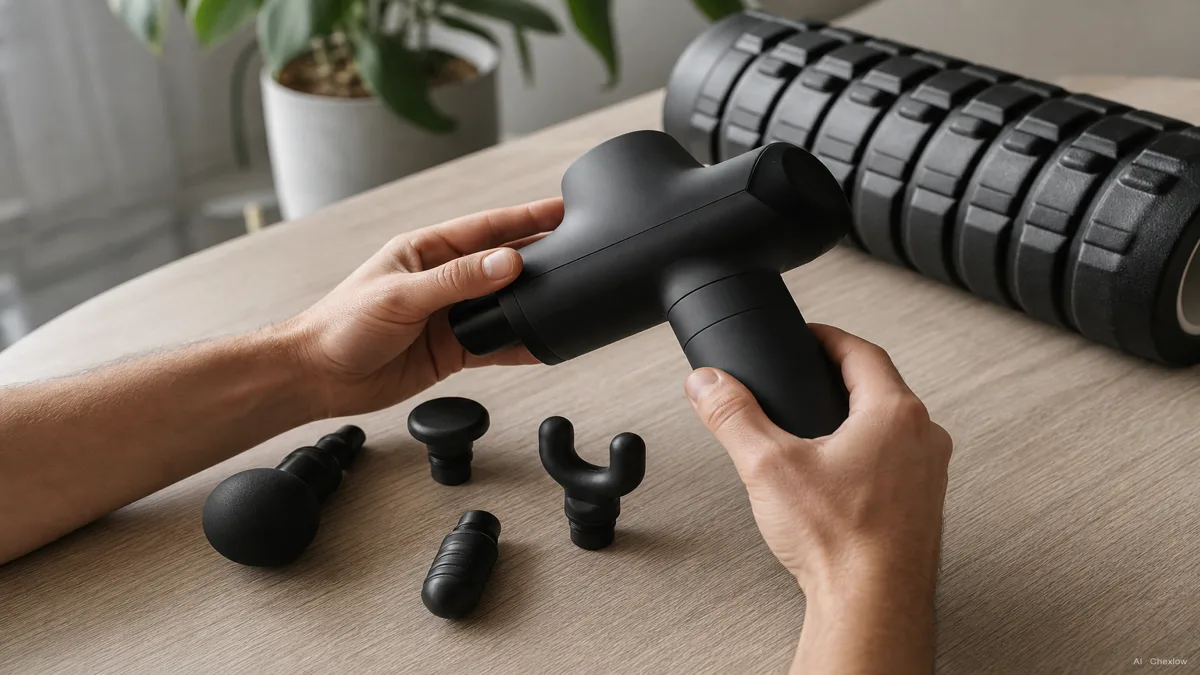
The evidence for foam rolling is comparatively strong and consistent. A systematic review found that self-myofascial release with a foam roller has consistent positive effects on joint range of motion (PMC), and more recent research links post-exercise recovery improvements to rolling each muscle area for at least about 120 seconds (Nature Scientific Reports, 2024). Where the evidence is weaker is strength: reviews have not found solid proof that foam rolling alone builds strength, though pairing it with dynamic stretching or resistance training may help.
The evidence for massage guns is real but more mixed. A systematic review found percussion massage can improve flexibility and reduce delayed-onset muscle soreness, but does not meaningfully change muscle activation or force production (PMC). One randomized controlled trial found no significant difference from a control group on some soreness-recovery measures (PMC). Where massage guns do show a clearer benefit is as a pre-workout warm-up tool: several studies report short-term flexibility and activation gains right before exercise, even though they do not appear to improve strength itself (PMC crossover pilot study).
Neither tool replaces sleep, nutrition, or genuine active recovery as the actual drivers of getting less sore. Both are adjuncts. The honest reading of the research is that a foam roller has the steadier evidence base for general recovery and range of motion, while a massage gun's clearest edge shows up as a quick pre-workout warm-up on a specific muscle.
Price Ranges and What You Get at Each Tier
A stall force spec, how much resisting pressure a massage gun's motor can push through before it slows down, is worth checking if you go that route, since it varies a lot between models. A budget gun in the $100 range often has a noticeably weaker motor than something like the Theragun Elite, rated around 40 lbs of stall force, and both sit well below a top-tier option like the Hypervolt 2 Pro, rated closer to 90 lbs (Recreation of LA). A gun that stalls out under light pressure will feel weak exactly where it is supposed to help most.
Foam rollers have a simpler price ladder. A basic smooth or ridged foam cylinder covers most needs for $10 to $40. Firmer, textured options aimed at deeper pressure, like the RumbleRoller, run closer to $50. Vibrating foam rollers add a motor for extra sensation and land in between the two categories, roughly $180 to $320, which makes them a reasonable middle step for someone who wants more than passive rolling but is not ready for a full massage gun.
Do You Eventually Need Both: Building a Simple Recovery Kit
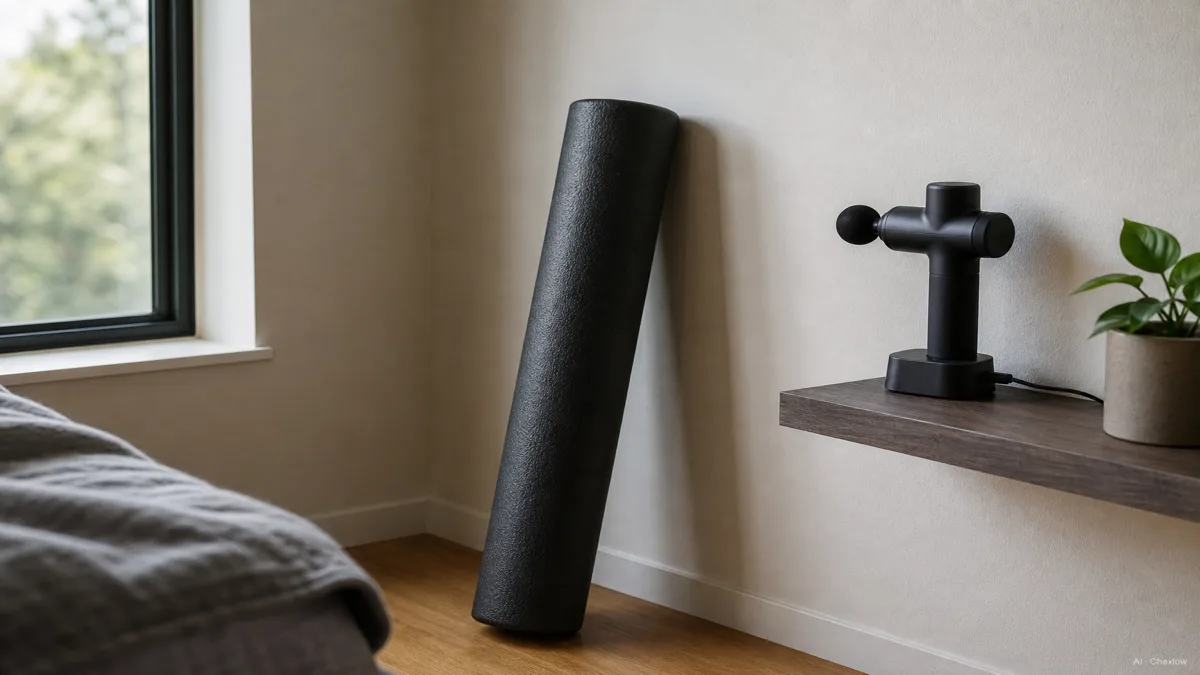
Independent reviewers keep landing on the same practical answer: the two tools are complementary rather than competing. A foam roller earns its place for general post-workout soreness and range-of-motion work across big muscle groups, and it is cheap enough that most people keep one regardless of what else they buy. A massage gun earns its place for the one stubborn spot a roller cannot reach well, a deep knot in a trap or glute, or a quick pre-workout wake-up on a specific muscle.
- Start with a foam roller if budget or general soreness across big muscle groups is the priority. It is the lower-cost entry point with the more consistent recovery evidence behind it.
- Start with a massage gun if a specific tight spot, convenience, or one-handed use matters more. Check the stall force spec before buying, since a weak motor will disappoint exactly where you need power most.
- Build toward both over time if the budget allows. A basic roller under $40 plus a mid-range gun eventually covers broad post-workout recovery and pinpoint deep-tissue spots without overlap.
Most people who train regularly end up owning both within a year or two. The real first-purchase decision is just about which gap in your current routine, broad coverage or pinpoint depth, is bothering you right now.
Sources
- Foam Roller Vs Massage Gun: Which to choose, and why, Petersen Physical Therapy
- Massage Gun vs. Foam Roller: Which Recovery Tool Is Right for You?, RENPHO
- Hyperice Hypervolt vs. TheraGun Review, Recreation of LA
- Effects of Self-Myofascial Release Using a Foam Roll or Roller Massager on Joint Range of Motion, Muscle Recovery, and Performance: A Systematic Review, PMC
- Recovery effect of self-myofascial release treatment using different type of foam rollers, Scientific Reports (Nature)
- The Effects of Massage Guns on Performance and Recovery: A Systematic Review, PMC
- The effect of percussion massage therapy on the recovery of delayed onset muscle soreness in physically active young men: a randomized controlled trial, PMC
- Does Massage Gun or Foam Roller Use During a Warm-Up Improve Performance in Trained Athletes?, PMC
How this guide was built
This piece started from a question that trips up nearly every new lifter figuring out recovery gear: foam roller or massage gun, and why they never seem to be compared fairly since one costs a fraction of the other. We cross-checked the mechanism explanations from Petersen Physical Therapy and RENPHO, pulled stall-force comparisons from Recreation of LA, and worked through the systematic reviews and trial data on both tools' actual recovery evidence so the buying guidance rests on what the research supports rather than marketing claims from either category. The framing stays equipment-agnostic on purpose, since the goal is helping a reader pick the right starting tool for their own soreness pattern before any single brand enters the picture.
Edited by the Chexlow team · Images are AI-generated illustrations