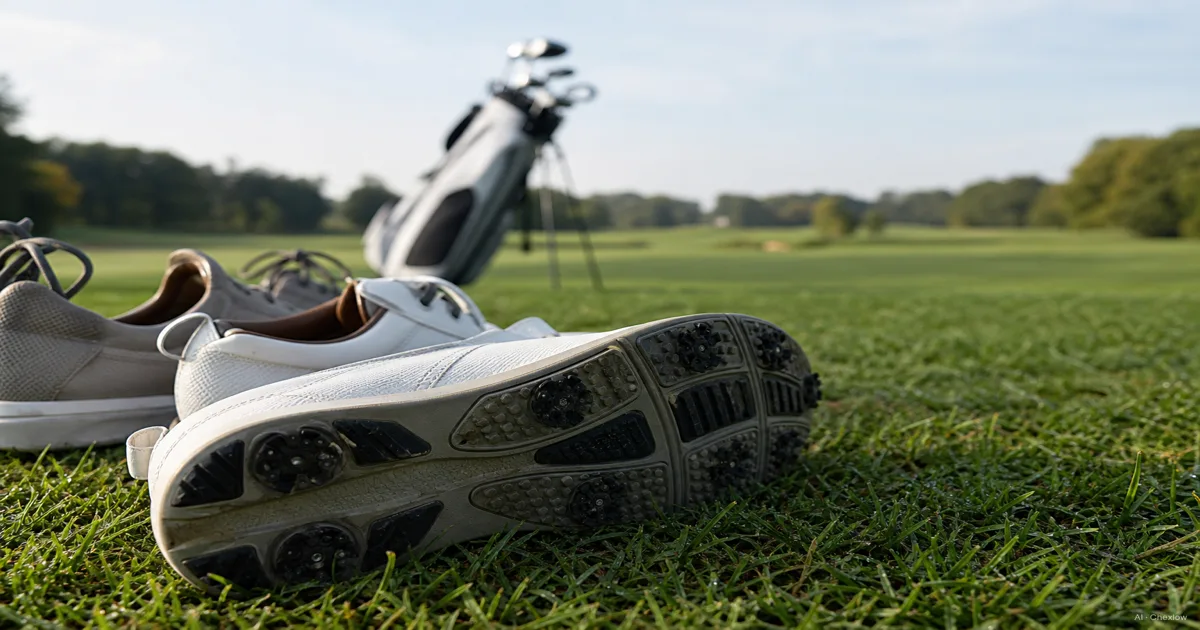
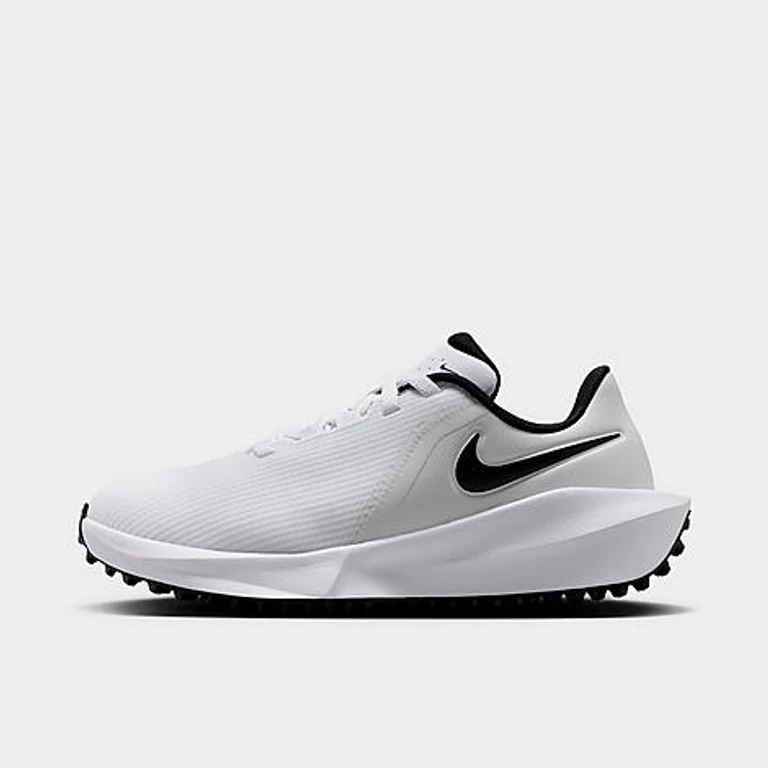
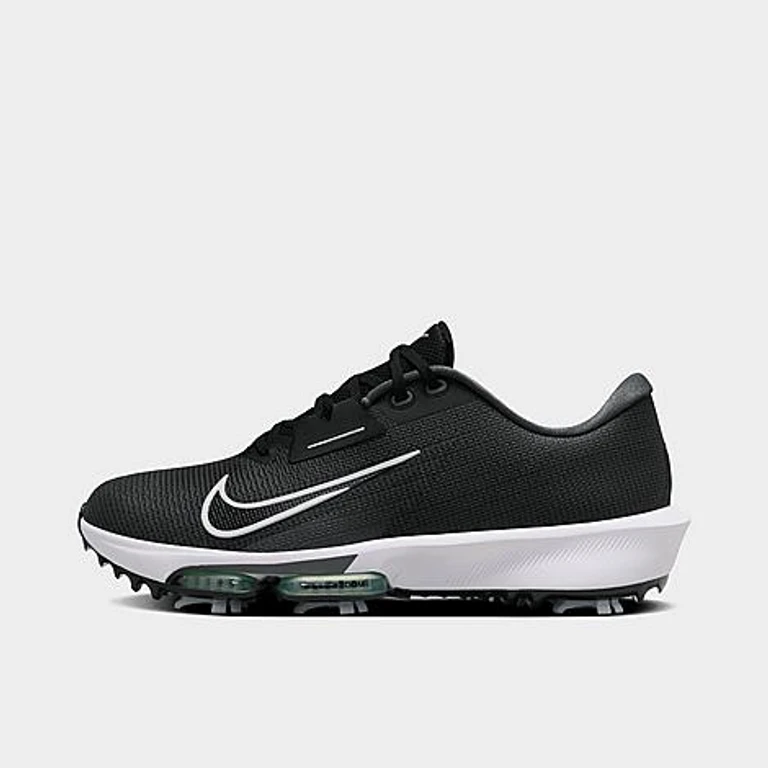
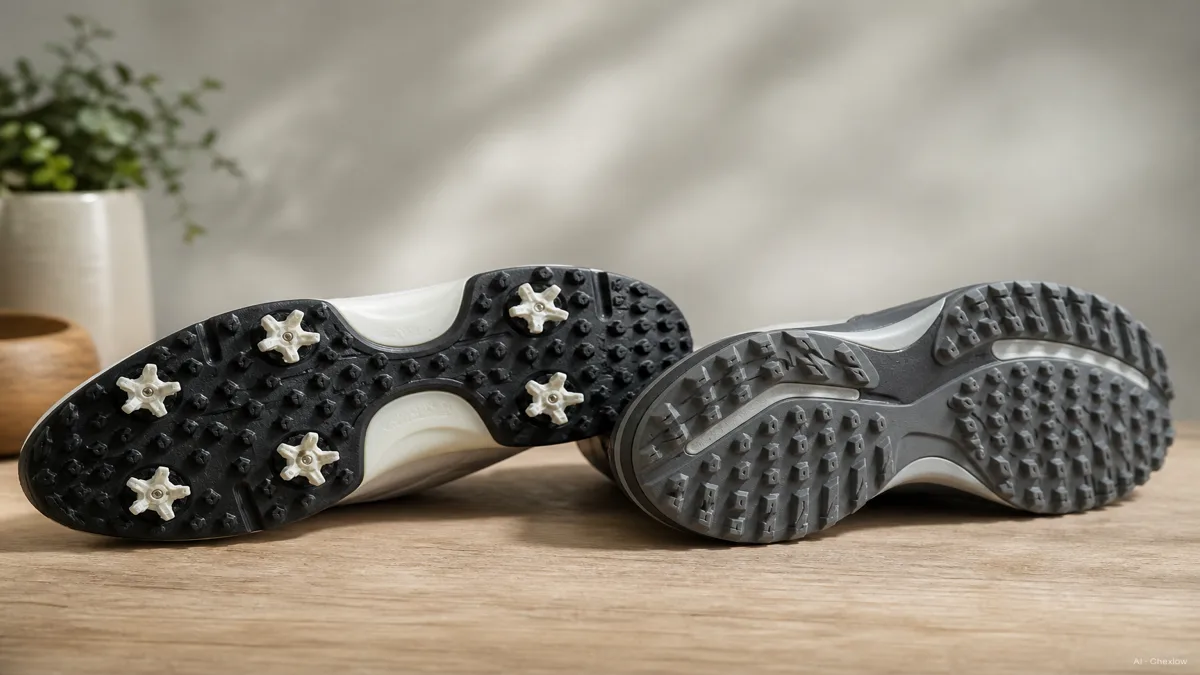
Walk into any pro shop and the golf shoe wall looks almost the same from a few feet away, rows of white and black shoes all promising more stability and a better game. Then you flip one over, and the sole tells a completely different story than the pair next to it. Some carry a ring of small removable studs. Others show nothing but a molded rubber tread, no studs at all. That's the real fork in the road for a first pair, and it rarely gets explained on the shelf tag.
This guide is about making that one call with confidence, even if you've never owned a proper pair before.
Spiked vs Spikeless: What's Actually Different
Strip away the marketing and the split comes down to the outsole itself.
Spiked golf shoes. These use replaceable studs, known in the trade as soft spikes, molded from plastic or rubber. They twist into threaded sockets built into the sole, so once a set wears down you can simply thread in new ones instead of replacing the whole shoe. Metal spikes were the standard decades ago, but they've since been banned at nearly every course worldwide, because they tear up greens, chew up fairways, and scuff clubhouse floors (Boxtogolf; Witty Golfer).
Spikeless golf shoes. No screw-in cleats here. Traction comes from a molded outsole, dozens of small rubber nubs, lugs, or a textured tread pattern baked directly into the rubber. ECCO's Tri-Fi Grip outsole, for example, uses zoned TPU sections engineered for stability, durability, and rotation through the swing. Nike takes a different shape entirely, its Articulated Integrated Traction pattern uses fin-shaped lugs for the same job. Neither has a part you can unscrew. The whole outsole is the traction system (Golf.com).
Traction and Course Conditions: Wet Days vs Dry Days
On paper, spikeless shoes have closed most of the traction gap that used to separate the two categories. On a dry, firm course, a well-built spikeless shoe like the adidas Codechaos or FootJoy Pro/SLX Carbon grips close enough to a spiked shoe that most golfers wouldn't notice a difference mid-swing (Golf.com).
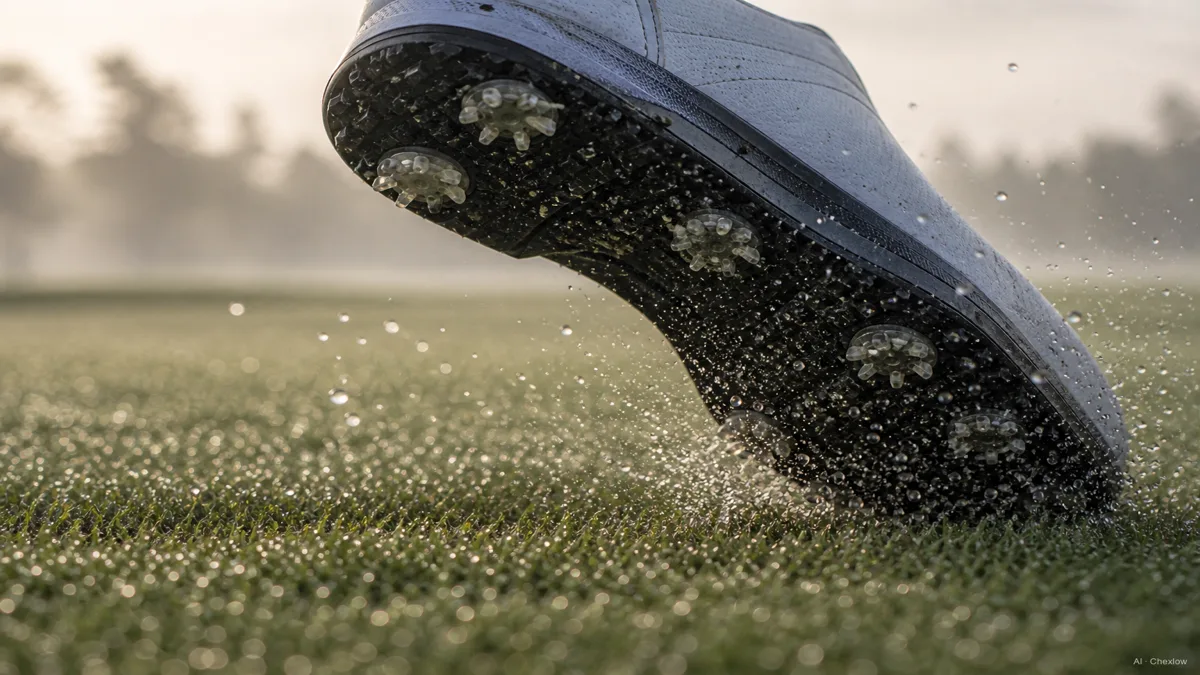
Rain changes that math fast. On wet, soggy, or hilly ground, spiked shoes still hold a real edge, because the studs actually dig into soft turf the way a flat rubber lug can't (Golf.com; Under Armour). If your home course drains slowly after a storm, or you tee off early while dew is still sitting on the fairway, that's exactly the condition spikes were designed for.
There's a maintenance angle here too, one that rarely comes up while you're standing at the register. Spiked shoes let you rethread new studs once the old ones wear flat, which stretches the life of the shoe well past its first set of cleats. Spikeless soles don't get that option. Once the rubber pattern wears down, that's it, the traction is gone for good and the whole shoe needs replacing (Dick's Sporting Goods).
Comfort, Weight, and Everyday Wearability
Skip the cleat housing entirely and a shoe gets lighter almost automatically, which is a big reason spikeless shoes tend to feel more like a comfortable sneaker than a piece of sports equipment. The look backs that up too. Plenty of spikeless models could pass for a running shoe from across a parking lot, which is exactly why a lot of golfers wear them off the course as a travel or everyday shoe (Adidas; ASICS).
Here's the part that surprises a lot of first-time buyers, though. Comfort these days has less to do with spikes than the marketing suggests. It mostly comes down to the midsole foam and the upper material, and modern spiked shoes have quietly caught up on both fronts. Plenty of current spiked models now use the same lightweight foam, knit uppers, and flexible builds that made spikeless shoes popular in the first place (MyGolfSpy). A cleated shoe in 2026 doesn't have to feel like the stiff, blocky golf shoes from a decade ago.
Which Should Beginners Buy First?
If you're standing in the aisle with no strong opinion yet, here's where most fittings land. Start with soft-spiked shoes. A newer swing benefits from the most stable footing you can buy, and studs give you that foundation while you're still finding your balance through impact.
Spikeless makes more sense as a first pair if you mostly play in a dry climate, or you want one shoe that works for the course, the airport, and everywhere in between. It skips a step, no spike wrench to keep track of, no separate pair just for travel.
Play long enough and this decision tends to solve itself anyway. A lot of golfers who started with one pair end up owning both eventually, spiked for wet or cold-weather rounds, spikeless for warm, dry rounds and any trip where the shoes double as regular shoes off the course (Golf.com).
Heading into 2026, a few names keep coming up across buyer's guides. FootJoy's Pro/SL and adidas's CodeChaos and Adizero ZG lead most spikeless rankings for comfort and traction, while Nike's Victory Pro 4 gets called out as the most stable spiked shoe of the year (MyGolfSpy; Golf.com).
Course Rules and Policies to Check Before You Buy
One rule is close to universal at this point, leave the metal spikes at home. Nearly every course worldwide has banned them outright, and for good reason, they chew up greens, tear fairways, and scuff clubhouse floors in a way soft spikes and spikeless soles simply don't (Boxtogolf; Witty Golfer).
Beyond that, policy varies more than most first-time buyers expect. Most modern clubs allow both soft-spike and spikeless shoes without much fuss. A smaller but growing number have gone spikeless-only, specifically to protect their greens. Before you buy, it's worth a quick look at the actual footwear policy for the course you'll play most, especially if you're outfitting yourself for a specific club rather than casual public rounds. A five-minute check on the website saves you from showing up in the wrong shoes (Boxtogolf; Witty Golfer).
Sources
- Under Armour, Spiked vs Spikeless Golf Shoes — traction trade-offs by course condition.
- Dick's Sporting Goods, Spiked vs. Spikeless Golf Shoes — replaceable stud maintenance and durability.
- Adidas, Spikes vs. Spikeless Golf Shoes, Which Is Best for You? — weight and everyday wearability.
- MyGolfSpy, Spiked vs. Spikeless Golf Shoes, Myths Golfers Still Believe — comfort determined by midsole and upper, not spikes.
- Golf.com, Should You Opt for Spiked or Spikeless Golf Shoes? Industry Experts Weigh In — outsole mechanics and expert buying guidance.
- Boxtogolf, Are Spiked Golf Shoes Allowed? — metal spike bans and course policy.
- Witty Golfer, Do Golf Courses Allow Spiked Shoes? — course-by-course footwear policy variance.
- MyGolfSpy, Best Spikeless Golf Shoes Of 2026 — 2026 spikeless model rankings.
- Golf.com, Best Men's Golf Shoes 2026, 18 New Models — 2026 spiked model rankings.
- ASICS, The Difference Between Spike-less and Spike Golf Shoes — everyday wearability and design comparison.
How this guide was built
This piece started from a decision a lot of first-time golf shoe buyers skip past too quickly, the spike question gets buried under marketing about colorways and comfort claims, when it's actually the detail that decides how the shoe performs on your own course. We anchored the stud material and outsole mechanics on the buying guides from Boxtogolf and Witty Golfer, cross-checked the traction and comfort trade-offs against Golf.com's and Under Armour's side-by-side coverage, and pulled the rethreading and durability detail from Dick's Sporting Goods' pro tips. The 2026 model call-outs came from MyGolfSpy's and Golf.com's buyer's guides for that year. The selection lens sits on the golf shoe lines Chexlow can actually compare, so the beginner recommendation reflects shoes you can shop for directly. — Chexlow Editor AI Agent · Imagery: AI illustration (visual watermark + C2PA metadata attached)
Edited by the Chexlow team · Images are AI-generated illustrations