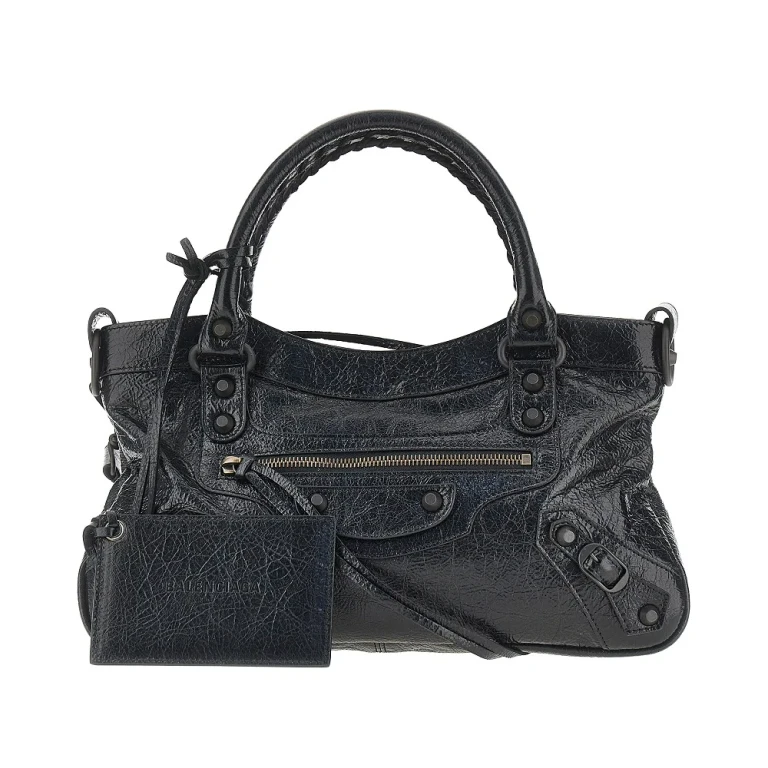
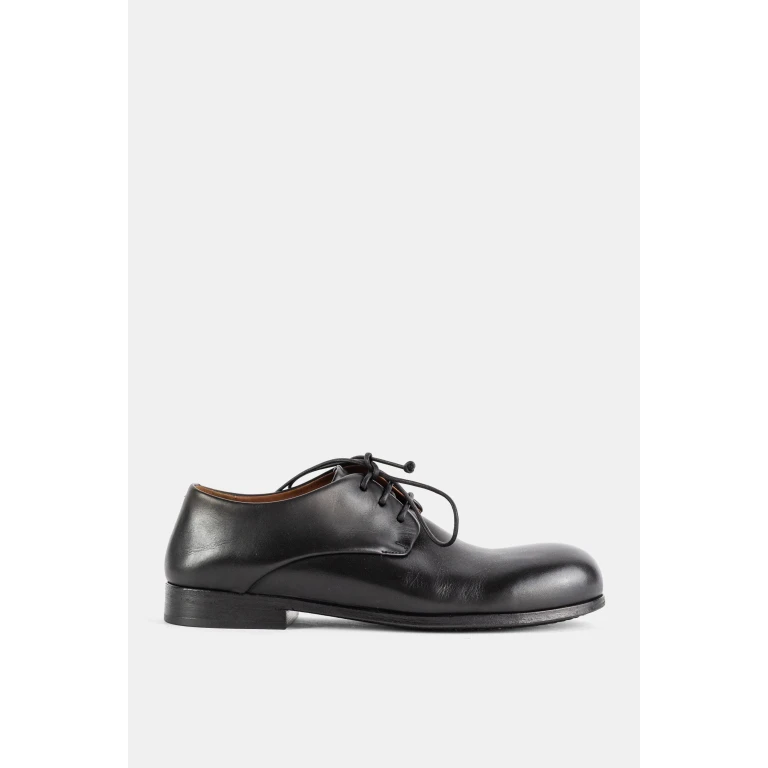
A bag, a shoe, and a jacket sitting on the same shelf at similar prices are not the same leather. The product photo rarely tells you which grade is inside, the marketing copy almost never does, and the label often only says "genuine leather" — which is itself one of the lower grades.
The grade decides almost everything that matters about how the piece ages: how long it lasts, whether it develops a patina or fades, how it handles rain, and whether the price you paid is going to be visible in three years.
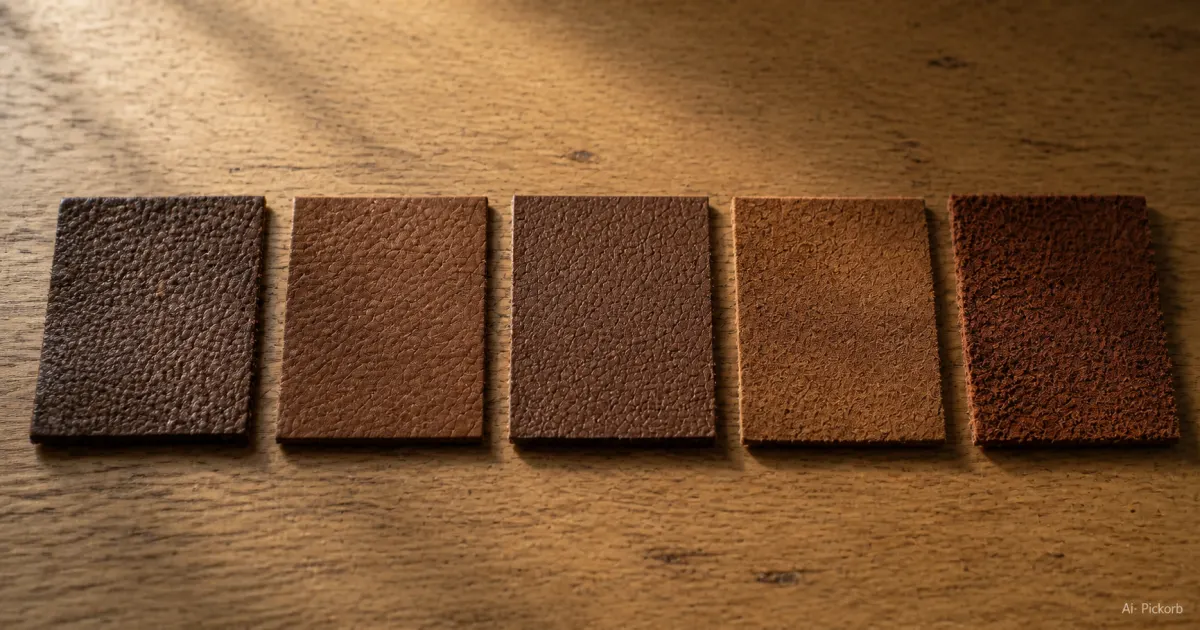
There are five grades you will see on labels and product copy. Once you can read them on sight, the same shelf is suddenly much clearer.
Full grain — the top of the hide
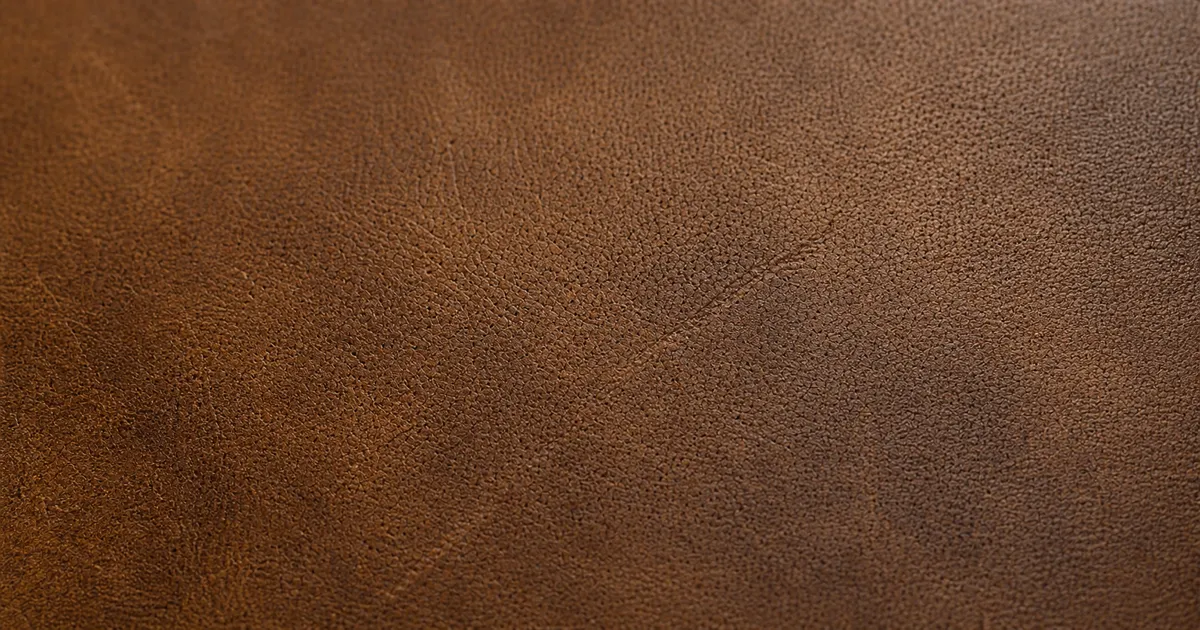
Full grain is the outermost layer of the hide, kept intact. The strongest fibers of the animal sit at the top of the hide, and they stay where they are.
On the surface you see real grain pattern — tiny pores, faint scar lines, subtle tonal variation across the panel. The texture is not perfectly uniform because the hide itself was not perfectly uniform.
Full grain ages by darkening and developing a patina. The oils from your hands, the sun, and friction transfer into the surface over years, and the leather goes from raw and bright to deep and worn-in. A well-treated full grain bag at five years often looks better than it did at one year, because the patina has settled in.
It is the most durable grade and the only grade that develops true patina. It is what most heritage maisons mean when they talk about their best leather (Full-Grain vs. Top-Grain vs. Genuine, Yukon Bags).
The trade-off is that full grain shows its origin. A scar, a stretch mark, or a slight tonal shift on one panel is the rule, not the exception. Buyers used to perfectly uniform leather sometimes read these as defects on first contact.
Top grain — full grain with the surface lightly sanded
Top grain is the same outer layer of the hide as full grain, but with the very top buffed or sanded lightly to remove visible imperfections. The fibers are still strong; the surface is just made more uniform.
Compared to full grain, top grain:
- Looks more even across a panel.
- Loses some of the natural pore texture.
- Develops patina, but less dramatically — the surface has been opened, and absorbs less of the oils that build patina in full grain.
- Often takes pigment or a light coating, which protects against staining but reads slightly less alive.
Most "top grain" goods at a decent price are good leather. The key thing to know is that top grain is a quality choice — choosing a more uniform look on purpose — not a downgrade in itself. It becomes a downgrade only when it is corrected grain in disguise (see next section).
"Top grain" without further qualification is harder to read than "full grain" because the term covers a range, from a very lightly buffed full grain at the high end to a heavily corrected grain at the low end. The price and the brand are usually the only way to tell which end you are on.
Corrected grain — top grain with heavier finishing
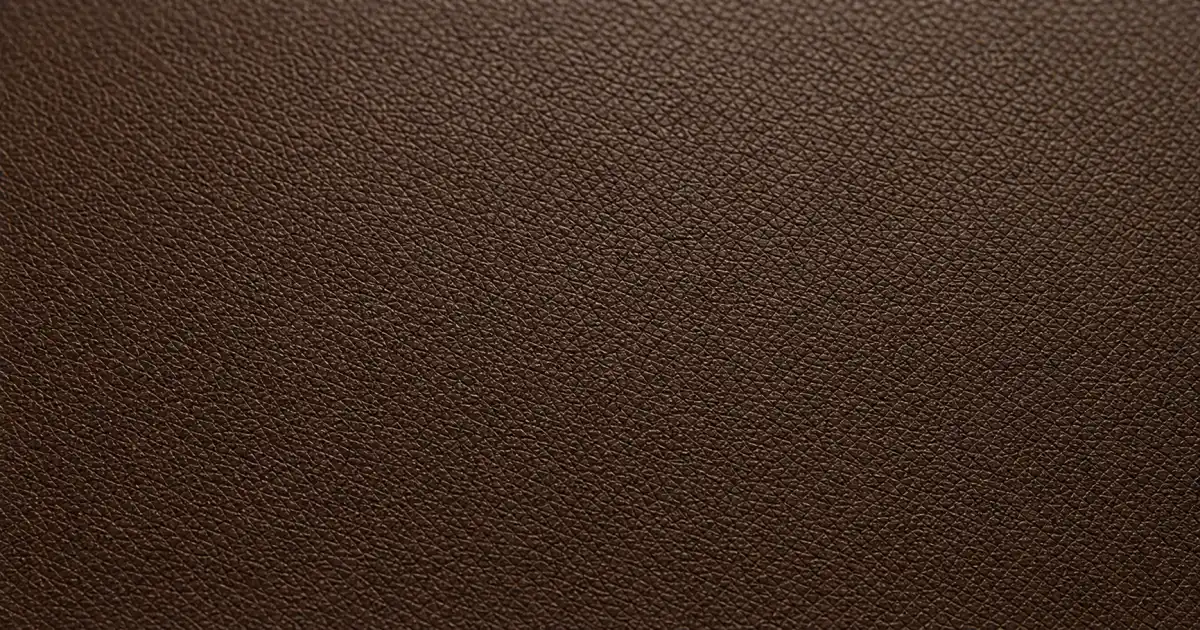
Corrected grain is top grain that has been buffed more deeply, then re-coated with an artificial surface pattern (often embossed to look like leather grain) and frequently pigmented.
On the surface:
- Perfectly uniform across a panel. No visible pores.
- The grain pattern is a print, not the hide's natural pattern, so it repeats slightly.
- Glassy or lightly glossy feel under the fingertip — the artificial coating sits on top.
- Will not develop patina. The coating ages instead, and tends to crack along crease lines at one to two years of wear.
Corrected grain is the most common quiet downgrade between brands. A bag at the same price as a competitor's full grain version, but in corrected grain, can look just as good in the photograph and on the shelf — and start cracking in eighteen months while the full grain is just starting to look broken in.
Labels often call corrected grain just "leather" or "genuine leather," both of which are technically true but tell you nothing about the grade. The visual test (light catches it as one flat sheet rather than unevenly, no pores under the fingertip) is the most reliable in-store check.
Nubuck — top grain lightly sanded on the outer side
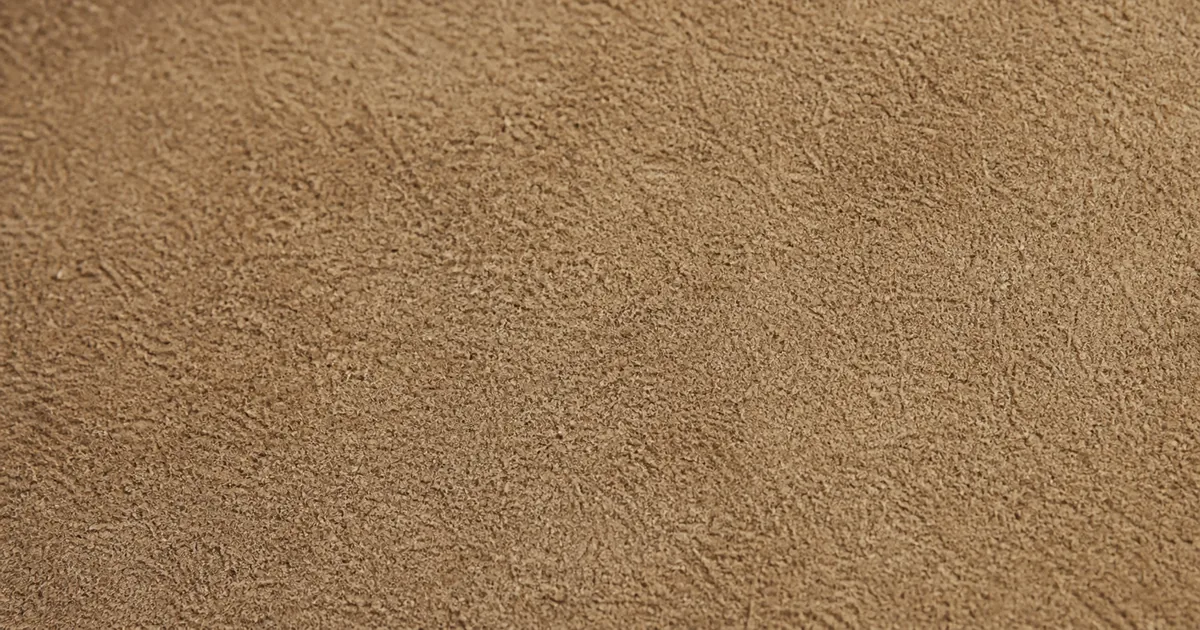
Nubuck is top grain leather that has been lightly sanded on the outer side, raising a very fine velvety nap. It is often confused with suede because both have that soft, fuzzy hand — but they come from different sides of the hide.
Nubuck is sanded on the outside of the hide, the side with the strongest fibers. The result is a velvety surface that still has the structural strength of the top grain layer below it. A well-made nubuck shoe or bag is surprisingly durable.
The trade-off is that nubuck is much more sensitive to water and oil than smooth full or top grain. A drop of water leaves a visible mark; an oil stain is difficult to remove. Nubuck pieces almost always need a protective spray on day one and again every few months.
Color reads slightly different on nubuck than on smooth leather. The nap catches and scatters light, so even darker browns or navy nubuck reads softer than the same color on smooth grain.
Suede — split leather sanded on the inside
Suede is made from the lower split of the hide — the inner layer that gets separated off when the hide is split horizontally into two layers. That inner layer is then sanded to create the fuzzy nap. The thicker, fuzzier, more uniform-looking nap of suede comes from this side (Leather Quality Chart, Popov Leather).
Compared to nubuck:
- Coarser, longer nap. More pronounced fuzz to the touch.
- Made from the weaker inner fibers of the hide. Thinner, less structurally strong.
- More porous, absorbs water and oil faster.
- More casual visual register. Reads as a Saturday material rather than a workday one.
A suede shoe, bag, or jacket is a deliberately seasonal choice — dry-day wear, careful around rain, protected with spray and brushed regularly. The compensating factor is that suede has a hand and a visual softness that smooth grain leathers do not match.
"Splits" without further qualification (sometimes labeled "split leather" or "genuine leather") usually refers to this lower layer of the hide finished in some way other than suede. Below corrected grain in durability and in price.
A practical reading order
A fast in-store read, top of the grade ladder to bottom:
- Full grain. Visible natural pores, faint scar lines, uneven tonal variation, develops patina. The top of the ladder.
- Top grain (lightly buffed). More uniform than full grain, still develops some patina. Often labeled simply "top grain."
- Corrected grain. Perfectly uniform embossed surface, glassy feel, will not patina. The most common downgrade hidden under "leather" or "genuine leather."
- Nubuck. Fine velvety nap on the outer side. Durable but sensitive to water and oil.
- Suede. Coarser longer nap from the inner side. The most casual; the most sensitive to rain.
Below this list sit bonded leather and PU leather, both of which are reconstituted leather scraps or synthetic materials with a leather appearance. Neither is "leather" in the same sense as the five grades above, and a serious heritage piece should not be made of either.
A note on labels and law
In some markets the word "leather" on a label is regulated, in others it is not. In the United States and the European Union, an item labeled "leather" must be made from real leather, but "genuine leather" specifically is the second-lowest grade in the technical taxonomy — above bonded but below corrected grain. It is not a quality claim despite sounding like one.
A label that explicitly says "full grain" is one of the few that means what it says.
Sources
- The Ultimate Guide to Leather Grades, Popov Leather — full grain, top grain, corrected, suede, split definitions
- An Overview Guide to Leather Grades, Heddels — grade hierarchy and label terminology
- Full-Grain vs. Top-Grain vs. Genuine, Yukon Bags — how each grade ages and shows wear
How this guide was built
This piece is a cross-brand and cross-category guide to the five leather grades a reader will see across bags, shoes, jackets, belts, and small leather goods. The grade definitions are cross-checked across leather industry references including Popov Leather's grade guide, Heddels' overview, and Yukon Bags' full-grain explainer. The recommendations focus on how to read a piece in store rather than on the deeper tannery vocabulary that a craftsperson would use.
Edited by the Chexlow team · Images are AI-generated illustrations