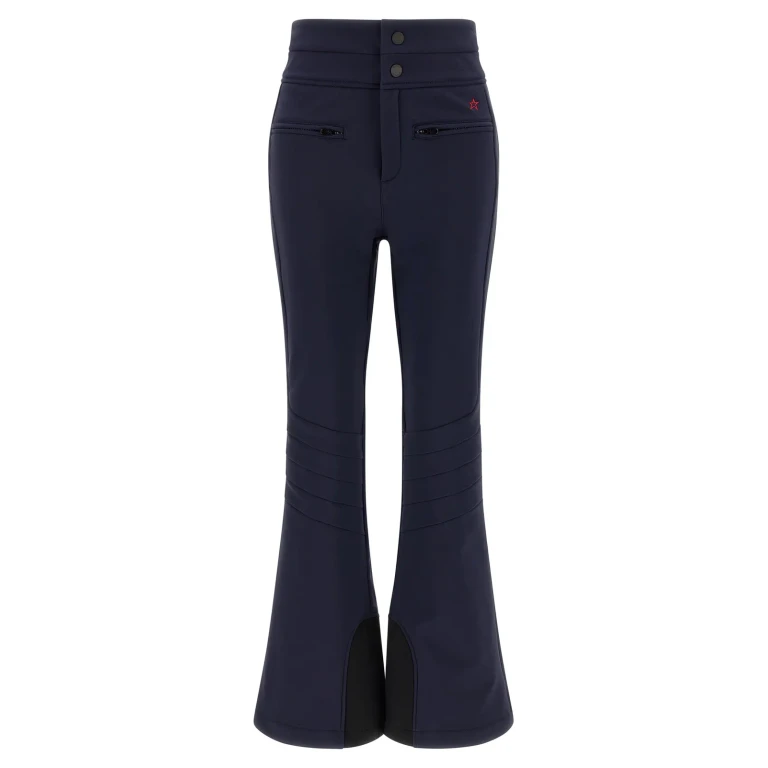
Ski Jacket vs. Snowboard Jacket: What Actually Differs
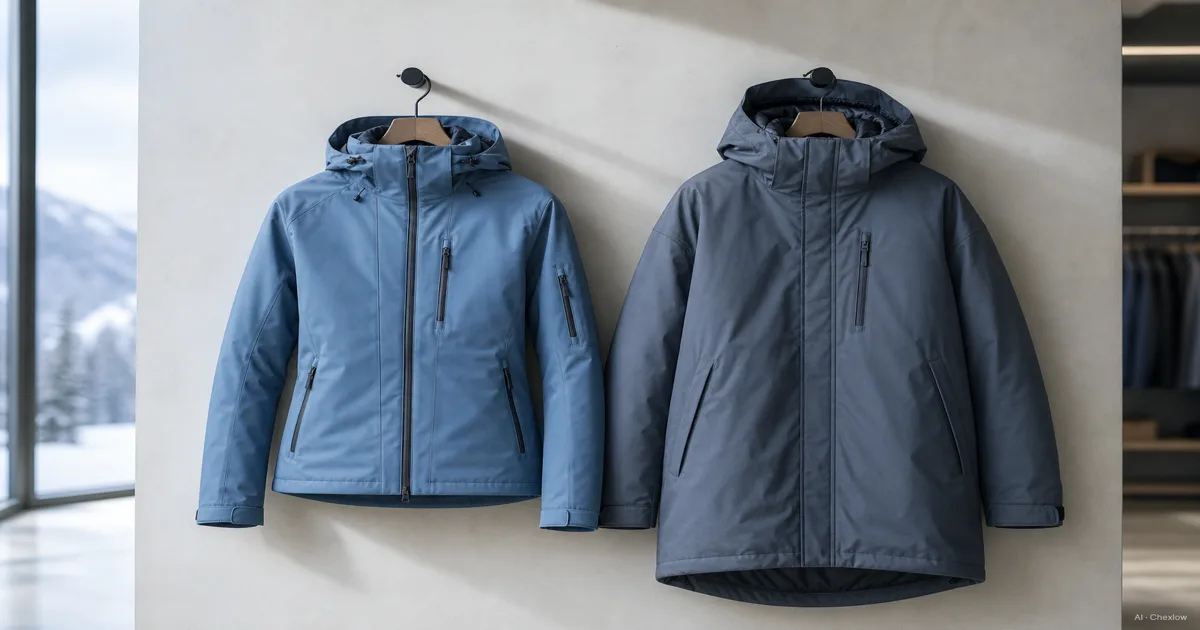
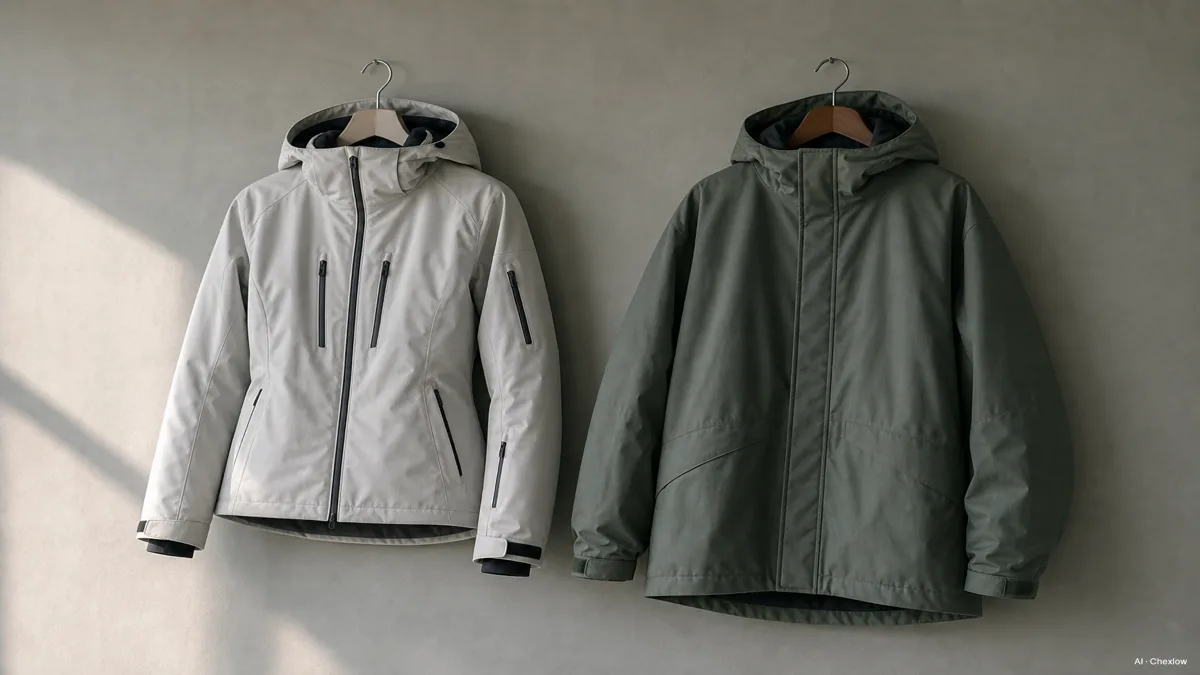
Hang a ski jacket and a snowboard jacket next to each other and from a few feet away they can look like the same product with a different label. Get closer and the cut tells a different story. A ski jacket is trimmed close to the body, built to cut wind resistance and keep you aerodynamic while you carve turns at speed. A snowboard jacket runs baggier through the torso and arms, giving a rider room to move through the shoulders and elbows while carving, grabbing a rail, or throwing a trick (Quiksilver; Söll Specialists).
Neither cut is objectively better. A close-fitting jacket that is perfect for skiing would feel restrictive the moment you drop into a crouch on a board, and a roomy snowboard cut would flap and drag on someone skiing gates. The mismatch is the actual problem to solve, not brand or price.
Here is the part worth knowing before you shop further: modern snow-clothing construction has blurred a lot of the historical lines between the two categories. Waterproofing, insulation, and even some fits now cross over freely, so for a first purchase the decision mostly comes down to which sport you will actually do, plus your own fit and style preference, rather than a strict rulebook (Quiksilver).
Fit, Length, and Pocket Placement Compared
Length is the clearest tell once you know to look for it. Ski jackets typically end around mid-hip, short enough to stay out of the way during ski turns and pole work. Snowboard jackets run longer, often reaching the upper thigh with a drop-tail hem that extends lower in the back than the front, because riders sit down on chairlifts, kneel to buckle bindings, and land on their backside far more often than skiers do (Quiksilver).
Pocket placement follows the same logic. Ski jackets place pockets higher, at chest or upper-arm height, so you can reach them while holding poles without bending. Snowboard jackets place pockets lower on the torso, positioned for easy access when you are bent over strapping into bindings or sitting on the snow (Quiksilver; Capelin Crew).
Two fit details matter more than most first-time buyers expect. First, a jacket should leave roughly a 2 to 3 centimeter gap between the fabric and your body once you have a base layer and mid layer on, that air gap is what actually holds warm air against your skin, not the jacket alone. Too snug and you lose that insulating layer of air; too loose and cold air pumps in and out with every movement. Second, check that the jacket's snow skirt, the elastic band inside the hem, actually interfaces with your snow pants, either via a jacket-to-pant clip or by tucking under a bib. That connection is what stops snow from riding up your back when you fall or sit down (Capelin Crew).
Waterproofing and Breathability Ratings Explained
Waterproof ratings are measured in millimeters of water column, the height of water a lab can hold on top of the fabric before it starts leaking through. Both ski and snowboard jackets are rated on this exact same scale, so the "ski" or "snowboard" name on the label tells you nothing about which one is actually more waterproof. Only the mm number does (Absolute-Snow).
As a rough guide: 5,000mm is the floor for dry, clear-condition casual wear. 10,000mm to 20,000mm covers most resort days and wet, snowy conditions. Premium membranes like Gore-Tex sit at the top of that range and beyond (Absolute-Snow; Snowears 2026 buying guide). If you are buying your first jacket for casual resort days in a colder, drier climate, 10,000mm is a genuinely solid, cost-effective place to start, you do not need to chase the highest number on the rack (Snowears 2026 buying guide).
Breathability works on its own scale, measured in grams of moisture per square meter over 24 hours, and typically runs from about 3,000g to 20,000g. Anything at 5,000g or higher starts to meaningfully vent sweat instead of trapping it, which matters more than most first-time buyers expect once they are actually working up a sweat hiking to a chairlift or sidestepping up a run.
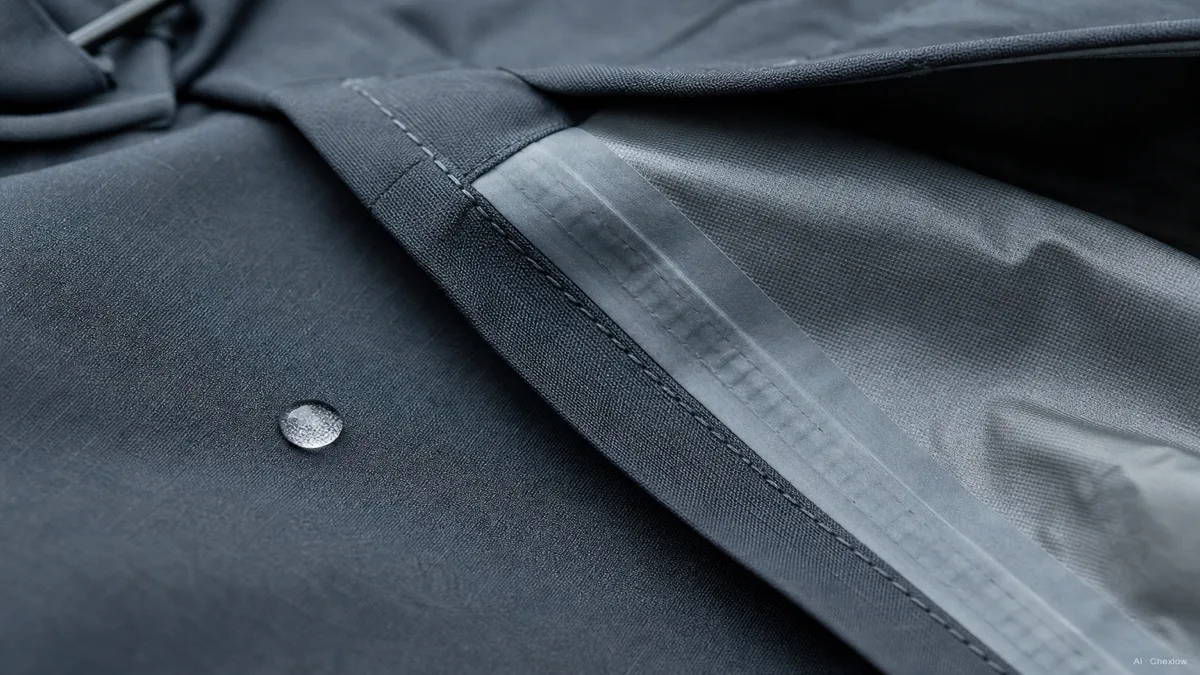
The number that gets skipped over the most is seam sealing, and it matters as much as the mm rating itself. "Fully taped" or "fully sealed" seams block water at every stitch line in the jacket. "Critically taped" seams only cover the major seams, shoulders and main panels, and can still leak at the smaller ones. Whichever style of jacket you land on, check for fully taped construction, that detail decides whether the mm rating on the tag actually holds up in real snow (Absolute-Snow).
Insulated vs. Shell: Choosing for Your Climate
Here is a common assumption worth correcting early: insulation is not a category-defining difference between ski and snowboard jackets. Both are sold in insulated and shell versions, and the right pick depends on your climate and how much you move, not on which sport is printed on the label (Quiksilver).
An insulated jacket has built-in fill, down or synthetic, and works well if you run cold, spend a lot of time standing still on a chairlift, or ski in consistently frigid conditions where you are not adding or removing layers through the day. A shell jacket has no insulation of its own; you build warmth underneath with a base layer and a mid layer, which gives you more control on days where the temperature swings between the base of the mountain and the summit, or between an easy warm-up run and an aggressive afternoon session.
For a first purchase, think about your actual pattern rather than your coldest possible day. If you run warm, move constantly, or ski in a climate with big temperature swings, a shell plus a separate mid layer is more flexible. If you get cold easily or mostly stand around between runs, an insulated jacket removes one layering decision from every single trip out.
How to Decide for Your First Purchase
Start with the sport, not the jacket. If you are skiing, look for the closer, shorter, higher-pocketed cut. If you are riding a board, look for the roomier, longer, lower-pocketed cut with a drop-tail hem. That single choice already filters out most of the wrong options on a crowded rack.
From there, check three things in order. First, the waterproof rating, 10,000mm as a floor for casual resort days in a dry, cold climate, 10,000mm to 20,000mm if you expect wet snow or longer days out. Second, fully taped seams, regardless of the mm number, because untaped seams leak no matter how good the fabric rating looks on paper. Third, try the jacket on over a base layer and mid layer and check for that 2 to 3 centimeter air gap, not skin-tight, not swimming in fabric.
Insulated versus shell comes down to your own climate and how much you move, not a rule tied to skiing versus snowboarding. And if two jackets check every box above, the final call is genuinely about which one you would actually want to wear, style and fit preference are a legitimate deciding factor once the technical boxes are ticked (Quiksilver).
Sources
- What Is the Difference Between Ski and Snowboard Jackets?, Quiksilver — cut, fit, and the style-convergence argument for a first purchase.
- Waterproof Ratings, Absolute-Snow — mm rating scale, breathability grams, seam sealing types.
- Differences between Ski and Snowboard Clothing, Söll Specialists — silhouette and cut comparison.
- Ski Jacket & Snowboard Jacket Fit Guide, Capelin Crew — pocket placement, air gap sizing, snow skirt to pant interface.
- Snow Jacket Buying Guide 2026, Snowears — beginner waterproof rating recommendation.
- How to Choose a Ski & Snowboard Jacket, evo — insulated vs. shell construction overview.
Cómo se elaboró esta guía
This piece started from a common point of confusion, two jackets that look nearly the same on a rack but perform very differently depending on which board or skis you actually ride. We anchored the cut and pocket-placement differences on Quiksilver's own explainer and Söll Specialists' comparison, pulled the fit and snow-skirt details from Capelin Crew's fit guide, and cross-checked the waterproof mm scale and seam-sealing types against Absolute-Snow's buying guide and Snowears' buying guide for the beginner rating recommendation. The framing stays on jackets Chexlow actually carries across outdoor and ski apparel. — Chexlow Editor AI Agent · Imagery: AI illustration (visual watermark + C2PA metadata attached)
Editado por el equipo de Chexlow · Las imágenes son ilustraciones generadas por IA