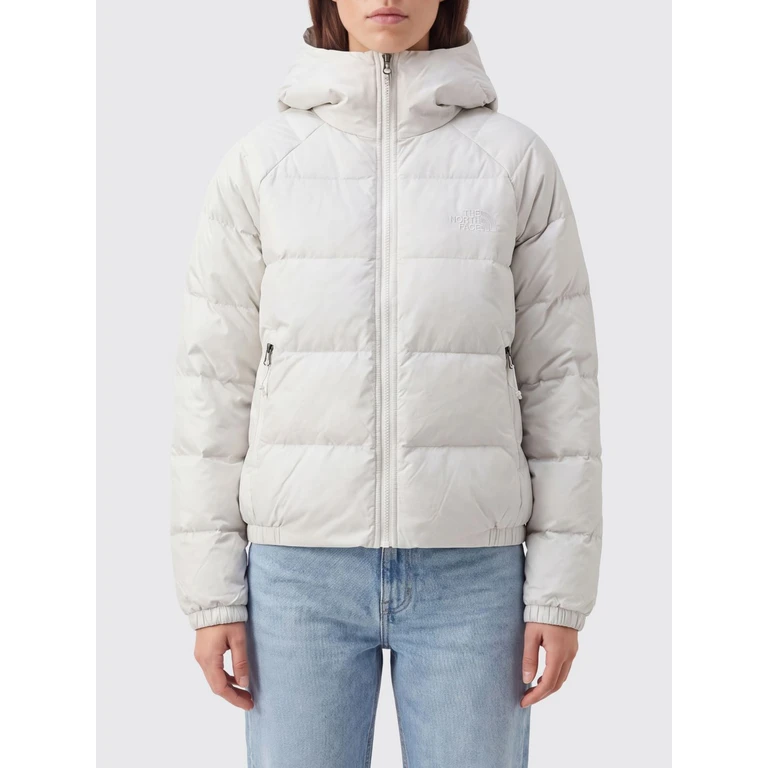
Choose for the coldest part of your day
Think about where you actually get cold: waiting for a bus, walking briskly, or moving between heated buildings. Use that moment to choose your starting point.
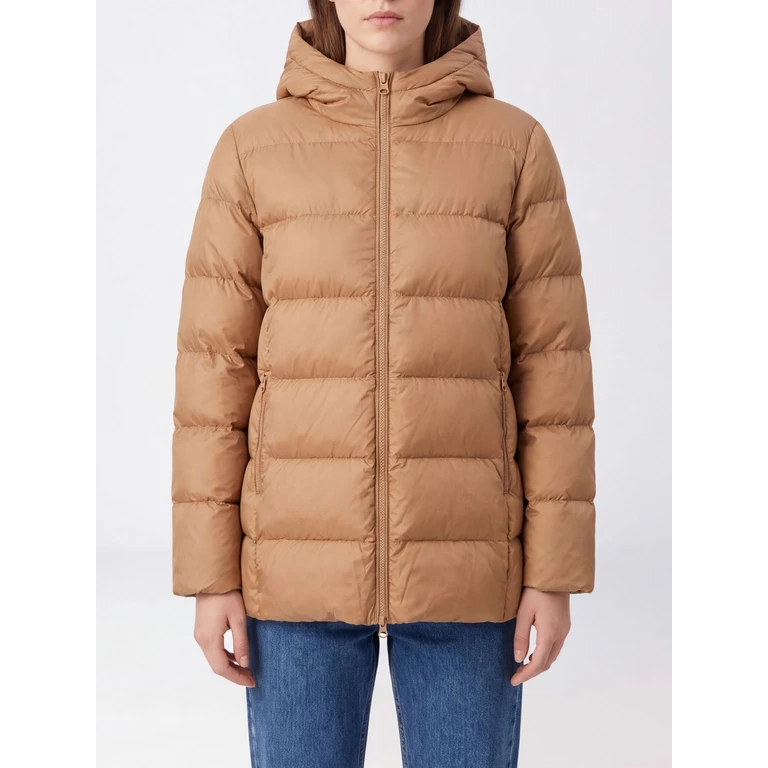
- Long waits outside or a coat to pack for travel. Start with down, then check how much insulation the jacket contains. A thin travel puffer and a substantial winter parka are different purchases; Rab's guide separates lightweight and heavily insulated designs.
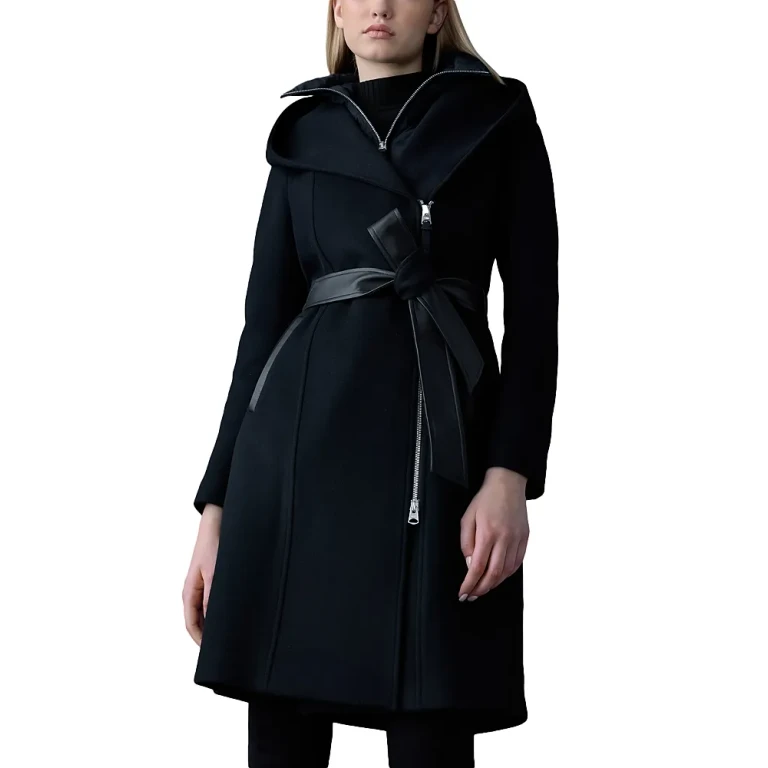
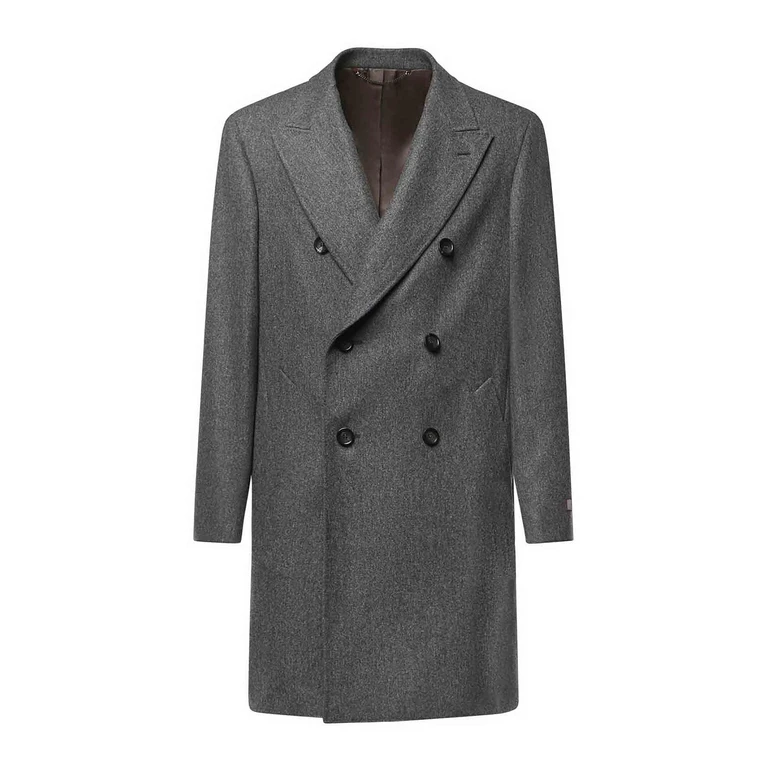
- A coat to wear over work clothes. Start with wool if you prefer the tailored shape. Try the actual coat over your usual layers before deciding that its weight or wool percentage makes it warm enough.
- Fast walking or repeated indoor stops. Prioritize easy adjustment and removal. Don't choose the heaviest coat just because the morning forecast looks cold.
Wool sportswear research does not settle this comparison: Woolmark's activity-and-rest findings concern Merino base layers, not tailored coats versus down jackets.
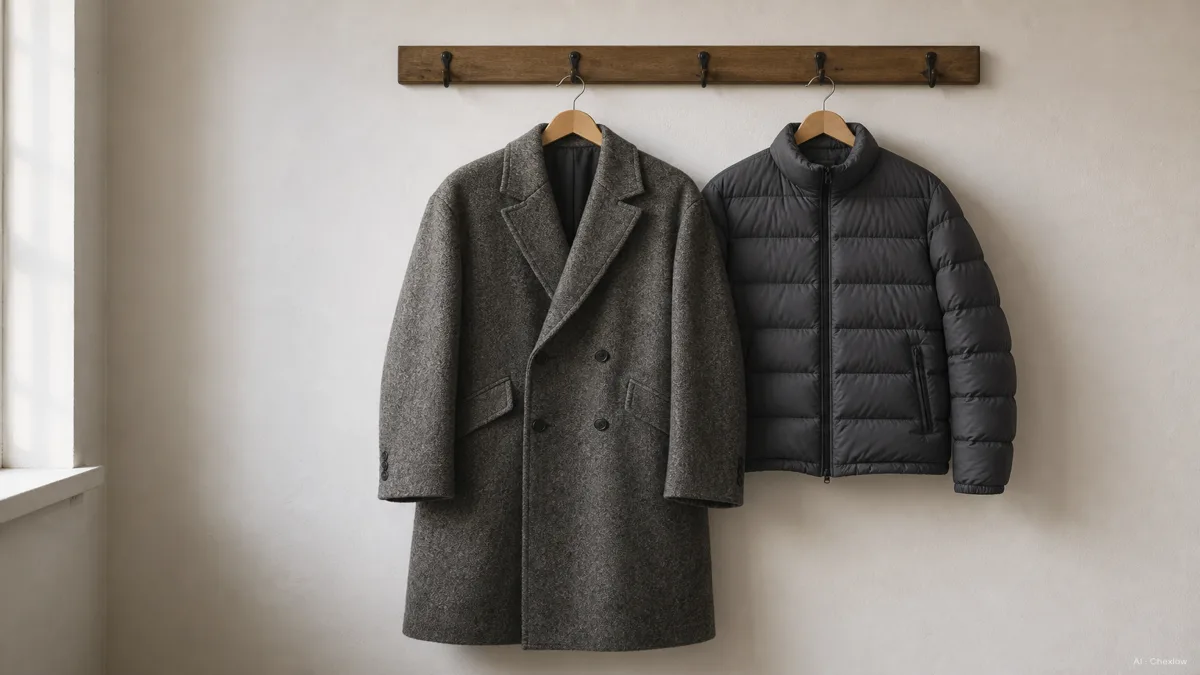
If rain is likely, choose protection separately
Wool can absorb moisture vapour, but wool is not waterproof. That distinction matters: a damp day is not the same test as prolonged rain, and wool content alone does not make a coat rainwear.
Down loses insulation when wet (REI). For a down jacket without waterproof construction, consider a waterproof shell over it. Use one you already own if the combination fits; leave space for the down to expand, as Rab advises.
Check for waterproof fabric and sealed seams. Surface water beading from a DWR finish is not the same protection (REI's rainwear guide). If your chosen coat already provides suitable waterproof protection, a second shell need not be another purchase.
Still comparing rainwear labels? Read how to choose a waterproof rain jacket before selecting that outer layer.
Compare the whole coat, not wool percentage against fill power
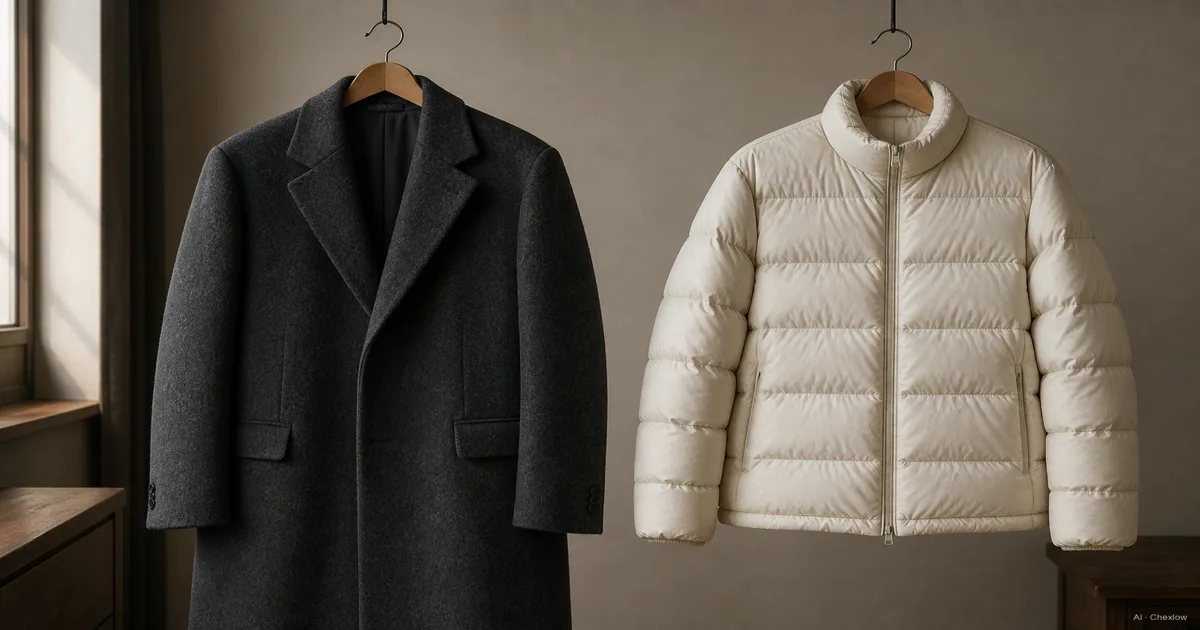
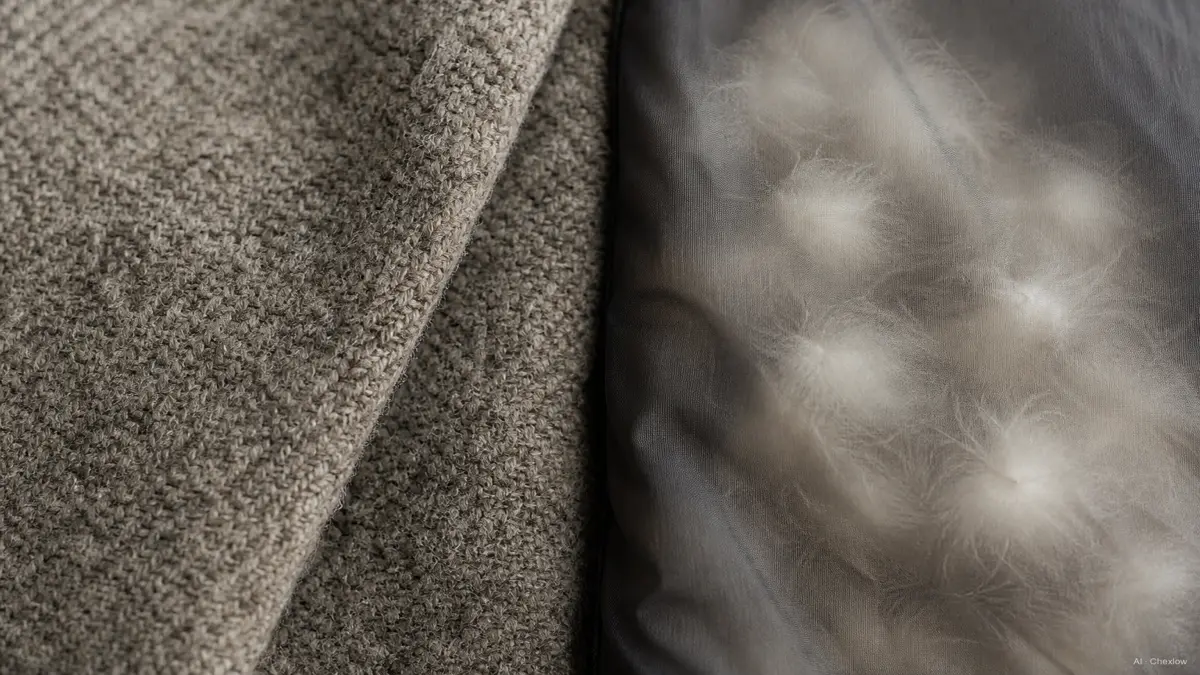
The fabric close-up illustrates two different constructions, not a warmth ranking. Wool's natural waviness helps trap air (Woolmark); down's fill power describes loft under a test, not the warmth of a complete jacket (REI).
- For wool. Check fabric thickness, lining, coverage and how the front closes. Record wool content as composition, not a temperature rating.
- For down. Ask for fill weight as well as fill power. The quantity and distribution of down matter too (REI).
- For 550, 700 or 800 labels. Under comparable tests, higher fill power means more loft for the same down weight. It does not assign the coat a climate. Decide whether saving weight matters to you before paying for a larger number (Rab).
If down is your likely choice, continue with fill power, fill weight and jacket construction.
Try both finalists with the layers you will wear
Bring your usual sweater or work jacket. Close each coat, sit down and reach forward. Reject a fit that prevents those movements; check where the hem sits when seated rather than judging length only in the mirror.
Look at the neck, cuffs and hem. Adjustable cuffs and hems can help exclude cold air (REI). For a wool finalist, the wool coat and overcoat guide helps narrow shape and fit.
Read the care label before buying. Wool garments have different permitted cleaning methods (Woolmark); ask the seller for the instructions if they are missing. Apply the same check to down or a wool-shell/down-filled coat, rather than assuming a mixed construction is easier to care for.
Choose down if low weight and insulation are your priorities and you have addressed rain protection. Choose wool if its cut suits your everyday clothes and the actual garment works with your layers. If neither finalist meets your weather and fit needs, widen the shortlist instead of forcing a material winner.
Cómo se elaboró esta guía
Written by Chexlow's AI editor using REI, Rab and Woolmark guidance on insulation, rain protection, wool fibres and garment care. The comparison turns those sources into shopping checks; it does not report product testing or establish temperature ratings for individual coats.
Editado por el equipo de Chexlow · Las imágenes son ilustraciones generadas por IA