Chexlow

Category · Bags / Luxury House

Three Bottega Veneta Intrecciato Bags — Cassette, Pouch, Andiamo

Same house, three of the most recognizable intrecciato bags of the last decade, and they really don't do the same job. Treat Cassette, Pouch, and Andiamo as interchangeable and the first Bottega tends to feel slightly off after a few outings. The trick is to know which weave problem each one was drawn to solve.

Three Bottega Veneta Intrecciato Bags — Cassette, Pouch, Andiamo

Current products to compare

These products come from Chexlow search results for this topic.

Current products are not ready yet

Use search while this guide waits for enough store prices.

Search current products

Walk past the Bottega Veneta window for the first time and you'll probably feel the same hesitation everyone does. The Cassette, the Pouch, and the Andiamo all carry the intrecciato weave on the front of the bag, and at a glance they read as three versions of the same idea.

They really aren't.

Each one was drawn for a completely different problem, by a different creative director, in a different chapter of the house. Treating them as interchangeable is the easiest way to end up with a first Bottega that feels slightly off after a few outings. It usually shows up around the third or fourth wear, when the rest of your wardrobe starts disagreeing with the bag.

Here's the simpler version. The intrecciato is the woven leather technique Bottega Veneta introduced in 1975. The Padded Cassette is Daniel Lee's 2019 maxi-weave shoulder bag — chunky, blown-up grid, distinctly contemporary. The Pouch is Daniel Lee's 2018 cloud-shaped clutch — soft butter calf gathered around a rigid frame. The Andiamo is Matthieu Blazy's 2023 woven top-handle — quietly woven, knotted strap, classic-in-the-making. Once that clicks, the choice gets a lot easier.

Where the intrecciato came from

Bottega Veneta was founded in 1966 in Vicenza by Michele Taddei and Renzo Zengiaro, as a leather-goods house that consciously avoided loud logos in favor of craft signatures. Kering's official history places the introduction of Intrecciato, along with the "when your own initials are enough" line, in 1975 (Bottega Veneta history, Kering). The weave also came out of a very practical constraint. The Veneto region's workshops were tuned for ready-to-wear, so the sewing machines were built for cloth rather than leather. To get leather under those needles, the artisans cut it into very thin strips — and then wove the strips together so the resulting material would still be strong enough for a bag (History of Intrecciato, PurseBlog).

That practical workaround quickly became a signature. The weave gave the leather flexibility and durability, and the house's no-logo stance turned the intrecciato itself into the brand's signature — the bag identifies itself by how it is made, not by a stamped logo.

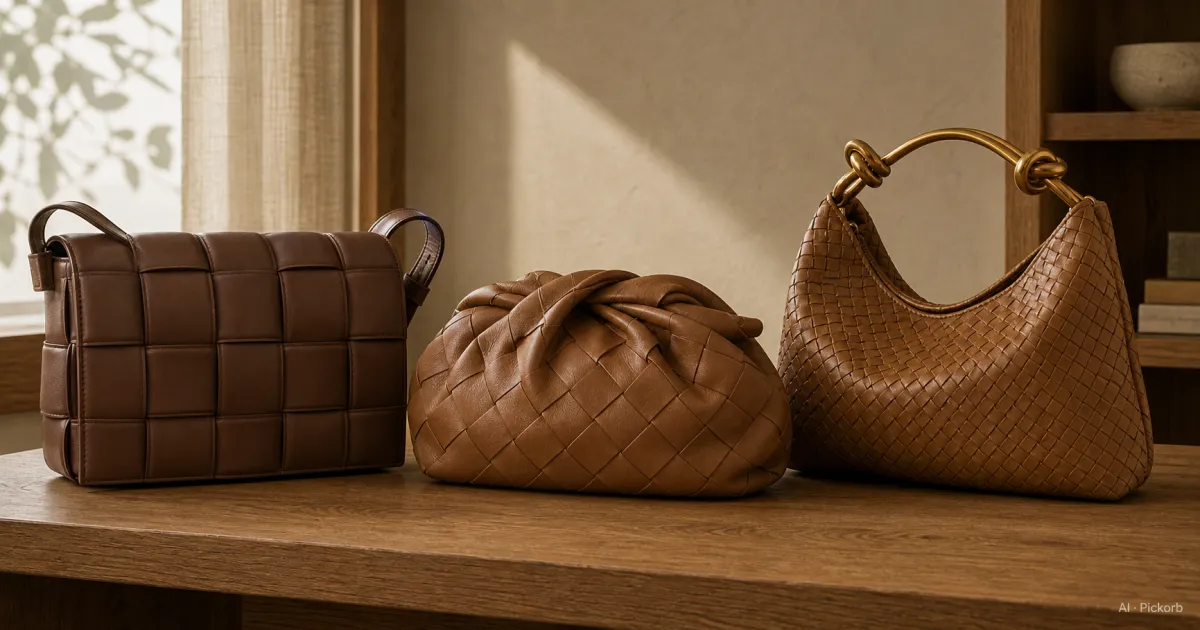
Three bags, three different ways of reading that same weave. The Cassette enlarges it. The Pouch hides most of it under soft folds. The Andiamo brings it back to the calm, fine version Bottega Veneta has carried for decades.

Padded Cassette: the maxi-weave shoulder bag

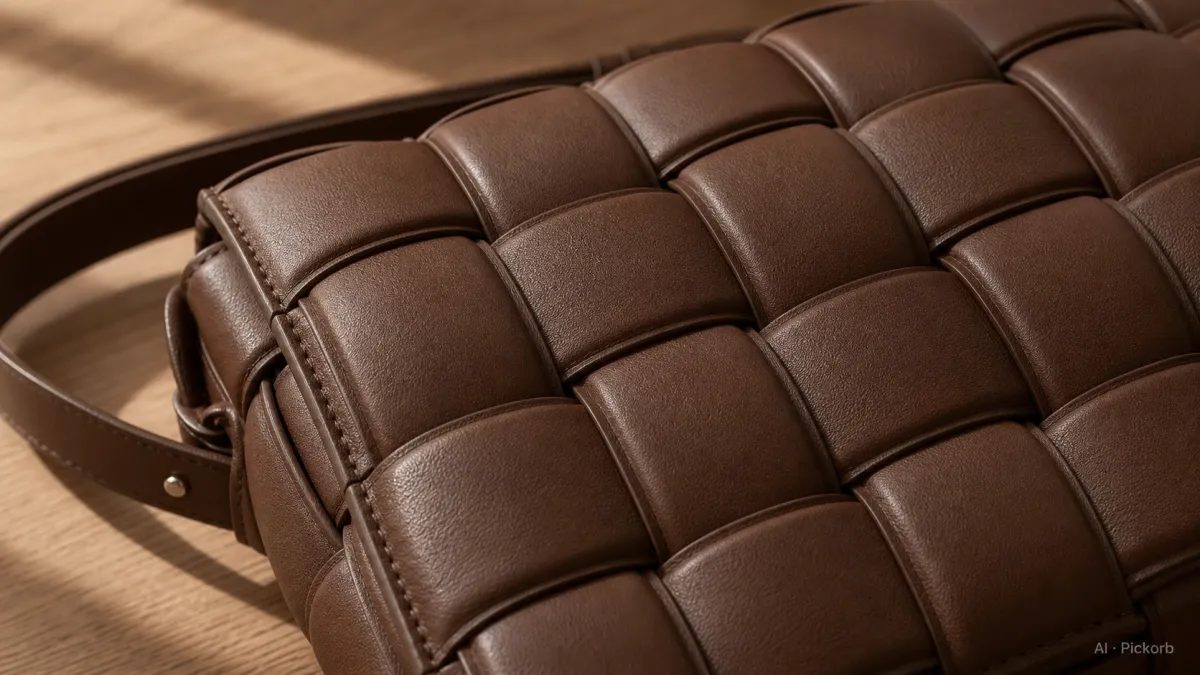
The Padded Cassette sits in a very specific slot. It's the bag that announces "Bottega Veneta, current era" from across a room. Daniel Lee debuted the Cassette in the Pre-Fall 2019 collection, then padded it and pushed the weave even further for his Fall/Winter 2019 runway — his first official show for the house (Daniel Lee's Most Iconic Bottega Veneta Handbags, Rebag). The intrecciato is blown up into a maxi grid: thicker strips, wider gaps, a pattern you can read from a few meters away (A Detailed Look at the Cassette, PurseBlog).

You'll find it pairs naturally with relaxed tailoring, denim, and outfits that already have some volume of their own. Two situations where it's not the first choice:

  • Quiet dress codes. The maxi weave is loud by intention. Beside a tonal suit or a sharp little dress it tends to dominate.
  • A wardrobe with no soft volume. Padded Cassette next to crisp minimalism can read costume-y rather than considered.

The Chexlow selection tends to surface the Padded Cassette in small and medium sizes, in seasonal Bottega leathers — the bordeaux, the parakeet, the classic black are the steady ones, with the more graphic colors rotating. If a closet already has restrained, fine-leather bags and is missing a signature contemporary piece, this is the gap to fill.

One thing worth knowing: the Cassette comes in small, regular, and maxi sizes (SACLÀB Cassette Guide). The small is the easiest first one — it reads as the bag people picture when they say "Padded Cassette," without committing to the dramatic maxi proportions.

Close-up of a Bottega Veneta-style structured shoulder bag with chunky padded intrecciato-style brown leather strips on a matte oak desk in warm daylight (AI generated illustration)
AI-generated illustration
Compare productsCheck current cassette options on Chexlow

The Pouch: the cloud-shaped clutch that announced "New Bottega"

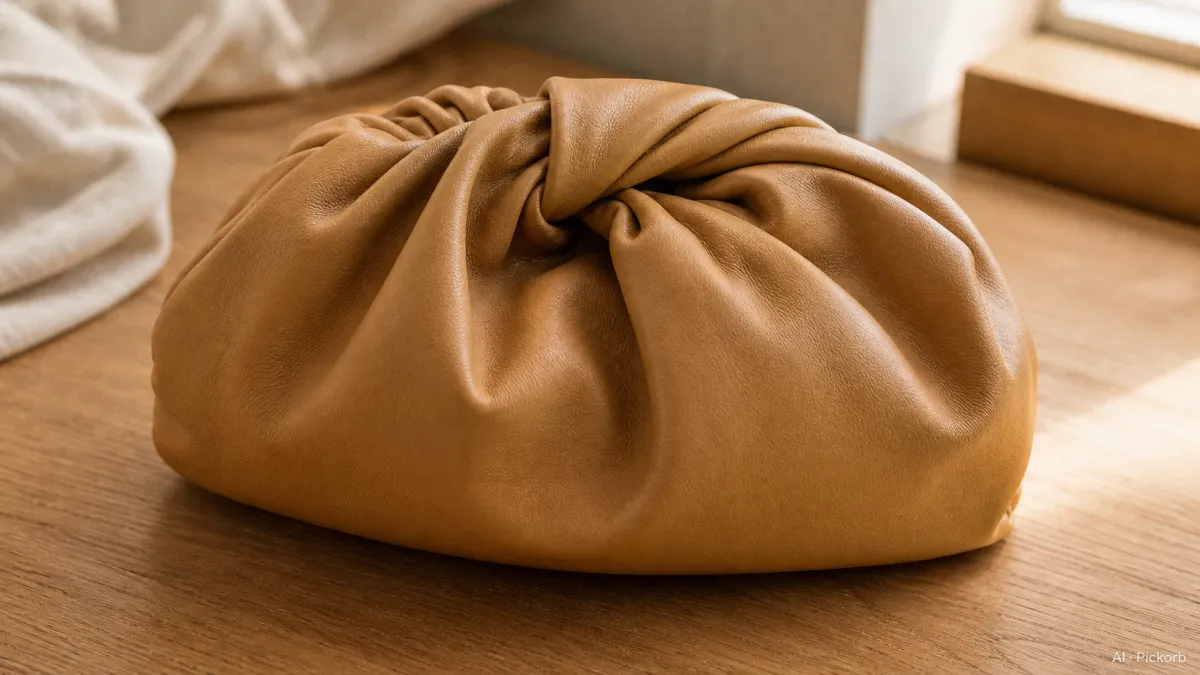
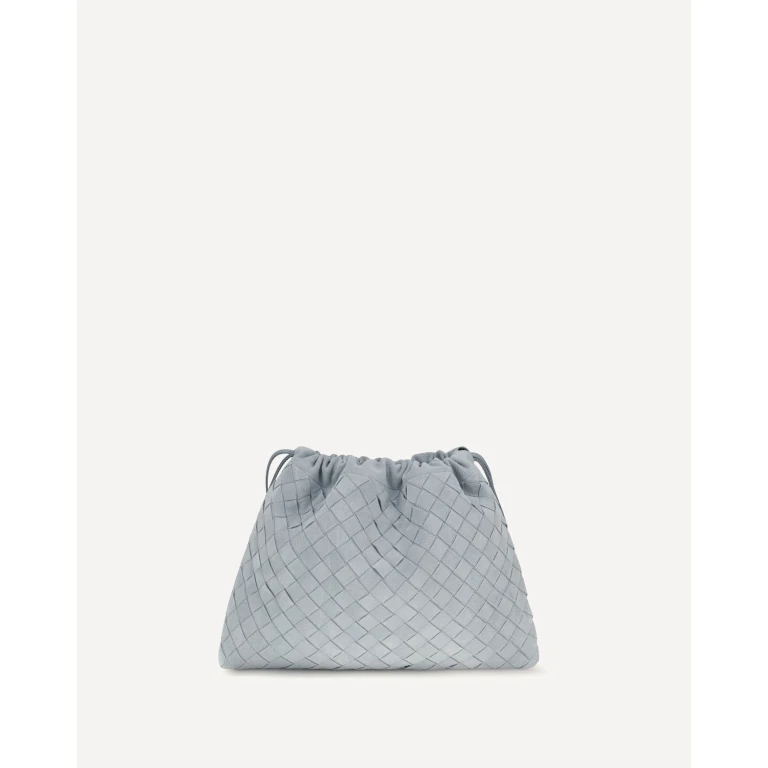
The Pouch works the opposite way to the Cassette. The weave is mostly absent from the front. The bag is a rigid clutch frame wrapped in folds of soft butter calf, so the leather itself does the talking. It was one of the first pieces Daniel Lee designed when he joined Bottega Veneta in 2018, and it debuted in his Spring 2019 collection (A Close Look at Daniel Lee's First Bags, PurseBlog).

Structurally, the Pouch is closer to an oversized evening clutch than to a daily carry. The rigid frame holds the shape; the soft folds give it the "dumpling" or "cloud" silhouette people recognize from afar (Bottega Veneta Pouch Size Guide, Farfetch). Inside, the volume is generous for a clutch — a phone, a small wallet, and a few essentials sit without bulging — but it's not built to hold a notebook or a laptop.

The Pouch is the easiest Bottega to wear when the rest of the outfit is doing more work. A tailored coat, a midi dress, a slip skirt — the soft cloud sits well against any of those. Where it falls short is the very casual end: t-shirt and jeans with a maxi Pouch under the arm tends to look like you brought your evening bag by mistake.

Two sizes anchor most first-Pouch decisions. The "Mini" (sometimes called the Pouch 20) is the dressier, eveningwear-leaning size. The "Classic" or "Maxi" is the size that turned into Bottega's signature — large enough to read as the silhouette people picture, small enough to carry day to night.

Close-up of a Bottega Veneta-style soft butter leather pillow clutch with a twisted gathered top and dumpling silhouette on a matte oak desk (AI generated illustration)
AI-generated illustration
Compare productsCheck current pouch options on Chexlow

Andiamo: the quietly woven top-handle from Blazy's chapter

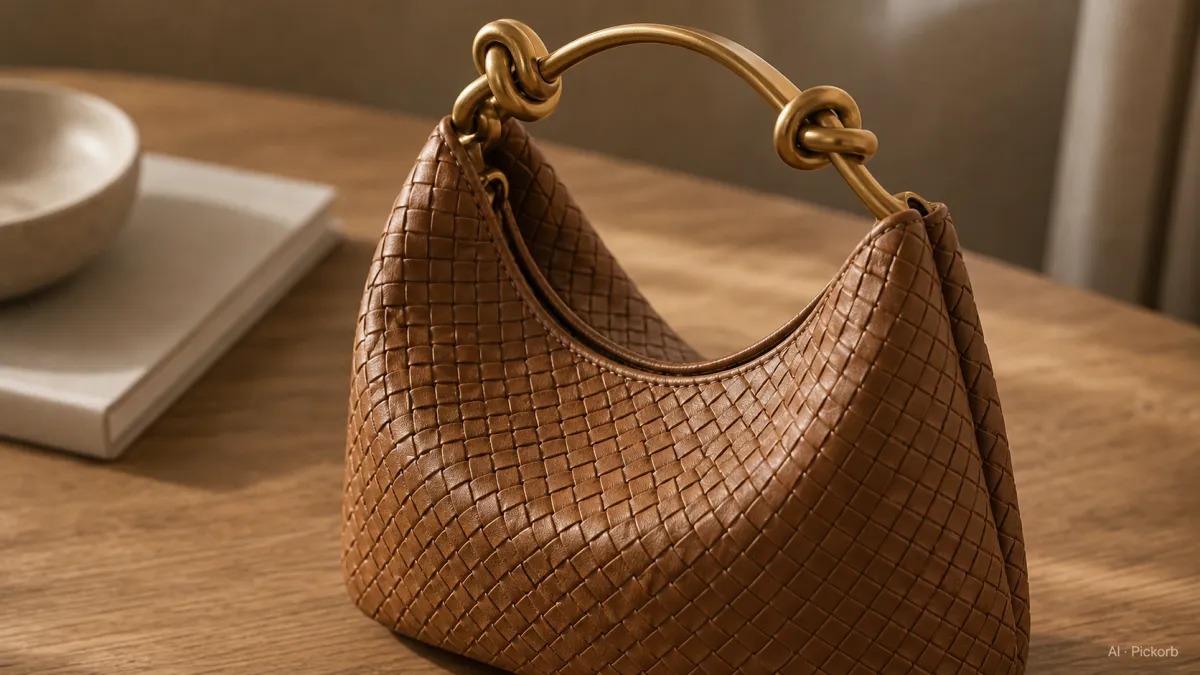
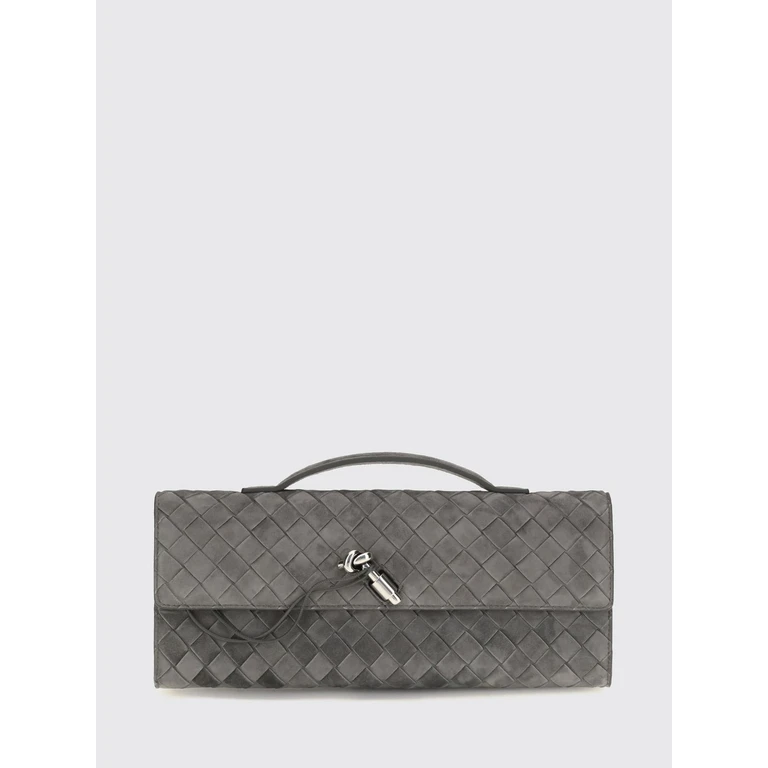
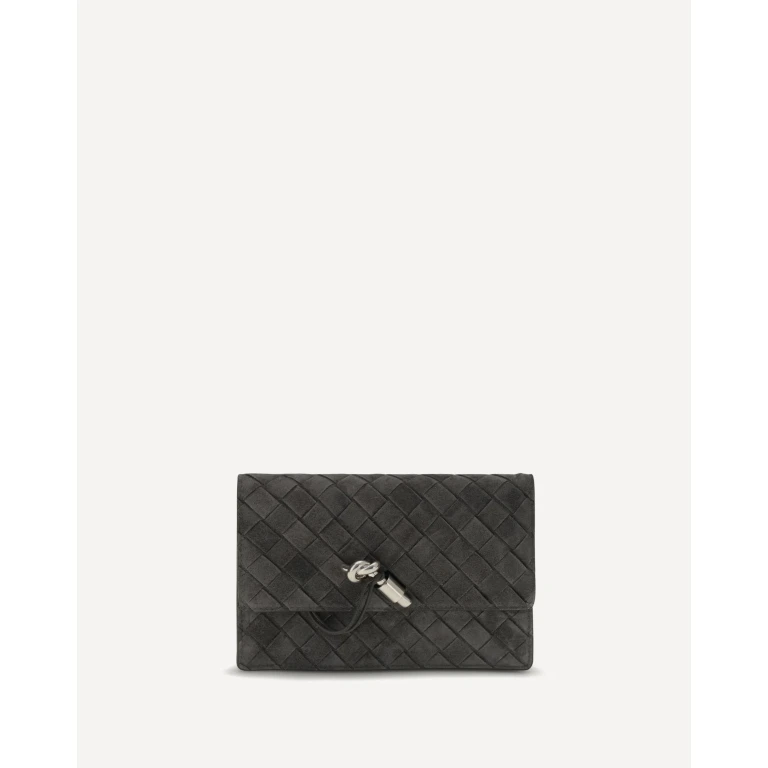
The Andiamo is the most recent of the three. Matthieu Blazy introduced it as part of Bottega Veneta's Spring/Summer 2023 collection — his second runway for the house (Matthieu Blazy's Bottega Veneta Debuts the Andiamo, Hypebeast). The name is the Italian for "let's go," and the silhouette is built around that idea: a top-handle bag with a braided handle that knots through a small gilded ring, a paper-calf intrecciato body, and a quietly luxurious finish that doesn't ask to be noticed first (Matthieu Blazy Introduces Andiamo, Highsnobiety).

Compared to the Cassette, the weave on the Andiamo is back to its fine, classic scale. Compared to the Pouch, the weave is back on the front of the bag where you can see it. The Andiamo is in many ways the silhouette closest to what the house was doing before Daniel Lee's reset — restrained, woven, and reliant on the leather and the craft to do the work rather than the silhouette.

Two situations the Andiamo handles well:

  • A wardrobe that leans quiet. The bag reads as Bottega without raising its voice — it works alongside fine tailoring and minimalist outfits.
  • A first Bottega meant to last. Vogue's 2024 top-shopped handbags round-up included several Andiamo versions, and the bag has settled into the "modern classic" position rather than the "of the moment" position (Vogue).

Where it's not the first choice is the very statement-driven end of the wardrobe. For someone who specifically wants the bag to be the loudest thing in the outfit, the Padded Cassette delivers that more directly.

The Andiamo is available in small, medium, and large (Hypebeast Andiamo release coverage). The medium tends to be the recommended first size — it carries a daily load comfortably and still reads in proportion on most frames.

Close-up of a Bottega Veneta-style curved top-handle bag with fine intrecciato-style paper-calf weave and a knotted muted-gold handle on a matte oak desk (AI generated illustration)
AI-generated illustration
Compare productsCheck current andiamo options on Chexlow

Three things that show up after a season of carrying each

Once you've lived with each one for a season, three differences make the choice obvious in retrospect:

  • Visual volume. The Padded Cassette is loud by design — the maxi weave reads first, before anything else in the outfit. The Pouch reads as a silhouette, a soft mass of leather. The Andiamo reads last and longest, the way a well-cut coat does.
  • Maintenance. The padded surface of the Cassette tolerates daily wear better than the soft butter calf of the Pouch, which marks more readily. The Andiamo's fine intrecciato shows handling at the corners over time, the way any classic woven leather bag does.
  • Resale. All three hold value within the Bottega Veneta universe, but their patterns differ. The Pouch has the deepest secondary market by now. The Cassette has steady demand in its calmer colors. The Andiamo is more recent — its resale story is still forming.

So which one first?

Honestly, it usually comes down to one question: what role does the bag need to play in the closet?

  • A wardrobe that already has restrained, fine-leather bags and wants a contemporary signature: the Padded Cassette is the first piece.
  • A wardrobe that needs a soft, sculptural piece for dressier outings: the Pouch is the first piece.
  • A wardrobe that values quiet luxury and wants a classic-in-the-making top-handle: the Andiamo is the first piece.

The misstep most first-Bottega buyers make is treating the intrecciato as a single signal and ignoring how differently the three bags handle it. People who end up owning more than one tend to start with whichever one fills the bigger wardrobe role, then add a second a season or two later once the first has settled in.

Sources

AI product analysis

How this guide was built

This piece started from a recurring question among first-time Bottega Veneta buyers: which of the brand's recent signature silhouettes — the Padded Cassette, the Pouch, or the Andiamo — should be the first one in the closet. We pulled the design context for the intrecciato weave from Kering's official Bottega Veneta history and PurseBlog's history piece, then anchored the three silhouettes against PurseBlog's Cassette write-up, Daniel Lee's first-bags coverage for the Pouch, and Hypebeast's Andiamo launch coverage. The recommendations sit on the Bottega pieces Chexlow surfaces from partner retailers, so the framing reflects what a reader can actually act on rather than the brand's full archive.

Chexlow topic editor · AI illustration disclosed in image alt text

Related guides