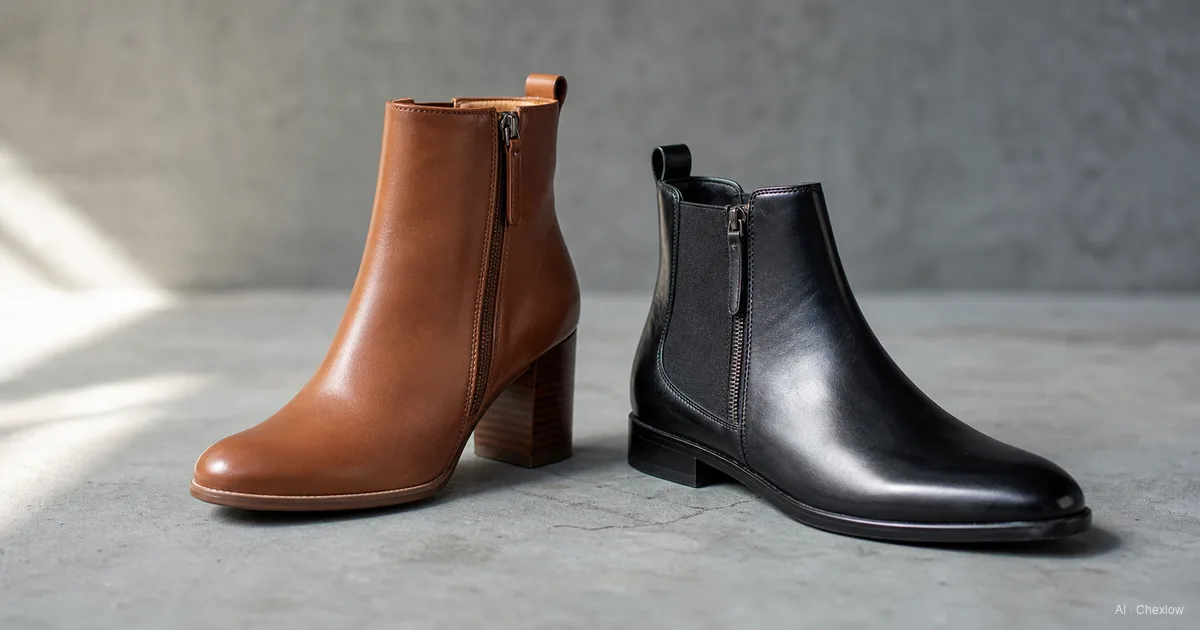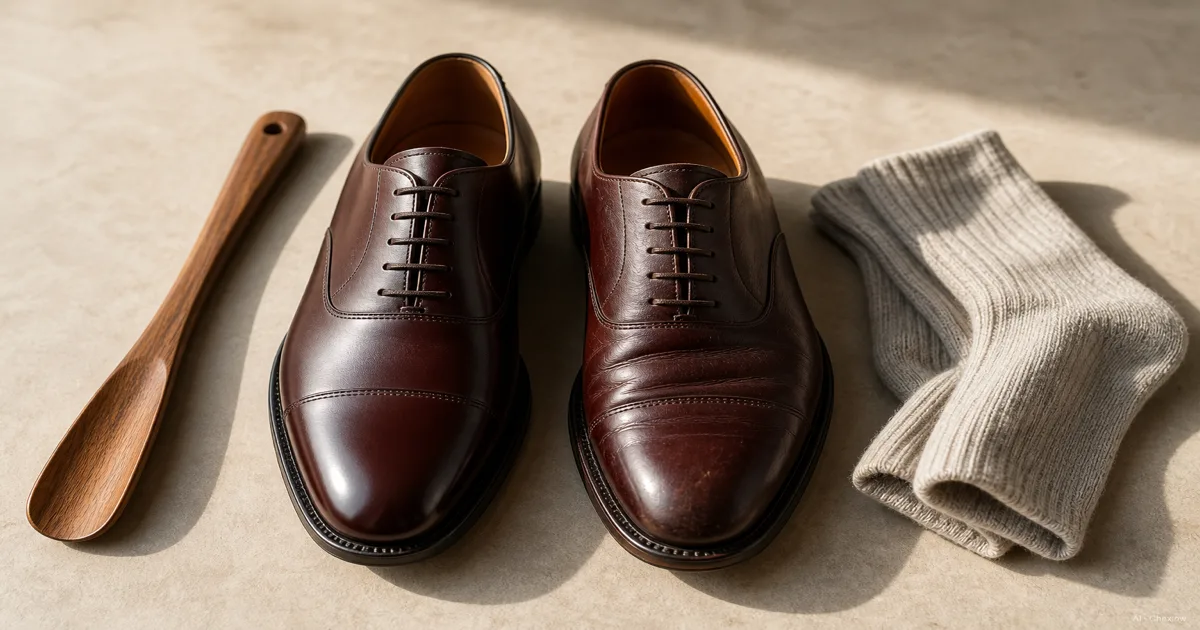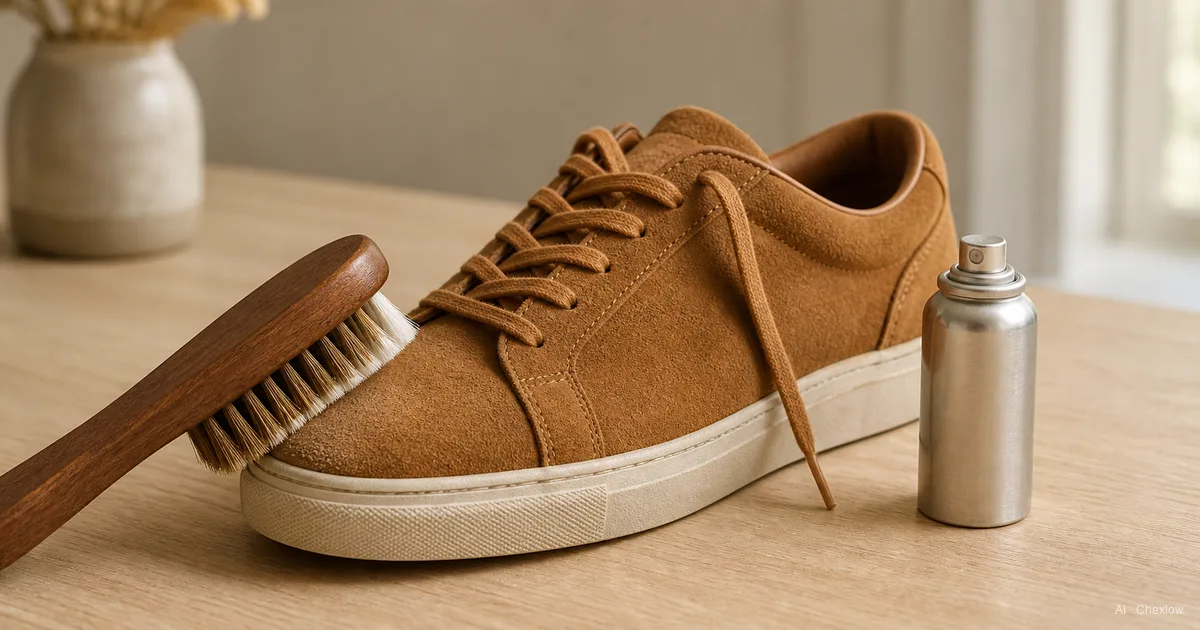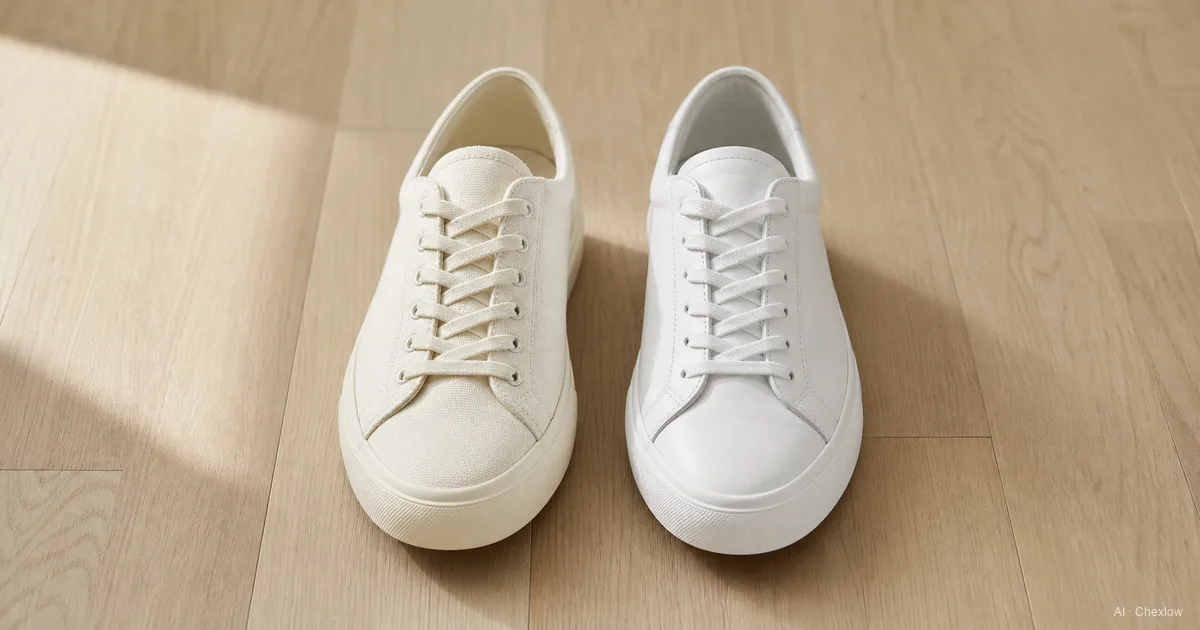
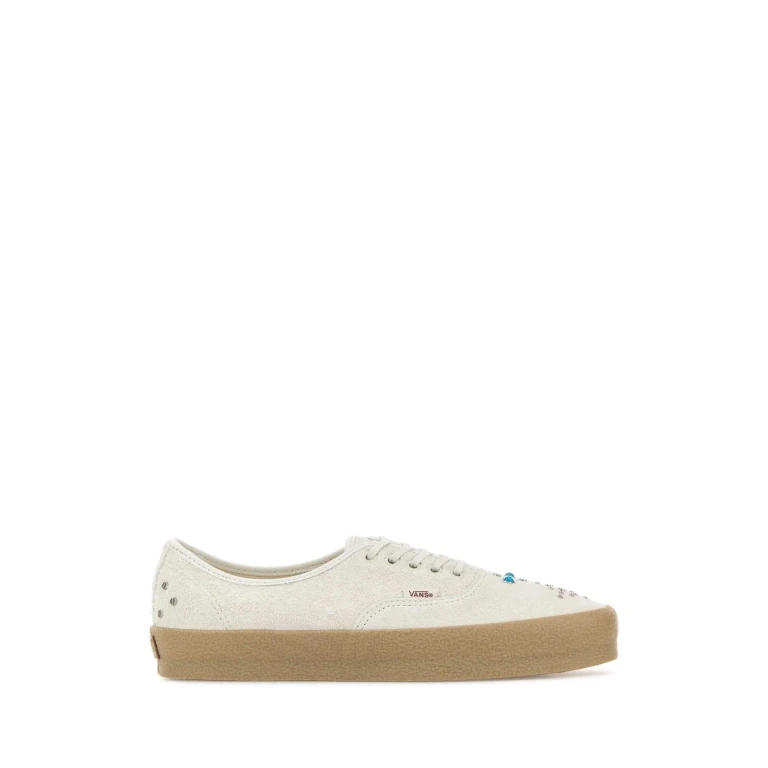
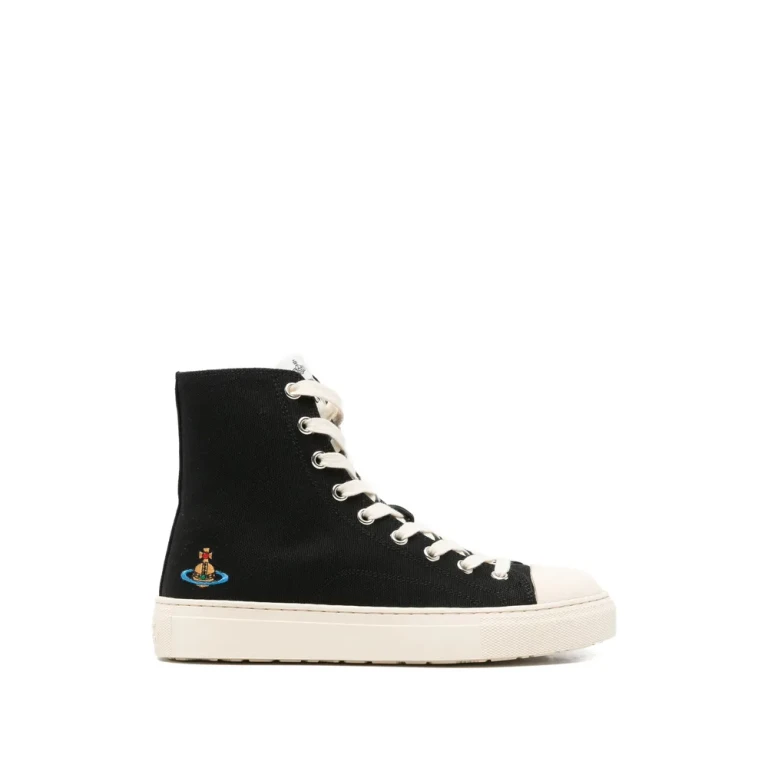
You are standing in front of two sneakers, online or in a shop. Same clean shape, same price, almost the same photo. One says canvas, the other says leather. You pick the one that looks slightly better on screen and move on.
Three weeks later you find out it was never a small choice.
It rains on a Tuesday. The canvas pair comes home dark and heavy and still damp the next morning. Or the opposite: you scuff the leather pair on a curb and the mark sits there, refusing to wipe off the way canvas dirt does. Same money, completely different relationship with the shoe.
The material is the decision. Not the logo, not the colourway. So before you pick, it helps to know what these two things actually are.
What you are really choosing between
Canvas sounds rugged, and the good stuff is. The cotton used in sneakers is usually a tight plain weave, often the heavier kind called cotton duck, where the threads sit closer together than ordinary fabric (cotton duck). That tight weave is why a canvas sneaker can take a beating and still hold its shape. It is also light and breathable, which is the whole appeal in summer.
But it is still cotton. Water goes straight into the fibres, and the same conservation research that measures canvas strength notes that the fabric gets softer and more easily deformed as humidity climbs (canvas properties). In plain terms: a soaked canvas shoe loses some of its structure until it dries.
Leather is a different animal, literally. What matters for a first pair is the grade. Full-grain keeps the natural hide surface and, instead of wearing out, slowly builds a patina (leather grades). Corrected-grain has been sanded and re-finished for a more even, forgiving surface. Both can look identical in a product photo, so the spec line and close-up shots matter more than the hero image.

Durability, and the day you get caught in the rain
Here is where the two split hardest.
Leather simply handles weather better. It is sturdier against scuffs over a long life, and a chrome-tanned leather upper shrugs off a wet street far better than cotton does (leather water response). One caveat worth knowing: leather still does not love being soaked. Too much water can stain or stiffen it, and you wipe it down rather than drench it. But a sudden shower is a minor event for a leather pair and a small crisis for a canvas one.
Canvas pays for its lightness in wet weather. The fibres drink water, the shoe goes heavy, and it can stay damp into the next day. None of that is a flaw exactly, it is just cotton being cotton. If your city is dry and warm, this barely registers. If you commute through wet winters, it decides the whole thing.
So the honest durability question is not "which lasts longer in a lab." It is "what does your weather look like." A leather pair is the safer all-rounder across seasons. A canvas pair rewards dry feet and warm air, and asks for a backup on rainy days.
When it gets dirty, which one bounces back
Every white sneaker gets dirty. What changes is how it recovers.
Canvas is honest about stains. A scuff or a coffee splash sinks into the weave, and because it is fabric, you can often throw the insoles aside and clean the upper fairly aggressively, even toss some pairs in a gentle wash. The trade-off is that deep stains can set, and the bright white never quite comes all the way back once the cotton has greyed.
Leather goes the other way. Most surface marks wipe off a smooth leather upper with a barely damp cloth, which is genuinely satisfying the first time you see it. But you do not soak it, you do not scrub it hard, and a corrected-grain finish is doing some of the visual work, so a deep gouge into the finish is harder to hide than a scuff on canvas. Care guidance for leather is consistent on this: clean gently, keep it dry, store it away from heat (leather care and storage).
One more thing that catches first-time buyers on both materials. The white rubber sole yellows over time no matter which upper you chose, because rubber and polymer surfaces react with light, heat, and air (photo-oxidation of polymers). That sole, by the way, is usually vulcanized rubber, cured with heat so it lasts (vulcanization). So if you find yourself blaming the canvas or the leather for a yellow sole edge, look again. That part ages on its own schedule.

Style range, seasons, and the price you actually pay
At the same price, the two soft-sell different things.
Canvas reads casual and a little younger. It pairs easily with shorts, rolled denim, and warm-weather everything, and it almost never feels too dressy. That is a strength in summer and a limit the rest of the year. A canvas low-top under tailored trousers in February reads as someone who only owns one pair of shoes.
Leather stretches further up the formality range. The same minimalist leather sneaker can sit under jeans on Saturday and under chinos at a relaxed office on Monday. It is the safer single pair if you want one sneaker to cover more of your life. It usually reads a touch more grown-up, which is exactly what some people want from a first real pair and exactly what others are trying to avoid.
Price is the quiet part. At the entry level, a decent canvas sneaker often costs less than a comparable leather one, simply because cotton is cheaper than hide. But the comparison that matters is cost over the time you actually wear it. A leather pair that survives three winters can be the cheaper shoe in the end, while a canvas pair that you replace every summer is cheap each time and not cheap in total. Neither answer is universal, it depends on how hard and how long you wear shoes.
So which first sneaker fits you?
Skip the idea that one material is simply better. They solve different lives.
Buy canvas first if your weather is mostly dry and warm, you want something light and easygoing, you do not mind babying it on rainy days, and you like the casual, slightly younger read. Throw-it-in-the-wash forgiveness is a real bonus if you are hard on shoes.
Buy leather first if you want one pair to cover most of the year, you walk through wet seasons, you would rather wipe a shoe clean than wash it, and you want something that works from weekend to a relaxed office. Just match the grade to your patience: full-grain if you like a shoe that ages with character, a more finished leather if you want day-one neatness and easy wipe-downs.
And if you are torn, ask one plain question. How often do your feet actually get wet in a normal month? That single answer settles more of this than the colour, the shape, or the brand ever will.
If you have narrowed it down to a couple of pairs, put more than the prices side by side. Line up the material, the sole construction, and the leather grade too, because that is where two near-identical sneakers quietly stop being the same shoe.
Sources
- Canvas and Cotton duck for canvas fabric construction, plain weave, weight, and how humidity affects it.
- Leather grades for full-grain vs corrected-grain, and leather conservation for water response, cleaning, and storage.
- Photo-oxidation of polymers for why white rubber soles yellow, and Vulcanization for how those soles are cured.