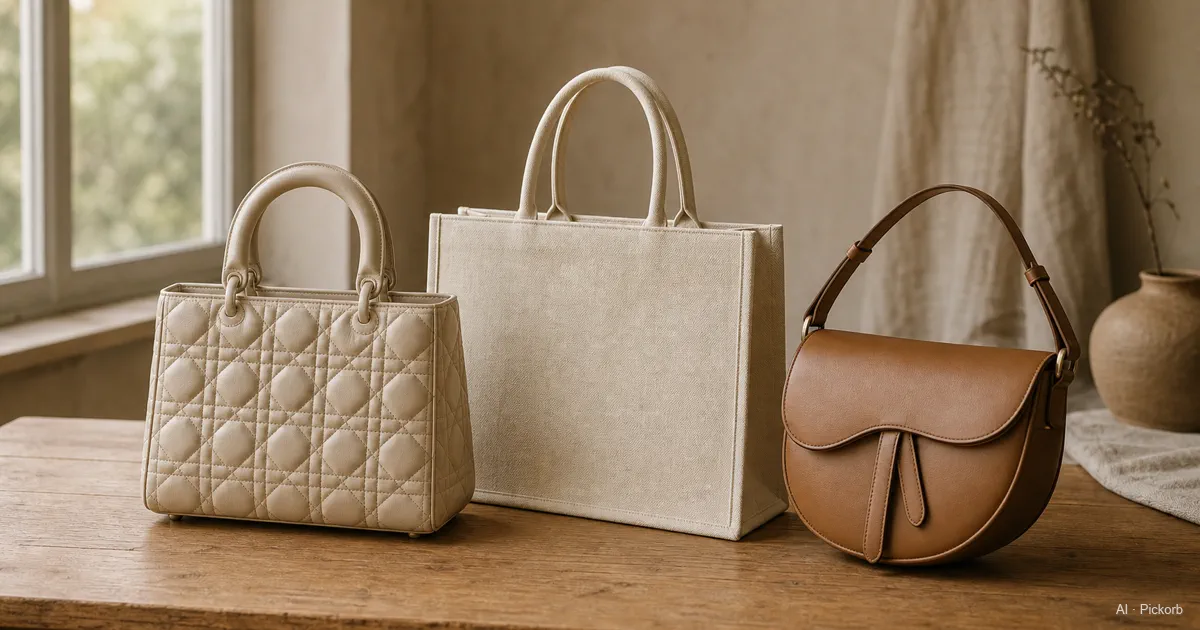
Walk into Dior for the first time and you'll probably feel the same hesitation everyone does. The Lady Dior, the Book Tote, and the Saddle sit close together in the imagination, and at a glance they read as three versions of the same idea.
They really aren't.
Each one was drawn for a completely different problem, by different hands, often decades apart. Treating them as interchangeable is the easiest way to end up with a first Dior that feels slightly off after a few outings. It usually shows up around the third or fourth wear, when the rest of your wardrobe starts disagreeing with the bag.
Here's the simpler version. The Lady Dior is a structured top-handle that traces back to 1994 and reads as the most formal Dior in most closets. The Book Tote is a soft canvas tote introduced in 2018 that's meant to live with you every day. The Saddle is the asymmetrical, equestrian-shaped shoulder bag from 1999, revived in 2018, that sits between the two on dressiness. Once that clicks, the choice gets a lot easier.
Where each one came from
The Lady Dior was born in 1994 under the creative direction of Gianfranco Ferré, who pulled the cannage quilting and the structured silhouette from Dior's own archives (Lady Dior, Wikipedia). At the time it was simply called Chouchou, a French nickname for "favourite". In September 1995, France's Première Dame Bernadette Chirac gifted a small black version of the bag to Princess Diana at the opening of the Cézanne retrospective at the Grand Palais in Paris (The History of the Lady Dior Bag, WWD). Diana carried it constantly afterward, and in 1996 Dior officially renamed the bag Lady Dior in her honour.
The Book Tote arrived nearly a quarter-century later. Maria Grazia Chiuri introduced it as part of the Spring/Summer 2018 ready-to-wear show, drawing on a 1967 sketch by Marc Bohan she had found in the Dior archives (The Dior Book Tote, Dior). The brief was unusually direct for a luxury house: a roomy, soft canvas tote large enough to carry actual books, finished in embroidery techniques intricate enough that the original embroidered version reportedly takes more than thirty-seven hours of work per bag.
Of the three, the Saddle carries the late-1990s Dior mood most clearly. John Galliano introduced it in 1999, and it debuted on the runway as part of Dior's Spring/Summer 2000 ready-to-wear collection (Dior Saddle bag, Wikipedia). The asymmetrical silhouette borrows from the curve of a jockey's saddle, and it became one of the defining bags of early-2000s pop culture after Carrie Bradshaw carried it in Sex and the City. After Galliano's departure, the Saddle effectively disappeared from Dior's main lineup until Maria Grazia Chiuri reissued it for Fall/Winter 2018, slightly enlarged to fit a modern phone and produced in a much wider range of finishes (The unique history of Dior's Saddle Bag: 1999–2022, Sign of the Times).
Three bags, three different design problems. The Lady Dior is a formal top-handle that aged into a wardrobe staple. The Book Tote is an everyday carrier built for canvas and embroidery. The Saddle is a sculptural shoulder bag that shifts between a bold fashion piece and an everyday bag depending on the finish.
Lady Dior: the formal top-handle that ages into a wardrobe
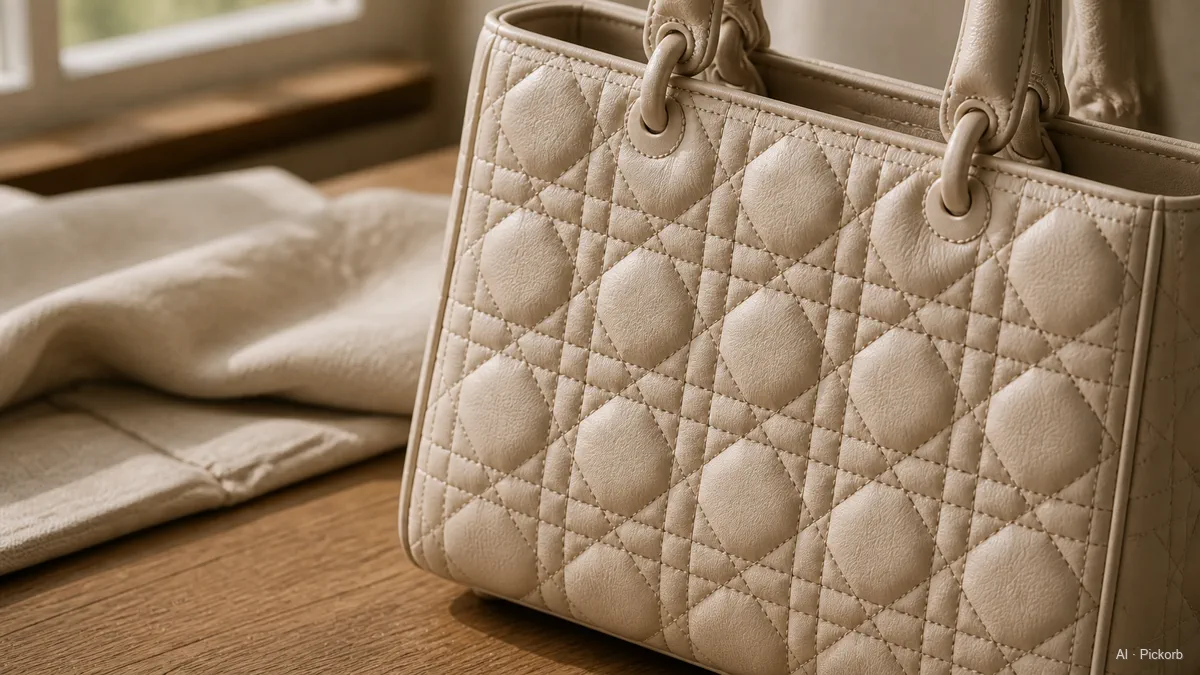
The Lady Dior sits in a very specific slot. Dressier than almost any other bag in most closets, with a structured rectangular body, two short top handles, the cannage quilting borrowed from Christian Dior's Napoléon III and Louis XV salon chairs, and the gold-tone D.I.O.R. charm hanging from the handle. The Medium (around 24 cm) is the size most often recommended as a first Lady Dior. The Small (around 20 cm) reads dressier and slightly more delicate, and the My ABCDior personalisation programme has made the Medium the default for first-time buyers because of how often it gets monogrammed.
You'll find it pairs naturally with tailored coats, midi dresses, and anything with a defined waist. Two situations where it's not the first choice:
- Heavy commute days. The short top handles aren't built for a laptop plus everything else, and the structured body doesn't absorb extra weight.
- A wardrobe with no formal pieces. The Lady Dior tends to over-dress a casual outfit rather than lift it.
The Chexlow selection tends to surface Lady Dior in classic lambskin and patent finishes, with the occasional limited-edition canvas. If a closet already has soft bags and totes but no structured top-handle, this is the gap to fill. If you already own a small structured bag, the Lady Dior upgrades the position rather than duplicating it.
One thing worth knowing: the Lady D-Lite and Lady D-Joy are softer reinterpretations of the same silhouette, with embroidery or a slightly relaxed body. They're often discussed alongside the Lady Dior, but they're not the same first-bag conversation. They read closer to the Book Tote in formality than to the original Lady Dior.
Book Tote: the everyday canvas tote that turned into a uniform
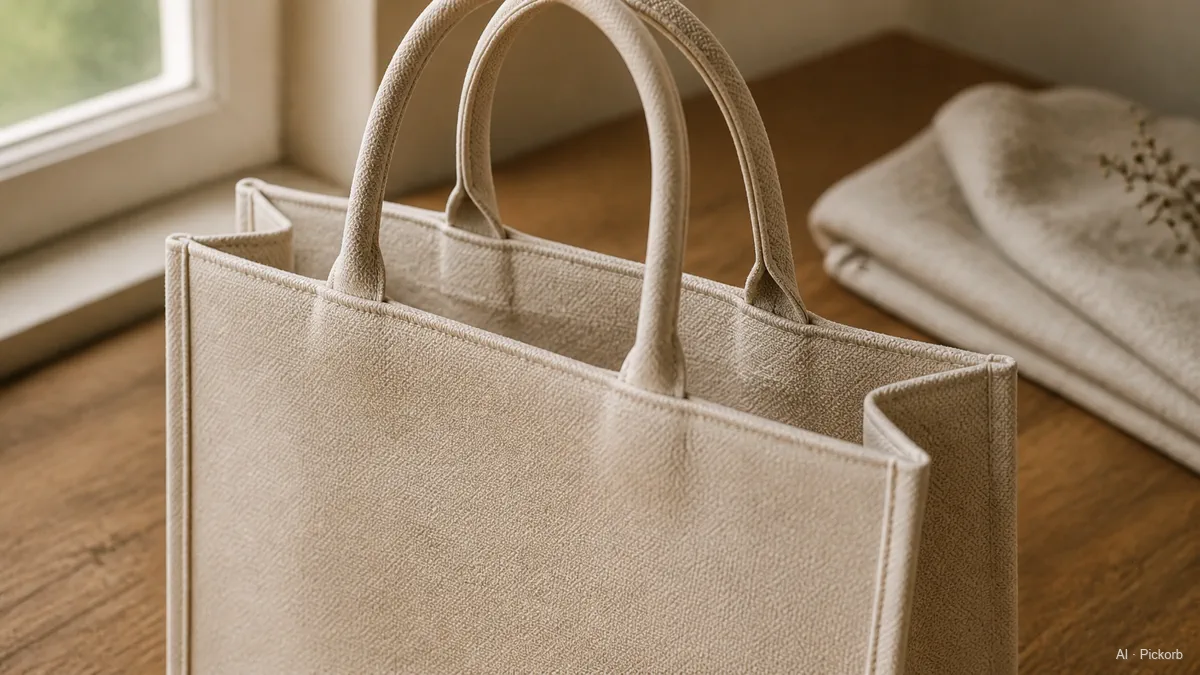
The Book Tote works the other way around from the Lady Dior. The brief was practical: a roomy, soft tote that could actually carry books, finished in a canvas surface that takes embroidery beautifully. The result is a flat, open-top rectangle with two short handles, no closure, and a body that holds shape but absorbs weight gracefully.
Structurally a Book Tote is closer to a soft tote with luxury surface treatments than to a structured handbag scaled up. There's no flap, no lock, no internal compartments to speak of, just one large opening and one or two interior pockets. The handles let it sit on the crook of an elbow or in a hand without strain, and the open silhouette swallows a laptop sleeve, a thin notebook, and a small wallet without bulging.
That's actually useful to know when you're deciding. A Book Tote behaves in a wardrobe the way a well-made soft tote does. It works between dress and casual, ages with visible wear at the corners, and pairs with most things from tailored trousers to denim. The embroidered Toile de Jouy or Oblique surface is what makes it read specifically as Dior at a distance.
For a closet that already has a structured Lady Dior slot, the Book Tote doesn't duplicate. It becomes the everyday bag. For a closet built around small evening bags and clutches, the Book Tote is a category addition that asks the rest of the wardrobe to catch up. That's worth being honest about.
The Medium is the most common first Book Tote pick. It fits a slim laptop sleeve and a small notebook without bulging. The Small reads more like a structured shoulder bag, and the Large starts to look like luggage. Useful for travel, less so for daily wear.
Saddle: the sculptural shoulder bag that swings between dressy and casual
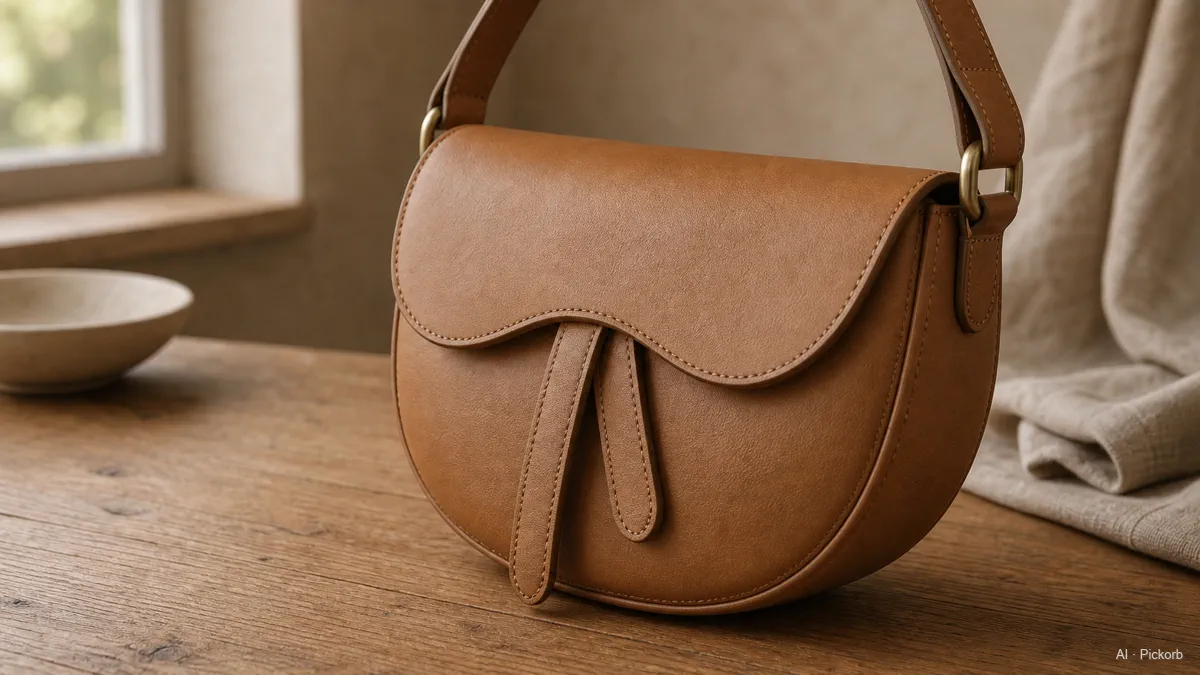
The Saddle is the most fashion-forward of the three. The asymmetrical body curves like a jockey's saddle (Dior Saddle bag, Wikipedia), the top flap secures with a hidden magnet on the 2018 reissue (velcro on the originals), and the D-shaped stirrup hardware on the strap is unmistakably Galliano's vocabulary. The silhouette is shoulder-only in its original form, though the reissue has spawned strap variations and a Belt Bag and Saddle Pouch in the same family.
The 2018 reissue is the version most people are buying today. It's slightly larger than the original to fit a contemporary smartphone, and Maria Grazia Chiuri has produced it in a much wider range of finishes: Oblique jacquard, embroidered canvas, smooth and grained leathers, and the occasional limited drop (The unique history of Dior's Saddle Bag, Sign of the Times). The Oblique jacquard is the version most often recommended as a first Saddle, mainly because it reads clearly as Dior from across a room and tends to hold value better in the secondary market.
Two situations the Saddle handles well that the other two don't:
- A wardrobe that leans into trend pieces. The shape is sculptural enough to be the focal point of an outfit, which works well with simpler clothing around it.
- Hands-free days. The shoulder-only strap and shaped body sit cleanly against the body in a way the Book Tote and Lady Dior don't.
Two situations where it falls short:
- Loading it up. The shaped body doesn't expand; what fits at the start is what fits at the end.
- Outfits that already have a lot of visual movement. The Saddle's silhouette competes with busy clothing rather than settling under it.
For a closet that wants something recognizably Dior without going fully formal, the Saddle is often the most expressive first choice. It reads as Dior at a distance, and it doesn't ask the rest of the wardrobe to formalize the way the Lady Dior does.
Three things that show up after a season of carrying each
Once you've lived with each one for a season, three differences make the choice obvious in retrospect:
- Carrying posture. Lady Dior sits in the hand or in the crook of the arm and feels deliberate. Book Tote lives on the forearm or open on a desk. Saddle slides cleanly onto the shoulder and stays there. They genuinely don't compete for the same gesture.
- Maintenance. The Lady Dior's lambskin shows scuffs at the corners faster than patent; both age with character. The Book Tote's canvas shows wear at the handle base and along the bottom edge, but the embroidery hides a lot. The Saddle's leather shows the most variation, with the magnet area on the flap and the curved bottom edge aging first.
- Resale. All three hold value, but in different ways. The Lady Dior has the deepest secondary market across years. The Saddle has spiky demand depending on the season's reissue colours. The Book Tote has steady aftermarket demand for the popular Toile de Jouy and Oblique versions but less for season-specific embroideries.
So which one first?
Honestly, it usually comes down to one question: which slot in your closet is actually empty?
- No structured top-handle bag, a wardrobe with tailored coats and dresses: Lady Dior is the first piece.
- No everyday work-and-weekend tote that still reads polished: Book Tote is the first piece.
- A wardrobe that wants something recognizably Dior without going fully formal, and a body that prefers shoulder-only carry: Saddle is the first piece.
The misstep most first-Dior buyers make is trying to make a single piece cover all three needs. It rarely works out. People who end up owning more than one tend to start with whichever one fills the bigger wardrobe gap, then add a second a season or two later once the first has settled in.
Sources
- Lady Dior, Wikipedia: 1994 introduction under Gianfranco Ferré, Chouchou original name, cannage quilting origin in Dior's Napoléon III and Louis XV salon chairs.
- The History of the Lady Dior Bag: How a Gift for Princess Diana Turned Into a Timeless Symbol of Luxury, WWD: September 1995 Bernadette Chirac gift to Princess Diana at the Cézanne retrospective opening, 1996 official renaming as Lady Dior.
- The Dior Book Tote with the Dior Oblique Motif, Dior: Spring/Summer 2018 introduction by Maria Grazia Chiuri, archival 1967 Marc Bohan sketch reference, embroidery savoir-faire.
- Dior Saddle bag, Wikipedia: 1999 introduction by John Galliano, Spring/Summer 2000 runway debut, 2018 reissue by Maria Grazia Chiuri.
- The unique history of Dior's Saddle Bag: 1999–2022, Sign of the Times: jockey-saddle silhouette origin and Fall/Winter 2018 collection context.
- How To Spot a Fake Vintage Dior Saddle Bag, Alice Elizabeth: vintage/reissue closure comparison, including velcro on vintage Saddles and hidden magnet on reissue Saddles.
How this guide was built
This piece started from a recurring question among first-time Dior buyers: which of the three signature silhouettes, Lady Dior, Book Tote, or Saddle, should be the first one in the closet. We pulled the design context for each from the Wikipedia entries on the Lady Dior and the Dior Saddle, the WWD retrospective on the Lady Dior, Dior's own editorial on the Book Tote, and Sign of the Times' history of the Saddle from 1999 to its 2018 reissue. The recommendations stay within the Dior pieces you can compare through Chexlow's partner stores, so the framing reflects what a reader can actually act on rather than the brand's full archive.
Edited by the Chexlow team · Images are AI-generated illustrations