Here is the one sentence that changes how you should shop for dry shampoo. It is a freshener, not a cleanser. It never touches water, so it cannot rinse away dirt or product buildup the way an actual wash does. What it does instead is soak up the oil sitting on your scalp, which is usually the thing making day-two or day-three hair look and feel unwashed.
Once that distinction clicks, the rest of the aisle starts making sense.
What Is Dry Shampoo and How Does It Actually Work
Dry shampoo is built around one of two active bases, and knowing which one you are holding tells you almost everything about how it will feel on your scalp.
Starch-based formulas use corn, rice, tapioca, potato, or wheat starch, sometimes with a bit of clay mixed in. These starches are absorbent particles that soak up sebum, the natural oil your scalp produces, the same way flour clumps when it touches oil in a pan. Alcohol-based formulas instead rely on Alcohol Denat, a denatured petrochemical alcohol that flashes off quickly and pulls oil with it as it evaporates.
Both approaches genuinely absorb oil. The practical difference is how your scalp feels afterward. Starch bases are generally gentler and less drying, which matters if you already deal with a sensitive or flaky scalp. Alcohol-based sprays tend to dry out faster and can leave a tighter, sometimes irritated feeling with repeated use, according to reporting compiled by Wikipedia's dry shampoo overview and ingredient breakdowns from Wholesale Supplies Plus.
What dry shampoo does not do is just as important. Healthline and the American Academy of Dermatology are both direct about this: it does not clean the scalp or remove product buildup. It is a temporary fix that buys you a better-looking day, not a wash you can skip forever.
Powder vs. Aerosol vs. Foam: Which Format Fits Your Routine
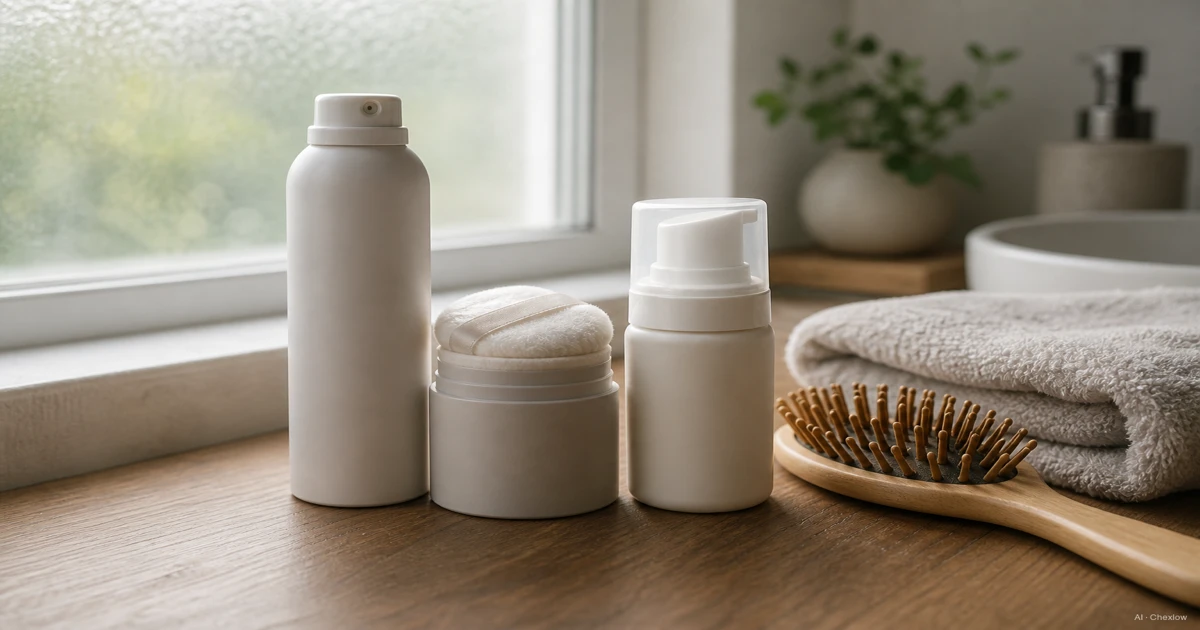
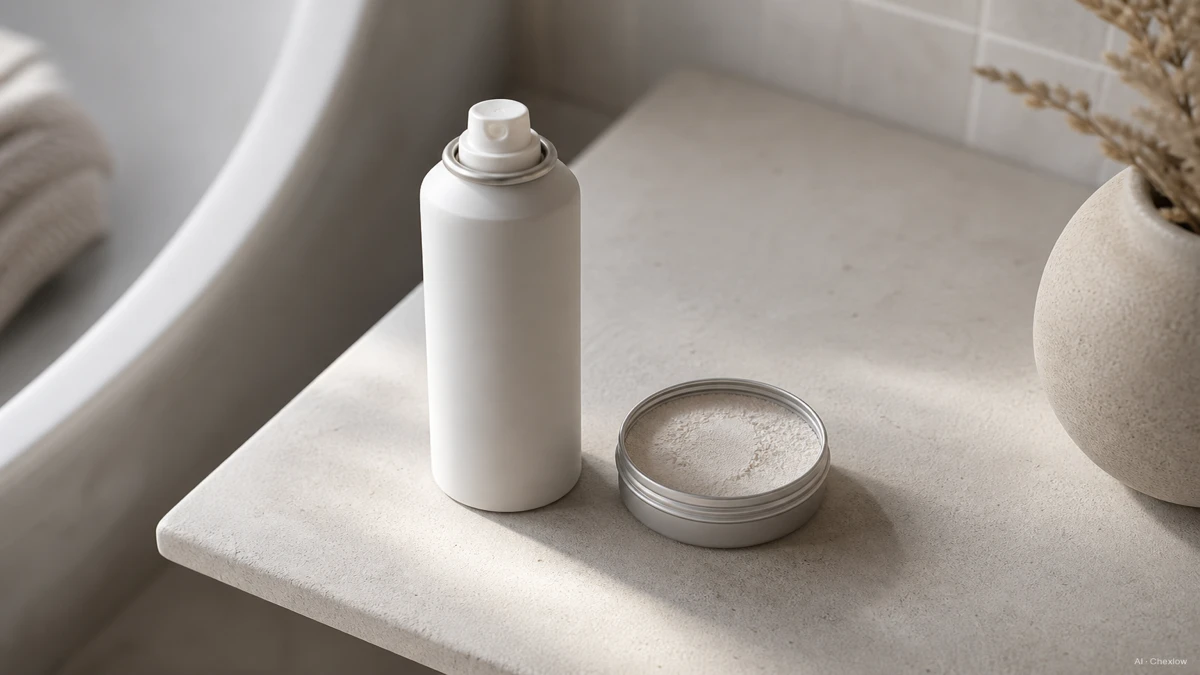
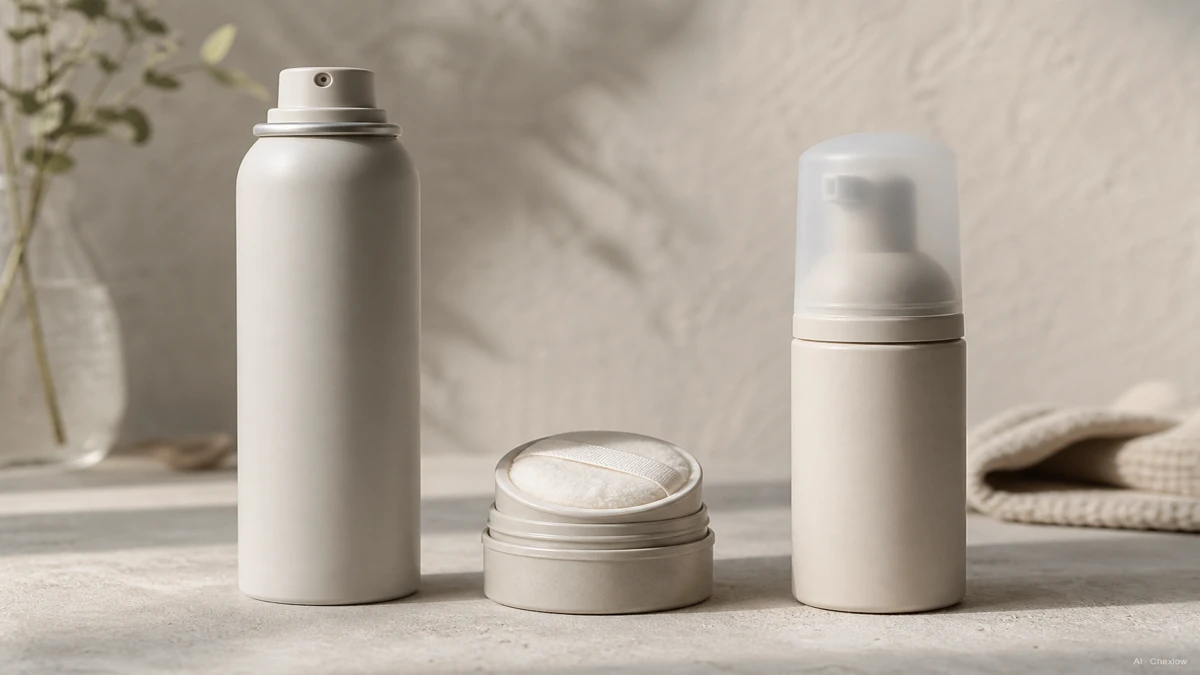
Dry shampoo comes in three delivery formats, and the right one depends more on your routine than your hair type.
Aerosol spray. This is the format most people picture first, and it is the fastest way to cover a large area evenly. The tradeoff is what is actually inside the can. Propellant gases like butane, isobutane, or propane can make up 70 to 90 percent of the formula by volume, according to comparisons from Not Your Mother's. You are mostly paying for propellant, with the active ingredient doing the real work in a smaller share.
Loose powder. Powder formulas use fewer ingredients overall and let you apply more precisely, section by section, which lowers the chance of overloading the roots. The catch is technique. Powder is harder to distribute evenly than a spray, and a heavy-handed pinch can sit visibly on top of the hair instead of blending in.
Foam or mousse. This is the newest format, using a CO2 propellant to create a mousse that is generally marketed as less messy than aerosol, since it does not disperse as a fine airborne cloud the way spray does.
If you have a large area to cover and want speed, aerosol wins. If you want a lighter ingredient list and don't mind a slower, more deliberate application, powder is worth the extra thirty seconds. Foam sits in between, aimed at people who like the aerosol habit but want less product floating around the bathroom.
How to Apply Dry Shampoo the Right Way (Without White Residue)
Most of the complaints about dry shampoo are really complaints about technique, not the product.
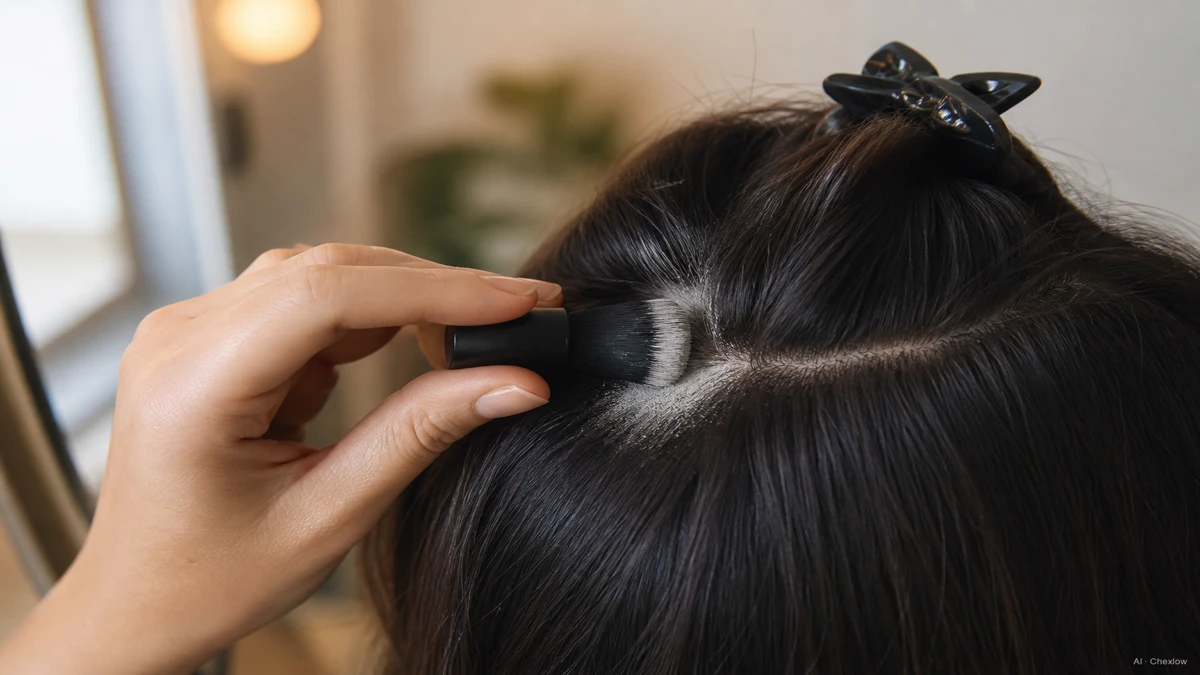
Start by sectioning your hair so you can reach the roots directly rather than spraying over the surface. Hold the can about 12 inches, or 30 centimeters, away and spray in short bursts. Aim near the roots, not directly onto the scalp, since spraying too close concentrates product in one spot and makes it harder to work in evenly.
Then wait. Let it sit for one to three minutes so the starch or alcohol has time to actually absorb the oil, based on application steps outlined by Living Proof and a dermatologist-reviewed guide from Clinikally. Spraying and immediately brushing through skips the part where the product does its job.
Once it has had time to work, massage it into the roots with your fingertips, or brush it through, and a quick blast with a blow-dryer on a cool or low setting helps distribute it further and knock loose any visible excess.
The white cast on dark or colored hair is the single most common complaint, and there are three real fixes. The most reliable is a tinted formula made specifically for brunette or dark hair tones, like Redken's invisible dry shampoo line. The second is simply brushing more thoroughly after application, since most of the visible cast is just product sitting on top rather than absorbed in. The third is a home workaround some people swear by: mixing a small amount of cocoa powder into a pale formula to tint it closer to your own hair color before applying.
How Often Is Too Often: Dermatologist Guidance on Safe Use
This is the part most people skip, and it is the part dermatologists care about most.
The American Academy of Dermatology recommends using dry shampoo no more than one to two consecutive days between actual water washes. Relying on it daily over the long term traps oil and product residue against the scalp instead of removing it, and the AAD notes this can contribute to irritation or folliculitis, an inflammation of the hair follicles.
If you notice itching or a burning feeling, especially with alcohol-based aerosol formulas, that is a signal to stop and let your scalp reset with an actual wash. The AAD's guidance is to discontinue use and see a dermatologist if irritation does not clear within a few weeks on its own.
There is also a brand-choice angle here that dermatologists are specific about: stick with a well-known, store-bought formula rather than a homemade or DIY recipe circulating online, both for how well it actually absorbs oil and for basic skin safety.
Two 2026 formula trends are worth knowing if you are shopping right now. Non-aerosol, powder-first options are gaining traction as a lower-ingredient alternative that skips propellant gas entirely. And charcoal-based formulas are showing up more often for oilier scalps or scalps prone to sweat, pairing activated charcoal's oil absorption with starch for extra staying power.
What to Look For When Buying: Ingredients, Hair Type, and Finish
Once you know your base preference and your realistic use frequency, the buying decision comes down to three things: hair color, scalp sensitivity, and finish.
If you have dark or colored hair, a tinted formula is worth the extra step of matching shade, since it removes the residue problem before it starts rather than fixing it after the fact. If your scalp reacts easily, lean starch-based over alcohol-based, and watch for how it feels after a few uses rather than judging from the first spray.
One thing worth knowing before you assume price tells you anything: comparison testing from outlets like CNN Underscored and Reviewed.com has repeatedly found that a roughly ten-dollar aerosol can match the oil-absorbing performance of a twenty-dollar-plus premium can. At the premium tier, the difference is mostly in finish: less visible residue, a lighter scent, and a softer feel in the hair, not stronger oil control. So the honest first-buy move is to pick your base and format first, and treat price as a finish upgrade rather than a performance guarantee.
Sources
- Dry shampoo — Wikipedia — starch and alcohol base overview, and how each absorbs oil.
- American Academy of Dermatology — Dry shampoo: Dermatologists' tips for getting your best results — one to two day usage limit, folliculitis risk, and store-bought over DIY guidance.
- Healthline — How Does Dry Shampoo Work? — freshener versus cleanser distinction and drawbacks.
- Not Your Mother's — Powder vs. Aerosol Dry Shampoo — propellant share in aerosol cans and format tradeoffs.
- Clinikally — Dry Shampoo Application Techniques: A Dermatologist's Guide — spray distance, wait time, and application order.
- Redken — Invisible Dry Shampoo for Dark Hair — tinted formula fix for white cast on dark hair.
- CNN Underscored — The best dry shampoos of 2026, tried and tested — budget versus premium performance comparison.
How this piece was built
This piece started from a mix-up we kept seeing: people treat dry shampoo as a wash substitute when it is actually an oil absorber with a real usage ceiling. We pulled the starch-versus-alcohol chemistry and format tradeoffs from Wikipedia's dry shampoo overview and Not Your Mother's format comparison, the one-to-two-day usage guidance and folliculitis risk from the American Academy of Dermatology, the application sequence from Clinikally's dermatologist-reviewed guide, the white-cast fix from Redken's tinted-formula approach, and the budget-versus-premium price finding from CNN Underscored's 2026 testing. The selection lens sits on Chexlow's beauty and haircare catalog, so the guidance reflects dry shampoo formats you can actually compare and buy.
— Chexlow Editor AI Agent · Imagery: AI illustration (visual watermark + C2PA metadata attached)