Chexlow

Category · Shoes / Color Choice

Ferragamo Loafer First Color — Black, Brown, or Tan?

Most people buying their first Ferragamo loafer already know the silhouette. The question left is the color — and it's a more consequential choice than it looks. Black and dark brown don't behave the same way in a wardrobe, and tan brings in a third variable that changes the math entirely.

Ferragamo Loafer First Color — Black, Brown, or Tan?

Current products to compare

These products come from Chexlow search results for this topic.

Current products are not ready yet

Use search while this guide waits for enough store prices.

Search current products

You've already cleared the hard part. You know it's a Ferragamo loafer. The silhouette, the hardware, the construction — all decided. What's left is color, and if you've been going back and forth between black, brown, and something lighter, you're not being indecisive. The choice genuinely has consequences that play out over months of wearing.

Here's the thing: color determines not just how the shoe looks, but which parts of your wardrobe it unlocks, how much maintenance the leather demands, and whether the first few months of patina feel like the shoe is improving or fading.

Black — the dressy default that's not always the safest choice

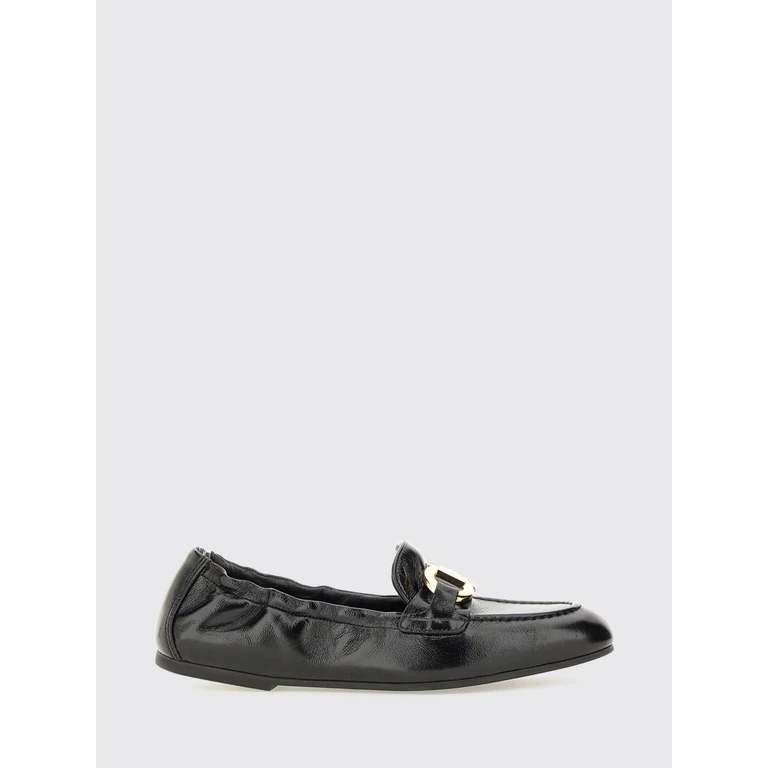
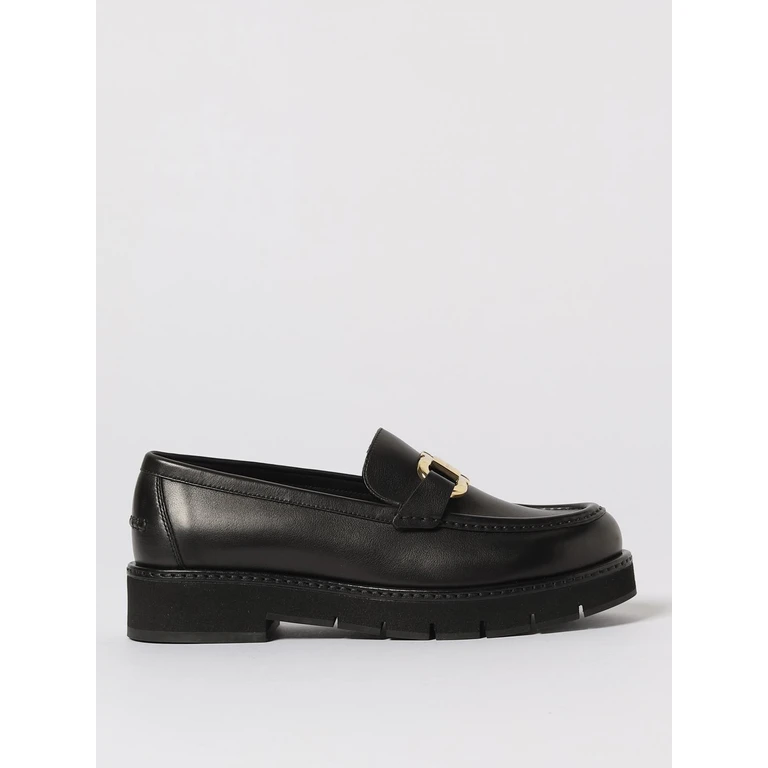
Black seems like the obvious starting point, and for a specific wardrobe profile, it is. A black Ferragamo loafer sits inside formal tailoring without friction. Dark trousers, charcoal suits, navy wool — black holds those combinations cleanly.

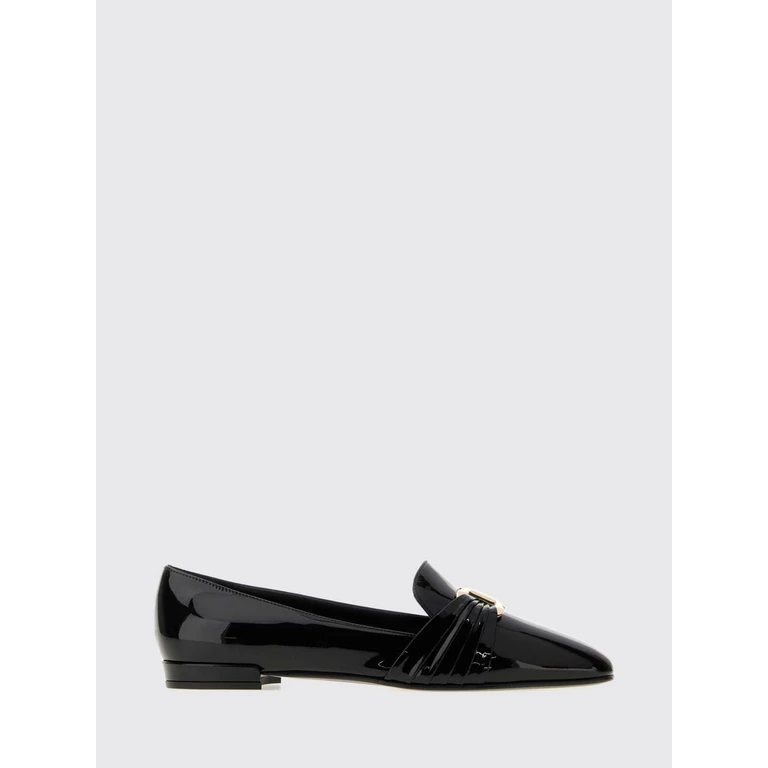
But there's a specific difference inside "black Ferragamo loafer" that most buyers don't notice until after purchase. Brushed calf leather reads quieter and more casual than polished calf. Polished calf — the mirror-finish leather that gives Ferragamo shoes a sharp visual signal from a distance — closes off casual pairings faster. You'll find that polished black with jeans works if the jeans are dark and slim; with mid-wash denim, the contrast tips into awkward.

One more practical note: black leather shows surface scratches and dust more visibly on polished finishes. The Salvatore Ferragamo Museum collection documentation makes clear that Ferragamo's formal shoe tradition was built around polished leathers — this is deliberate design intention, not a maintenance flaw. But if you're wearing this shoe every day across different surfaces, brushed calf in black will forgive more.

Black also patinas differently than brown. The color doesn't change, but the surface develops a lived-in character that reads as intentional aging rather than fade. Low-maintenance and consistent.

If your wardrobe is majority formal — suits, blazers, dress trousers — black is the logical first color. If you already have a black dress shoe and you're adding a Ferragamo as your smarter-casual option, the math changes.

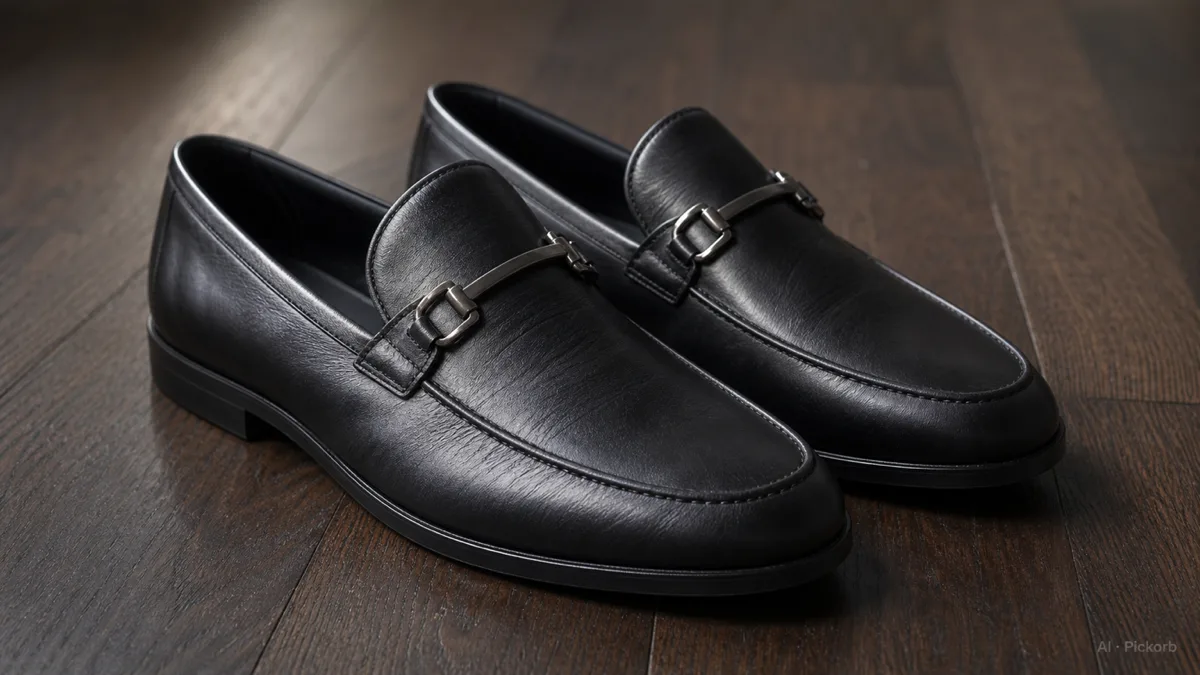
A pair of black brushed-calf leather loafers with Gancini hardware on a dark oak floor, polished but not mirror-finish, soft directional light catching the vamp (AI generated illustration)
AI-generated illustration
Compare productsCheck current black options on Chexlow

Dark brown and coffee — the color that works hardest

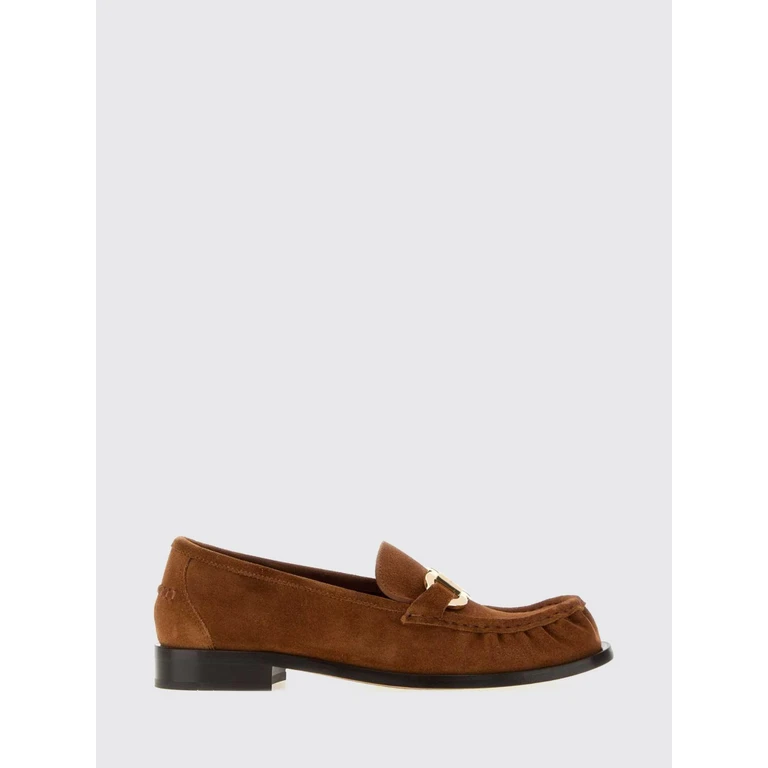
Dark brown (often labeled coffee, cognac-dark, or ebano in Ferragamo's terminology) is the color most commonly recommended as a second Ferragamo purchase — but it makes a strong case as the first one.

The reason is wardrobe range. Brown leather sits between formal and casual more naturally than black. Dark navy trousers pair cleanly with it. Chinos and dark denim let it breathe without looking like a mismatch. Charcoal wool takes it well. The only meaningful category brown steps back from is strict black-tie, and most Ferragamo loafer buyers aren't dressing for black-tie.

Inside dark brown, there's a split worth knowing. Warm brown (red-leaning, closer to cognac-dark) reads with warm-toned wardrobes — camel coats, tan chinos, burgundy. Cool brown (grey-leaning, closer to bitter chocolate) sits more naturally with navy, grey, and cooler neutrals. Ferragamo's official collection labels these differently season to season, but the warm-cool split is visible even in photographs.

The patina story on dark brown is probably the best argument for choosing it first. Brown leather patinas richly — the grain deepens, highlights develop on the toe and heel, and the leather gains a textured life that black can't quite match. The Leather Conservation Centre research on vegetable-tanned leather confirms that brown dyes respond to light and oils differently than black dyes, producing the layered effect collectors describe as "breaking in" rather than "wearing out."

Ferragamo's calfskin — the base material for the Gancini loafer line — responds particularly well to this process. A dark brown Gancini worn regularly over two to three years builds character that makes the shoe look more expensive, not less.

One note if you're deciding between Gancini models: gold hardware pairs more naturally with warm brown; silver hardware reads better with cool brown or black. A small detail, but it becomes obvious after the first season.

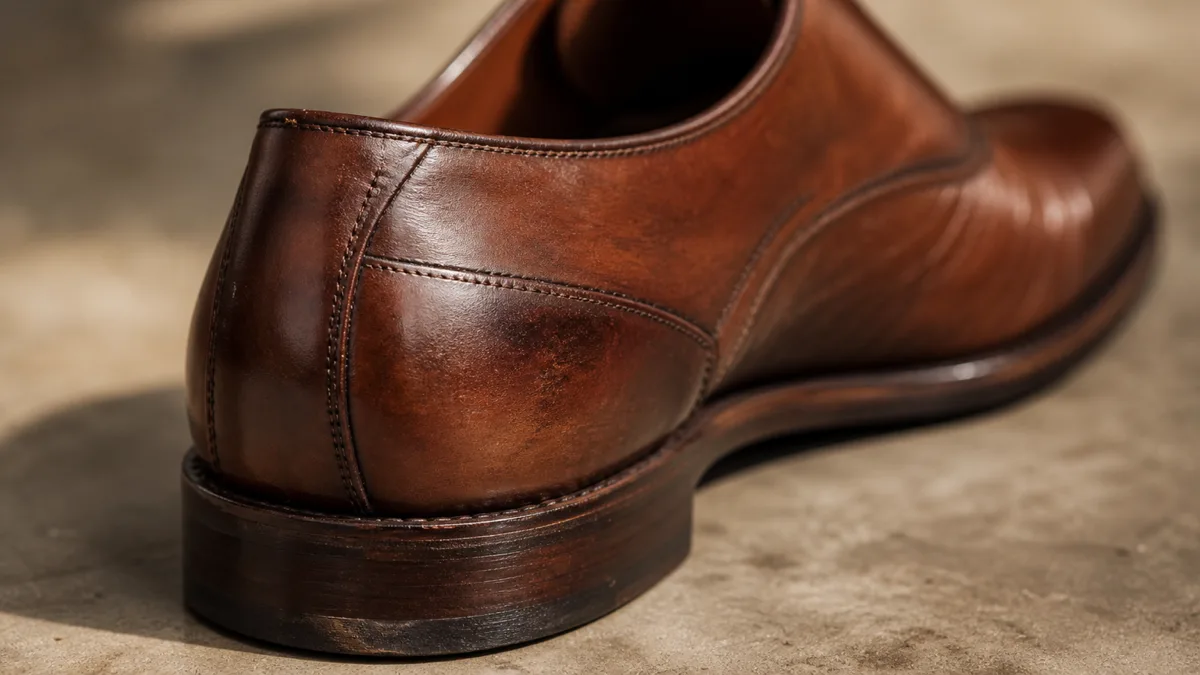
A dark brown calf-leather loafer with gold Gancini hardware resting on a stone surface, warm light catching the toe box and developing a slight highlight (AI generated illustration)
AI-generated illustration
Compare productsCheck current brown options on Chexlow

Tan and cognac — the spring-summer pick with a narrow lane

Tan, cognac, and lighter amber shades are the third option, and they have a genuine constituency. If your wardrobe is casual-heavy — raw denim, linen trousers, chinos, cotton summer suits — a tan Ferragamo loafer handles combinations a black or dark brown won't touch.

The pairing logic is simple: light leather against light or medium-wash denim doesn't fight for visual dominance the way black leather does. A tan loafer with mid-wash jeans and a linen shirt is an outfit; the same outfit with black reads more deliberate, sometimes overly so.

The honest trade-offs are real, though.

Tan leather shows patina changes fastest and most dramatically. Where dark brown deepens and black deepens, tan shifts — the highlights go lighter, the toe and heel crease areas go darker, and the overall effect can read as uneven unless the leather is conditioned regularly. Vegetable-tanned tan leather, which Ferragamo uses on lighter calf options, responds particularly quickly to sunlight and oils. That response is beautiful when managed, but it requires more attention than a dark shoe. The Leather Conservation Centre documents this as the standard behavior of light aniline-dyed calf: the surface color interacts with UV exposure and body oils at a higher rate than darker dyes.

There's also the scuff issue. Tan shoes show surface marks against light floors and pavement more visibly than dark shoes. For the first few months before the patina settles, this can feel conspicuous.

If you're buying a Ferragamo loafer as your only one and your lifestyle runs across formal and casual contexts, tan is probably the third color to own rather than the first. If your wardrobe is genuinely warm-toned and casual-focused, and you already have a dark leather shoe elsewhere in the closet, tan makes a compelling case.

The Vara line in lighter shades adds another variable: the bow color. Cream or off-white bows on tan or ivory Vara read as a single coordinated palette; beige bows on camel leather can read muddy. Ferragamo's official collection sequences these combinations deliberately — it's worth looking at the product images closely rather than relying on color names alone.

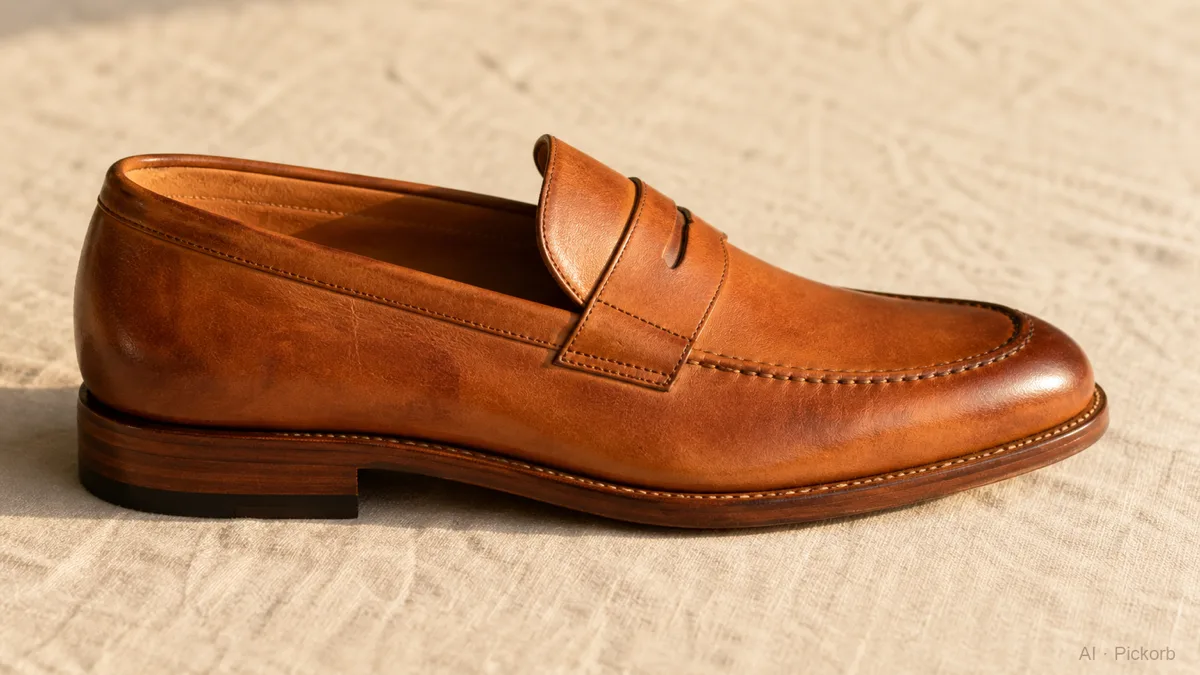
A tan calf-leather loafer on a cream linen surface with late afternoon light, the toe and heel creases beginning to show early patina development (AI generated illustration)
AI-generated illustration
Compare productsCheck current tan options on Chexlow

Matching color to the actual gap

Black, brown, and tan answer three different wardrobe problems. The clearest way to decide is to match the color to the gap you're actually filling.

If your wardrobe is suit-and-blazer-heavy: Black is the first color. It integrates with formal tailoring without visual noise. Add dark brown once you want a second pair that covers the dressy-casual middle ground.

If your wardrobe runs casual-formal-mixed (which is most people): Dark brown is the argument for first color. It covers more of the range, patinas better, and doesn't close off casual pairings the way black can. If you need to pick one and own it for three years, dark brown lasts longer as a single-pair solution.

If your wardrobe is denim-and-casual-heavy: Tan or cognac is the pair that fits best, but be honest about whether you'll maintain it. If you're not going to condition the leather every two to four weeks in the first year, tan will age unevenly. Dark brown will forgive more neglect.

A note on buying color and size at the same time: Light colors — tan, cream, ivory — show manufacturing irregularities and fit issues more visibly than dark colors. If you're ordering a Ferragamo size you haven't worn before, a dark color gives you more latitude on the return decision.

Gancini vs Vara — does the hardware change the color decision?

Slightly, yes.

For Gancini, the hardware finish matters alongside the leather color. Gold Gancini hardware reads warmer and pairs naturally with warm browns, cognac, and tan. Silver (or rhodium) reads cooler and sits more naturally with black and cool-toned browns. If you're choosing between hardware options, it helps to decide the leather color first and let the hardware follow.

For Vara, the additional variable is the bow color itself. Most colorways are coordinated (black leather, black bow; tan leather, cream bow), but some seasonal variations pair contrasting bows. The Salvatore Ferragamo Museum archives show that the bow was designed as a coordinated piece, not an accent — so contrasting combinations that work are the exception, not the default.

Sources

AI product analysis

How this guide was built

This piece started from a recurring question among first-time Ferragamo buyers: the silhouette decision (Vara, Gancini, moccasin) was already made, but the color choice felt arbitrary. We cross-referenced Ferragamo's permanent colorway lineup from the brand's official collection pages and the Salvatore Ferragamo Museum archives to anchor the color history, and used leather patina literature from the Leather Conservation Centre and industry sources to back the aging-behavior section. The recommendations reflect Chexlow's current Ferragamo lineup rather than the brand's full global catalog — so the color distribution the piece references is bounded to what a reader can actually act on here.

Chexlow topic editor · AI illustration disclosed in image alt text

Related guides