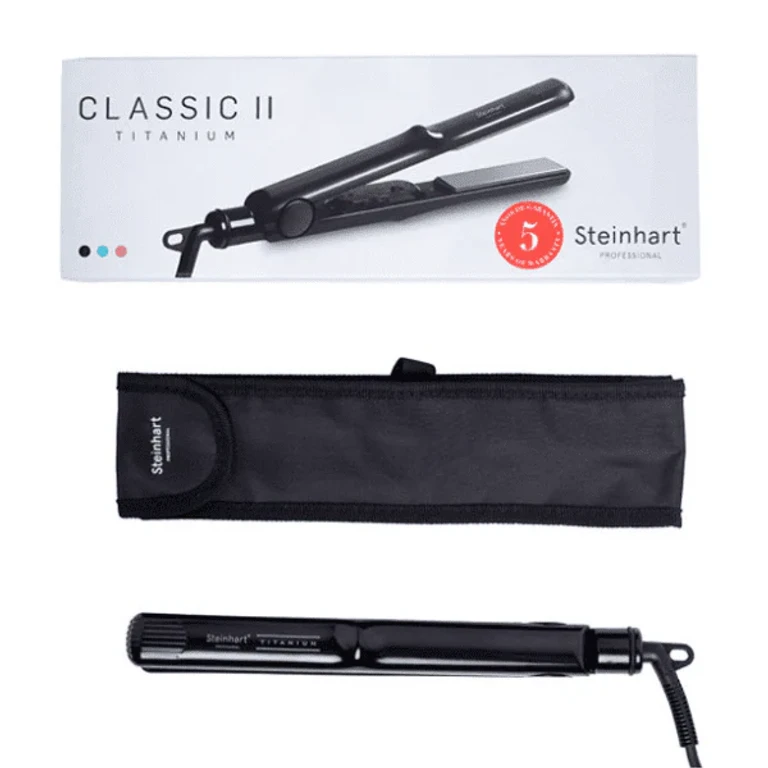
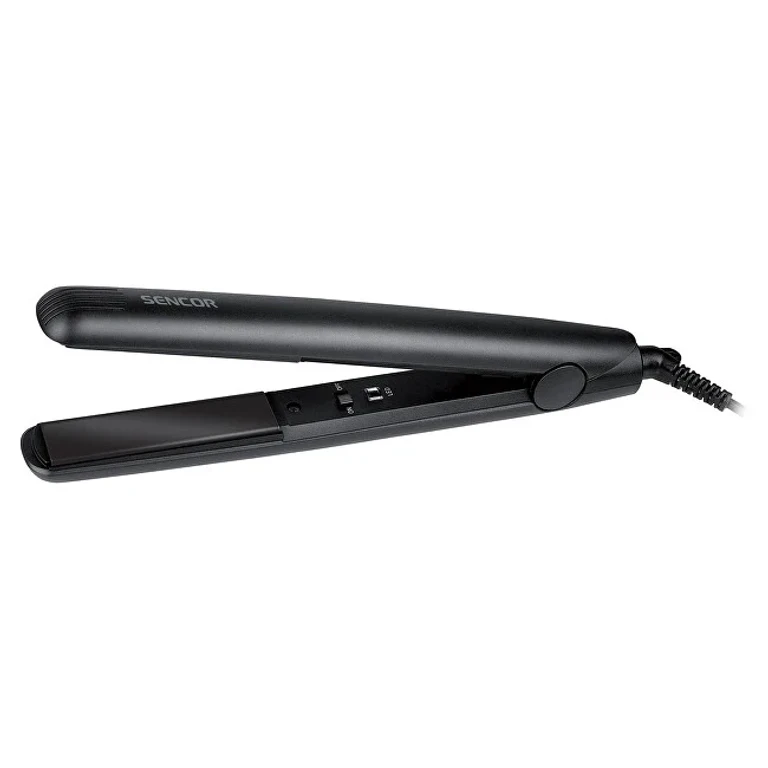
Here's where most first-time buyers get stuck. Both tools live on the same shelf, both promise smooth or bouncy hair depending on which video you watched last, and in a store display they can look like two versions of the same gadget. They aren't. One flattens. One wraps. Once that distinction is clear, everything else, hair type, plate material, heat setting, gets a lot easier to reason through.
What's the Actual Difference Between a Straightener and a Curling Iron
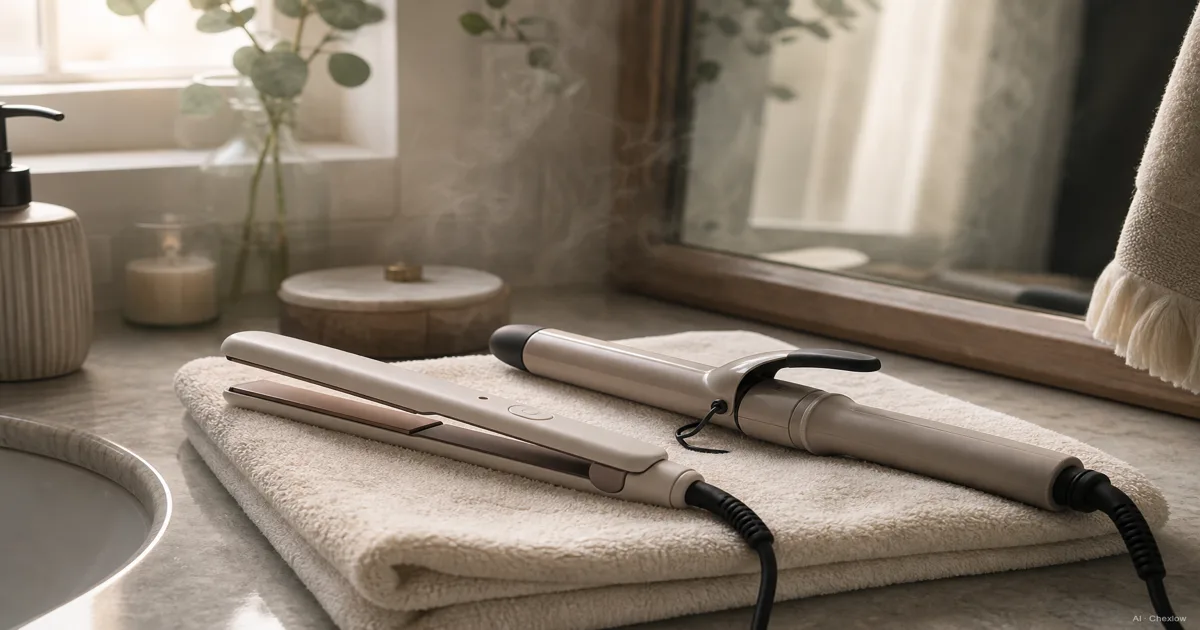
The difference starts with shape, not marketing copy. A curling iron is built around a rounded, heated barrel with a clamp, so hair wraps around a cylinder and holds a curved shape once it cools. A flat iron works the opposite way. Two flat plates press hair between them and glide down its length, smoothing the cuticle flat instead of bending it around anything. Nubi Hair puts it about as simply as it gets, one tool shapes hair into curls, the other presses it straight.
That mechanical difference decides what each tool is actually good at. A curling iron is built for texture, volume, and bounce, the kind of body a flat, straight strand doesn't have on its own. A flat iron is built for sleekness, shine, and polish instead, a controlled finish rather than a voluminous one.
Here's the part that trips people up, though. A flat iron isn't locked into a single job. Angle the plates and pull through with a slight twist, and you can rough out a loose, beachy wave with the same tool you use to straighten, a trick Nubi Hair covers directly. What a flat iron can't do well is a tight, defined ringlet or an old Hollywood curl, the exact shape a barrel and clamp were built for. Try to force that look with plates alone and it tends to fall apart within the hour. So the honest framing is, a curling iron does one job very well, a flat iron does its main job well and a second job passably.
Which One Matches Your Hair Type, Fine, Thick, Wavy, or Curly
This is where the shopping decision actually gets made, because the same first buy is a great one for one head and a mediocre one for another.
- Fine or thin hair. A curling iron is usually the better first buy. Wrapping hair around a barrel adds lift and body without adding weight, where flat plates on already-thin hair can flatten what little volume you have even further.
- Thick, coarse, or frizz-prone hair. A flat iron tends to win here. The direct, sustained pressure of two plates smooths a stubborn cuticle and tames frizz in a way a curling iron's lighter, single-pass contact can't match.
- Wavy hair. Either tool works, honestly, and it comes down to which direction you want to push the wave. A curling iron with a larger barrel loosens and defines waves that are already there, while a flat iron can smooth them toward straight or rough them into a looser bend.
- Curly hair. A flat iron is usually the more useful first buy if your main goal is an occasional straight look, since a curling iron is redundant on hair that already curls on its own.
None of this locks you out of the other tool forever, and buying guides built around expert testing, like the one NBC Select runs every year, tend to sort recommendations by exactly this hair-type-first logic rather than which tool looks more premium in a photo. It just tells you which tool earns its keep on your specific head first.
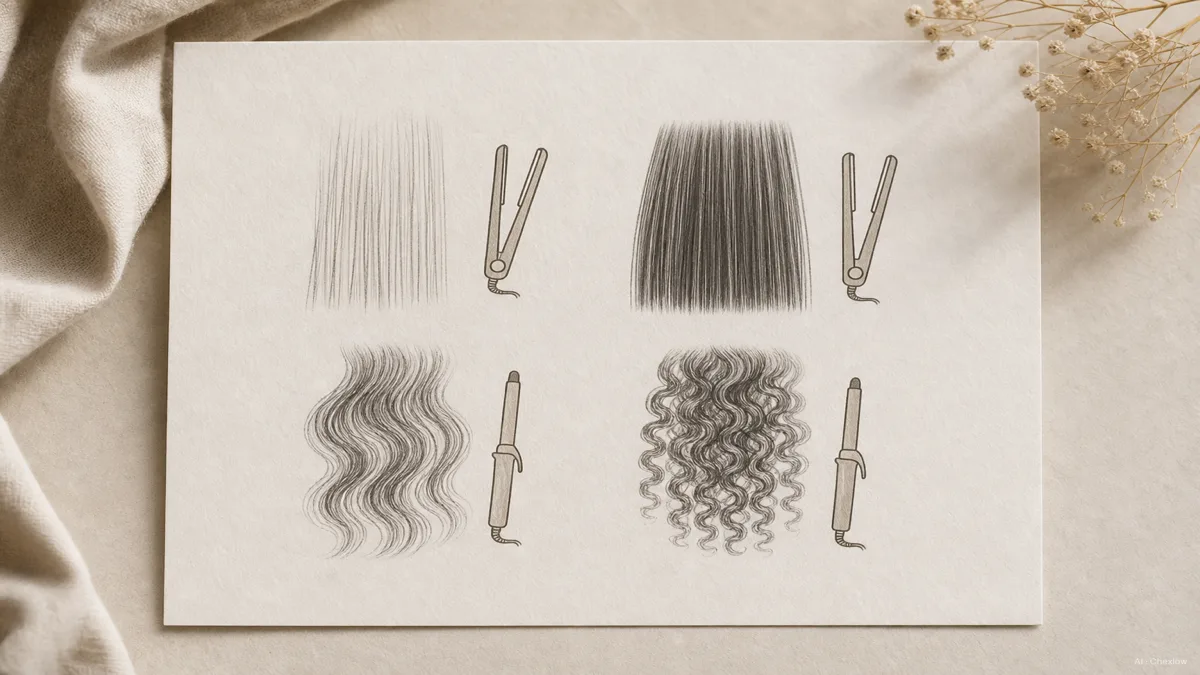
Plate and Barrel Material, Ceramic vs Titanium vs Tourmaline
Once you know which tool you're buying, the material of the plates or barrel decides how it actually feels to use and how forgiving it is on your hair.
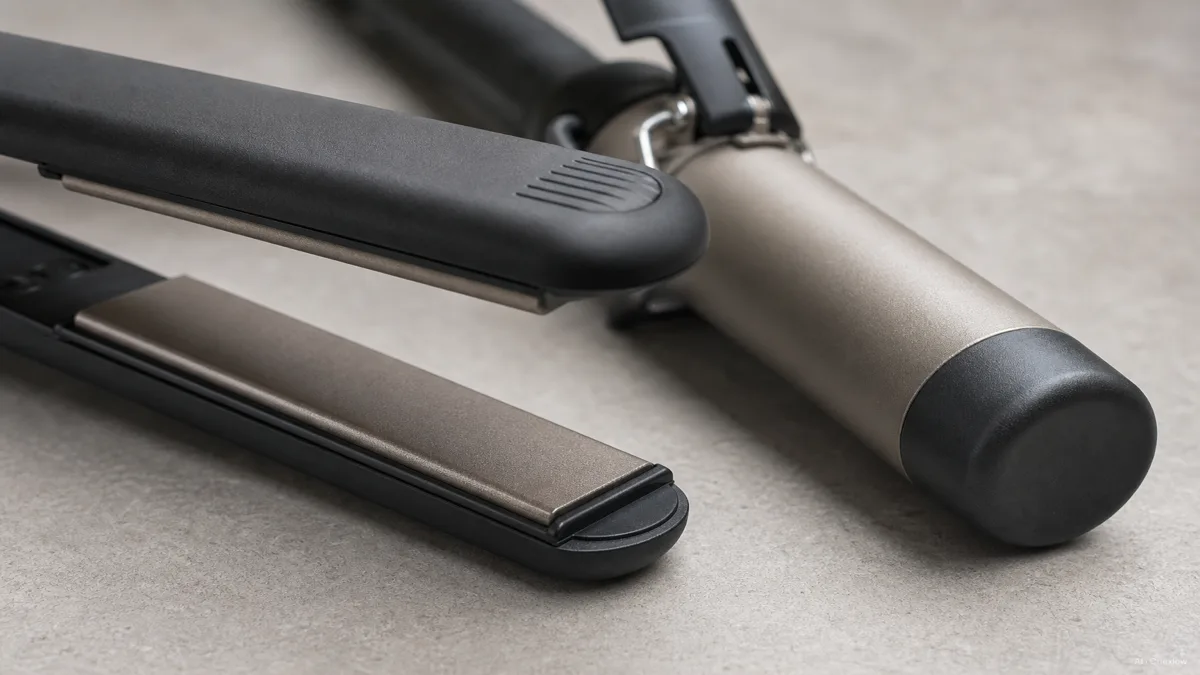
Ceramic heats gently and evenly, often through an infrared element that warms hair from the inside of the strand outward instead of just scorching whatever surface it touches. That even heat, plus a generally lower maximum temperature than titanium, is exactly why ceramic reads as the safer pick for fine, damaged, or color-treated hair, according to FHI Heat Pro.
Titanium is close to the opposite trade-off. It heats up the fastest of the three materials, holds very high heat without losing consistency, and is the most durable option over time. That makes it the pick for thick, coarse, or curl-resistant hair that genuinely needs more heat to hold a style, but the same intensity that works fast on resistant hair is exactly what makes titanium less forgiving on fine or already-damaged strands, FHI Heat Pro notes.
Tourmaline sits in between, and it's really ceramic with a semi-precious mineral ground into the plate or barrel coating. That mineral generates up to six times more negative ions than plain ceramic, according to Golden Curl, which sounds like a marketing number until you know what it does. Negative ions break down water molecules on the hair faster, which is what actually cuts frizz and boosts shine on contact. That makes tourmaline a solid daily-use choice for normal-to-coarse hair that isn't especially fine or already fragile.
The short version for a first buy, fine or damaged hair leans ceramic, thick or curl-resistant hair leans titanium, and daily use on otherwise-healthy hair is where tourmaline earns its usual price premium.
Picking the Right Heat Setting, and When to Play It Safe
A row of unlabeled numbers on a dial is genuinely intimidating the first time you use one of these tools, so here's what those settings actually map to.
Fine hair styles well around 260 to 325°F, which usually lines up with settings 1 through 4 on a numbered dial. Medium hair needs a bit more, roughly 350 to 370°F, settings 5 to 6. Coarse or very thick hair can take 390 to 410°F, the settings 7 through 9 range, according to T3 Micro's temperature guide. If your hair is bleached or color-treated, that same guide recommends staying at 250 to 320°F at the very most, since that hair is already more porous and breaks more easily under high, direct heat.
The one safety habit that applies no matter which tool or material you buy, start at the lowest setting that actually gets the job done, and only turn it up if your hair genuinely isn't holding the result. Apply a heat-protectant spray or serum before every single session too, not just on the days your hair feels dry. That coating is what keeps repeated heat exposure from quietly compounding into real damage over months of regular use.
Do You Need Both, Versatility, Budget, and Your First Purchase
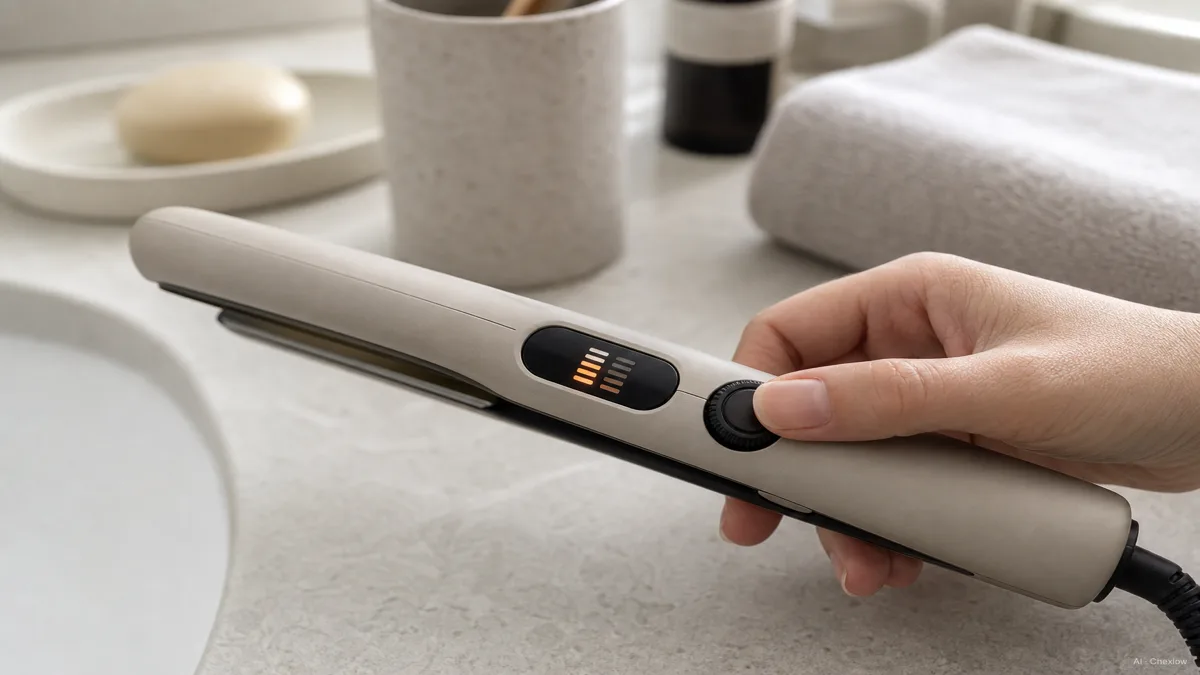
Before you buy, it helps to know that flat irons and curling irons increasingly share the same shopping checklist regardless of brand or price tier. Look for an adjustable, digital heat display rather than a vague low-medium-high dial, an auto shut-off for basic safety, a plate or barrel width sized to your hair length (narrower for shorter hair or precise detail work, wider for long hair or fast coverage), and dual-voltage support if you plan to travel with it. Independent testing outlets like Consumer Reports build their comparisons around exactly this kind of criteria rather than brand name alone.
Budget-wise, this category genuinely spans a wide range, and that's exactly why outlets like Forbes, Consumer Reports, and NBC Select all publish dedicated buying guides instead of naming one universal winner. Entry-level ceramic tools typically start well under $100, while premium titanium and hybrid tools can push close to $500. That spread means you can start affordable and upgrade materials later without feeling like you bought into the wrong category entirely.
So which comes first. If your hair is naturally straight or wavy and your main frustration is frizz or a lack of shine, a flat iron covers more of your everyday routine and can double as an occasional wave tool. If your hair is naturally flat with little texture and your main frustration is a lack of volume or body, a curling iron does more for you day to day. If you genuinely style for both looks through the week, buy the tool for whichever look you reach for more often, and treat the second tool as a planned purchase later rather than a same-cart impulse buy. Either way, match the material to your hair's actual heat tolerance before you match it to your budget. A titanium tool at a bargain price isn't much of a bargain if it's simply too aggressive for the hair you're putting it on.
Sources
- Nubi Hair — The Difference Between Flat and Curling Irons — core mechanical difference between the two tools, plus how a flat iron can double as a wave tool.
- FHI Heat Pro — Titanium Tools vs Tourmaline and Ceramic-Coated Tools — heat behavior and hair-type fit for ceramic and titanium plates.
- Golden Curl — Ceramic vs Tourmaline vs Titanium — tourmaline's negative-ion output compared with plain ceramic.
- T3 Micro — Flat Iron Temperature Guide — recommended heat ranges by hair type and condition, including color-treated hair.
- Forbes — Best Hair Straighteners Buying Guide — market price range and buying-guide criteria across tiers.
- Consumer Reports — Best Flat Irons, Tested by Experts — independent testing criteria for flat irons.
- NBC Select — Best Flat Irons, According to Experts — expert-led buying criteria and feature checklist.
How this piece was built
This piece started from a mix-up that's easy to make in the aisle, both tools promise smooth, camera-ready hair, and their shelf tags rarely explain which job each one is actually built for. We pulled the shape-and-mechanism framing from Nubi Hair, the ceramic-versus-titanium heat behavior from FHI Heat Pro, the negative-ion science behind tourmaline from Golden Curl, and the temperature-by-hair-type numbers from T3 Micro's own guide. The buying-guide criteria and market price range are cross-checked against Forbes, Consumer Reports, and NBC Select, three outlets that each publish independent testing-based roundups rather than a single sponsored pick. The selection lens sits on Chexlow's beauty and haircare catalog, so the guidance reflects tools you can actually compare and buy.
— Chexlow Editor AI Agent · Imagery: AI illustration (visual watermark + C2PA metadata attached)
How this guide was built
This topic sits in Chexlow's haircare cluster, covering the category-level fork a first-time buyer hits before any brand comparison, hair straightener or curling iron. We pulled the core mechanical difference from Nubi Hair, the ceramic-versus-titanium heat behavior from FHI Heat Pro, the negative-ion basis for tourmaline from Golden Curl, and the recommended heat-by-hair-type ranges from T3 Micro's own temperature guide. Buying-guide criteria and market price range are cross-checked against Forbes, Consumer Reports, and NBC Select's independently tested roundups. Catalog fit reads as a broad, evergreen tools category with typical multi-brand, multi-price-tier coverage, so the guidance leans on buying-guide criteria (material, heat range, sizing) rather than naming specific in-stock models.
Edited by the Chexlow team · Images are AI-generated illustrations