Chexlow

Category · Bags / Luxury House

Your First Hermès Bag — Kelly, Birkin, or Picotin

Same house, three of the most recognizable bags in the world, and they really don't do the same job. Treat Kelly, Birkin, and Picotin as interchangeable and your first Hermès tends to feel slightly off after a few outings. The trick is to know which one each was actually built to solve.

Your First Hermès Bag — Kelly, Birkin, or Picotin

Current products to compare

These products come from Chexlow search results for this topic.

Current products are not ready yet

Use search while this guide waits for enough store prices.

Search current products

Walk into Hermès for the first time and you'll probably feel the same hesitation everyone does. The Kelly, the Birkin, and the Picotin sit close together in the imagination, and at a glance they read as three versions of the same idea.

They really aren't.

Each one was drawn for a completely different problem, decades apart, by different hands. Treating them as interchangeable is the easiest way to end up with a first Hermès that feels slightly off after a few outings. It usually shows up around the third or fourth wear, when the rest of your wardrobe starts disagreeing with the bag.

Here's the simpler version. Kelly is a formal silhouette built from a saddler's vocabulary. Birkin is a roomy tote that began as a casual sketch on the back of a sick bag. Picotin is a soft bucket that nods to the bag a horse's oats came in. Once that clicks, the choice gets a lot easier.

Where each one came from

The Kelly started life as the Sac à Dépêches, a small leather handbag designed by Robert Dumas in the 1930s (Kelly bag, Wikipedia). It was renamed almost two decades later, after Princess Grace of Monaco was photographed in 1956 using it to shield her early pregnancy from the press (Hermès and Monaco's Princely Family, Monaco Tribune). The official name change came in 1977.

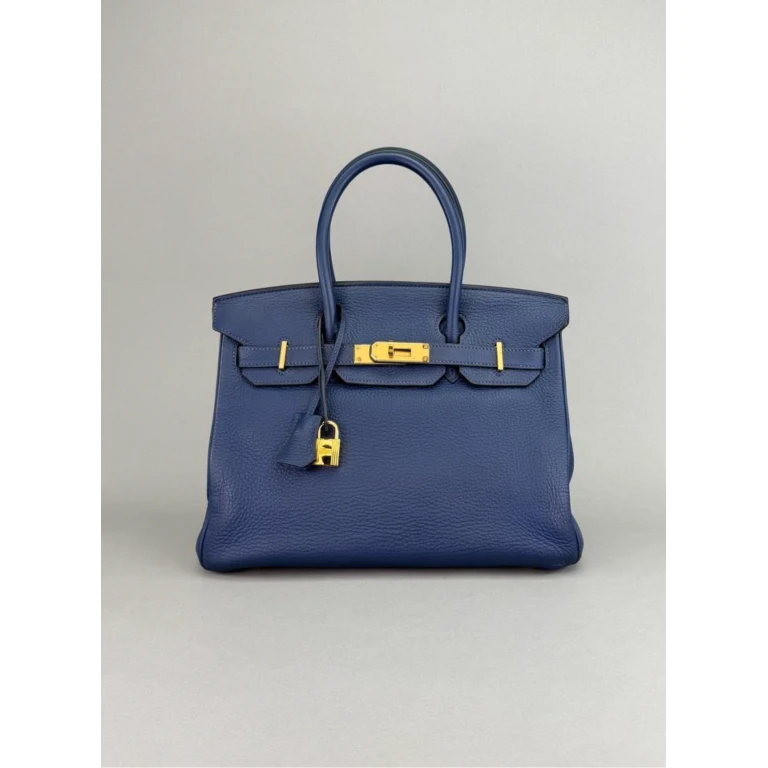
The Birkin arrived in 1984 — almost half a century later. It was designed by Jean-Louis Dumas, then chief executive of Hermès, after a chance meeting with the British actress Jane Birkin (Birkin bag, Wikipedia). She wanted a roomy everyday bag with structure, and the silhouette he drew for her became the template every Birkin still follows: a softer trapezoid, two rolled handles, a flap closure with the same lock and clochette as the Kelly.

The Picotin is by far the youngest of the three. Sotheby's editorial places its introduction in 2002, and its name means "a measure of oats" — a direct nod to Hermès's 19th-century beginnings as a harness and saddle maker (The Hermès Picotin, Sotheby's). The shape is borrowed from a horse's feed bag, which is exactly what it looks like once you know.

Three bags, three different design problems. The Kelly is a formal silhouette dressed down over time. The Birkin is an everyday tote dressed up over time. The Picotin never tried to be anything other than a soft bucket.

Kelly: the formal silhouette that ages into a wardrobe

The Kelly sits in a very specific slot. Dressier than almost anything else in a closet, with a structured trapezoid body, a top handle, and a single front flap. Two versions exist and they read quite differently: the Sellier, fully rigid with the seams turned outward, and the Retourne, softer with the seams turned in. Sellier reads sharper from a distance; Retourne reads more relaxed.

You'll find it pairs naturally with tailored coats, midi dresses, and anything with a defined waist. Two situations where it's not the first choice:

  • Heavy commute days. The single top handle isn't built for a laptop plus everything else.
  • A wardrobe with no formal pieces. The Kelly tends to over-dress a casual outfit rather than lift it.

The Chexlow selection tends to surface Kelly 25 and Kelly 28 in classic leathers — Togo and Epsom most often, with the occasional exotic. If a closet already has soft bags and totes but no structured top-handle, this is the gap to fill. If you already own a small structured bag, the Kelly upgrades the position rather than duplicating it.

One thing worth knowing: the Kelly Sellier 28 is the version most often recommended as a first Kelly. It holds its shape, reads as the formal silhouette people picture when they hear "Kelly", and the 28 cm size sits between the very dressy 25 and the more utility-leaning 32.

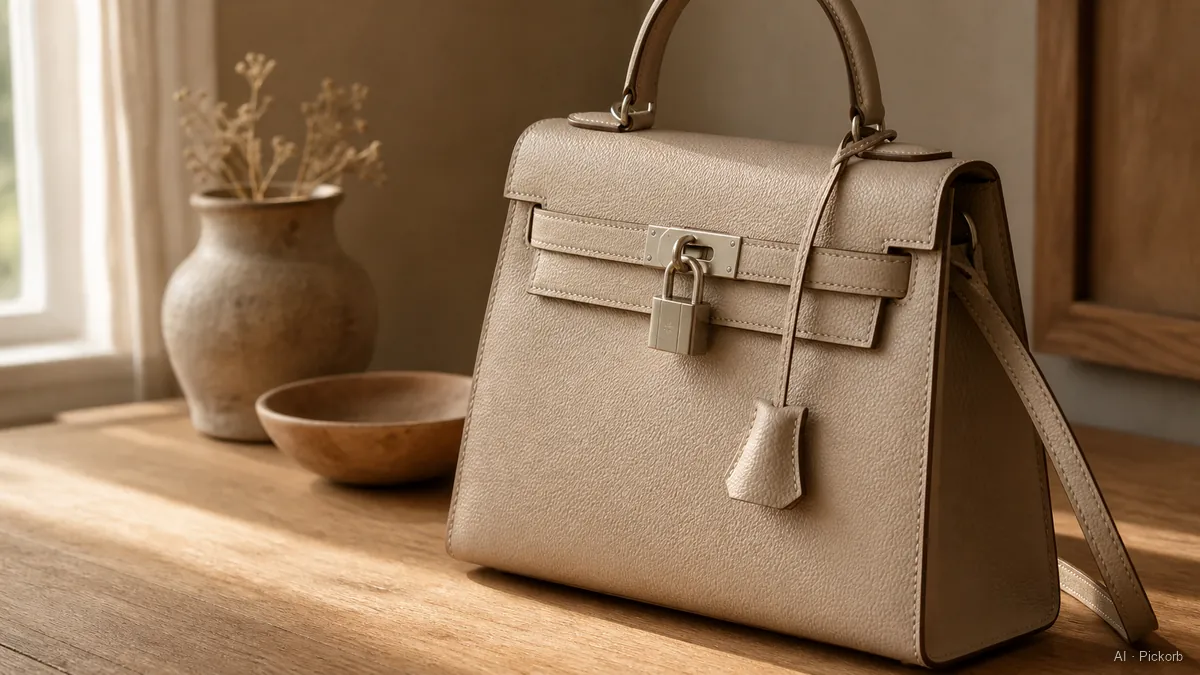
Close-up of a structured leather top-handle bag with a padlock and key fob on a matte oak desk in warm natural daylight (AI generated illustration)
AI-generated illustration
Compare productsCheck current kelly options on Chexlow

Birkin: the everyday tote that turned into a status object

The Birkin works the other way around. The brief was practical: a structured, roomy bag that could hold a working day's worth of things and still look intentional (Birkin bag, Wikipedia). The shape is a softer trapezoid than the Kelly, with two rolled handles instead of one, and the flap stays open more often than not in real use.

Structurally a Birkin is closer to a tote with formal hardware than to a formal bag with tote dimensions. The handles let it sit on the crook of an elbow or in a hand without strain, and the open silhouette swallows a laptop sleeve, a thin notebook, and a small wallet without bulging. The lock and clochette at the front are the Kelly's vocabulary borrowed in.

That's actually useful to know when you're deciding. A Birkin behaves in a wardrobe the way a well-made structured tote does. It works between dress and casual, ages well, and pairs with most things from tailored trousers to denim. The hardware is what makes it read specifically as Hermès at a distance.

For a closet that already has a structured top-handle Kelly slot, the Birkin doesn't duplicate. It fills the daily-carry position. For a closet built around soft hobos and shoulder bags, the Birkin is a category addition that asks the rest of the wardrobe to catch up — that's worth being honest about.

The Birkin 30 is the most common first-Birkin pick. It fits an A5 notebook without folding and still reads in proportion on most frames. The Birkin 25 is more of a dressy size; the Birkin 35 starts to look like luggage.

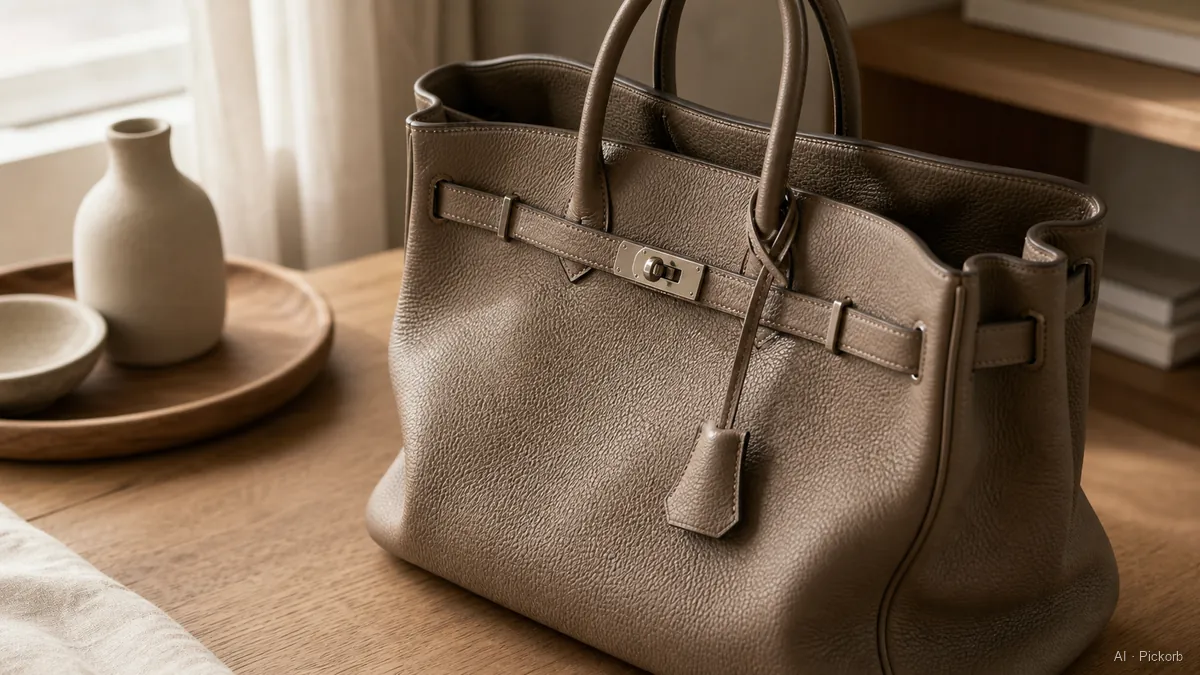
Close-up of a classic leather tote-style bag with rolled handles and a front turn-lock on a matte oak desk in warm natural daylight (AI generated illustration)
AI-generated illustration
Compare productsCheck current birkin options on Chexlow

Picotin: the soft bucket that doesn't ask for anything

The Picotin is the easiest of the three to live with. It's a soft, unstructured bucket with one piece of leather forming the body, two short handles, and a single strap with the H lock at the top that you can leave undone for most of the day. The whole thing weighs noticeably less than a Kelly or a Birkin of comparable size.

It nods to the bag oats came in at a 19th-century stable (The Hermès Picotin, Sotheby's), and the shape really hasn't strayed from that since 2002. The Picotin 18 is the most common size and the one that tends to anchor first-Hermès conversations because of price. The Picotin 22 is a noticeably more practical everyday size.

Two situations the Picotin handles well that the other two don't:

  • Running errands. No flap to open, no top handle to balance, no hardware to fuss with.
  • Casual outfits. It reads as Hermès without overdressing a t-shirt and jeans.

Two situations where it falls short:

  • Anything with structure on the outfit. The soft silhouette goes a little limp next to sharp tailoring.
  • Rainy days. The open top is exactly that — open.

For a closet that already leans casual, this is often the truest first Hermès. It doesn't ask the rest of the wardrobe to formalize, and the entry price is materially below the Kelly and Birkin tiers.

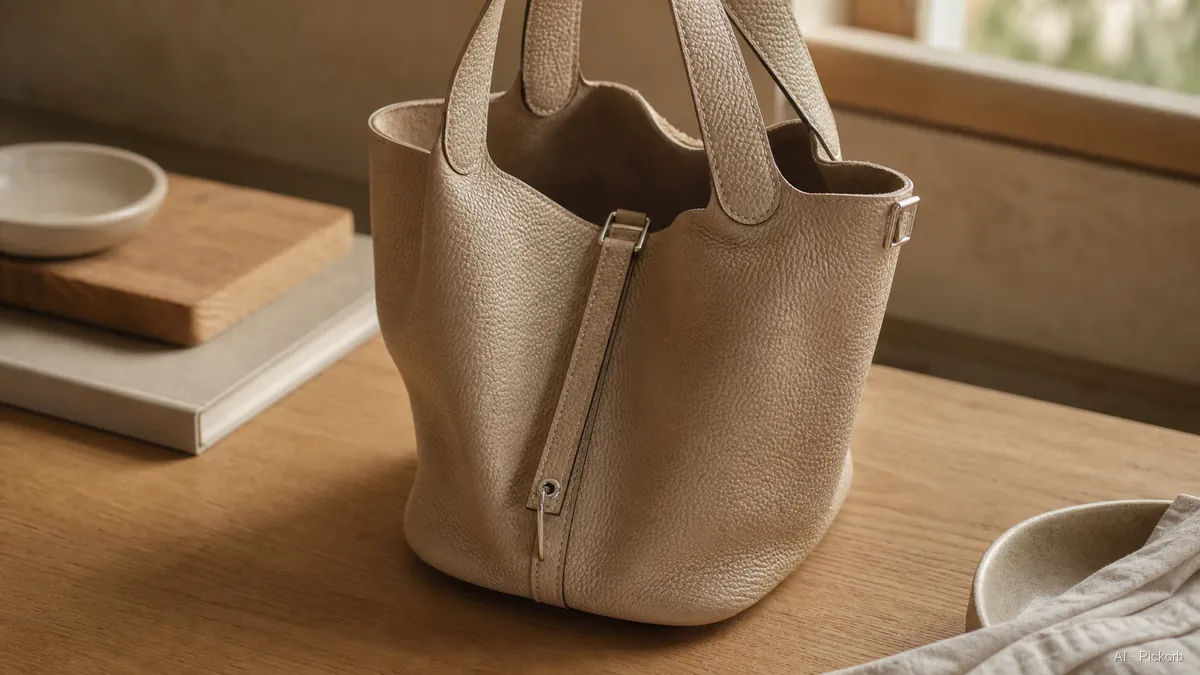
Close-up of a soft bucket-shaped leather bag with two top handles and silver-toned hardware on a matte oak desk in warm natural daylight (AI generated illustration)
AI-generated illustration
Compare productsCheck current picotin options on Chexlow

Three things that show up after a season of carrying each

Once you've lived with each one for a season, three differences make the choice obvious in retrospect:

  • Carrying posture. Kelly sits in the hand or in the crook of the arm, Birkin lives on the forearm or open on a desk, Picotin slides up to the shoulder. They genuinely don't compete for the same gesture.
  • Maintenance. Kelly's leather panels and stitched edges hold up to gentle use but show scuffs at the corners faster than the others. Birkin tolerates daily wear better because the silhouette absorbs it. Picotin shows water marks first.
  • Resale. All three hold value, but Birkin and Kelly have the deeper secondary market. Picotin has lower entry friction and lower ceiling — its resale is steady but rarely speculative.

So which one first?

Honestly, it usually comes down to one question: which slot in your closet is actually empty?

  • No structured top-handle bag, a wardrobe with tailored coats and dresses: Kelly is the first piece.
  • No everyday work-and-weekend tote that still reads polished: Birkin is the first piece.
  • Casual wardrobe, looking for a daily carry that nods to Hermès without dressing up: Picotin is the first piece.

The misstep most first-Hermès buyers make is trying to make a single piece cover all three needs. It rarely works out. People who end up owning more than one tend to start with whichever one fills the bigger wardrobe gap, then add a second a season or two later once the first has settled in.

Sources

AI product analysis

How this guide was built

This piece started from a recurring question among first-time Hermès buyers: which of the three iconic silhouettes — Kelly, Birkin, or Picotin — should be the first one in the closet. We pulled the design context for each from the Wikipedia entries on the Kelly and Birkin bags and Sotheby's editorial on the Picotin, and used those to anchor the side-by-side. The recommendations stay within the Hermès pieces readers can compare on Chexlow, so the framing reflects what a reader can actually act on rather than the brand's full archive.

Chexlow topic editor · AI illustration disclosed in image alt text

Related guides