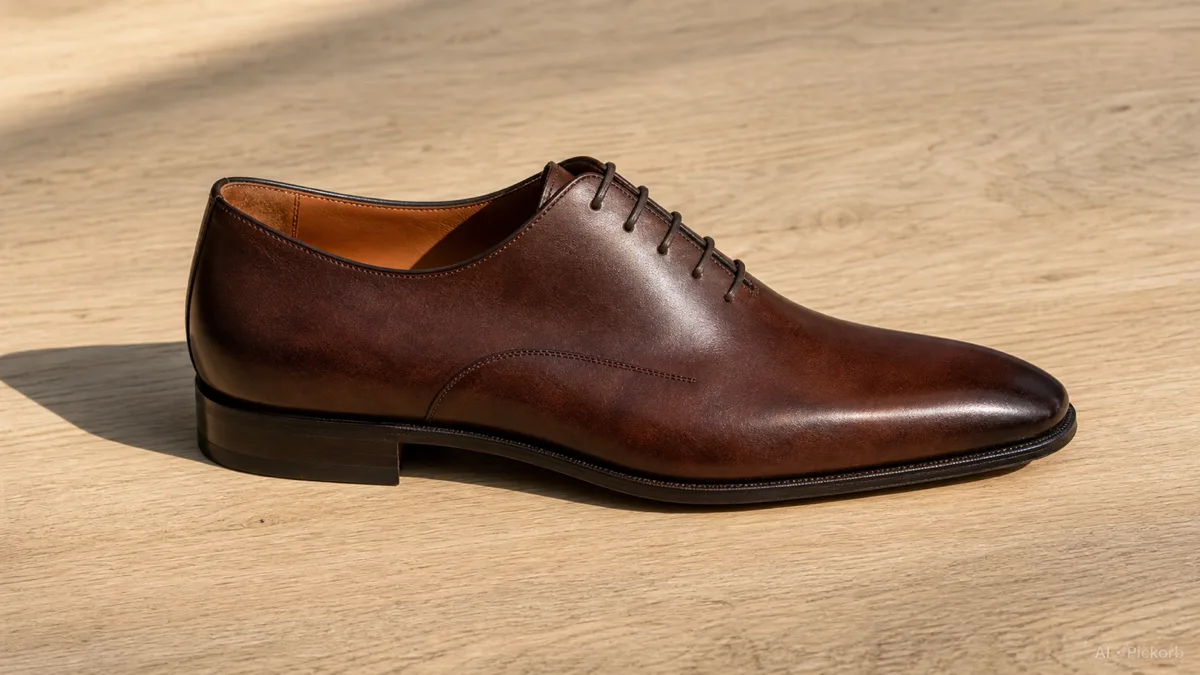
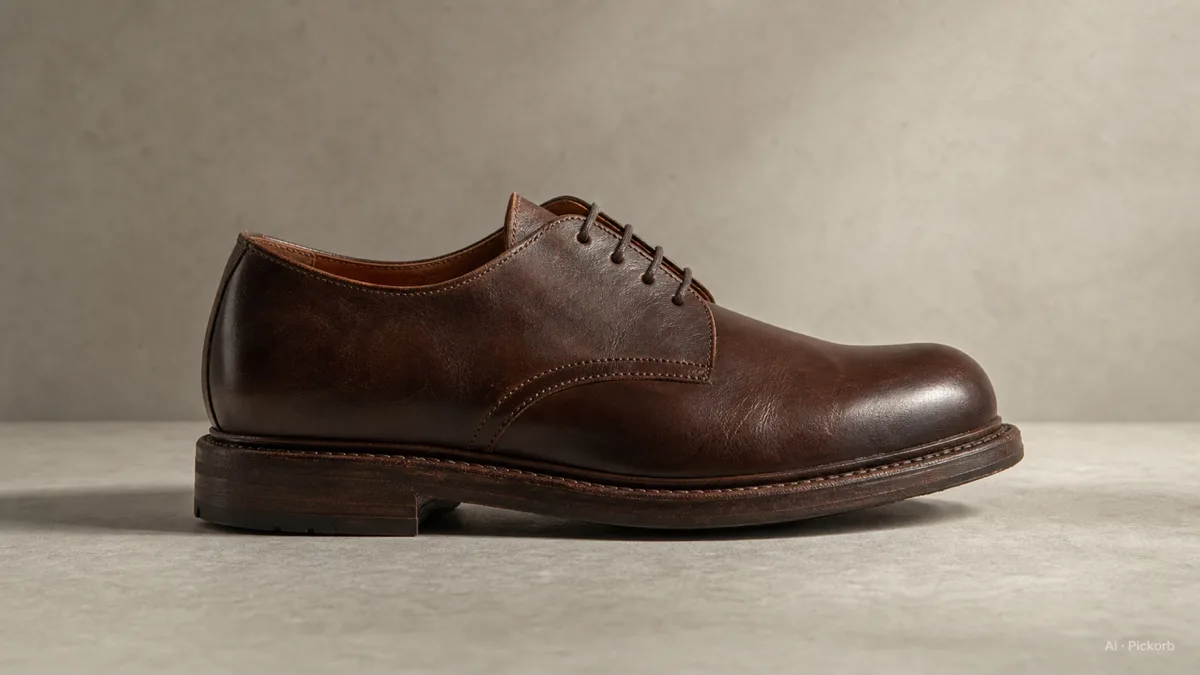
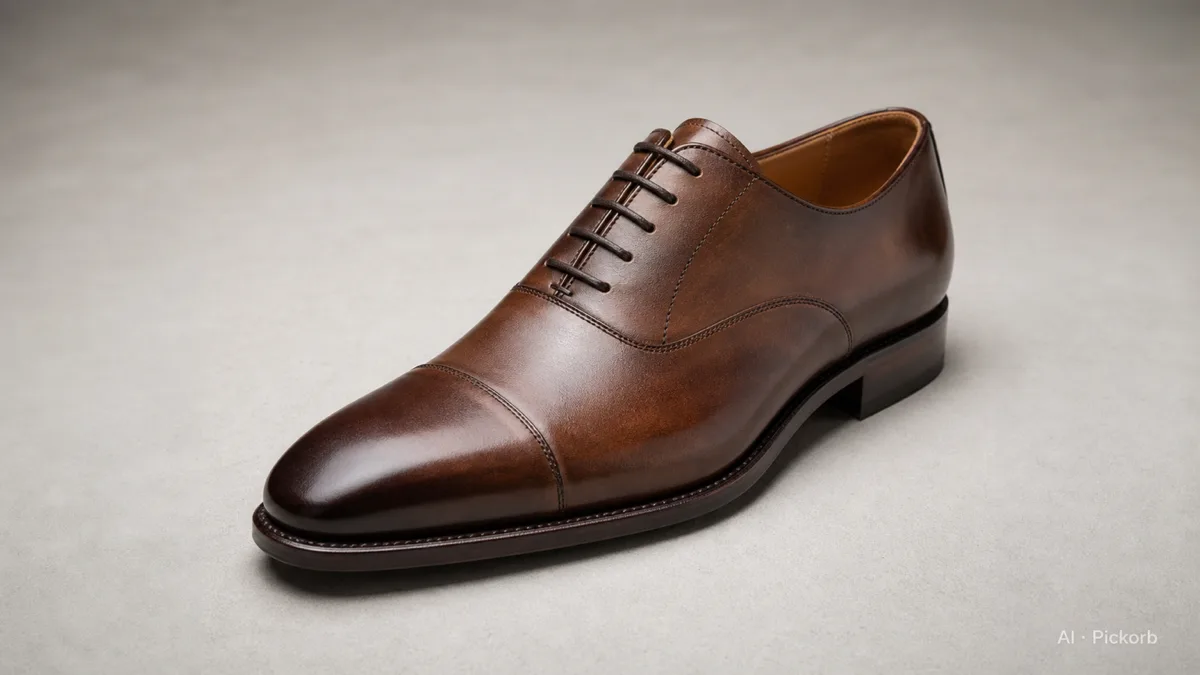
A last (forma in Italian, forme in French) is the foot-shaped block a shoe is built around. Everything about how a shoe sits on your foot flows from the last's geometry: the toe box shape, the instep height, the heel cup depth, the arch position. Two shoes with identical EU markings can fit completely differently if they come from different last traditions.
The three main European traditions — Italian, British, and French — each developed their characteristic last geometry through different manufacturing centers, customer expectations, and dress codes. Here's the thing: you don't need to know every house's fit notes. The traditions share enough internal consistency that a few key dimensions tell most of the story.
The Italian Last: Long, Narrow, Low Instep
Italian lasts evolved in the workshops of Florence, Milan, and Vigevano, historically the center of Italian fine footwear manufacturing (Museo Salvatore Ferragamo, Florence). The design priority was a clean silhouette from above: an elongated toe box, a narrower width across the ball, and a lower instep height.
What that means in practice:
- Toe box. Longer and more pointed (almond-to-pointed spectrum). The extra length at the toe creates the clean line that makes Italian shoes read well in formal contexts, but it also means your toes aren't filling the full visible length of the shoe.
- Ball width. Narrower than the British equivalent at the same nominal size. Houses in the Ferragamo, Tod's, and Santoni tradition tend to run this way.
- Instep height. Lower. If you have a high instep, an Italian last can feel like the laces or strap are pulling even when the length is right.
- Heel cup. Moderately snug, designed for a slim heel profile.
Sizing rule of thumb. Italian lasts generally run true to size or a half size small on volume. If you're between sizes in an Italian-last shoe — say, the EU 42 is snug in the toe and the EU 43 has too much length — the conventional guidance is to go with the 43 and use insoles or heel grips to adjust volume. A toe box that's too tight compresses over time; extra length doesn't.
If you have a wide forefoot or a high instep, Italian lasts are the most likely category to cause problems. The visual length reads narrower than it is, which can create a mismatch between "this looks right" and "this feels right."

The British Last: Round Toe, High Instep, Generous Ball
British last geometry came out of the Northampton footwear tradition, a manufacturing cluster that built shoes for export, military use, and English country wear (Northampton Museums & Art Gallery, footwear collection). The design priorities were different: durability, weather resistance, and comfort over full-day wear on varied surfaces.
The result is a last with noticeably different proportions:
- Toe box. Rounder. The classic British round toe reads shorter from above, which can feel conservative next to Italian shoes, but it gives the forefoot considerably more room.
- Ball width. Wider. Houses in the Crockett & Jones, Church's, and John Lobb tradition are built on lasts that accommodate a broader forefoot.
- Instep height. Higher. This is the dimension that catches people most off-guard. A British last will feel roomier in the instep than an Italian last at the same EU size — not loose, but with real clearance.
- Heel cup. Deeper and more structured, designed to hold the foot firmly through uneven terrain.
Sizing rule of thumb. British lasts tend to run slightly generous at the same EU size relative to Italian. Some buyers with narrow feet size down half a size from their Italian measurement. Some buyers with wide feet find British lasts are the first category that fits without discomfort. If you've historically found Italian shoes tight across the ball, a British last at your normal EU size is often the fix.
One more thing worth noting: the higher instep and deeper heel cup mean British lasts hold the foot in a slightly different position than Italian lasts. Some wearers find this more comfortable for walking; others find the different heel geometry requires a brief break-in period.

The French Last: Almond Toe, Balanced Volume, True-to-Size
French last geometry sits between the Italian and British traditions in most dimensions, but that description undersells it. The French approach developed primarily in Paris ateliers and the Cholet and Romans-sur-Isère manufacturing regions (Musée International de la Chaussure, Romans-sur-Isère). The priority was a balanced silhouette that worked for both formal and informal contexts.
Key dimensions:
- Toe box. Almond-shaped: elongated but not pointed. Less toe-crowding than a typical Italian last, less visual volume than a British round toe.
- Ball width. Moderate. Not as generous as British, but slightly more forgiving than Italian at the same nominal size.
- Instep height. Medium. Houses in the Berluti and Hermès shoe tradition build on lasts with moderate instep clearance that suits a wide range of foot profiles.
- Heel cup. Well-defined but not deep in the British sense.
Sizing rule of thumb. French lasts are the most likely to match your measured EU size across different foot profiles. If you're in the middle of a sizing decision and don't know your last preference yet, a French-last shoe at your standard EU size is the lowest-risk starting point.
That said, people with very wide forefeet may find French lasts a half size below comfortable, and people with very narrow feet may find them slightly roomy in the ball. The almond toe can create mild toe-box pressure in full-width feet over long distances.

When You're Between Sizes, Which Direction to Go
The between-size decision changes depending on last tradition.
Italian last, between sizes. Go up half. The narrow ball means the smaller size is more likely to compress your forefoot over time, and Italian shoes tend to have enough structure to adapt to the extra length with a good insole or heel pad.
British last, between sizes. Depends on your forefoot width. If your forefoot is wide, stay at the larger size. If your forefoot is narrow, try the smaller size — the generous ball width means the smaller size may still have more forefoot room than you expect.
French last, between sizes. Go up half in most cases. The almond toe gives more toe room at the larger size than the smaller, and the balanced volume tends to adjust well to length variation.
One general principle that holds across all three: length is easier to compensate for than width. A shoe that's half a size too long can be adjusted with an insole. A shoe that compresses your ball joint across the width cannot.
The Conversion Table Isn't Wrong, The Last Is the Missing Variable
EU/UK/US shoe size conversion charts are accurate measurements of foot length. They're not wrong. What they don't capture is last geometry — the three-dimensional shape around which the shoe was built.
A EU 42 on a Brannock device (Brannock Device Company) tells you your foot is approximately 271mm long. It doesn't tell you whether a given last has 8mm of toe allowance or 12mm, or whether the ball width is set for a C/D width or an E/EE width.
This is why people who've always bought Italian shoes and switch to British for the first time often size down, and why people making the reverse switch often size up. The foot hasn't changed. The geometry around it has.
If you're buying from a house for the first time and don't have a reference point, the most useful information is: 1. Whether the house uses an Italian, British, or French last tradition (most heritage houses document this in their fit notes) 2. Whether you have any foot dimension that falls outside average — wide forefoot, high instep, narrow heel
Those two inputs, plus your measured EU size, give you a much more reliable starting point than the conversion table alone.
Sources
- Museo Salvatore Ferragamo, Florence — Italian last design context and Florentine footwear manufacturing tradition
- Northampton Museums & Art Gallery, footwear collection — British last tradition and Northampton manufacturing history
- Musée International de la Chaussure, Romans-sur-Isère — French last tradition and regional footwear manufacturing
- Brannock Device Company — foot measurement standard and EU/UK/US size conversion methodology
How this guide was built
This piece came from a recurring sizing confusion: buyers who know their EU number still end up with the wrong fit when crossing between Italian, British, and French last traditions. The last geometry differences are documented across brand technical fit notes, British footwear trade resources (Northampton-tradition houses), and French atelier fit documentation. We used those to anchor the three-way comparison. The piece is brand-agnostic by design — last traditions are a manufacturing convention, not a brand-specific feature, so the guidance holds regardless of which house you're buying from.
Chexlow topic editor · AI illustration disclosed in image alt text