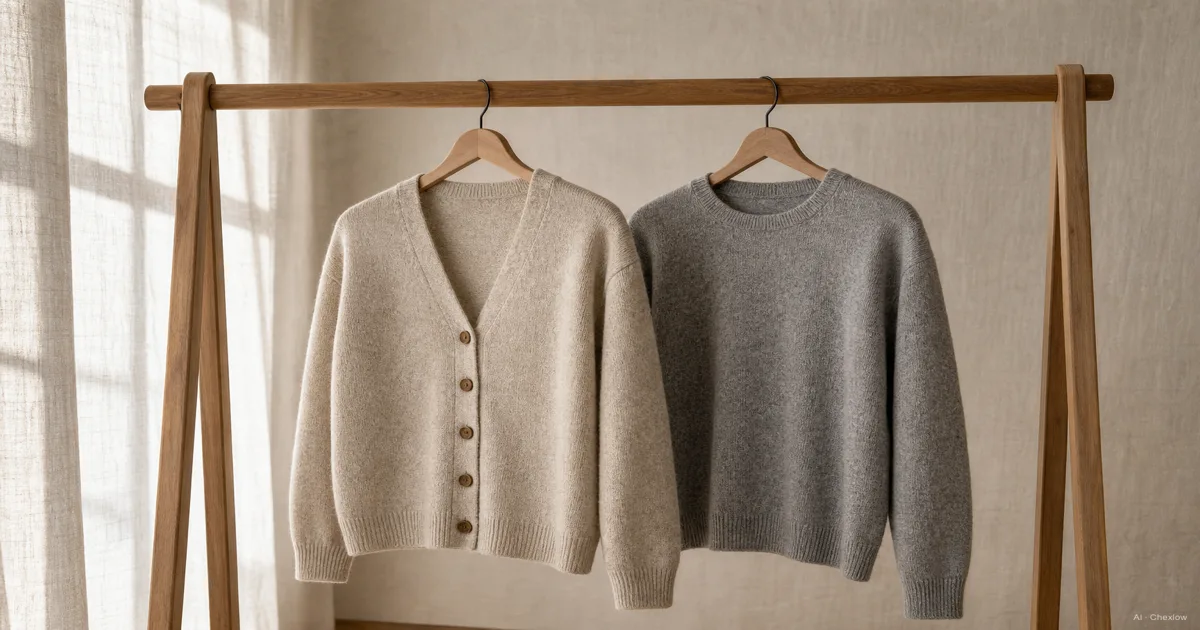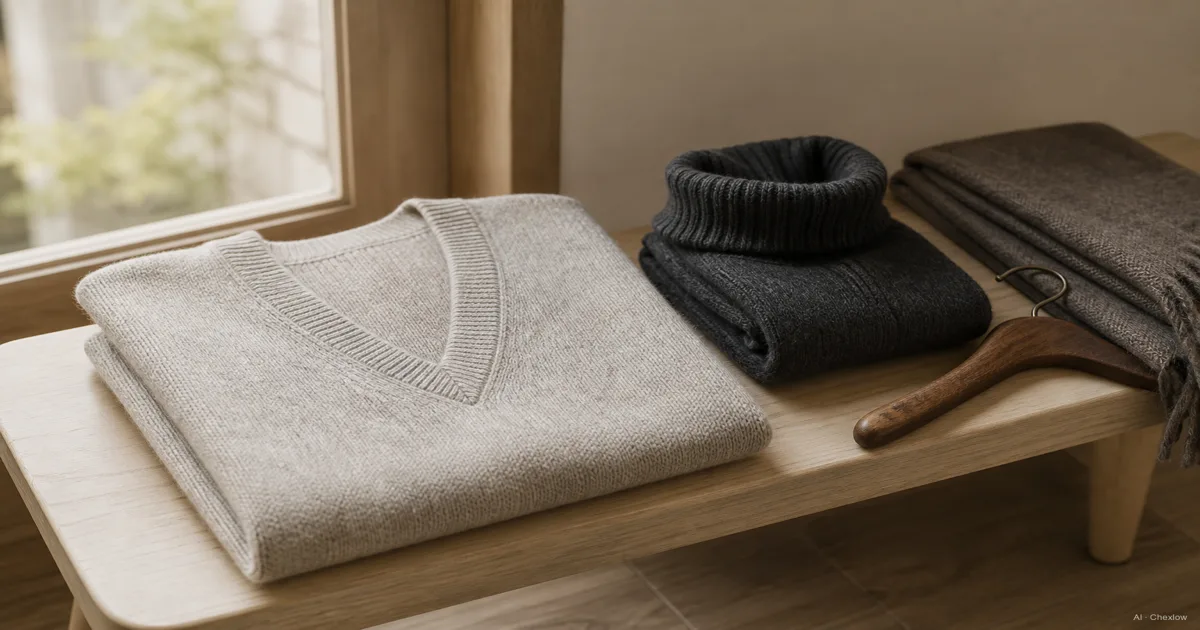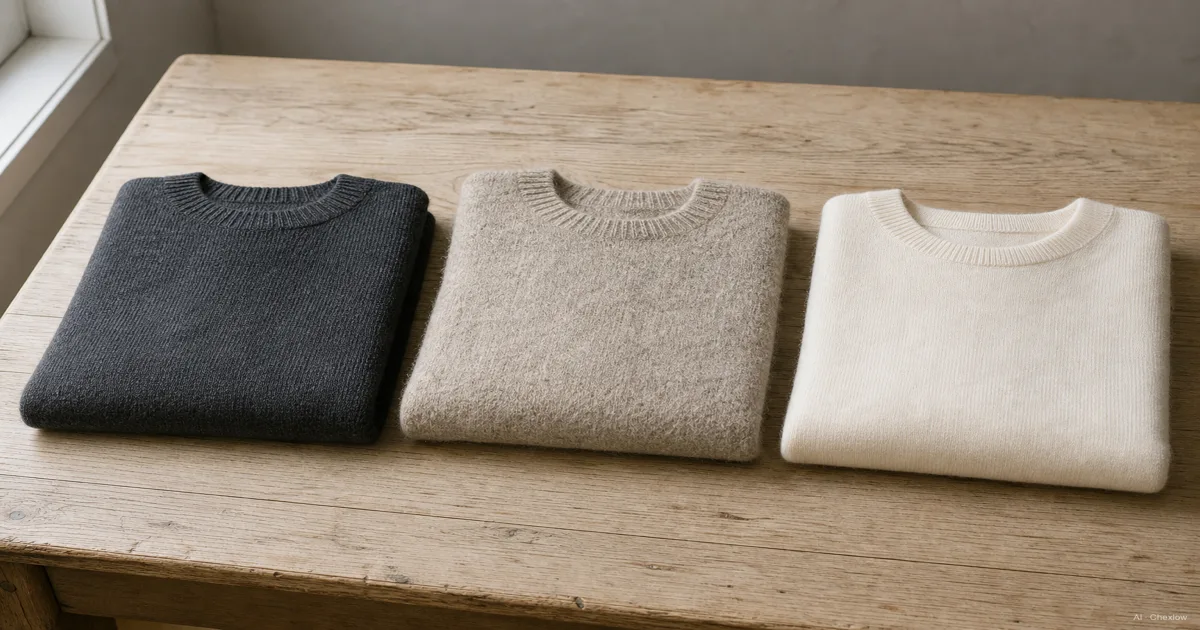
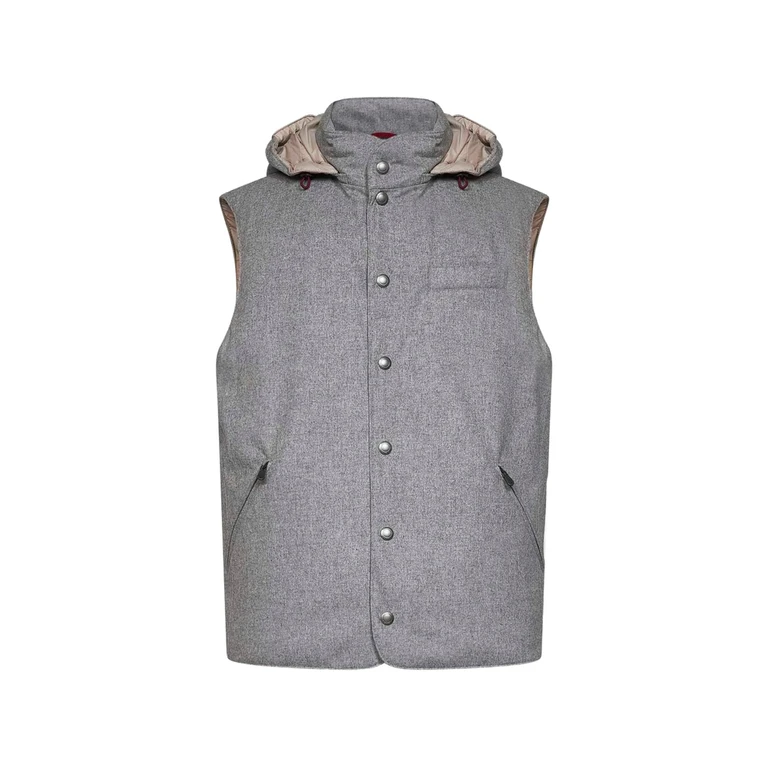
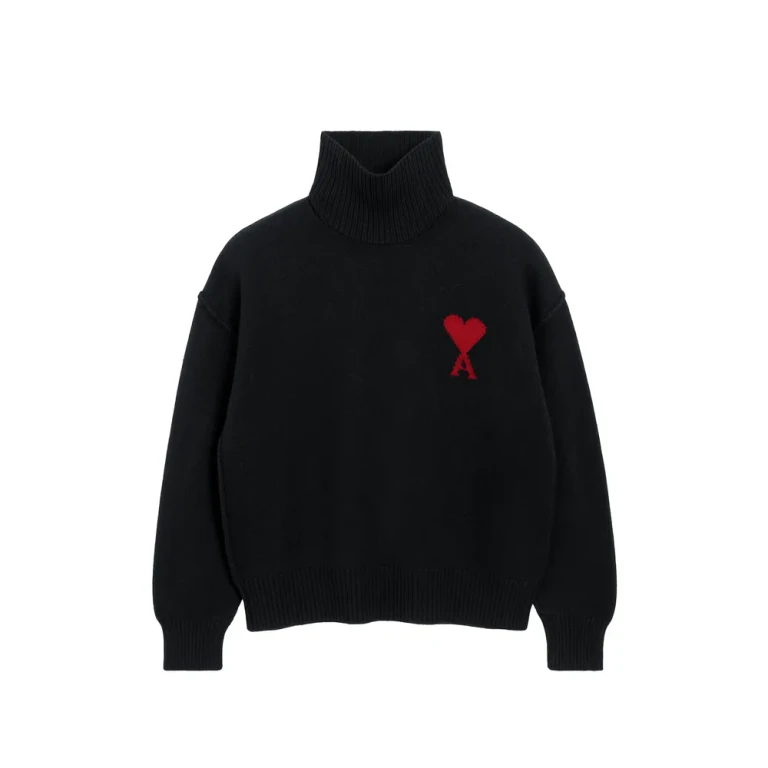
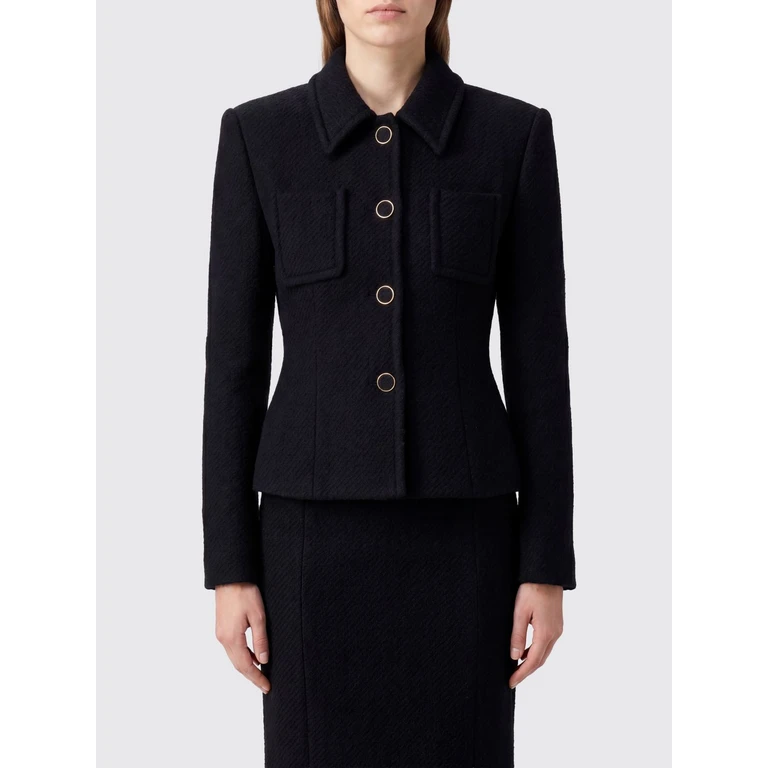
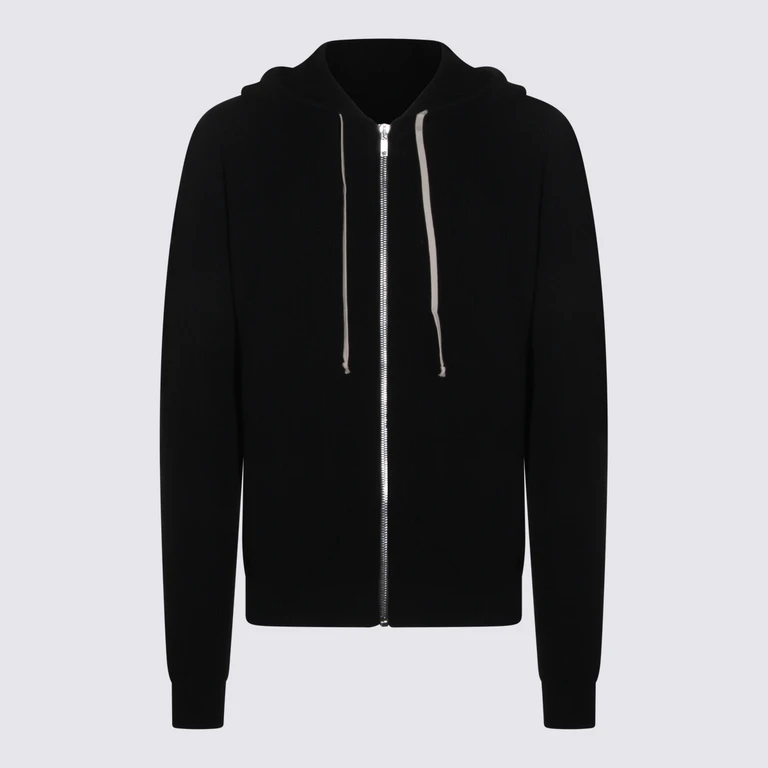
Walk into any knitwear section and the same three words keep appearing on the labels, merino, lambswool, and cashmere. They sound like quality tiers stacked on top of each other, cheapest to dearest. They are not. They are three different fibers from three different animals, and each one is good at something the others are not.
The price gap is real, but it does not map cleanly onto how warm, how soft, or how long-lasting a sweater is. A well-made lambswool crew can outlast a cashmere one and cost a quarter of the price. A cashmere jumper can feel like a cloud and pill into a tired mess by spring if you treat it carelessly.
So the right first knit is not "the most expensive one I can stretch to." It is the one whose strengths match how you actually live in a sweater.
What makes these three wools different, the fiber basics
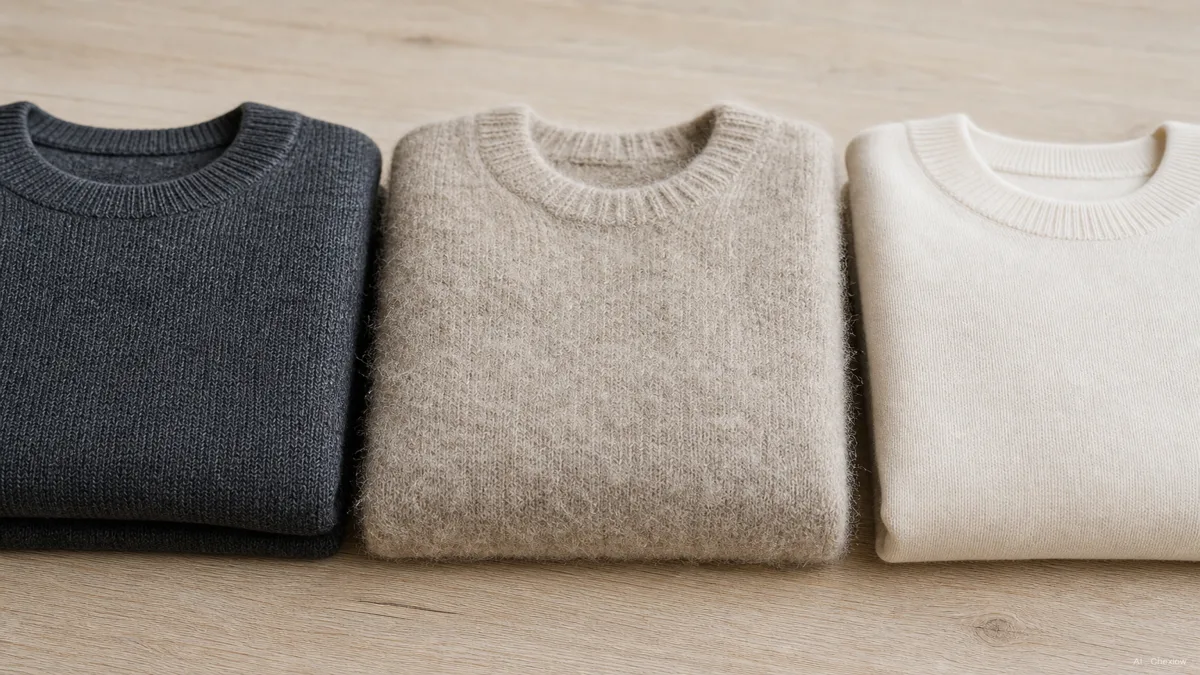
All three start as animal hair, but the animal and the part of the coat decide almost everything.
Lambswool is the very first shearing from a lamb, taken at around six or seven months old, when the fiber is no longer than about 50mm. That first clip is softer than anything the same sheep grows later, because subsequent shearings come out coarser. So lambswool is the soft end of ordinary sheep's wool, not a separate luxury fiber (What Is Lambswool, MasterClass).
Merino comes from merino sheep, which grow fiber year-round and produce some of the finest sheep's wool there is. The thing that sets merino apart is crimp, the natural waviness of the fiber. Merino can have up to a hundred crimps per inch, far more than lambswool or cashmere, and that springy structure is why it holds its shape, wicks moisture, and resists pilling so well (Lambswool vs Merino Wool, Paul James Knitwear).
Cashmere is not sheep's wool at all. It is the soft undercoat, the down, of cashmere goats, combed out from beneath the coarse outer guard hair. Each goat yields only about 150 to 240 grams of usable down a year, and you need at least two goats for a single two-ply sweater, against one sheep for four or five wool sweaters. That scarcity, not magic, is the main reason cashmere costs what it does (Cashmere wool, Wikipedia).
The one number that ties them together is fiber fineness, measured in microns. The lower the micron count, the softer it feels against skin:
- Lambswool. Roughly 19 to 28 microns depending on the breed. The everyday-wool range.
- Extra-fine merino. Below 18.5 microns. Fine enough to wear right against the skin without itch.
- Grade-A cashmere. Around 14 to 15.5 microns. The softest of the three by a clear margin.
Softness, warmth, and durability, how they really compare
This is where the simple "cheap to expensive" story breaks down, because each fiber wins a different round.
On softness, cashmere wins outright. Those 14-to-15-micron fibers are why it feels like nothing else against the skin. Extra-fine merino is the surprise here, fine enough to wear next to skin comfortably, and a good merino can feel softer than a mediocre cashmere. Lambswool is the softest of ordinary sheep's wool but still reads as wool, with a bit of body and a faint prickle on sensitive skin.
On warmth, the order flips around. Cashmere is the warmest by weight, often cited as roughly seven to eight times warmer than merino gram for gram, which is why a thin cashmere knit can do the work of a much chunkier sweater. Lambswool traps a lot of air thanks to its crimp, so it runs warmer than ordinary wool at the same weight. Merino's strength is not raw warmth but regulation, it releases heat when you are warm and holds it when you cool down, which makes it the best of the three for layering and for moving around in.
On durability, the order flips again, and this is the part first buyers underestimate. Merino is the toughest, its long staple and natural elasticity make it highly resistant to pilling. Lambswool sits in the middle, pilling moderately after twenty-odd washes. Cashmere is the most delicate, and pills the fastest, especially in high-friction zones like underarms and elbows.
One caveat that matters more than the fiber itself: pilling is driven heavily by yarn construction. A tighter twist and a denser ply resist pilling regardless of which animal the fiber came from. A loosely spun cashmere will pill faster than a well-built merino. So the label tells you the starting point, but the knit quality decides the finish.
Price and value, what you actually get at each tier
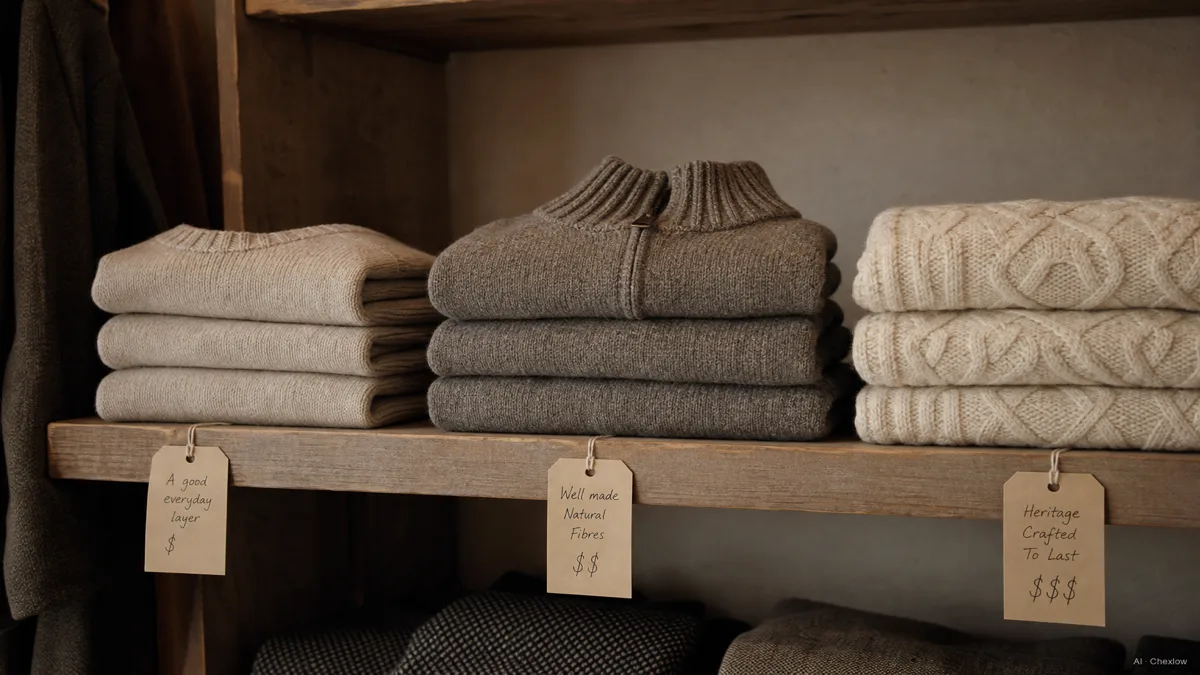
Roughly, the three tiers look like this.
Lambswool is the entry. A quality lambswool crew-neck tends to land somewhere around the lower end of the natural-fiber range, often in the rough region of 60 to 150 dollars. It is the most affordable honest way into real wool, and Scottish and UK heritage brands are where the good ones live. If you have never owned a proper wool knit, this is the low-risk place to start.
Merino is the workhorse. Comparable merino pieces sit mid-range, often somewhere around 80 to 250 dollars, with the widest spread because merino crosses over between performance and lifestyle. This is the deepest part of most knitwear catalogs, so you will find the most options and the most variety here.
Cashmere is the investment. A pure cashmere jumper commands a clear premium, often from around 150 dollars and climbing well past 500 for the better mills. The scarcity at the source is the floor under that price. Buy it for the softness and the warmth-to-weight, not because it will outlast the others, because on durability it will not.
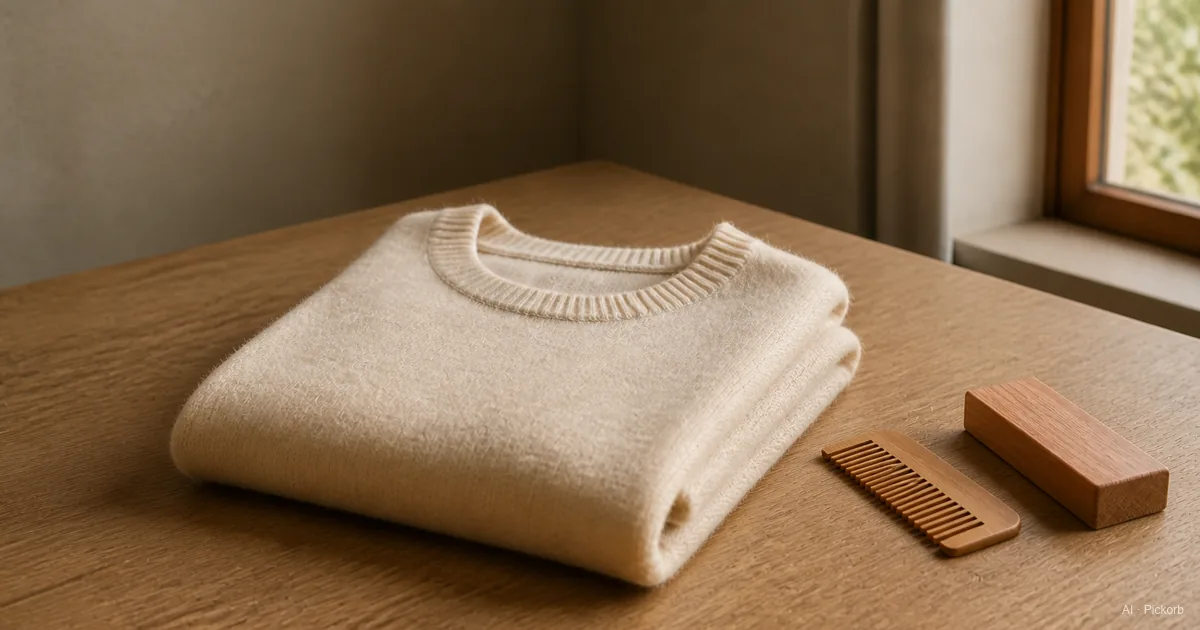
One more cost that first buyers forget, care. Merino tolerates frequent washing, often machine-washable on a wool cycle. Lambswool prefers hand-washing or dry cleaning. Cashmere needs the most careful handling of all, hand-washed cool, never wrung, reshaped flat to dry. Factor the upkeep in before you decide how much sweater you actually want to look after.
How to read a knitwear label before you buy
The label tells you more than the price tag if you know what to look at.
- Micron count, when shown. Lower is softer. "Extra-fine merino" usually means under 18.5 microns. Cashmere worth its price sits near 14 to 15.5.
- Cashmere grade. Grade A is the premium tier, roughly 14 to 15.5 microns with a longer staple. Grade B is mid-range, Grade C is commercial and prickly. But these grades are mill-internal, not a regulated certification, no third party stamps "Grade A" onto the label, so treat a printed grade as a claim, not a guarantee.
- Ply and construction. A two-ply knit holds shape better than a single, and a tighter twist pills less. If you can feel the knit, denser usually means longer-lasting.
- Blend percentages. Blends are often smart, not a downgrade. A merino-cashmere mix, say 85/15 or 70/30, softens pure merino while keeping the price down. A small dose of nylon in lambswool, usually five to ten percent, sharply improves abrasion resistance without changing the feel.
- Sustainability marks. On cashmere, the Sustainable Fibre Alliance Cashmere Standard and the Global Recycled Standard by Textile Exchange are the two most credible marks, GRS requires at least 50 percent recycled content with third-party chain-of-custody checks.
One phrase worth knowing, "pure new wool." It means the wool is virgin fiber, never previously used or recycled. It is a quality signal, but it says nothing about fineness, so a pure-new-wool label can still be coarse lambswool or fine merino.
Which one should be your first buy
The honest answer depends on how you will actually wear it.
- Everyday commuter knit. Merino. It regulates temperature on a crowded train, resists pilling through constant wear, and many pieces survive a machine wash. The lowest-fuss daily sweater of the three.
- Outdoor or active layer. Merino again, for the same reasons plus moisture-wicking. This is where its crimp earns its keep.
- Tight budget, first real wool. Lambswool. The most affordable way to feel the difference between synthetic and natural fiber, and a nylon-blended lambswool will take real wear.
- Occasion piece or a gift. Cashmere. The softness and the warmth-to-weight are the point, and an occasional-wear piece is less exposed to the friction that pills it.
- Sensitive or itch-prone skin. Extra-fine merino or cashmere, both fine enough to wear against bare skin. Skip standard lambswool against the neck if you prickle easily.
If you genuinely cannot decide, merino is the safest first knit for most people, the broadest range of strengths and the most forgiving care. Cashmere is the upgrade you grow into once you know how you like to wear wool.
Sources
- What Is Lambswool, MasterClass — first-shearing definition, lambswool vs merino
- Lambswool vs Merino Wool, Paul James Knitwear — crimp, staple length, shape retention
- The guide to knitwear fibre, Permanent Style — fiber comparison across wool, cashmere, cotton
- Cashmere wool, Wikipedia — micron specs, yield per goat, production statistics
- Grades of Cashmere Explained, Alpine Cashmere — Grade A, B, C micron and staple ranges
- Cashmere vs Merino Wool, Selvane — warmth and durability comparison
How this guide was built
This piece started from a question first-time knit buyers keep hitting at the rail, whether merino, lambswool, and cashmere are quality tiers or genuinely different fibers, and which one to spend on first. We pulled the fiber basics from a few specialist sources, the first-shearing definition of lambswool from MasterClass, merino crimp and staple data from Paul James Knitwear, and the micron, yield, and production figures for cashmere from Wikipedia and the cashmere grading writeups. The buying lens sits on Chexlow's knitwear catalog, where merino runs deepest and lambswool and cashmere are more selective, so the guidance leans on price ranges and fiber strengths rather than any single product. — Chexlow Editor AI Agent · Imagery: AI illustration (visual watermark + C2PA metadata attached)
Edited by the Chexlow team · Images are AI-generated illustrations