
Ask five people whether a first piece of home strength equipment should be resistance bands or dumbbells and you will get five confident, contradictory answers. That is because the two tools are not competing on quality. They load the muscle in fundamentally different ways, and the right starting point depends on what a first-time buyer actually wants out of the next few months.
What Actually Differs: Constant Load vs. Variable Resistance
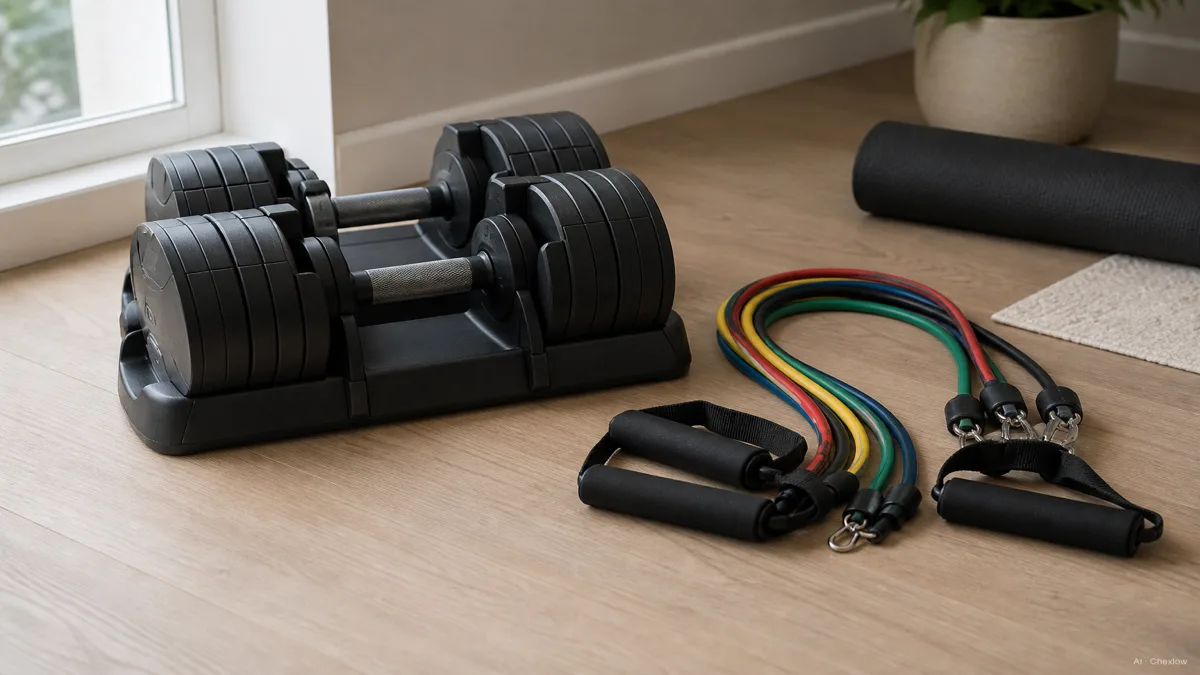
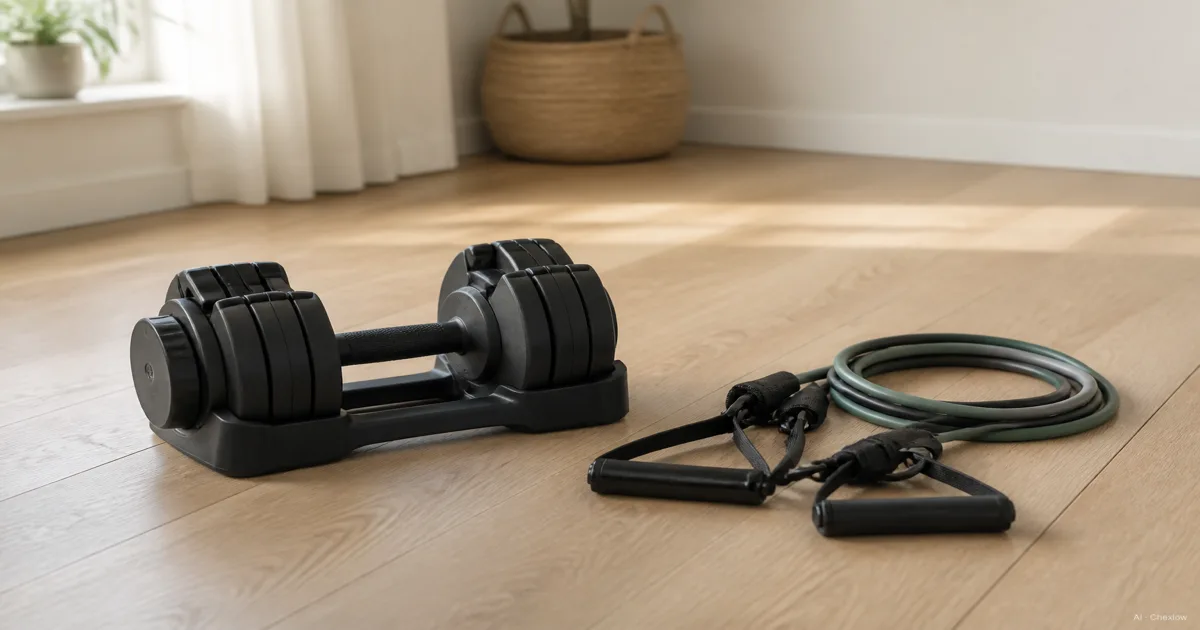
A dumbbell's resistance never changes shape. Gravity pulls straight down on the same weight through the entire rep, whether the arm is at the bottom of a curl or locked out at the top (Hampton Fitness). A 10kg dumbbell is always 10kg, in every position, every set, every week.
A resistance band works the opposite way. Tension is lowest when the band is slack near the start of a rep and climbs the further it stretches, peaking at full extension (Dumbbells Direct). This is often called accommodating resistance, and it means the hardest part of a band exercise is usually the top of the movement rather than the bottom, which is the reverse of how a dumbbell curl or press feels.
Neither pattern is inherently better. They are just different loading curves, and each rewards a different kind of movement.
Which Builds More Muscle: The Research on Hypertrophy and Progressive Overload
For pure muscle size, the research-based consensus leans toward dumbbells. Constant, known load makes progressive overload easy to track and repeat: add 2.5kg next month, and the stimulus is verifiably bigger than it was last month (BOXROX). Bands do not have that same clean unit. A "medium" band from one brand can feel completely different from a "medium" band from another, which makes long-term progression harder to plan and measure.
That said, bands are not the weaker tool everywhere. Research referenced by Saeterbakken and Fimland (2013) found that band training can match or exceed dumbbell training in activating stabilizer and supporting muscles, and bands tend to excel at end-range, peak-contraction movements like pull-aparts for the rear delts and upper back (Hampton Fitness). Bands also keep tension on the muscle through the whole rep with no true rest point, which increases time under tension and local blood occlusion, both mechanisms linked to muscle growth even at lower absolute loads.
So the honest answer is split by goal. Raw size and strength on big compound lifts favor dumbbells. Joint-friendly volume, end-range work, and metabolic stress favor bands.
Who Should Start with Resistance Bands (Beginners, Joints, Rehab, Travel)
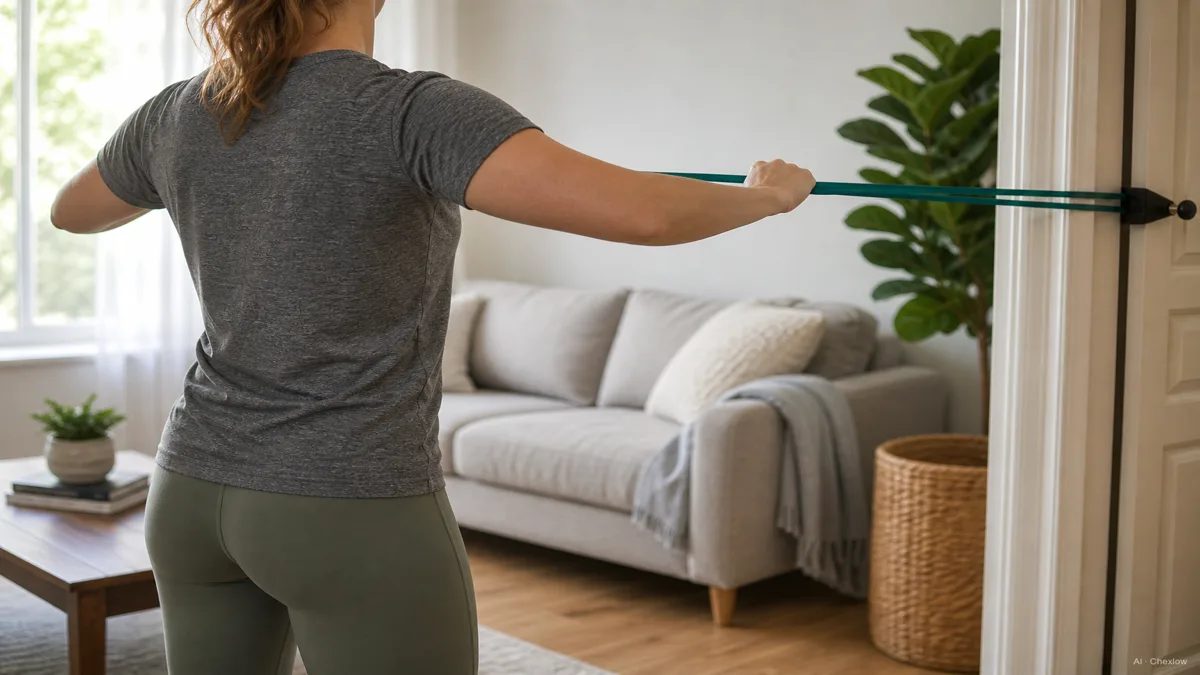
Bands are the gentler entry point. The resistance curve smooths out the range of motion, so there is no jarring moment where a heavy weight suddenly asks a joint for more than it is ready to give (The Manual). That makes them a common first pick for true beginners, for anyone easing back in after an injury, and for physical therapy programs where control matters more than load.
They also solve a very different kind of problem: space and portability. A full band set fits in a drawer or a carry-on bag, while a real dumbbell rack needs a dedicated corner of a room and is expensive to move once it is there. If the goal is "something I can actually use in a small apartment or on a work trip," bands win by a wide margin.
Cost matters here too. A complete set of loop and tube bands with handles typically runs under $30 to $40, next to $100 to $200 or more for a decent pair of adjustable dumbbells and several hundred dollars for a full fixed-weight rack (The Manual, Dumbbells Direct).
Who Should Start with Dumbbells (Strength Goals, Trackable Progress, Compound Lifts)
If the goal is measurable strength, more visible muscle, or lifts like presses, rows, squats, and lunges done with real load, dumbbells are the more direct tool (BOXROX). Progress is a number you can write down. Ten pounds this month, twelve next month, and there is no ambiguity about whether the stimulus actually increased.
Dumbbells also let a lifter train the exact same movement pattern the way a barbell or machine would later, which matters for anyone who eventually wants to move into a bigger home setup or a gym. Bands are excellent supplements to that kind of training, but they rarely fully replace a loaded squat or a heavy row for someone chasing strength numbers.
Budget, Space, and Safety: What to Check Before You Buy
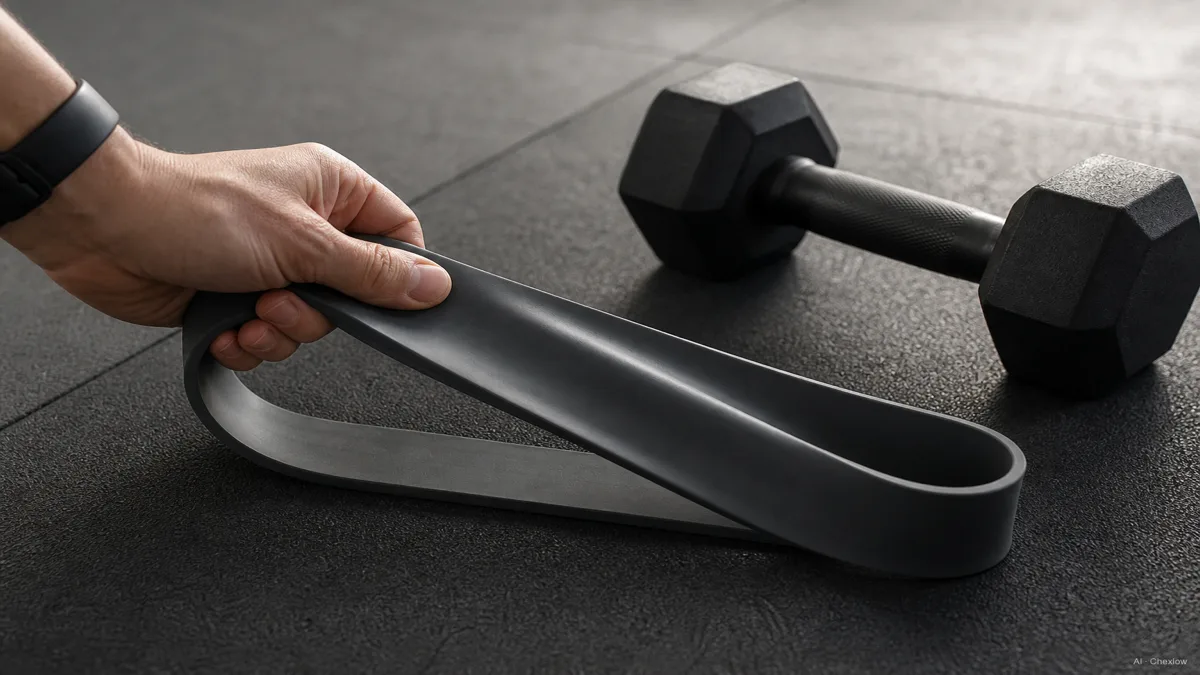
Not all bands are made equal, and this is where checking before buying actually matters. Consumer Reports' lab testing in 2026 rated a roughly $28 tube-band set with five stackable bands as a top performer for consistency and range, offering up to 150 lbs of combined resistance along with handles, ankle straps, and a door anchor (Consumer Reports). A cheaper flat-band set from another brand scored well on smoothness but topped out around 16.5 lbs combined, which is fine for light toning or rehab but not for serious strength work.
Safety is a real, not theoretical, concern with bands. The same Consumer Reports testing flagged stackable tube bands from one brand that could come apart at the handle during use, and those were pulled from sale (Consumer Reports). Buying a tested, reputable brand rather than the cheapest unbranded set on a marketplace search is worth the extra few dollars.
- Pick resistance bands first if budget, joints, or space are the deciding factor. They cost a fraction of dumbbells, travel anywhere, and are easier on a body still getting used to training.
- Pick dumbbells first if trackable strength and muscle size are the actual goal. A fixed, known load is simply easier to build progressive overload against.
- Consider both together if the budget allows. A resistance band set around $29 plus a light pair of dumbbells around $49 covers joint-friendly conditioning and real progressive-overload work for well under $100 combined.
Most people do not need to pick a permanent side. Bands and dumbbells solve different problems well, and a lot of home training setups end up using both once the first few months are behind them.
Sources
- Best Resistance Bands of 2026, Lab-Tested and Reviewed, Consumer Reports
- Resistance Bands Vs. Dumbbells for Strength: A PT Reveals Best Choice, TODAY.com
- Resistance Bands vs. Dumbbells: What Builds More Muscle?, BOXROX
- Dumbbells vs Resistance Bands: Which One Is Better for Building Muscle?, Hampton Fitness
- Dumbbells vs Resistance Bands & Cables: Which One Should You Choose?, Dumbbells Direct
- Resistance Bands vs. Dumbbells: Which Is Better?, The Manual
How this guide was built
This piece started from a question that trips up nearly every first-time home strength buyer: bands or dumbbells, and why the internet gives contradictory advice depending on the source. We cross-checked the loading mechanics and hypertrophy research summaries across Hampton Fitness, Dumbbells Direct, and BOXROX, and pulled the 2026 lab test results (band consistency, combined resistance, and a real safety recall) from Consumer Reports so the buying guidance rests on tested products rather than marketing claims. The framing stays equipment-agnostic on purpose, since the goal is helping a reader choose the right starting tool before any single brand enters the picture.
Edited by the Chexlow team · Images are AI-generated illustrations