Chexlow

Category · Bags / Authentication

Vintage Luxury Handbag Authentication, Five Signs Before You Buy

A counterfeit luxury bag rarely fails on one obvious detail. It fails on five small ones at the same time. A modern fake is usually good enough to fool a photograph and a quick glance, and it is good enough to fool a date code check on its own. What it cannot fake is the combination of stitch density, hardware weight, leather feel, and a brand-specific small detail all matching up. This guide is the five things to compare before buying.

Vintage Luxury Handbag Authentication, Five Signs Before You Buy

Current products to compare

These products come from Chexlow search results for this topic.

Current products are not ready yet

Use search while this guide waits for enough store prices.

Search current products

A counterfeit luxury bag almost never fails on one obvious detail. The hologram is on it, the date code is stamped, the logo is roughly the right shape. It fails on five small things at the same time, and the only way to read a bag accurately is to check several of those things together.

A real bag has stitch density, hardware weight, leather feel, and a brand-specific small detail all matching what the house actually does. A fake usually gets three of those right and misses the other two.

What follows are five signs that authenticators look at first. They do not replace a paid authentication service for an expensive bag, but they will catch most counterfeits before the bag becomes someone else's problem.

1. Stitching density and color

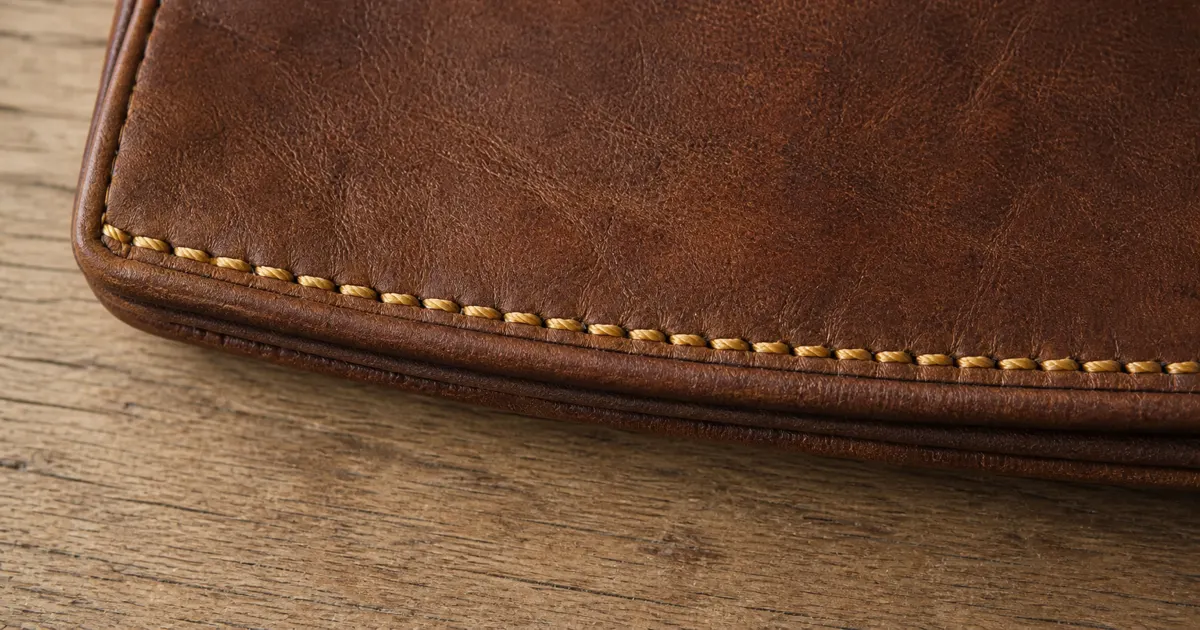
A close-up of the stitching along the edge of a vintage leather handbag, showing tight, evenly spaced stitches in a slightly mustard-yellow thread, all running parallel to the leather edge on a matte oak desk in soft natural daylight (AI generated illustration)
AI-generated illustration

Run your eye along any seam on the bag. On an authentic vintage luxury bag, the stitches are tight, evenly spaced, and all parallel to the seam edge. There is no wobble, no skipped stitch, no thread color drift.

On a Louis Vuitton bag, authentic stitching has a distinct slightly mustard-yellow tone — a result of a resin coating the house applies to the thread (Louis Vuitton authentication guide, Codogirl). A bright canary yellow or a flat yellow is wrong. Counterfeit thread color usually misses on the saturation: too bright or too pale.

On a Chanel bag, the diamond quilting on the front panel is one of the few stitch patterns where a counterfeit reliably fails. A real Chanel diamond has a consistent stitch count along each line (usually 11 stitches across the diamond width) and the diamonds line up cleanly with the bag's edge. A fake almost always has a slightly different count or a misaligned grid.

On a Hermès, the saddle stitch on the handles, the corners, and the strap attachments should be the same density throughout. Hermès saddle stitch is done by hand with two needles and a waxed linen thread; the two sides of the seam look identical. A machine-stitched copy has one side slightly different from the other.

2. Hardware weight and finish

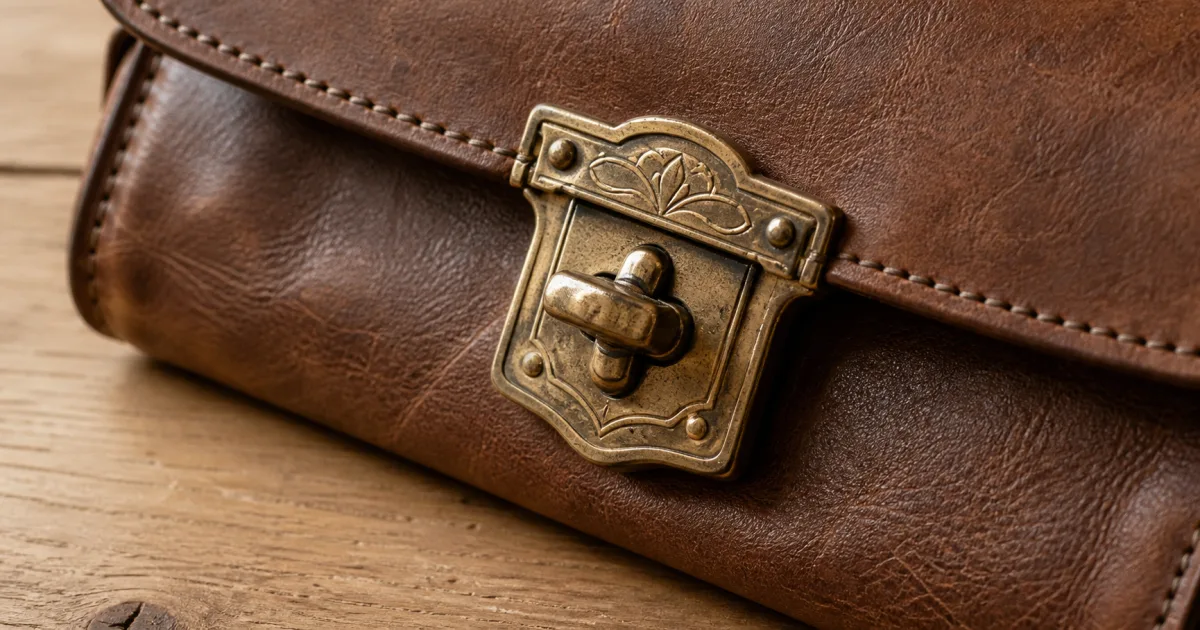
A close-up of the metal clasp and hardware on a vintage luxury bag, showing precise engraving, weighty solid brass construction, slightly worn but still rich finish on a matte oak desk in soft natural daylight (AI generated illustration)
AI-generated illustration

Pick up the hardware. The clasps, locks, feet, and zipper pulls on an authentic luxury bag should feel noticeably heavy in the hand. The houses use solid plated brass for most hardware, and the weight is the first thing that catches.

On a Louis Vuitton, where the plating wears through, the metal underneath should be high-grade brass — a slightly warm golden color, not silver or copper. A fake LV that has worn through usually shows a dull gray base metal.

Chanel hardware has crisp deep engraving on the lock. The CC logo and the brand markings should feel like they are cut into the metal, not stamped lightly onto the surface. Run your fingernail across the engraving — on a real Chanel lock you feel the depth. On a counterfeit, the engraving is often shallow and the lines have slightly rounded edges.

Hermès hardware is the heaviest of the three. A Hermès Kelly or Birkin lock weighs noticeably more than the bag's other components, and the screws holding the hardware in place are slotted (not Phillips) on most vintage references. The screw heads should be aligned vertically or horizontally — Hermès workshops align them deliberately.

3. Leather feel and patina

Press the leather between your thumb and forefinger. Authentic luxury bag leather has a particular feel — soft but not floppy, with a slight memory when you press it. It springs back into shape.

On a Louis Vuitton bag with Vachetta leather trim, the leather should develop a honey-colored patina over time. New Vachetta starts almost white; a vintage bag from the 1990s should be a warm caramel by now. A vintage LV with Vachetta still looking new-white is either replaced trim or a fake. The Vachetta also has a faint natural leather smell. A counterfeit often smells like glue or plastic.

Chanel uses lambskin or caviar (a pebbled goatskin) on most bags. Lambskin is very soft, almost like paper, and shows wear easily. Caviar is more textured and durable. The fake versions of both often feel slightly stiff or have a uniform plastic-like surface that does not respond to pressure the way real leather does.

Hermès uses Togo, Epsom, Clemence, Box, and a half-dozen other named leathers depending on the bag. Each has a different grain pattern; learning the named leathers takes years, but the general test is the same: the leather should feel alive, slightly warm, and have grain you can read under indirect light.

4. Blind stamp, date code, and serial number

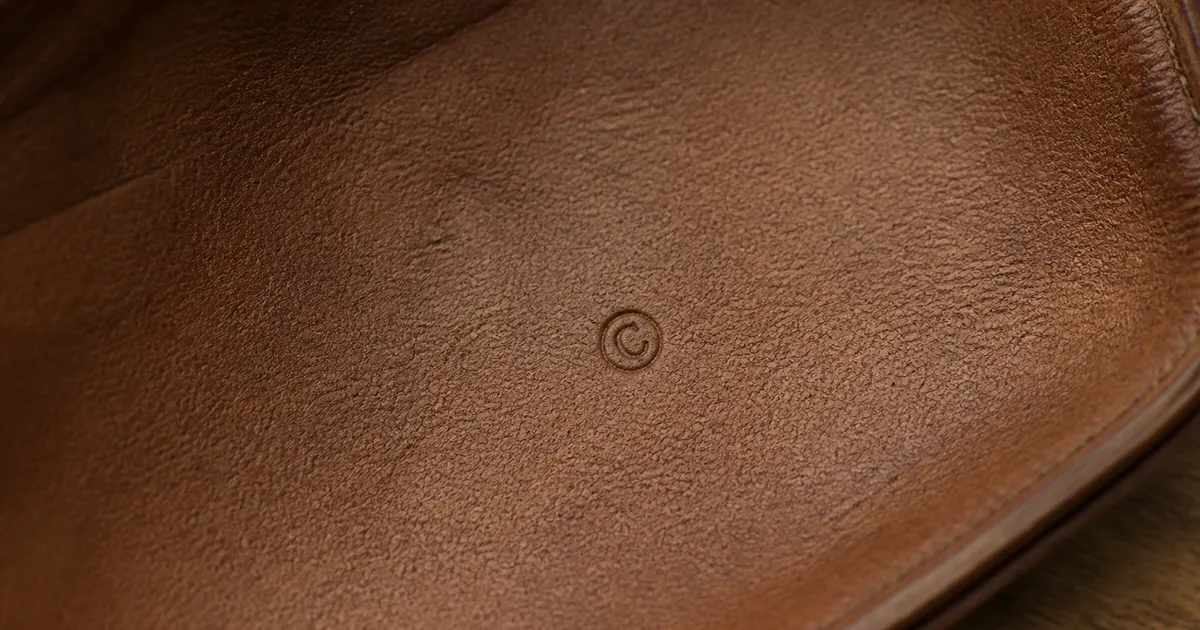
A close-up of a small embossed blind stamp on the interior leather of a vintage luxury handbag, showing precise alignment and crisp letters and numbers on a matte oak desk in soft natural daylight (AI generated illustration)
AI-generated illustration

A date code or serial number on its own is not a reliable authentication signal. Counterfeit operations get hold of real number sequences regularly (Louis Vuitton Date Code Checker, Real Authentication). What matters is whether the number, the format, and the placement are all consistent with what the house actually used for that year and that model.

Louis Vuitton used date codes from the early 1980s until early 2021, when the house switched to RFID chips. The format changed several times in that window. A 1990s LV should have a four-character code with two letters indicating the factory and two digits indicating the year and week. A pre-1990 LV has a different format entirely. A 2022 LV should have no date code visible at all (RFID instead).

Chanel uses an authenticity sticker with a serial number inside the bag. From 1986 onward, the serial number length and format changed by era — six digits, then seven, then eight. A serial number that does not match the era of the bag is a common counterfeit tell.

Hermès uses a blind stamp embossed into the leather, usually inside the bag near the strap base. It contains a single letter inside a shape (year code) and a small artisan code. The letter is in a square for one era, a circle for another, a hexagon for another. Matching the shape to the year code system in force at the bag's claimed production year is one of the fastest tells.

5. The small brand-specific detail

Every house has at least one small construction detail that is genuinely hard to fake because it requires either expensive tooling or hand skill that counterfeit operations rarely have.

On Hermès, it is the saddle stitching done by hand with the two-needle method. The two threads pass each other inside the leather; the result is that the front and back of the seam look identical. Machine stitching cannot replicate this exactly — one side is always slightly different.

On Chanel, it is the way the chain strap is woven through the leather strap. On an authentic Chanel, the leather is threaded through specific links in a pattern that cannot be easily replicated; a counterfeit usually threads it through every link or skips obvious ones.

On Louis Vuitton, it is the symmetry of the monogram pattern across seams. A real LV is built so the monograms on each side of a seam line up — the monogram is continuous across the bag. A fake LV almost always has misaligned monograms at the seams; the pattern jumps slightly.

Each house has more than one such detail. Authentication services document them in detail. For a private buyer, knowing one or two per house is enough to catch most counterfeits.

When to send the bag to a paid service

If the bag is over a few hundred dollars and you cannot confirm three of the five signs above with confidence, a paid authentication service is worth the cost. Major services (Real Authentication, Entrupy, Authenticate First) typically charge $20-50 for a remote photo authentication and provide a certificate. For a Birkin or a Kelly, the cost is a rounding error compared to the price of the bag.

A paid service does not replace the five physical signs above. It adds a sixth layer — an experienced eye that has seen thousands of real and fake examples of the specific model. For anything over a few thousand dollars, both layers together are the right move.

Sources

AI product analysis

How this guide was built

This piece is a cross-brand authentication guide covering vintage Hermès, Chanel, and Louis Vuitton bags — the three houses where counterfeiting is most active and where the resale market is large enough that misidentification is common. The five signs come from authentication references including Real Authentication's date code material, Codogirl's Louis Vuitton authentication guide, and All Vintage Styles' general designer authentication. Authenticators look at far more than five things on a real inspection. The five here are the most reliable ones a buyer can check before sending the bag to a paid service.

Chexlow topic editor · AI illustration disclosed in image alt text

Related guides